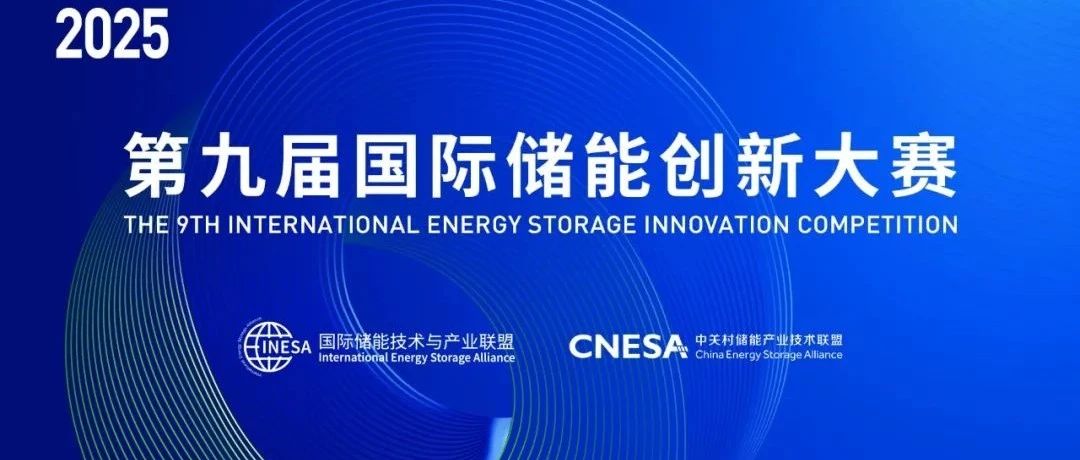
大容量储能电芯

Search documents
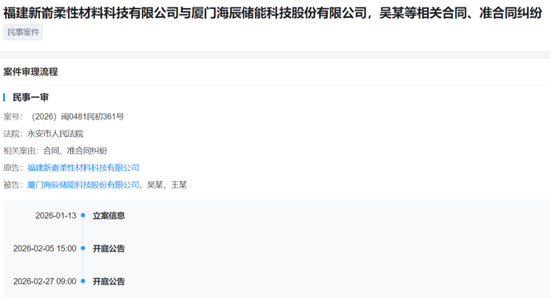
海辰储能再陷诉讼漩涡:8年前的合作牵出核心技术归属争议
Xin Lang Cai Jing· 2026-02-15 11:49
Core Viewpoint - The lawsuit against Xiamen Haichen Energy Storage Technology Co., Ltd. and its founders has raised concerns about the ownership of technology developed during a previous collaboration, potentially impacting the company's upcoming IPO [1][2][19] Group 1: Lawsuit Details - Haichen Energy Storage and its founders are being sued by Zhang Ruiming, the actual controller of Fujian Xinyu Flexible Material Technology Co., Ltd., for a total claim of approximately 90.38 million yuan [1][2] - The lawsuit is based on contract and quasi-contract disputes, with the case already being heard in the Fujian Yong'an People's Court [2][3] - The plaintiff seeks compensation for economic losses of 49.68 million yuan and interest on occupied funds amounting to 40.70 million yuan [3][23] Group 2: Background of the Dispute - The dispute traces back to a 2018 collaboration between Fujian Xinyu and Shenzhen Jinmei New Materials Technology Co., Ltd., which aimed to develop lithium battery materials with a total investment of 600 million yuan [5][25] - The collaboration failed to materialize, leading to a court ruling in December 2025 that held Jinmei responsible for breach of contract [5][25] - The lawsuit extends to Haichen Energy Storage due to allegations that key personnel and technology were transferred from the original project to the newly established company [6][28] Group 3: Technology Ownership Issues - A central issue in the lawsuit is the ownership of technological achievements and team resources developed during the 2018 collaboration [9][29] - The original project aimed to develop composite flow battery technology, and the technology and team resources are claimed to have been transferred to Haichen Energy Storage, which was founded in November 2019 [9][29] - Concerns have been raised regarding the potential implications of unclear technology ownership on the company's valuation and market position [33] Group 4: Broader Legal Context - Haichen Energy Storage is also involved in multiple disputes with CATL, primarily stemming from the departure of key technical personnel [14][34] - CATL has filed a lawsuit against Haichen Energy Storage for unfair competition, seeking 150 million yuan in damages [14][34] - The company is facing additional scrutiny due to allegations of commercial secret infringement against some of its management personnel [14][34] Group 5: Market Implications - Haichen Energy Storage has experienced rapid growth, achieving a shipment volume of 35.1 GWh within six years and ranking among the top global energy storage battery suppliers [37][38] - The ongoing legal disputes, particularly regarding technology ownership, introduce uncertainty into the company's IPO process, which could affect investor confidence [38][39] - The capital market typically raises risk premiums when civil disputes, intellectual property lawsuits, and criminal investigations coincide [36]

奋进的河北·数读新变化|向实向新,民间投资活力涌动
Xin Lang Cai Jing· 2026-02-07 23:55
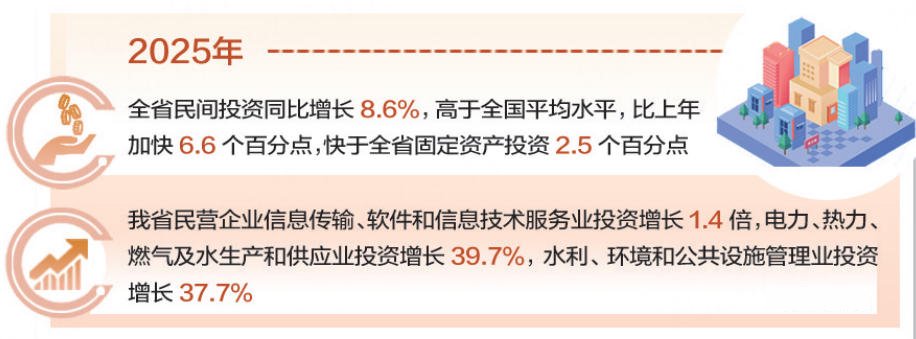
Core Viewpoint - The growth of private investment in Hebei Province is a significant contributor to the expected acceleration of fixed asset investment growth, positioning it among the top three provinces in the nation by 2025 [3][4]. Group 1: Private Investment Growth - In 2025, private investment in Hebei is projected to grow by 8.6% year-on-year, surpassing the national average and accelerating by 6.6 percentage points compared to the previous year [3]. - The increase in private investment is expected to outpace the overall fixed asset investment growth in the province by 2.5 percentage points [3]. Group 2: Industry Development - The rapid development of the electronic information industry in Hebei is creating favorable conditions for private investment, with a significant cluster forming in Shijiazhuang [4]. - The second phase of the Envision (Cangzhou) Zero Carbon Smart Industrial Park is expected to achieve an annual output value of 20 billion yuan upon full production [5]. Group 3: Investment Structure Optimization - By 2025, investments in the information transmission, software, and IT services sectors are expected to increase by 140%, while investments in utilities such as electricity and water supply are projected to grow by 39.7% and 37.7%, respectively [6]. - The optimization of the investment structure reflects a trend towards practical and innovative development in Hebei [6]. Group 4: Regulatory and Support Framework - The implementation of the Private Economy Promotion Law and the introduction of the Hebei Provincial Private Economy Promotion Regulations are aimed at enhancing fair competition and supporting private enterprises [6]. - A provincial-level private investment project database has been established to provide support in terms of land, energy, and funding for selected projects [7][8]. Group 5: Service Improvement - Since March 2025, over 11,400 face-to-face communication events have been held to address the needs of private enterprises, resolving more than 24,000 issues [9]. - A comprehensive service platform for the development of the private economy is being established, integrating various functions to facilitate efficient interaction between government and enterprises [9]. Group 6: Economic Contribution - By 2025, the contribution of the private economy to Hebei's GDP is expected to reach 65.6%, accounting for 66.8% of the province's economic growth [9].
向实向新,民间投资活力涌动
Xin Lang Cai Jing· 2026-02-07 21:54
Core Insights - Private investment is a crucial support for stabilizing growth, adjusting structure, and promoting employment in Hebei province [1] Group 1: Investment Growth - By 2025, private investment in Hebei is expected to grow by 8.6% year-on-year, surpassing the national average and accelerating by 6.6 percentage points compared to the previous year [1] - The growth of private investment is projected to outpace the overall fixed asset investment in the province by 2.5 percentage points [1] Group 2: Sector Performance - In 2025, investment in the information transmission, software, and information technology services sector is expected to increase by 140%, while investment in the electricity, heat, gas, and water production and supply sector is projected to grow by 39.7% [3] - Investment in water conservancy, environment, and public facilities management is anticipated to rise by 37.7% [3] Group 3: Regulatory Environment - The implementation of the Private Economy Promotion Law and the introduction of the Hebei Provincial Private Economy Promotion Regulations are aimed at ensuring fair competition and enhancing financing support for private enterprises [3] - A provincial-level private investment project database has been established to support projects with land, energy, environmental capacity, and funding [5] Group 4: Service Optimization - Since March 2025, over 11,400 face-to-face communication events have been held to address the needs of private enterprises, resolving more than 24,000 issues [5] - A comprehensive service platform for the development of the private economy has been established, integrating policy interpretation, government-enterprise communication, and financing cooperation [5] Group 5: Economic Contribution - By 2025, the added value of the private economy is expected to account for 65.6% of the province's GDP, contributing 66.8% to economic growth [5] - The private economy is projected to drive 3.7 percentage points of the expected 5.6% GDP growth [5]
储能市场需求旺盛 上市公司订单饱满
Zheng Quan Ri Bao Wang· 2025-09-29 12:10
Group 1: Market Demand - The demand for large-capacity energy storage cells is currently very high, with some companies' orders extending to the first quarter of 2026 [1] - The overseas market is experiencing a significant increase in demand for large-scale energy storage, driven by the growth of renewable energy [2] - In China, the independent energy storage model is emerging, with improving economics and a noticeable increase in demand [2] Group 2: Policy Support - The National Development and Reform Commission and the National Energy Administration have issued a plan aiming for a new energy storage installed capacity of over 180 million kilowatts by 2027, which is expected to drive direct investment of approximately 250 billion yuan [2] - Energy storage systems consist of various components, with cells accounting for about 60% to 70% of the total cost, indicating a critical supply shortage for large-capacity cells [2] Group 3: Company Performance - Huizhou Yiwei Lithium Energy Co., Ltd. is a global leader in the energy storage battery sector, currently operating at full capacity due to high order volumes [3] - Guangzhou Penghui Energy Technology Co., Ltd. ranks among the top global companies in energy storage cell shipments, having introduced innovative large-capacity cell products this year [3] - Guangdong Liyuanheng Intelligent Equipment Co., Ltd. has made significant progress in expanding its overseas market presence, securing strategic partnerships and orders for energy storage equipment [4] Group 4: Industry Outlook - The energy storage industry in China has developed a complete industrial chain, with companies leveraging their strengths in technology, products, and channels [4] - The global renewable energy industry's growth presents substantial potential for the energy storage market, and companies are encouraged to capitalize on the development opportunities [4]


亿纬锂能港股IPO:不甘“龙二”的宿命
阿尔法工场研究院· 2025-06-16 13:05
Core Viewpoint - EVE Energy aims to maintain its position as a "second-tier leader" in the lithium battery industry and effectively counter "black swan" events by proactively gathering funding sources [1][9][60] Group 1: IPO and Market Response - EVE Energy's announcement of its H-share IPO on the Hong Kong Stock Exchange did not receive a warm response from the capital market, unlike CATL [2][4] - Following the IPO announcement, EVE Energy's A-share price fell nearly 5% from 45.02 CNY to 42.78 CNY [3] - The muted market reaction is attributed to the slowdown in the lithium battery industry and investor concerns over the company's potential funding pressures [6] Group 2: Funding Needs and Global Expansion - The funds raised from the Hong Kong IPO are crucial for EVE Energy, described as a "lifeline" for the company [7] - EVE Energy plans to use the IPO proceeds for overseas factory construction, accelerating global capacity layout, and supplementing working capital [11] - The company has a cash balance of approximately 13.4 billion CNY, but its overseas projects require nearly 17.4 billion CNY, leaving a funding gap of about 4 billion CNY [19] Group 3: Customer Payment Challenges - EVE Energy's core business, power batteries, accounts for nearly 40% of its revenue, with automotive companies as its primary customers [25] - Following the IPO announcement, several automotive companies committed to reducing payment terms to within 60 days, highlighting a significant change in the supply chain [26] - The average accounts payable turnover days for domestic automakers is 171.6 days, significantly higher than the less than 60 days typical for Western brands [28] Group 4: Storage Battery Market and Competition - EVE Energy's storage battery revenue is projected to account for 39.14% of total revenue in 2024, with a shipment target of 50.45 GWh, making it the second-largest globally after CATL [36] - The U.S. market is a key target for EVE Energy, but changes in policy, such as the IRA, pose significant challenges for its downstream customers [38][39] - The bankruptcy of Powin, a major U.S. energy storage integrator and customer, raises concerns about future cooperation and payment uncertainties [40][43] Group 5: R&D Investment and Competitive Pressure - EVE Energy must invest heavily in R&D to keep pace with competitors, with R&D spending increasing from 700 million CNY to 2.942 billion CNY over the past five years [47] - The company plans to launch a pilot line for solid-state batteries by the end of this year, aiming for a 400 Wh/kg energy density by 2028, which lags behind competitors [49][55] - EVE Energy faces intense competition in large-capacity battery cells, with rivals rapidly advancing their technologies [56][58] Group 6: Overall Challenges and Future Outlook - EVE Energy is confronted with multiple challenges, including the need for funding for overseas expansion, risks in accounts receivable, difficulties in the storage market, and pressures from R&D investments [59] - The success of the Hong Kong IPO is critical not only for expanding financing channels but also for supporting overseas expansion and technological advancements [60]


超越宁德时代,储能大厂电芯容量“狂飙”;业内人士:往大做已有较好基础
Sou Hu Cai Jing· 2025-04-23 07:51
Core Insights - The competition for large-capacity energy storage cells is intensifying, with multiple companies showcasing advancements in cell capacities ranging from 314Ah to over 700Ah, indicating a trend towards higher energy density solutions [2][3][4] Group 1: Industry Trends - Major players like CATL, Aiko, and BYD are rapidly developing and showcasing large-capacity cells, with a focus on 500Ah and above, aiming for mass production by 2025 [2][4] - The industry is witnessing a shift towards larger cell specifications, which may complicate system integration due to varying sizes and designs among manufacturers [4][5] - The push for larger cells is seen as a strategy to optimize cost structures within energy storage systems [4][6] Group 2: Safety Concerns - As cell capacities increase, safety and reliability have become critical concerns, with industry leaders emphasizing the importance of cell design and safety measures to mitigate risks associated with higher energy densities [3][5][7] - The safety of large-capacity cells is primarily dependent on the cell's design, with external safety measures considered secondary [5][7] - There is a growing apprehension regarding the potential risks of larger cells, as higher energy densities could lead to increased safety challenges [7][8] Group 3: Technological Advancements - Improvements in raw material consistency, manufacturing precision, and automation have significantly enhanced the reliability and performance of larger energy storage cells [6][8] - The industry is moving towards achieving higher consistency in cell performance, with advancements allowing for better control over manufacturing processes [6][8] - Future developments may see further increases in cell capacities, but challenges remain in ensuring material consistency and advanced manufacturing capabilities [6][8]
160项入围!第九届国际储能创新大赛ESIC2025正式启动网络票选
中关村储能产业技术联盟· 2025-03-14 05:49
Core Points - The 9th International Energy Storage Innovation Competition received a total of 303 entries from various international and domestic entities in industry, academia, research, and application since its launch in October 2024 [1] - Out of these, 160 projects have advanced to the finals, categorized into six groups: Technical Innovation (57), Application Innovation (33), Outstanding Products (35), Patent Innovation (11), Soft Science Innovation (7), and New Enterprises + Unicorns (17) [1] Group Summaries Technical Innovation Group - The projects include various technologies such as electrochemical storage, physical storage, integrated control technologies, and energy safety systems [1] - Notable entries include a safety monitoring product from Siwei Energy, a high-efficiency battery storage integration technology from Jiangsu Trina Storage, and a new structure lithium-ion battery from BYD [9][10] Application Innovation Group - This group features projects like the energy storage microgrid from Siwei Energy and a 50MW sodium-ion storage project from CRRC Zhuzhou Electric Locomotive Research Institute [14][15] - Other significant projects include a user-side energy storage project from Guangdong New Juneng and a digital energy storage station project from Huadian [15][16] Outstanding Products Group - Entries include a new generation outdoor energy storage cabinet from Siwei Energy and a 3.44MWh box-type energy storage system from Zhejiang Wolong [19][20] - Other notable products are a high-pressure liquid-cooled energy storage system from Beijing Haibo and a smart energy management system from Anhui Youdan [20] Patent Innovation Group - This group includes patents for technologies such as a cooling system for battery cells from Jiangsu Trina Storage and a detection device for thermal runaway in large energy storage battery packs from Suzhou Jingkong [23] - Other patents cover various safety and control methods for energy storage systems [23] Soft Science Innovation Group - Projects focus on smart operation platforms for energy storage throughout their lifecycle and optimization strategies for energy storage stations to support regional green development [25] - Notable entries include an AI-based lifecycle operation platform from Hongzheng Energy and a smart energy management system from Guangzhou Penghui [25] New Enterprises + Unicorns Group - This group highlights emerging companies and innovative startups in the energy storage sector, showcasing their potential to disrupt the market with new technologies and solutions [1]