
大疆运动相机

Search documents
挑战"受管制清单",大疆起诉FCC
Guan Cha Zhe Wang· 2026-02-24 12:35
Core Viewpoint - DJI is challenging the FCC's decision to include the company and its products on the "Covered List," which restricts the sale of new drone models in the U.S. without FCC approval, aiming to protect consumer rights and market competition [1] Group 1: Legal Actions and Responses - DJI filed a lawsuit against the FCC, arguing that the decision lacks substantial evidence proving that its products pose a national security threat, thus violating due process and constitutional rights [1] - The company previously expressed disappointment over the FCC's decision, stating it limits consumer choice and undermines fair market principles [1] - DJI has attempted to communicate with the U.S. Department of Defense to understand the reasons for being placed on the list but received no substantial response [4] Group 2: Market Impact and Consumer Reaction - Following the FCC's ban announcement, there was a significant market reaction, with a 200% price increase for related equipment on second-hand platforms and an 8-fold increase in DJI product sales in a single week [2] - Consumers, including filmmakers and agricultural tech personnel, have voiced their frustration over the ban, emphasizing that there are no comparable alternatives to DJI products [2] - DJI holds over 70% market share in the global civilian drone market and approximately 70% to 90% in the U.S. market across various sectors, with over 80% of law enforcement agencies using DJI products [2] Group 3: Regulatory Context - The FCC's ban is part of a broader strategy to mitigate security threats during major international events, such as the 2026 World Cup and the 2028 Los Angeles Olympics [3] - The ban stems from a defense authorization act passed by Congress, which mandates a security review of companies like DJI, with a deadline for the review set for December 23, 2025 [3] - The FCC clarified that the ban does not prohibit the import, sale, or use of existing approved drone models, nor does it affect drones already purchased by consumers [3] Group 4: Judicial Outcomes - A previous court ruling found insufficient evidence for many of the Department of Defense's core allegations against DJI, but the court ruled based on the dual-use nature of the technology, which was deemed inappropriate by some experts [4][5] - The Chinese government has expressed strong opposition to the U.S. actions, criticizing the broad interpretation of national security and the discriminatory nature of the list against Chinese companies [5]


大疆起诉美国FCC 指控禁令程序违法
Yang Zi Wan Bao Wang· 2026-02-24 12:02
Group 1 - DJI has filed a lawsuit against the FCC's decision to include the company and its products on the "Covered List," aiming to protect its legal rights and the interests of American consumers and agricultural users affected by the ban [1] - The FCC's decision is criticized for lacking substantial evidence to prove that DJI products pose a national security threat, which allegedly violates due process and constitutional rights [1] - Following the FCC's ban announcement, there was a significant market reaction, with a 200% price increase for related equipment on second-hand trading platforms and an 8-fold year-on-year increase in DJI product sales for a major U.S. drone dealer [2] Group 2 - DJI holds over 70% market share in the global civil drone market and approximately 70% to 90% market share in the U.S. consumer, commercial, and government drone markets [2] - Over 80% of more than 1,800 law enforcement agencies in the U.S. utilize DJI products [2] - DJI's action camera series surpassed GoPro with a 66% global market share, becoming the leading brand in the action camera market, while its panoramic camera captured 43% of the global market share shortly after its release [2]
独家!大疆起诉美国联邦通信委员会(FCC)
Huan Qiu Wang· 2026-02-24 10:04
Core Viewpoint - DJI Innovation has filed an appeal against the FCC's decision to list the company and its products on a "regulated list," claiming the decision lacks substantial evidence and violates procedural fairness and constitutional rights [1][3]. Group 1: Legal Actions and Responses - DJI filed an appeal on February 20, 2026, challenging the FCC's decision made on December 23, 2025, which categorized DJI as a company posing unacceptable risks to U.S. national security [1][4]. - The company expressed disappointment over the FCC's decision, stating it restricts consumer choice and undermines fair market competition [2][4]. Group 2: Market Impact and Consumer Reactions - The FCC's ban led to a strong reaction from U.S. consumers and agricultural users, resulting in a "stockpiling" trend of DJI drones and parts [5]. - Many drone operators voiced concerns about the lack of alternatives to DJI products, emphasizing that their choice is based on affordability and performance rather than the origin of manufacture [5]. Group 3: Market Position - DJI holds over 70% of the global civil drone market and approximately 70% to 90% of the U.S. consumer, commercial, and government drone markets [2][5]. - Over 80% of more than 1,800 law enforcement agencies in the U.S. utilize DJI products [5]. - As of Q3 2025, DJI's action camera series surpassed GoPro with a 66% global market share, and its panoramic camera captured 43% of the global market share shortly after its release [5].
卖爆了!大疆运动相机荣登日本销量榜首,并稳居全球运动影像市场领导地位
Huan Qiu Wang Zi Xun· 2026-01-22 01:08
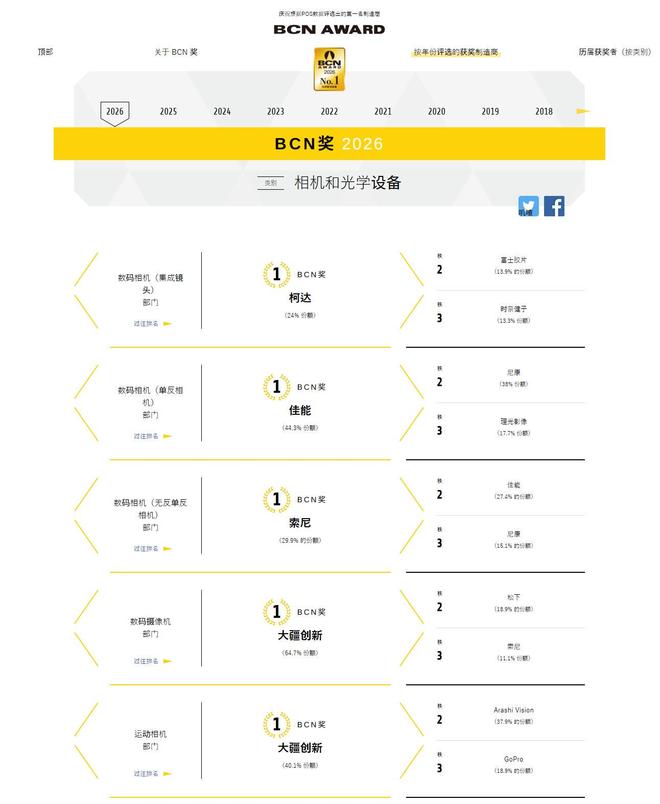
Core Insights - DJI has achieved significant market success in Japan, winning the "BCN AWARD 2026" for both "Digital Cameras" and "Action Cameras," marking its first-time dominance in the action camera category and breaking GoPro's decade-long market monopoly [1][4] Market Performance - The BCN AWARD is based on actual POS sales data from 2,350 major electronic retailers in Japan, reflecting the true performance of brands in the consumer electronics market for the year 2025 [3] - DJI's action cameras have not only surpassed traditional strong brands in Japan but have also established a leading position globally, with a market share of 66% in Q3 2025, further solidifying its status as the undisputed leader in the action camera segment [4] Product Innovation - Analysts attribute DJI's success in the action camera sector to its keen understanding of user needs and continuous technological innovation, with products like the Osmo Action series, Osmo 360, and Osmo Nano offering superior stabilization, image quality, and user-friendly designs [5] - The Osmo Pocket 3 has also been recognized as a top-selling handheld gimbal camera, showcasing DJI's leadership in both handheld and action camera markets [6]
曝哈啰顺风车小程序驾照、行驶证免审,填假信息也能接单;大疆全景相机全球市占近50%;亚马逊计划裁员3万人丨雷峰早报
雷峰网· 2025-10-28 00:43
Key Points - The article discusses the departure of Zhu Lidan, the legal representative of Hongsheng Beverage Group, and the investigation of several employees at the production base, indicating potential internal issues within the company [3][5]. - It highlights the significant market share of DJI in the global action camera and panoramic camera markets, with DJI holding nearly 70% and 50% market shares respectively [12]. - The article mentions the appointment of new executives at Zero One Wanwu, indicating a strategic shift in leadership [13][14]. - It reports on the internal personnel changes at JD.com, including the dismissal of Shao Jingping, which reflects ongoing adjustments within the company [10]. - The article notes the potential layoffs at Amazon, with up to 30,000 positions being cut, marking the largest reduction in 2023 [34]. - It discusses the launch of Qualcomm's AI200 and AI250 chips, which aim to challenge Nvidia in the AI chip market, resulting in a significant stock price increase for Qualcomm [38][39]. Group 1 - Zhu Lidan's departure from Hongsheng and the investigation of employees suggest internal turmoil [3][5]. - DJI's dominance in the action camera market with a 66% share and 43% in the panoramic camera market indicates a strong competitive position [12]. - The appointment of new executives at Zero One Wanwu reflects a strategic leadership change [13][14]. Group 2 - JD.com's internal personnel changes, including the dismissal of Shao Jingping, highlight ongoing organizational adjustments [10]. - Amazon's potential layoffs of up to 30,000 positions represent a significant workforce reduction [34]. - Qualcomm's introduction of AI200 and AI250 chips aims to compete with Nvidia, leading to a notable increase in stock price [38][39].

“China Shopping”热展现中国制造全球吸引力
Zhong Guo Xin Wen Wang· 2025-10-10 12:55
Group 1 - China has become a popular global travel destination during the National Day and Mid-Autumn Festival holidays, with 751,000 foreign visitors recorded, a year-on-year increase of 19.8% [3] - Foreign tourists are increasingly focused on shopping for high-value Chinese products, moving away from traditional souvenirs to items like DJI drones and Huawei foldable phones [2][3] - The trend of "China Shopping" reflects a shift in foreign consumer preferences, with a rise in reverse purchasing among European and American customers [3][4] Group 2 - The structural upgrade of Chinese manufacturing has led to high-quality products like smartphones and drones gaining a strong foothold in the global market [4][5] - Chinese brands are becoming leaders in the global consumer market, with Huawei capturing 48% of the global market share in foldable phones and DJI holding 70% to 85% in the drone sector [5] - The convenience of shopping in China is enhanced by digital payment systems and efficient retail services, making it an attractive destination for global tourists [6] Group 3 - The cultural appeal of Chinese products is rising, with films and games like "Nezha 2" and "Black Myth: Wukong" gaining international popularity, contributing to the global resonance of "China-made" products [6] - The combination of manufacturing return, brand trust, and open market policies is transforming China from a global factory to a global showcase [7] - The shopping lists of foreign tourists serve as a more intuitive indicator of China's market attractiveness than economic data [8]