大蛮驴

Search documents
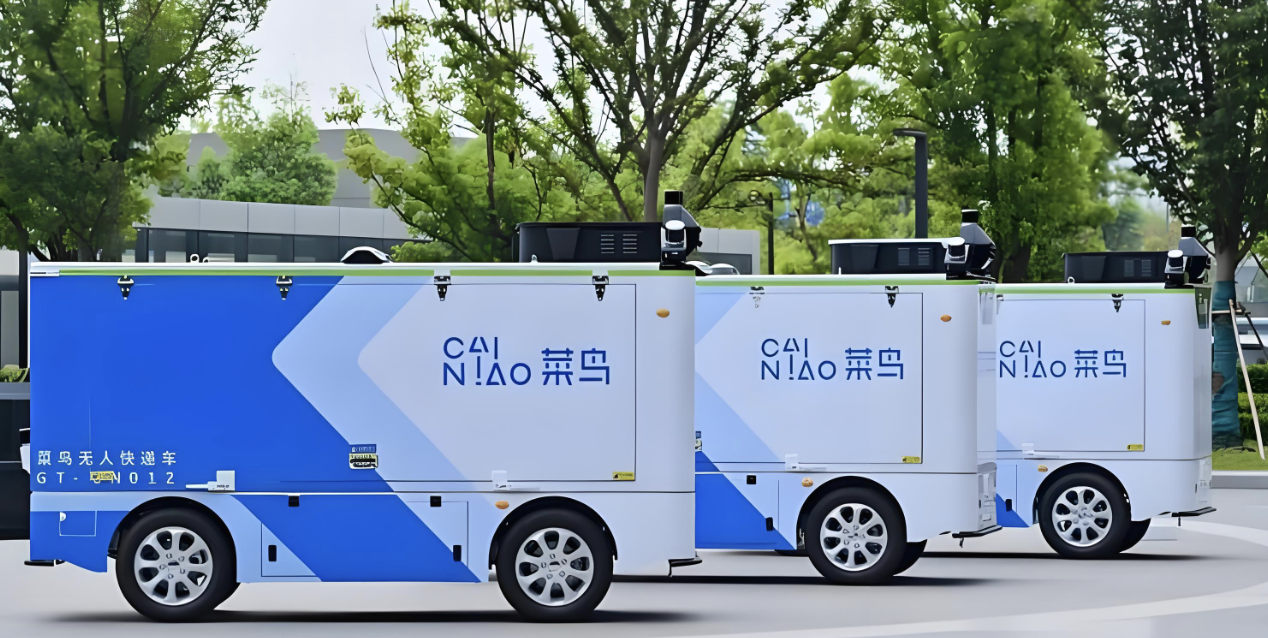
RoboVan超级航母来了!菜鸟、九识深度整合,组建超2万台全球最大Robovan车队!
Jin Rong Jie· 2026-01-30 08:35
Core Insights - The strategic restructuring between Jiushi Intelligent and Cainiao's unmanned vehicle business marks a significant milestone in the autonomous driving industry, transitioning from "single-point breakthroughs" to "system integration" [1] - The new entity will operate the world's largest RoboVan autonomous freight vehicle fleet, exceeding 20,000 units [1] Group 1: Strategic Restructuring - Jiushi Intelligent will become a strategic shareholder of Cainiao through the injection of its unmanned vehicle business and cash investments, supporting the creation of the RoboVan super carrier [1] - The restructuring establishes a dual-brand independent operation model, with Jiushi Intelligent focusing on comprehensive self-research in autonomous driving technology and Cainiao's unmanned vehicle brand providing intelligent supply chain services [2] Group 2: Technology and Resource Integration - The integration enhances Jiushi Intelligent's technical reserves and supply chain system in the L4 autonomous driving sector, leveraging Cainiao's global logistics network and Jiushi's research and development capabilities [3] - The combined entity will benefit from nearly 100 million kilometers of real-world data and advanced algorithm models, significantly accelerating the evolution of autonomous driving algorithms [3] Group 3: Market Development - Jiushi Intelligent, founded in August 2021, has received multiple rounds of financing, including a recent $100 million investment led by Ant Group, and aims to achieve over 10,000 autonomous vehicle deliveries by September 2025 [4] - The unmanned logistics vehicle market is projected to exceed hundreds of billions of dollars globally by 2027, with China's market share expected to surpass 40% [5]
传闻成真!菜鸟入股九识智能 将开启无人车双品牌运营
Nan Fang Du Shi Bao· 2026-01-29 15:19
Core Insights - The partnership between Cainiao and Jiushi Intelligent has been confirmed, marking a strategic integration in the autonomous vehicle sector, specifically focusing on the RoboVan business [1] - This collaboration aims to enhance Jiushi Intelligent's capabilities in Level 4 autonomous driving through asset injection and cash investment from Cainiao [1][3] - Cainiao will no longer directly produce and sell autonomous vehicles but will leverage its logistics advantages to increase the application of autonomous vehicles in logistics [1][4] Company Overview - Jiushi Intelligent was established in August 2021 and is headquartered in Suzhou, Jiangsu Province, with a founding team from Baidu and JD's autonomous vehicle divisions [2] - The company has secured multiple rounds of financing, including a recent $100 million investment led by Ant Group in its B4 round [2] - By September 2025, Jiushi Intelligent is expected to have delivered over 10,000 autonomous vehicles [2] Market Context - The autonomous delivery vehicle market is gaining significant attention from capital markets, with major internet companies investing heavily in this sector [3] - It is projected that the global autonomous delivery vehicle market will exceed hundreds of billions of dollars by 2027, with China's market share expected to account for over 40% [3] - The logistics industry is anticipated to deploy over 200,000 autonomous delivery vehicles in the next three to five years [3] Strategic Positioning - Jiushi Intelligent will focus on developing comprehensive self-research technologies for autonomous driving, while the "Cainiao Autonomous Vehicle" brand will target specific scenarios and key accounts [4] - Both brands will collaborate through technology sharing, operational synergy, and resource integration to create a future-oriented RoboVan ecosystem [4]
菜鸟入股九识智能?一场货运无人车行业的“超级整合”猜想
Xin Lang Cai Jing· 2026-01-08 08:49
Core Viewpoint - The logistics autonomous vehicle industry is witnessing significant financing and strategic partnerships, with Alibaba's Cainiao Group reportedly planning to invest in Jiushi Intelligent, aiming for deeper integration and collaboration to strengthen market leadership [1][2][4]. Group 1: Strategic Collaboration - The collaboration between Cainiao and Jiushi Intelligent is focused on integrating technology and ecological resources to enhance their dominance in urban delivery markets and expand into the global autonomous freight market [2][4]. - This partnership is seen as a strategic move rather than a superficial investment, indicating a deeper resource optimization as the industry matures [1][2]. Group 2: Company Profiles - Jiushi Intelligent, with a market share leading position, has a strong team from top institutions like Baidu and Waymo, and has recently secured a record order of 7,000 autonomous vehicles from China Post [4][5]. - Cainiao, backed by Alibaba, has a robust foundation in AI and machine vision, and has been developing autonomous vehicles since 2013, with plans to expand its global logistics network [5][6]. Group 3: Market Dynamics - The logistics autonomous vehicle market is evolving from a technology showcase to a mature commercial operation, with applications expanding beyond delivery to include sanitation and security [6][9]. - The anticipated partnership between Jiushi Intelligent and Cainiao is expected to accelerate the industry towards a "ten-thousand vehicle" operational norm, enhancing scalability and efficiency [9][11]. Group 4: Financial Implications - The potential investment from Cainiao is viewed as a signal of deepening capital integration in the autonomous freight sector, moving from simple financial investments to ecosystem building [8][11]. - Jiushi Intelligent has undergone multiple funding rounds, raising significant capital, which supports its expansion into over 300 cities with more than 15,000 deployed vehicles [4][8].

阿里无人车的「阵痛史」:团队赛马、战略摇摆与整合困局
雷峰网· 2025-12-23 14:30
Core Viewpoint - The article discusses the evolution and challenges faced by Alibaba's autonomous vehicle initiatives, particularly focusing on the logistics sector, highlighting missed opportunities and internal conflicts that led to the decline of its autonomous vehicle projects [3][4][5]. Group 1: Industry Developments - The autonomous logistics vehicle sector has seen significant capital influx and operational advancements in 2023, with companies like New Stone Technology and NineSight completing substantial funding rounds, indicating a rebound after years of stagnation [3]. - NineSight is reportedly in talks to acquire Alibaba's logistics vehicle division, which could enhance its competitive position in the logistics market [3][4]. - The article notes that the autonomous vehicle sector in China is approaching a pivotal moment with several companies preparing for IPOs, marking a transition from a nascent stage to a more mature market [3]. Group 2: Alibaba's Internal Dynamics - Alibaba's autonomous vehicle efforts began with the establishment of the Cainiao ET Logistics Laboratory, which aimed to develop autonomous logistics vehicles but faced strategic misalignments and leadership changes that hindered progress [7][9]. - The dual approach within Alibaba, with the Cainiao ET Laboratory focusing on logistics and the Damo Academy's autonomous driving lab targeting passenger vehicles, led to resource duplication and inefficiencies [15][29]. - The merger of the Cainiao ET Laboratory into the Damo Academy's autonomous driving lab in 2020 was a significant turning point, consolidating efforts but also leading to internal conflicts and a loss of focus on logistics applications [30][36]. Group 3: Key Personnel and Leadership Changes - Key figures such as Zhang Chunhui and Chen Junbo played pivotal roles in the development of Alibaba's autonomous vehicle projects, with their departures marking critical moments in the decline of these initiatives [12][50]. - The leadership transition within the Damo Academy, particularly the appointment of Wang Gang and subsequent changes in strategic direction, contributed to the fragmentation of the autonomous vehicle team [25][41]. - The article highlights the contrasting management styles of Chen Junbo and Guo Zhenyu, which created friction within the team and ultimately affected project outcomes [47][49]. Group 4: Project Outcomes and Future Directions - The autonomous logistics vehicle "Xiaomanlv" achieved significant operational milestones, including reaching 1 million delivery orders, but faced challenges in scaling due to budget constraints and strategic misalignment [36][52]. - The ambitious plans for the "Dabanlv" project, aimed at developing autonomous heavy-duty trucks, were ultimately abandoned following key personnel exits, signaling a broader decline in Alibaba's autonomous vehicle ambitions [50][54]. - The article concludes with the integration of the Xiaomanlv project back into Cainiao, indicating a shift in focus towards logistics and a potential re-evaluation of Alibaba's strategy in the autonomous vehicle space [53][54].