
菜鸟无人车

Search documents
传闻成真!菜鸟入股九识智能 将开启无人车双品牌运营
Nan Fang Du Shi Bao· 2026-01-29 15:19
Core Insights - The partnership between Cainiao and Jiushi Intelligent has been confirmed, marking a strategic integration in the autonomous vehicle sector, specifically focusing on the RoboVan business [1] - This collaboration aims to enhance Jiushi Intelligent's capabilities in Level 4 autonomous driving through asset injection and cash investment from Cainiao [1][3] - Cainiao will no longer directly produce and sell autonomous vehicles but will leverage its logistics advantages to increase the application of autonomous vehicles in logistics [1][4] Company Overview - Jiushi Intelligent was established in August 2021 and is headquartered in Suzhou, Jiangsu Province, with a founding team from Baidu and JD's autonomous vehicle divisions [2] - The company has secured multiple rounds of financing, including a recent $100 million investment led by Ant Group in its B4 round [2] - By September 2025, Jiushi Intelligent is expected to have delivered over 10,000 autonomous vehicles [2] Market Context - The autonomous delivery vehicle market is gaining significant attention from capital markets, with major internet companies investing heavily in this sector [3] - It is projected that the global autonomous delivery vehicle market will exceed hundreds of billions of dollars by 2027, with China's market share expected to account for over 40% [3] - The logistics industry is anticipated to deploy over 200,000 autonomous delivery vehicles in the next three to five years [3] Strategic Positioning - Jiushi Intelligent will focus on developing comprehensive self-research technologies for autonomous driving, while the "Cainiao Autonomous Vehicle" brand will target specific scenarios and key accounts [4] - Both brands will collaborate through technology sharing, operational synergy, and resource integration to create a future-oriented RoboVan ecosystem [4]
九识智能与菜鸟深度战略整合,开启双品牌运营
Bei Ke Cai Jing· 2026-01-29 11:32
Group 1 - The core viewpoint of the news is the strategic integration between Jiushi Intelligent and Cainiao, focusing on the development of the RoboVan autonomous vehicle business [1] - Cainiao will inject its own autonomous vehicle business and make a cash investment to become a shareholder of Jiushi, supporting the creation of a RoboVan super carrier [1] - This partnership marks the official start of deep collaboration in the RoboVan field between the two companies [1] Group 2 - Following this strategic cooperation, Cainiao will no longer directly produce and sell autonomous vehicles but will leverage its logistics scenarios and ecological advantages to enhance the application of autonomous vehicles in the logistics sector [2] - Jiushi will obtain the "Cainiao Autonomous Vehicle" brand authorization, initiating a dual-brand operation [2]
菜鸟无人车并入九识RoboVan生态
Hua Er Jie Jian Wen· 2026-01-29 10:43
Core Viewpoint - After nearly 10 years of investment in autonomous vehicle development, the company has made a significant decision to integrate its autonomous vehicle business with Jiushi Intelligent, marking the beginning of deep collaboration in the autonomous vehicle sector [1][3]. Group 1: Strategic Integration - The company has injected its autonomous vehicle business and made a cash investment to become a shareholder of Jiushi Intelligent, supporting the creation of the RoboVan super carrier [1]. - Following this integration, the company will no longer directly produce and sell autonomous vehicles but will leverage its logistics scenarios and ecosystem advantages to enhance the application of autonomous vehicles in logistics [3]. - Jiushi Intelligent will operate under a dual-brand strategy, with the "Cai Niao Unmanned Vehicle" brand being authorized for use by Jiushi, while maintaining its identity as an Alibaba-invested incubated enterprise [3]. Group 2: Market Position and Product Development - The company has achieved breakthroughs in 2024, transitioning its autonomous vehicle work scenarios from closed and semi-closed areas to public roads for last-mile delivery, with its L4-level autonomous vehicle GT entering mass production [4]. - The company has launched new models, including the upgraded GT Pro and the budget-friendly GT-Lite, and has been actively involved in various applications such as heavy load, short-distance, cold chain delivery, and police patrols [4]. - Jiushi Intelligent, established in 2021, focuses on L4 RoboVan and aims to have over 16,000 autonomous vehicles operating by the end of 2025, covering more than 300 cities in China [4][5]. Group 3: Industry Outlook - The demand for logistics autonomous vehicles is significant, with the potential to reduce costs and improve efficiency for express logistics companies, applicable in various fields such as express delivery, takeaway, B2C retail, and fresh delivery [6]. - The average price of mainstream logistics autonomous vehicles is around 50,000 yuan, with a business model based on vehicle sales and FSD service fees [6]. - The integration of the two companies is seen as a key milestone in moving from "single-point breakthroughs" to "system integration" in the autonomous driving industry, with expectations for a win-win development in different market dimensions [6].
九识智能与菜鸟将共建RoboVan超级航母 开启双品牌运营
Zheng Quan Ri Bao Wang· 2026-01-29 10:43
Core Insights - The strategic integration between Jiushi Intelligent and Cainiao's unmanned vehicle business marks the beginning of deep collaboration in the RoboVan sector [1][2] - Cainiao will no longer directly produce and sell unmanned vehicles but will leverage its logistics ecosystem to enhance the application of unmanned vehicles in logistics [1] - Jiushi Intelligent will gain brand authorization for "Cainiao Unmanned Vehicle," initiating dual-brand operations [1][2] Group 1 - The integration combines asset injection and cash investment, optimizing resource allocation and enhancing Jiushi Intelligent's technological reserves and supply chain in the L4 autonomous driving sector [1] - The management and technical leaders from Cainiao's unmanned vehicle team will join Jiushi Intelligent, contributing to future strategic planning and operational management [1] - This collaboration aims to merge Cainiao's global logistics expertise with Jiushi Intelligent's strengths in autonomous vehicle development and algorithms, creating a higher level of core competitiveness [1][2] Group 2 - Jiushi Intelligent has developed highly mature algorithm models based on nearly 100 million kilometers of real public road data, while Cainiao's unmanned vehicle team has expertise in visual language models and world models [2] - The integration is seen as a key milestone in the transition of the autonomous driving industry from "single-point breakthroughs" to "system integration," providing a broader global perspective for the company [2] - Both companies will maintain a close ecological partnership to explore new paths for intelligent logistics [2]
九识智能深度整合菜鸟无人车业务
Bei Jing Shang Bao· 2026-01-29 09:15
Core Viewpoint - The strategic integration between Jiushi Intelligent and Cainiao's unmanned vehicle business marks a significant collaboration in the RoboVan sector, with Cainiao becoming a shareholder in Jiushi Intelligent through cash investment and the injection of its unmanned vehicle business [1] Group 1: Strategic Collaboration - Jiushi Intelligent and Cainiao have announced a deep strategic integration in the unmanned vehicle business, indicating a formal start to their collaboration in the RoboVan field [1] - Following this partnership, Cainiao will cease direct production and sales of unmanned vehicles, instead leveraging its logistics scenarios and ecosystem advantages to enhance the application of unmanned vehicles in logistics [1] - Jiushi Intelligent will receive brand authorization for "Cainiao Unmanned Vehicle," initiating a dual-brand operation strategy [1] Group 2: Management and Technical Integration - The management and technical leaders from Cainiao's unmanned vehicle division will join Jiushi Intelligent, contributing to future strategic planning and operational management [1] Group 3: Company Background - Jiushi Intelligent was established in August 2021 and has innovatively launched the first medium to large unmanned cargo vehicle capable of operating on urban motor vehicle roads, pioneering the L4 RoboVan autonomous driving sector [1] - Jiushi Intelligent's business has expanded to multiple countries and regions, including China, Singapore, the UAE, and Austria, establishing advantages in urban distribution across sectors such as express delivery, fast-moving consumer goods, fresh produce, and catering [1]
菜鸟无人车与九识智能战略整合 共建RoboVan超级航母
Mei Ri Jing Ji Xin Wen· 2026-01-29 07:37
Group 1 - The core viewpoint of the article is that Jiushi Intelligent and Cainiao have announced a deep strategic integration in the unmanned vehicle business, marking the beginning of collaboration in the RoboVan field [1] - Cainiao will inject its unmanned vehicle business and make a cash investment to become a shareholder of Jiushi, supporting the creation of the RoboVan super carrier [1] - Following this strategic cooperation, Cainiao will no longer directly produce and sell unmanned vehicles but will leverage its logistics scenarios and ecological advantages to enhance the application of unmanned vehicles in logistics [1] Group 2 - Jiushi will obtain the "Cainiao Unmanned Vehicle" brand authorization and initiate dual-brand operations [1] - The management and technical leaders of Cainiao's unmanned vehicle division will join Jiushi Intelligent to participate deeply in future strategic planning and operational management [1]
战略整合,定鼎新局!九识与菜鸟将共建RoboVan超级航母,开启双品牌运营
Cai Jing Wang· 2026-01-29 07:30
Core Insights - The strategic integration between Jiushi Intelligent and Cainiao's unmanned vehicle business marks the beginning of deep collaboration in the RoboVan field, with Cainiao becoming a shareholder through asset injection and cash investment [1][2] Group 1: Strategic Integration - The partnership enhances Jiushi Intelligent's capabilities in L4-level autonomous driving technology and supply chain systems, establishing it as the only "super aircraft carrier" in the freight sector [2] - Management and technical leaders from Cainiao's unmanned vehicle team will join Jiushi Intelligent to participate in future strategic planning and operational management [2] Group 2: Technological Synergy - Jiushi Intelligent's extensive real-world data and mature algorithm models combined with Cainiao's expertise in visual language and world models create a powerful synergy, positioning them at the forefront of L4 autonomous driving technology [3] - The collaboration shifts focus from isolated technological exploration to systematic industrial synergy [3] Group 3: Dual Brand Operation - Post-integration, Jiushi Intelligent will operate under a dual-brand strategy, utilizing the "Cainiao Unmanned Vehicle" brand while maintaining its identity as an Alibaba-invested ecosystem enterprise [4] - Jiushi Intelligent will focus on comprehensive self-research in autonomous driving technology, while "Cainiao Unmanned Vehicle" will target specific scenarios and key accounts, creating a smart supply chain service based on RoboVan [4] - The collaboration aims to build a future-oriented RoboVan ecosystem through technology sharing, operational synergy, and resource interconnection, promoting win-win development across different market dimensions [4]
阿里无人车的「阵痛史」:团队赛马、战略摇摆与整合困局
雷峰网· 2025-12-23 14:30
Core Viewpoint - The article discusses the evolution and challenges faced by Alibaba's autonomous vehicle initiatives, particularly focusing on the logistics sector, highlighting missed opportunities and internal conflicts that led to the decline of its autonomous vehicle projects [3][4][5]. Group 1: Industry Developments - The autonomous logistics vehicle sector has seen significant capital influx and operational advancements in 2023, with companies like New Stone Technology and NineSight completing substantial funding rounds, indicating a rebound after years of stagnation [3]. - NineSight is reportedly in talks to acquire Alibaba's logistics vehicle division, which could enhance its competitive position in the logistics market [3][4]. - The article notes that the autonomous vehicle sector in China is approaching a pivotal moment with several companies preparing for IPOs, marking a transition from a nascent stage to a more mature market [3]. Group 2: Alibaba's Internal Dynamics - Alibaba's autonomous vehicle efforts began with the establishment of the Cainiao ET Logistics Laboratory, which aimed to develop autonomous logistics vehicles but faced strategic misalignments and leadership changes that hindered progress [7][9]. - The dual approach within Alibaba, with the Cainiao ET Laboratory focusing on logistics and the Damo Academy's autonomous driving lab targeting passenger vehicles, led to resource duplication and inefficiencies [15][29]. - The merger of the Cainiao ET Laboratory into the Damo Academy's autonomous driving lab in 2020 was a significant turning point, consolidating efforts but also leading to internal conflicts and a loss of focus on logistics applications [30][36]. Group 3: Key Personnel and Leadership Changes - Key figures such as Zhang Chunhui and Chen Junbo played pivotal roles in the development of Alibaba's autonomous vehicle projects, with their departures marking critical moments in the decline of these initiatives [12][50]. - The leadership transition within the Damo Academy, particularly the appointment of Wang Gang and subsequent changes in strategic direction, contributed to the fragmentation of the autonomous vehicle team [25][41]. - The article highlights the contrasting management styles of Chen Junbo and Guo Zhenyu, which created friction within the team and ultimately affected project outcomes [47][49]. Group 4: Project Outcomes and Future Directions - The autonomous logistics vehicle "Xiaomanlv" achieved significant operational milestones, including reaching 1 million delivery orders, but faced challenges in scaling due to budget constraints and strategic misalignment [36][52]. - The ambitious plans for the "Dabanlv" project, aimed at developing autonomous heavy-duty trucks, were ultimately abandoned following key personnel exits, signaling a broader decline in Alibaba's autonomous vehicle ambitions [50][54]. - The article concludes with the integration of the Xiaomanlv project back into Cainiao, indicating a shift in focus towards logistics and a potential re-evaluation of Alibaba's strategy in the autonomous vehicle space [53][54].



无人物流车火了!上市公司纷纷入局
证券时报· 2025-09-24 04:31
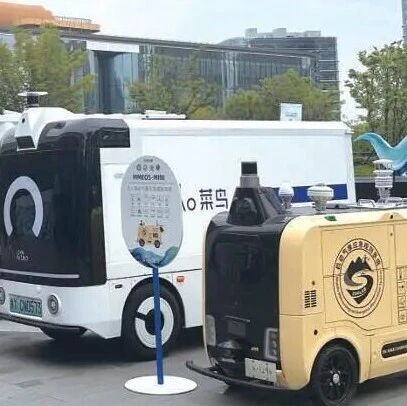
Core Viewpoint - The article discusses the rapid development and commercialization of unmanned delivery vehicles in China, driven by favorable policies, market demand, and decreasing costs, highlighting the strategic moves of various listed companies in this sector [6][12]. Industry Overview - The cost of last-mile delivery accounts for over 30% of total logistics costs, and with rising labor costs, the demand for unmanned delivery solutions is increasingly urgent [3][4]. - Recent policies have facilitated the deployment of unmanned vehicles in sectors such as pharmaceuticals, heavy goods delivery, and express logistics, leading to significant commercial achievements [4][6]. Policy Support - National policies have been introduced to support unmanned logistics vehicles, including the issuance of "pass licenses" and the gradual opening of road rights across provinces, laying a foundation for large-scale applications [6][12]. - By September 2025, over half of China's 3,600 districts and counties will support unmanned vehicles on the road, with ongoing expansion of policy support [6]. Market Demand - The explosion of market demand, particularly in the pharmaceutical sector, has driven the need for timely delivery, with traditional delivery methods failing to meet current requirements [6][14]. - The growth of the instant retail market has exacerbated the capacity shortage, necessitating technological solutions to address high logistics costs [4][14]. Cost Reduction - The cost of unmanned vehicles is rapidly decreasing, with prices dropping from over 1 million yuan in 2018 to below 20,000 yuan for the latest models [7]. - Key components such as lidar and cameras have seen significant price reductions, further enabling the scalability of unmanned vehicle applications [7]. Strategic Moves by Listed Companies - Companies like Desay SV and Youjia Innovation are entering the unmanned delivery vehicle market with differentiated strategies, focusing on low-speed unmanned vehicles and leveraging existing data for algorithm optimization [9][10]. - Desay SV's "Chuanxing Zhiyuan" brand has launched low-speed unmanned vehicles with innovative technologies, targeting high-demand markets such as instant delivery and urban logistics [9]. Commercialization Achievements - The collaboration between Zhongying Pharmaceutical Group and Cainiao has set a benchmark in pharmaceutical delivery, achieving a 50% reduction in delivery costs and a 70% increase in efficiency through unmanned vehicles [14]. - In the express delivery sector, unmanned vehicles have demonstrated a 70% cost reduction, with per-package costs dropping to 0.1 yuan [14]. Challenges Ahead - Despite rapid growth, the industry faces challenges related to system integration, balancing costs, performance, and development cycles [15]. - The potential for unmanned vehicles to replace traditional transport methods could lead to a market size of 207.1 billion yuan annually, with significant implications for the logistics industry [15].
物流无人车商业化提速 多方合力破解运输降本“最后一公里”
Zheng Quan Shi Bao· 2025-09-23 18:13
Core Insights - The demand for unmanned delivery is increasing due to rising labor costs, with last-mile delivery costs exceeding 30% of total logistics costs [1][2] - Government policies are facilitating the commercialization of unmanned vehicles, with over half of China's districts supporting their road usage by September 2025 [2][8] - The cost of unmanned vehicles is rapidly decreasing, making them more accessible for large-scale applications [3][4] Industry Acceleration - National policies have been introduced to support unmanned logistics vehicles, including the "Notice on Conducting Pilot Work for Intelligent Connected Vehicles" [2] - As of September 2025, over 1,900 out of 3,600 districts in China have allowed unmanned vehicles on the road, indicating a significant expansion of policy support [2] - The increasing demand for timely delivery in sectors like pharmaceuticals is driving the need for unmanned delivery solutions [2][7] Cost Reduction and Commercialization - The price of unmanned vehicles has dropped significantly, with some models now available for under 20,000 yuan, compared to over 1 million yuan in 2018 [3][4] - The supply chain for unmanned vehicles is becoming more cost-effective, with components like lidar and cameras seeing substantial price reductions [3] - The reduction in delivery costs is paving the way for broader commercialization of unmanned vehicles [4][8] Strategic Moves by Listed Companies - Companies like Desay SV and Youjia Innovation are entering the unmanned logistics market with differentiated strategies [4][5] - Desay SV launched its "Chuanxing Zhiyuan" brand, focusing on low-speed unmanned vehicles with innovative features [4] - Youjia Innovation's "Xiaozhu Unmanned Vehicle" is designed for logistics scenarios, leveraging data from previous operations for optimization [5][6] Commercial Success Stories - Partnerships between companies like Zhongying Pharmaceutical Group and Cainiao have demonstrated the effectiveness of unmanned delivery, achieving a 50% reduction in delivery costs and a 70% increase in efficiency [7] - In the express delivery sector, unmanned vehicles have reduced costs by 70%, with per-package costs dropping to 0.1 yuan [7] - By September 2025, Cainiao's unmanned vehicles are expected to cover 25 provinces and over 1,900 districts in China [7] Challenges and Future Outlook - The unmanned vehicle industry faces challenges related to system integration and balancing costs, performance, and cycles [8] - Low-speed unmanned vehicles can address last-mile delivery issues while also enhancing autonomous driving algorithms through data feedback [8] - The logistics unmanned vehicle market has the potential to replace 4.44 million commercial vehicles annually, with a corresponding market size of 207.1 billion yuan [8]