
太湖之星

Search documents
无锡水域总磷、总氮浓度首次双达Ⅲ类 创2007年以来最好水平
Xin Hua Ri Bao· 2026-01-19 00:21
Core Insights - The article highlights the significant ecological improvements in Taihu Lake, with a focus on the successful management and restoration efforts leading to increased biodiversity and improved water quality [1][3][6]. Group 1: Ecological Restoration and Biodiversity - Taihu Lake has seen a threefold increase in bird species over the past decade, with 243 species recorded, including 7 national first-class protected species and 32 second-class protected species [1]. - The comprehensive nutrient index of Taihu Lake's water in Wuxi has dropped to 51.5, and the biodiversity index has reached an "excellent" level, marking the best water quality since 2007 [1][3]. Group 2: Sediment Management - The "Taihu Star" and "Taihu Light" dredging platforms have processed 3 million cubic meters of sediment since their launch in March 2024, equivalent to removing the sediment from 3.2 standard swimming pools daily [2][3]. - Wuxi has completed over 5 million cubic meters of sediment removal in the past year, accounting for more than 70% of the total sediment removal in Taihu Lake since 2007 [3]. Group 3: Pollution Control and Wastewater Treatment - Wuxi has invested over 100 billion yuan annually in Taihu Lake management over the past four years, focusing on controlling pollution from industrial, domestic, and agricultural sources [5]. - The new underground wastewater treatment plant in Wuxi has a daily processing capacity of 100,000 tons, serving approximately 857,000 residents and over 500 enterprises [4]. Group 4: Integrated Water Management - Wuxi's river systems contribute about 85% of the inflow to Taihu Lake and bear approximately 75% of the pollution load, making them critical for both water supply and pollution control [6]. - By 2025, all 13 major rivers entering Taihu Lake are expected to achieve Class II water quality, a significant improvement from 8 rivers in 2024 [6]. Group 5: Community Engagement and Tourism - The reopening of the "Taihu Scenic" boat tours has attracted 2.97 million visitors in one year, showcasing the achievements in lake management and promoting regional tourism [7]. - The ongoing efforts in ecological restoration and pollution control have transformed Wuxi into a model for sustainable urban development, enhancing the quality of life for residents and visitors alike [7].
太湖上的“巧克力工厂”有多神奇?
Xin Lang Cai Jing· 2025-12-27 13:36
Core Viewpoint - The article highlights the significant advancements in the ecological governance of Taihu Lake, particularly through the introduction of innovative technologies like the "Taihu Light" platform, which aims to improve water quality and manage sediment effectively [1][3]. Group 1: Ecological Governance Achievements - In 2024, Taihu Lake's water quality is expected to reach Class III, marking the best level in 30 years and achieving national standards for good lakes for the first time [1]. - The "Taihu Light" platform, launched on August 15, 2025, is the world's first integrated ecological dredging platform, designed to process sediment efficiently [1][3]. Group 2: Technological Innovations - The "Taihu Light" consists of five vessels, including a dredging ship and a water treatment ship, capable of dredging up to 8,000 cubic meters per day, which is 1.6 times more efficient than its predecessor, the "Taihu Star" [5]. - The platform utilizes advanced composite water treatment technology, ensuring that treated water meets Class III surface water standards and can be directly discharged into the lake [5][8]. Group 3: Environmental Impact and Future Plans - The dredged sediment, referred to as "chocolate," can be used for wetland restoration and the production of eco-friendly building materials, contributing to environmental sustainability [5]. - Over the next six years, the "Taihu Light" is projected to complete over 10 million cubic meters of dredging, equivalent to reducing sediment by the volume of approximately 4,000 standard swimming pools [8].

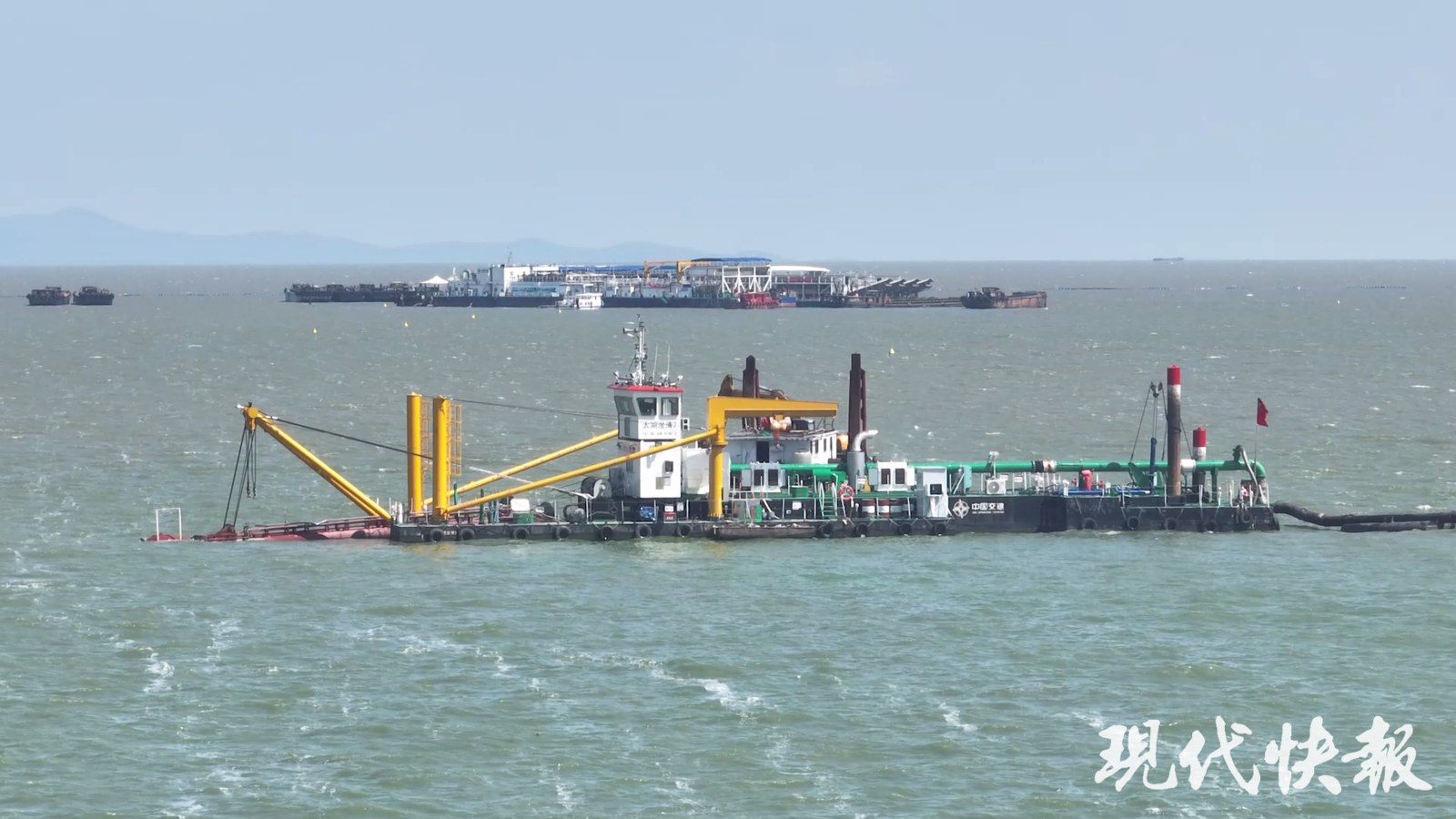
太湖上的“巧克力工厂”有多神奇?
Xin Lang Cai Jing· 2025-12-27 13:34
Core Viewpoint - The article highlights the significant advancements in the ecological governance of Taihu Lake, emphasizing the successful implementation of innovative technologies and reforms that have led to improved water quality and effective sediment management [1][7]. Group 1: Ecological Governance Achievements - In 2024, Taihu Lake's water quality is expected to reach Class III, marking the best level in 30 years and achieving national standards for good lakes for the first time [1][7]. - The "Taihu Light" project, which is a world-first integrated ecological dredging platform, is set to be fully operational by August 15, 2025, contributing to the lake's ecological restoration [1][5]. Group 2: Technological Innovations - The "Taihu Light" consists of five vessels, including a dredging ship and a water treatment ship, capable of dredging up to 8,000 cubic meters per day, which is 1.6 times more efficient than its predecessor, "Taihu Star" [5][7]. - The platform utilizes advanced composite water treatment technology, ensuring that treated water meets Class III surface water standards, allowing for direct discharge into the lake [5][8]. Group 3: Environmental Impact and Future Plans - The dredged sediment, referred to as "chocolate," is repurposed for wetland restoration and environmental construction materials, demonstrating a circular economy approach [5][7]. - Over the next six years, "Taihu Light" aims to complete over 10 million cubic meters of dredging, significantly reducing sediment accumulation in the lake [7].
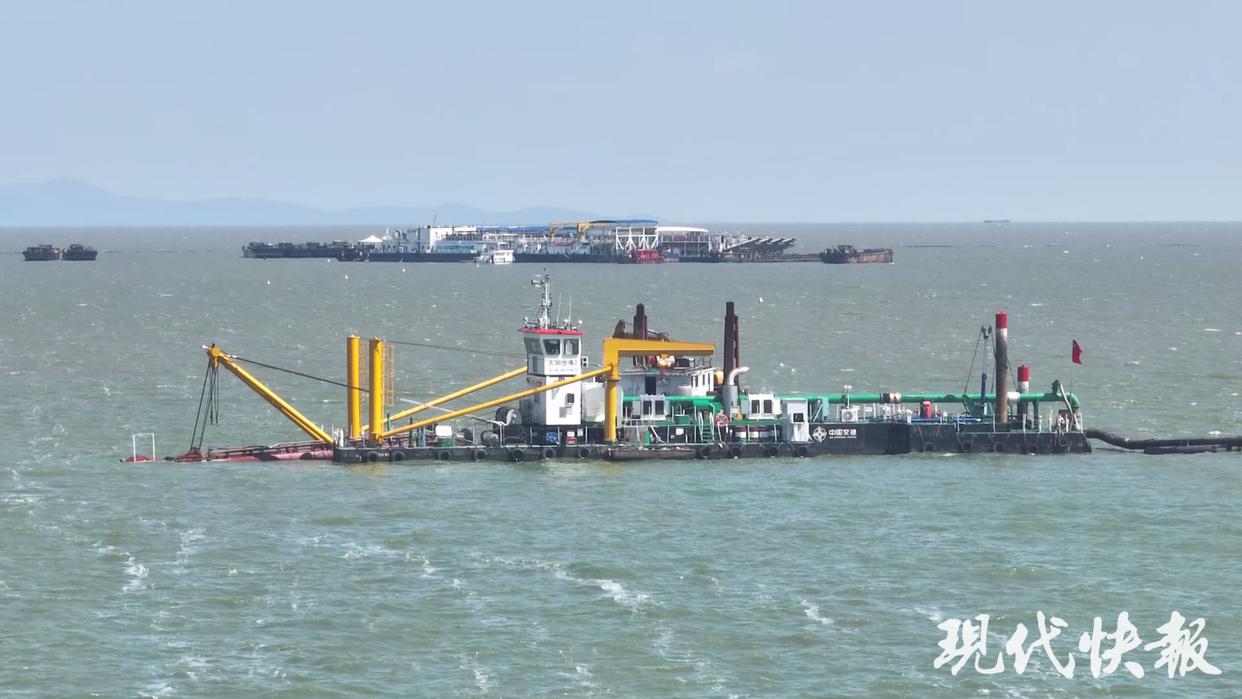
跟采太湖清淤船(产经观察)
Ren Min Ri Bao· 2025-09-10 22:13
Core Insights - The "Taihu Light" integrated dredging platform has been fully operational since August 15, 2023, and is expected to dredge over 10 million cubic meters in the next six years, equivalent to the sediment of approximately 4,000 standard swimming pools [4][9] - This platform is an upgraded version of the "Taihu Star," with a daily dredging capacity increased by 1.6 times [4][9] Dredging Operations - The platform consists of multiple connected vessels forming a "floating factory" that integrates dredging, screening, dewatering, and purification functions [5] - The dredging process involves the "Taihu Junqing 2" vessel using a suction head to remove sediment, which is then transported through a pipeline to the "Taihu Light 1" screening vessel [6][7] Water Treatment and Environmental Impact - The "Taihu Light" has achieved the goal of not occupying land for sediment and not discharging wastewater onto land, significantly reducing land use and enhancing ecological efficiency [9][10] - The platform's water treatment system can process wastewater onboard, achieving a total nitrogen content of less than 1 mg/L, which is much stricter than land-based treatment standards [10] Technological Innovations - The platform employs advanced technologies for stable connections between vessels, ensuring effective operation even in challenging weather conditions [11] - A centralized control system with over 300 sensors allows for real-time monitoring and operation by a single operator, enhancing efficiency [12] Industry Development and Collaboration - The development of the "Taihu Light" is supported by a collaborative effort among 12 core manufacturers across dredging, shipbuilding, and water treatment industries [14] - The platform represents a significant leap in domestic dredging technology, moving from reliance on imported equipment to leading in innovation and efficiency [13][14]
太湖治理再添重大装备 未来6年可清淤超千万立方米 跟采太湖清淤船(产经观察)
Ren Min Ri Bao· 2025-09-10 22:02
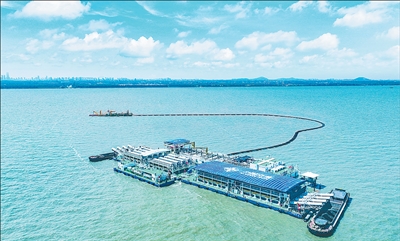
Core Insights - The "Taihu Light" has been fully put into operation, capable of dredging over 10 million cubic meters of sediment in the next six years, equivalent to the volume of approximately 4,000 standard swimming pools [1] - This upgraded platform enhances daily dredging capacity by 1.6 times compared to its predecessor, "Taihu Star" [1] Equipment and Operation - The dredging operation utilizes multiple vessels connected to form a "mobile factory" on water, integrating functions such as dredging, screening, dewatering, and purification [3] - The "Taihu Light" employs advanced technology for sediment removal, including a precise suction head and a dual-layer screening system to filter out impurities [4] - The platform's modular design allows for flexible deployment across different water bodies, enhancing its adaptability and reuse value [5][6] Technological Innovations - The "Taihu Light" achieves significant land-saving and ecological efficiency by ensuring that sediment does not occupy land and that treated water does not need to be discharged onshore [6][7] - The platform's water treatment capabilities are highly efficient, with a design that allows for a treatment area significantly smaller than traditional land-based facilities, while achieving superior water quality standards [7][8] - Advanced connection technologies ensure stable operation even in adverse weather conditions, with a new safety positioning system that minimizes vessel movement [8] Industry Development - The evolution of dredging technology in China has progressed from outdated methods to advanced, integrated solutions, with the "Taihu Light" representing a leap in capabilities [9][10] - The demand for effective sediment management in China's lakes and rivers has driven innovation, with the dredging capacity of new equipment significantly surpassing previous models [10][11] - A collaborative effort among 12 core manufacturers has facilitated the rapid development of the "Taihu Light," showcasing the strength of industrial synergy in advancing domestic dredging technology [11]
“太湖之光”全面投产——清淤利器开创河湖治理新模式
Ke Ji Ri Bao· 2025-08-21 08:13
Core Viewpoint - The article highlights the launch of "Taihu Light," an innovative integrated ecological dredging platform developed by China Communications Tianjin Navigation Bureau, which aims to address sediment issues in Taihu Lake without occupying land or negatively impacting the environment [1][2][3] Group 1: Company Overview - China Communications Tianjin Navigation Bureau has independently designed and developed the world's first ecological dredging platform, "Taihu Light," which officially commenced full production on August 15 [1] - The company faced significant challenges in developing this technology, as there were no existing precedents for an integrated dredging platform [2] Group 2: Technology and Innovation - "Taihu Light" utilizes advanced technologies, including the V-MBR (Vibrating Membrane Bioreactor) for efficient water treatment, allowing for the processing of sediment and wastewater entirely on the platform [3] - The platform is equipped with 15,000 sensors for intelligent operation, enabling real-time monitoring and adjustment of treatment parameters [3] Group 3: Environmental Impact - The platform addresses the long-standing issue of nutrient-rich sediment in Taihu Lake, which poses a threat to water quality despite improvements in recent years [1] - The innovative dredging method ensures that sediment does not occupy land and that treated wastewater meets surface water quality standards for direct discharge into the lake [3]
参展商满意度达95%!链博会持续筑牢韧性供应链生态
Zhong Guo Jing Ji Wang· 2025-07-21 04:52
Core Insights - The China International Supply Chain Promotion Expo (Chain Expo) is the world's first national-level exhibition focused on supply chains, showcasing various industries and emphasizing the core value of "linking the world and co-creating the future" [1] Group 1: Industry Collaboration and Innovation - The Chain Expo serves as a high-end platform for global enterprises to collaborate, aiming to create a more open, efficient, and sustainable supply chain ecosystem [2] - YTO Express's chairman highlighted the Expo's role in enhancing connectivity among upstream and downstream enterprises, promoting a "win-win chain" [2] - Sinopec showcased its commitment to clean energy supply chains, focusing on natural gas, hydrogen, and other sustainable energy sources, and signed cooperation agreements with nearly 50 companies in the hydrogen sector [3] Group 2: Technological Advancements - Numerous companies presented cutting-edge technologies and smart solutions at the Expo, demonstrating innovation in the supply chain sector [3] - Ninebot showcased 10 models of short-distance transportation and service robots, emphasizing its full industry chain layout in smart mobility [3] - Inner Mongolia Jishuo Technology introduced a leading "rumen capsule" technology for real-time livestock health monitoring, breaking foreign monopolies and enhancing domestic livestock farming [3] Group 3: Infrastructure and Equipment - China Communications Construction Group displayed major infrastructure projects, including Asia's largest self-propelled dredging vessel, enhancing global industrial chain collaboration [4] Group 4: Cross-Industry Synergy - CITIC Group presented its comprehensive service capabilities across various sectors, aiming to be a "bridge linking the world" [5] - China Resources Group showcased its strategic layout in health, green agriculture, and clean energy, with over 270,000 supply chain enterprises participating in its procurement activities [5] Group 5: Global Supply Chain Dynamics - Tsingtao Brewery emphasized the importance of global supply chain connectivity, leveraging smart cold chain logistics for product freshness [6] - APP (Asia Pulp & Paper) highlighted its role in cross-border industrial chains and ecological innovation, aiming to deepen international cooperation in the supply chain [6] Group 6: Future Outlook - The Chain Expo has evolved into a significant platform for global industrial chain cooperation, promoting a shift from product competition to collaborative ecosystem building [7] - Participating companies believe the Expo enhances technological matchmaking and market expansion, contributing to the resilience and sustainability of global supply chains [7]
太湖水之变磨砺三十年,水质从Ⅴ类提升到全湖Ⅲ类,恢复到良好标准
Zhong Guo Huan Jing Bao· 2025-06-25 02:46
Core Viewpoint - The article discusses the long-term efforts and challenges in the ecological restoration and pollution control of Taihu Lake, highlighting the transition from severe pollution to improved water quality over 30 years, with a focus on collaborative governance and innovative solutions to address the complex pollution issues [1][4][19]. Group 1: Water Quality Improvement - Taihu Lake's water quality has improved from Class V to Class III over 30 years, establishing itself as a benchmark for large lake nutrient management internationally [1]. - The average depth of Taihu Lake is 1.9 meters, making it a shallow lake with limited self-purification capacity, which complicates pollution management [2][3]. - In 2022, the population in the Taihu basin accounted for 4.8% of the national total, and the regional GDP represented 9.8% of the national GDP, indicating significant economic activity in the area [3]. Group 2: Pollution Sources and Challenges - The shallow nature of Taihu Lake allows sunlight to reach the bottom, promoting blue-green algae growth, which is exacerbated by industrial pollution and urbanization in the surrounding areas [2][3]. - The 2007 blue-green algae outbreak highlighted the complexity of pollution sources, leading to a shift in focus from ecological restoration to source control and pollution interception [4][6]. - The Taihu basin has faced severe pollution, with 67% of monitored points classified as inferior Class V water quality, indicating a critical need for effective pollution control measures [3]. Group 3: Governance and Collaborative Efforts - The governance of Taihu Lake has evolved from fragmented management to a more coordinated approach, with the establishment of inter-agency collaboration and joint initiatives among cities [15][16]. - The introduction of the Taihu Lake water pollution prevention office in 2009 marked a significant step towards unified management of water quality across different jurisdictions [16]. - Recent initiatives include the establishment of cross-regional cooperation mechanisms and joint law enforcement efforts to tackle pollution effectively [17][18]. Group 4: Economic Transformation and Sustainable Development - The shift from high-pollution industries to green, low-carbon economic models is crucial for the sustainable development of the Taihu region, with significant reductions in polluting industries [12][13]. - The transformation of Zhou Tie Town from a chemical industry hub to an eco-friendly area demonstrates the potential for economic growth while prioritizing environmental protection [12][13]. - By 2024, the region has seen a stable GDP growth rate while improving water quality, showcasing a successful model of balancing economic development with ecological sustainability [14].