
绿色生产生活方式

Search documents
创意图解:建设美丽中国,如何推动全面绿色转型?
Xin Lang Cai Jing· 2026-01-22 13:01
Group 1 - The article discusses the significant progress in ecological restoration in China, highlighting that by the end of November 2026, 21 counties in the Taklamakan Desert region have achieved an additional afforestation area of 8.3822 million acres [1] - It emphasizes the implementation of major ecological protection and restoration projects, which enhance the diversity, stability, and sustainability of the ecosystem [1] - The article outlines the promotion of a green production and lifestyle, integrating ecological concepts into economic and social development across various sectors [1] Group 2 - Specific measures include the establishment of ecological environment zoning management systems, which have been implemented in over 40,000 areas [1] - The article mentions the commitment to adjust industrial structures, pollution control, and ecological protection as part of the "14th Five-Year Plan" to build a beautiful China that coexists harmoniously with nature [1] - It highlights the importance of the concept that "lucid waters and lush mountains are invaluable assets" in guiding various industries and regions towards sustainable development [1]


协同发力形成绿色生产生活方式
Xin Lang Cai Jing· 2026-01-18 22:33
Core Viewpoint - The article emphasizes the importance of accelerating the formation of green production and lifestyle as a means to enhance the quality of life and promote sustainable economic development in Heilongjiang Province [1][3]. Group 1: Green Production and Lifestyle - Green production is defined as a production model focused on technological innovation, energy conservation, and carbon reduction, aiming for efficient resource utilization and sustainable environmental development [1][2]. - Green lifestyle reflects a profound change in people's consumption behaviors and social participation, promoting a green and low-carbon attitude in daily life, such as waste sorting and choosing green products [1][2]. Group 2: Interrelationship Between Green Production and Lifestyle - Green production provides the material basis and technical support for green lifestyles, making green products and services possible [2]. - Conversely, green lifestyles exert market pressure on production, encouraging enterprises to accelerate their green transformation, creating a virtuous cycle that integrates production, circulation, and consumption systems [2]. Group 3: Significance of Green Production and Lifestyle - Green development is a crucial part of the new development concept, promoting harmony between humans and nature, which is a distinctive feature of Chinese modernization [3]. - The transformation towards green lifestyles is essential for ecological civilization and the construction of a beautiful Heilongjiang, requiring public participation to enhance ecological awareness [3]. Group 4: Comprehensive Promotion of Green Development - To promote green development in Heilongjiang, it is necessary to integrate green and low-carbon concepts into all aspects of economic and social development, with a focus on systematically constructing green production and lifestyle [4]. - Continuous education and public awareness campaigns are essential to transform macro policy guidance into individual and community recognition of green values [4]. Group 5: Encouraging Green Consumption - Promoting sustainable green consumption can effectively drive the green transformation of production, with initiatives such as advocating for energy-saving and environmentally friendly consumption behaviors [5]. - Collaboration between government and enterprises is crucial to expand the supply of green products and services, utilizing subsidies and tax incentives to stimulate green consumption [5]. Group 6: Institutional Support for Green Development - Strengthening the institutional framework for green production and lifestyle is vital, including implementing strict environmental protection responsibilities and developing a robust support system for green innovation [5]. - Optimizing industrial structure and accelerating the development of green industries will facilitate low-carbon circular development, supported by market mechanisms that reward green practices [5].
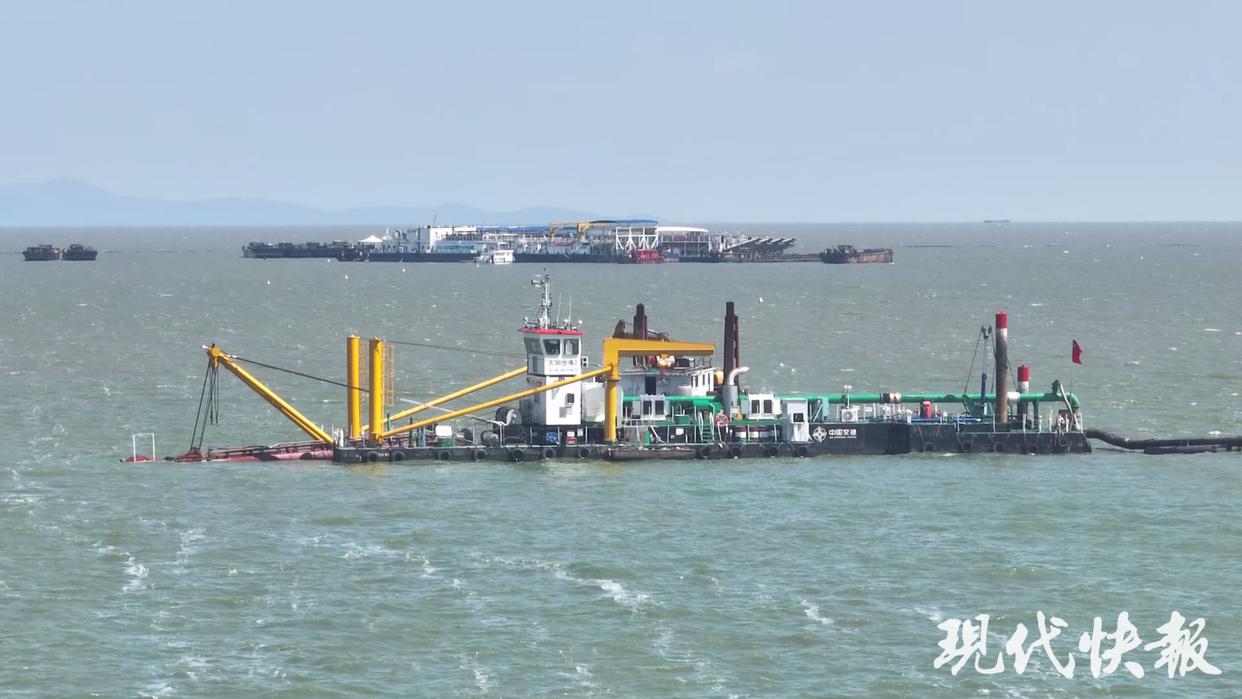
太湖上的“巧克力工厂”有多神奇?
Xin Lang Cai Jing· 2025-12-27 13:34
Core Viewpoint - The article highlights the significant advancements in the ecological governance of Taihu Lake, emphasizing the successful implementation of innovative technologies and reforms that have led to improved water quality and effective sediment management [1][7]. Group 1: Ecological Governance Achievements - In 2024, Taihu Lake's water quality is expected to reach Class III, marking the best level in 30 years and achieving national standards for good lakes for the first time [1][7]. - The "Taihu Light" project, which is a world-first integrated ecological dredging platform, is set to be fully operational by August 15, 2025, contributing to the lake's ecological restoration [1][5]. Group 2: Technological Innovations - The "Taihu Light" consists of five vessels, including a dredging ship and a water treatment ship, capable of dredging up to 8,000 cubic meters per day, which is 1.6 times more efficient than its predecessor, "Taihu Star" [5][7]. - The platform utilizes advanced composite water treatment technology, ensuring that treated water meets Class III surface water standards, allowing for direct discharge into the lake [5][8]. Group 3: Environmental Impact and Future Plans - The dredged sediment, referred to as "chocolate," is repurposed for wetland restoration and environmental construction materials, demonstrating a circular economy approach [5][7]. - Over the next six years, "Taihu Light" aims to complete over 10 million cubic meters of dredging, significantly reducing sediment accumulation in the lake [7].
中国学者答巴西友人:展望“十五五”,如何以科技创新推动高质量发展?| 问答中国
Zhong Guo Xin Wen Wang· 2025-12-17 06:23
Group 1 - The core viewpoint of the article emphasizes the importance of integrating empathy, altruism, and human-centered approaches into technological development during China's "14th Five-Year Plan" period [1][2] - The "14th Five-Year Plan" aims to significantly enhance China's level of technological self-reliance and strength, signaling a commitment to open cooperation and mutual benefit in technological advancements [2] - The plan highlights the principle of high-quality development, advocating for a new development philosophy that promotes sustainable economic growth and comprehensive social progress [2] Group 2 - The "14th Five-Year Plan" includes initiatives for green manufacturing, the establishment of emerging pillar industries, and the construction of a beautiful China, reflecting China's emphasis on green production and lifestyle [2] - The five development concepts of "innovation, coordination, green, openness, and sharing" are expected to inject strong momentum into China's high-quality economic development and contribute to global sustainable development [2] - The plan outlines a clear development strategy that aims to create a win-win situation through high-level opening up and cooperation in technological development [2]
共青团中央青年讲师团赴黑龙江、江苏、福建、陕西开展党的二十届四中全会精神宣讲
Zhong Guo Qing Nian Bao· 2025-11-26 23:52
Core Points - The article discusses the organization of a series of youth lectures by the Communist Youth League Central Committee, focusing on the spirit of the 20th National Congress of the Communist Party of China and the "14th Five-Year Plan" achievements, as well as the vision for the "15th Five-Year Plan" [1] Group 1 - The youth lectures are being held in various provinces including Heilongjiang, Jiangsu, Fujian, and Shaanxi, with themes centered around youth responsibility and contributions to national development [1][2][3][4] - In Heilongjiang, over 400 participants engaged in discussions about technological advancements named after traditional Chinese cultural elements, emphasizing the importance of high-level technological self-reliance [2] - In Jiangsu, interactive sessions encouraged youth to explore the application of party policies in their daily lives, highlighting local development stories and technological innovations in sports [2] Group 2 - In Fujian, the lectures focused on integrating green development into everyday life, with examples such as shared bicycles and low-carbon delivery services, resonating with local youth [3] - In Shaanxi, discussions included the significance of national security in modern technology, with examples of local achievements in digital preservation and the application of various academic disciplines in national development [4] - The overall initiative aims to instill a sense of responsibility among youth, encouraging them to align their personal growth with national development goals [4]

让绿色生产生活蔚然成风
Jing Ji Ri Bao· 2025-11-11 00:10
Core Viewpoint - The formation of a green production and lifestyle is a crucial initiative proposed by the 20th Central Committee to promote comprehensive green transformation in economic and social development, contributing to the construction of a beautiful China [1] Group 1: Green Production - Since the 14th Five-Year Plan, China's energy structure has been continuously optimized, with renewable energy generation capacity reaching historic highs, making wind and solar power generation capacity and output rank first in the world [1] - The optimization of industrial layout and technological upgrades in green production aims to reduce resource consumption and pollution emissions from the supply side [1] Group 2: Green Lifestyle - The promotion of a green lifestyle is essential for driving production changes through shifts in consumption patterns and public participation, forming a mutually reinforcing relationship with green production [1] - The coverage and resource utilization rates of urban household waste classification have significantly improved nationwide [1] Group 3: Challenges and Shortcomings - The production side still faces structural contradictions, with high-energy-consuming industries like steel, cement, and chemicals remaining dominant, and many enterprises are reluctant or unable to transition to greener practices [2] - On the consumption side, public awareness and acceptance of green products need improvement, as high premiums and inconsistent standards hinder consumer willingness [2] Group 4: Systematic and Intelligent Green Transition - To promote a widespread green production and lifestyle, it is essential to systematize, industrialize, and digitize the green transition, integrating green development into industrial planning [2] - The establishment of zero-carbon industrial parks and the promotion of green energy supply models are crucial for making green standards a prerequisite for industrial entry [2] Group 5: Policy and Responsibility - It is necessary to strengthen the responsibility of enterprises and stimulate their internal motivation through a balanced approach of constraints and incentives, including financial subsidies and tax reductions for green technological upgrades [3] - Building a green supply chain system and leveraging leading enterprises to set green procurement standards can drive collaborative emission reductions across the supply chain [3] Group 6: Cultivating Green Consumption Culture - Fostering a green consumption culture and enhancing public awareness through initiatives like "carbon credits" for low-carbon behaviors can make green actions tangible and rewarding [3] - Public education and campaigns such as "Green Life into Thousands of Homes" and "National Low Carbon Day" are essential for internalizing and externalizing a green lifestyle [3]
加快全面绿色转型 产业如何做好“加减法”?
Ren Min Wang· 2025-11-01 09:17
Core Viewpoint - Green development is a prominent feature of Chinese modernization, emphasizing the need for a comprehensive green transformation in economic and social development as outlined in the 15th Five-Year Plan proposal by the Central Committee of the Communist Party of China [1][3]. Group 1: Pollution Prevention and Ecological Optimization - The focus is on environmental protection for the public, implementing precise and scientific pollution control, emphasizing source governance, and enhancing collaborative efforts in reducing pollution and carbon emissions [5]. - There is a commitment to a comprehensive approach to protect and manage ecosystems, including biodiversity conservation and large-scale afforestation initiatives [6]. Group 2: New Energy System Construction - The plan aims to increase the proportion of renewable energy supply, ensuring a safe and orderly transition from fossil fuels, and building a robust new power system [7]. - The strategy includes a multi-energy approach, integrating wind, solar, water, and nuclear energy, while promoting high-quality development of clean energy [7]. Group 3: Carbon Peak Achievement - The implementation of a dual control system for total carbon emissions and intensity is a key focus, alongside promoting energy-saving and carbon-reduction transformations [8][9]. Group 4: Green Production and Lifestyle Formation - The initiative aims to advance ecological environment zoning and control, optimizing industrial layout in collaboration with national spatial planning [13]. - There is a push for green and low-carbon transformations in key sectors such as industry, urban construction, and transportation [13].
如何让更多绿电穿越山海、点亮万家灯火?
Jing Ji Ri Bao· 2025-10-31 23:29
Core Viewpoint - The construction of a new energy system is essential for achieving carbon peak and carbon neutrality goals, with a focus on developing clean energy sources and reducing reliance on fossil fuels [1][5] Group 1: New Energy System Development - The new energy system aims to create a modern energy system dominated by non-fossil energy, ensuring energy security and facilitating a low-carbon transition [1][2] - By the end of the 14th Five-Year Plan, most new electricity demand will be met by increased clean energy generation [1] - The introduction of the Energy Law in 2024 provides a legal framework for the construction of the new energy system and new power systems [1] Group 2: Clean Energy Expansion - There is a need to significantly develop non-fossil energy sources, including wind, solar, hydro, and nuclear power, to enhance the clean energy portfolio [3] - The transition period requires the clean and efficient use of fossil fuels, with coal power being transformed into a flexible and stable energy source to support renewable energy [3] Group 3: Infrastructure and Technology - The establishment of a new power system requires the construction of high-capacity transmission lines and smart grid technologies to ensure efficient distribution and utilization of green electricity [4] - The integration of distributed energy resources will enable households and businesses to participate actively in energy production and consumption, fostering a green lifestyle [4] Group 4: Socioeconomic Impact - The shift to green energy will serve as a new engine for high-quality economic development, reducing production costs for businesses and enhancing competitiveness in international trade [4] - The transition to a new energy system is a comprehensive response to the aspirations for high-quality development, energy security, and improved living standards [5]
关于绿色发展,“十五五”时期的三个“加快”意味着什么
2 1 Shi Ji Jing Ji Bao Dao· 2025-10-24 23:28
Core Points - The central committee of the Communist Party of China emphasizes accelerating the comprehensive green transformation of economic and social development to build a beautiful China, guided by the goals of carbon peak and carbon neutrality [1][2][3] Group 1: Green Transformation Initiatives - The meeting proposed four key measures to accelerate green transformation: implementing a dual control system for carbon emissions, transitioning to a green low-carbon energy system, transforming the industrial structure towards green low-carbon, and promoting green low-carbon lifestyles [1][3][11] - By the end of the 14th Five-Year Plan, the majority of new electricity demand will be met by new clean energy generation, focusing on developing non-fossil energy and enhancing the efficiency of fossil energy use [3][4][6] Group 2: New Energy System Development - The construction of a new energy system is entering a systematic phase, with a focus on non-fossil energy as the main supply and fossil energy as a backup, supported by a new power system [6][7][8] - The new energy system aims to enhance energy security, economic viability, and technological innovation, with a target for non-fossil energy to account for over 80% by 2060 [8][12] Group 3: Green Production and Lifestyle - The report highlights the need for a shift towards green production and lifestyle, which will involve short-term investments in low-emission technologies and long-term benefits through reduced energy consumption and waste [9][10] - Consumers will see an increase in the availability of green products, supported by policies that lower purchase costs and promote sustainable consumption practices [10][11] Group 4: Carbon Peak and Neutrality Goals - The period leading up to 2030 is critical for achieving the carbon peak goal, with a focus on establishing a dual control system for carbon emissions and enhancing the national innovation system for green technologies [11][12][13] - The transition from energy consumption control to precise carbon emission control is essential for optimizing energy structure and achieving carbon reduction targets [12][13]