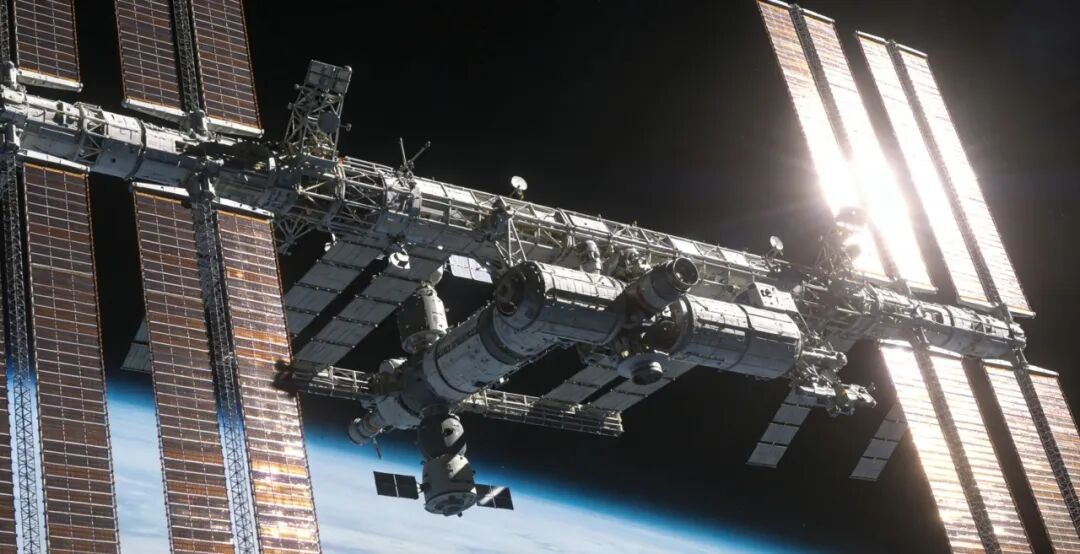
太空光伏电站

Search documents
太空光伏,未来最具确定性的25家公司
Sou Hu Cai Jing· 2026-02-27 13:45
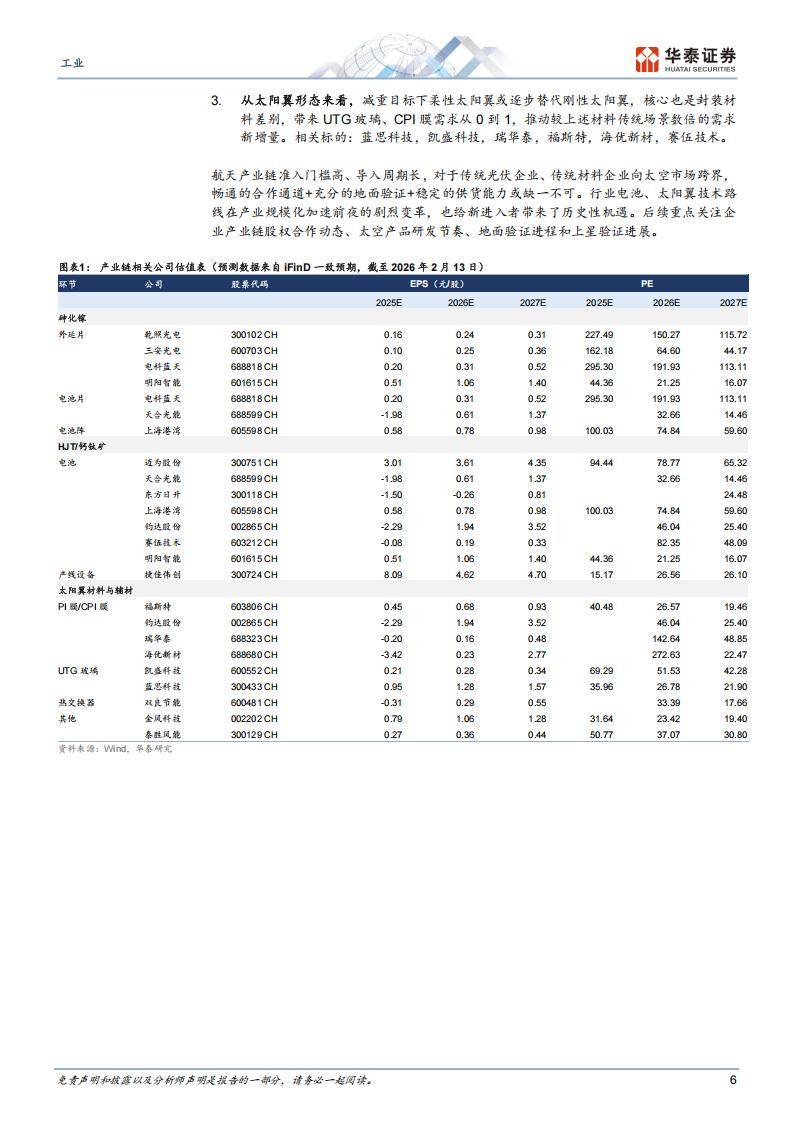
Group 1 - The deployment of over 200,000 satellites by China and 1 million by SpaceX indicates a significant shift in the satellite internet landscape, moving from communication functions to space-based computing capabilities [1][2] - The low Earth orbit (LEO) satellite market is transitioning from tens of megawatts to hundreds of megawatts and even gigawatts, with energy supply becoming a critical bottleneck for space asset expansion [1][2] - Space solar power (SSP) is emerging as a key area of focus, with two main scenarios: space-to-space (S2S) and space-to-earth (S2E) power supply [1][4] Group 2 - The demand for space-based computing is expected to reach 100 gigawatts annually, driven by the exponential growth of artificial intelligence applications [2][34] - The advantages of space-based computing include unlimited solar energy and reduced hidden costs compared to ground-based data centers, which face land and energy consumption challenges [2][34] - The theoretical solar constant in space is approximately 1367 watts per square meter, significantly higher than ground levels, providing a stable energy source for space applications [2][34] Group 3 - Current space solar applications focus on providing power to various spacecraft, with the power requirements of satellites increasing from hundreds of watts to kilowatts and even megawatts [3][4] - High-efficiency, radiation-resistant, and lightweight battery technologies are becoming essential, with triple-junction gallium arsenide batteries leading the market due to their high conversion efficiency [3][4] - Flexible solar arrays are gradually replacing traditional rigid panels, offering better power-to-weight ratios and space-saving advantages during launch [3][4] Group 4 - The concept of space power stations (SPS) aims to collect solar energy in geostationary orbit and transmit it to Earth, potentially providing a continuous clean energy source [4][5] - China plans to validate megawatt-level experimental systems in orbit by around 2030 and achieve gigawatt-level commercial operation by 2035 [4][5] - Two main transmission methods are being explored: microwave transmission, which has high efficiency but requires large ground antennas, and laser transmission, which has high energy density but is affected by weather conditions [4][5] Group 5 - The evolution of efficient photovoltaic batteries is critical, with traditional silicon batteries being replaced by triple-junction gallium arsenide batteries and next-generation perovskite batteries showing promise for space applications [6][10] - Perovskite batteries exhibit high power-to-weight ratios and lower production costs, with ongoing research aimed at improving their radiation resistance [6][10] Group 6 - Wireless power transmission (WPT) is a crucial component of the space solar power chain, requiring advanced technologies for precise energy focusing and beam control [7][9] - Current research focuses on the 2.45 GHz and 5.8 GHz frequency bands, balancing atmospheric attenuation and equipment size [7][9] Group 7 - The space solar power industry chain is extensive, involving upstream materials, midstream battery components, and downstream system integration and launch services [8][9] - Upstream materials include high-purity gallium and arsenic, while midstream involves battery production and power management systems, which require high reliability [8][9] Group 8 - Chinese companies have a competitive advantage in both the photovoltaic and aerospace sectors, with strong synergies emerging from their integration [10][11] - Companies like Longi and Qianzhao are leading in high-efficiency silicon battery technology, while institutions like the Aerospace Fifth Academy have extensive experience in space power systems [10][11] Group 9 - The space solar power sector faces challenges such as heat dissipation in vacuum environments and structural integrity under mechanical stress [11][12] - The increasing risk of space debris poses a significant threat to the safety of space solar power stations, necessitating research into self-repairing structures [11][12] Group 10 - The historical context of energy transformation suggests that space solar power could play a pivotal role in humanity's transition to interstellar civilization [12][13] - As technologies mature, the commercial model for space solar power is expected to shift from government-led initiatives to market-driven approaches, fostering the emergence of competitive aerospace energy giants [12][13]

马斯克画的“太空光伏”饼,又要被东大实现了
3 6 Ke· 2026-02-09 03:38
Core Viewpoint - The article discusses Elon Musk's ambitious plans for space solar power, highlighting its potential as a key component of a broader energy strategy for humanity's multi-planetary future [5][15]. Group A: Space Solar Power Concept - Musk aims to build giant solar power stations in space, which will include massive computing centers and the capability to wirelessly transmit excess energy back to Earth [3][5]. - The concept of space solar power is part of a larger vision that includes a network of Starlink satellites, the Starship spacecraft, and plans for Mars colonization [5][12]. Group B: Advantages of Space Solar Power - Space solar power systems can operate continuously without the interruptions caused by Earth's day-night cycle and weather, achieving effective generation times significantly higher than on Earth [8]. - The solar energy density in space is over 1.5 times that on Earth, allowing for lighter and more durable solar panels with a lifespan of up to 20 years [8][12]. - The decreasing costs of launching materials into space due to advancements in reusable rocket technology make deploying solar power systems in space increasingly feasible [8][12]. Group C: China's Role in Solar Technology - China's solar industry is characterized by intense competition, leading to significant advancements in technology, including ultra-thin flexible solar panels and high-efficiency multi-junction solar cells [10][12]. - The country has developed a complete supply chain for solar technology, making it a leader in the field and a critical partner for Musk's space solar power ambitions [10][12]. Group D: Resource Acquisition for Space Solar Power - The Chinese space agency is exploring technologies for resource extraction from asteroids and the Moon, which could provide materials for building solar arrays in space [12][14]. - This approach aims to reduce reliance on Earth-sourced materials and costs, enabling a sustainable model for space infrastructure development [14][15]. Group E: Potential Collaboration - Musk's strategy may involve partnerships with Chinese companies to leverage their advanced solar technology and manufacturing capabilities for space solar power projects [15]. - Such collaborations could transform the energy supply landscape in space, similar to how Tesla revolutionized the electric vehicle industry [15].
马斯克考察引爆“太空光伏”万亿想象空间!卫星产业ETF(159218)年内吸金超28亿
Sou Hu Cai Jing· 2026-02-05 01:43
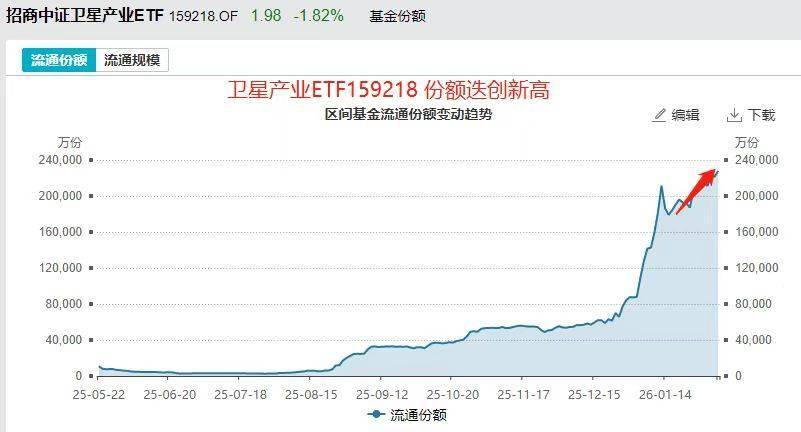
Core Insights - Elon Musk's team is secretly exploring Chinese heterojunction and perovskite photovoltaic companies, indicating a strategic move in the market [1][3] - The satellite industry ETF (159218) has seen significant inflows, with over 100 million yuan raised in a single day and a cumulative net inflow exceeding 2.83 billion yuan since the beginning of the year, marking a 159.75% increase in fund shares [1] Industry Analysis - Musk's actions are viewed as more than just supply chain assessments; they are seen as essential steps in his grand "space economy" vision [3] - The prediction that space AI computing will become the lowest-cost option within 2-3 years aligns with plans to achieve annual orbital launch capabilities of hundreds of gigawatts through the "Starship" [3] - The integration of efficient, lightweight space photovoltaic power stations with powerful on-orbit AI data centers is considered the ultimate form of achieving Musk's vision [3] - This strategic groundwork for "space energy + space computing" networks significantly enhances the long-term narrative of the satellite industry [3] - The satellite industry ETF (159218) encompasses the entire industry chain, from rocket launches and satellite platform manufacturing to potential future applications in space energy and computing [3] - The sustained inflow of long-term capital during market fluctuations indicates that investors are backing a theme validated by actions from leading global entrepreneurs, focusing on a certain future trajectory [3]