太空光伏能源

Search documents
概念股暴涨后遇冷!马斯克带火的“太空光伏”,前景几何?谁已入局?
Da Zhong Ri Bao· 2026-02-05 10:30
Core Viewpoint - The recent surge and subsequent decline in the space photovoltaic concept stocks were triggered by news of Elon Musk's team conducting research on solar energy companies, raising questions about the viability and market potential of space photovoltaics [1][2][3]. Group 1: Market Reaction - On February 4, space photovoltaic concept stocks experienced significant gains, with companies like Zhonglai Co. hitting a 20% limit up, while others like Guosheng Technology saw consecutive gains [3]. - Following the initial excitement, by February 5, the Wind Space Photovoltaic Index dropped by 4.86%, with several stocks, including Junda Co. and Jincheng Co., hitting their daily limit down [4]. Group 2: Company Responses - Multiple companies, including TCL Zhonghuan and Jinko Solar, confirmed interactions with Musk's team but clarified that no formal agreements or collaborations had been established [2][3]. - Jinko Solar stated that while they had contact with Musk's team, they had not signed any contracts or received orders related to space photovoltaics [3]. Group 3: Industry Insights - The concept of space photovoltaics involves harnessing solar energy in outer space and transmitting it back to Earth, which is seen as a potential solution for energy supply in commercial space endeavors [8]. - Industry experts, including the Secretary-General of the China Photovoltaic Industry Association, indicated that space photovoltaic technology is still in the exploratory phase, with significant uncertainties regarding its commercialization [3][8]. - The Ministry of Industry and Information Technology emphasized the need for high standards and quality regulation in the photovoltaic industry, aiming to address challenges such as supply-demand mismatches and promote innovation [8]. Group 4: Future Outlook - Analysts from Zhongyuan Securities noted that space photovoltaics are currently in the early stages, requiring validation across various technical and economic dimensions for large-scale commercial application [9]. - Huaxi Securities highlighted that emerging applications in space photovoltaics could drive growth across the entire photovoltaic industry, benefiting equipment, materials, and battery manufacturers [9].







"太空光伏"概念走热,部分企业触发交易异常,业内: 目前仍处于0到1阶段
Di Yi Cai Jing· 2026-02-02 07:45
Core Viewpoint - The "space photovoltaic" concept has become a major focus in the secondary market, significantly influenced by Tesla CEO Elon Musk's endorsements, with the relevant index rising 19.83% in the past month, outperforming the CSI 300 index's 1.18% increase [1] Group 1: Market Performance - The space photovoltaic concept index has seen a substantial increase, with notable stocks such as JunDa Co., Ltd. rising by 84.62%, Mingyang Smart Energy increasing by 60.22%, and Jiejia Weichuang up by 44.04% over the past 20 days [1] - Several photovoltaic companies have experienced significant stock price surges, triggering trading anomalies, with stocks like Dongfang Risen and Laplace exceeding a cumulative price deviation of 30% over multiple trading days [3] Group 2: Technology and Feasibility - Space photovoltaic energy involves utilizing solar photovoltaic technology in outer space to generate and supply energy, with the potential for direct power transmission to Earth or powering satellites and space stations [3] - The feasibility of space photovoltaic technology is supported by the abundant sunlight in space and the ability to deploy photovoltaic components on satellites, with near-Earth orbit satellites experiencing over 60% sunlight exposure [3] - Despite the market enthusiasm, the industry faces significant uncertainties regarding the maturity and long-term reliability of the technology, as well as the economic viability required for large-scale commercialization [4][5] Group 3: Industry Insights - Industry insiders indicate that the application scenarios for space photovoltaic technology are still in the exploratory phase, with many companies in the secondary market not yet supplying products to commercial space satellite companies [4] - Analysts emphasize that space photovoltaic technology is currently in the early stages, requiring validation of technical routes and economic benefits for large-scale commercial applications [5] - The current cost of space photovoltaic energy is estimated to be around $2-3 per kilowatt-hour, significantly higher than ground photovoltaic costs of $0.03-0.05 per kilowatt-hour, highlighting the economic challenges ahead [6] Group 4: Future Outlook - Companies like Trina Solar and HaiMuxing express optimism about the future of space photovoltaic technology, with ongoing collaborations with leading aerospace institutions to accumulate practical experience [6] - The commercial viability of space photovoltaic technology is projected to gradually materialize over the next 10 to 15 years, driven by decreasing launch costs and breakthroughs in battery technology [7]




“太空光伏”概念走热,业内:目前仍处于0到1阶段
Di Yi Cai Jing Zi Xun· 2026-01-30 13:27
Core Insights - The "space photovoltaic" concept has gained significant attention in the secondary market, largely influenced by Tesla CEO Elon Musk's endorsements [2] - The Wind Space Photovoltaic Index has risen by 19.83% over the past month, outperforming the Shanghai and Shenzhen 300 Index, which increased by 1.18% [2] - Several photovoltaic companies have experienced substantial stock price increases, with JunDa Co., Ltd. rising by 84.62% and Mingyang Smart Energy increasing by 60.22% in the last 20 days [2] Market Performance - The stock prices of companies like Dongfang Risen and Laplace have shown abnormal fluctuations, with price deviations exceeding 30% over consecutive trading days [3] - The space photovoltaic sector is characterized by its potential to harness solar energy in outer space, providing power to satellites and space stations [3] Industry Challenges - Despite the market enthusiasm, the commercialization of space photovoltaics faces significant uncertainties related to technology maturity and economic viability [4] - Industry insiders indicate that the application scenarios for space photovoltaics are still in the exploratory phase, with many companies not yet supplying products to commercial satellite firms [4] Technological Considerations - Current leading materials for space photovoltaics include gallium arsenide, which is costly at approximately 1000 RMB per watt, and perovskite, which faces stability issues in extreme space conditions [5] - The cost of electricity generated from space photovoltaics is estimated to be 2-3 USD per kilowatt-hour, significantly higher than the ground-based photovoltaic cost of 0.03-0.05 USD per kilowatt-hour [5] Future Outlook - Several A-share listed companies express optimism about the future of space photovoltaics, with potential market size reaching trillions as technology advances [5] - Companies like Trina Solar and HaiMuxing are actively collaborating with leading aerospace institutions to develop practical applications for space solar energy [5] - The commercialization of space photovoltaics is projected to gradually occur over the next 10 to 15 years as launch costs decrease and battery technologies improve [6]

“太空光伏”概念走热 部分企业触发交易异常 业内:目前仍处于0到1阶段
Di Yi Cai Jing· 2026-01-30 12:05
Core Viewpoint - The "space photovoltaic" concept has become a major focus in the secondary market, significantly influenced by Tesla CEO Elon Musk's endorsements, with the relevant index rising 19.83% in the past month, outperforming the CSI 300 index by 18.65% [1] Market Performance - The space photovoltaic concept index has shown strong performance, with notable stock increases: JunDa Co., Ltd. up 84.62%, Mingyang Smart Energy up 60.22%, Jiejia Weichuang up 44.04%, Dier Laser up 41.54%, and Tuori New Energy up 35.94% over the past 20 days [1] - Several photovoltaic companies have experienced significant stock price surges, triggering trading anomalies, such as Dongfang Risheng and Laplace, both exceeding a cumulative price deviation of 30% within a short period [2] Industry Insights - Space photovoltaic energy refers to utilizing solar photovoltaic technology in outer space to generate and supply energy, with the potential to transmit power wirelessly to Earth or supply satellites and space stations [2] - The rationale for space photovoltaics includes abundant sunlight in space and the feasibility of deploying photovoltaic components on satellites, with near-Earth satellites experiencing over 60% sunlight exposure [2] Challenges in Industrialization - Despite the rising stock prices, the industry faces significant uncertainties regarding the industrialization of space photovoltaics, including technological maturity and economic viability for large-scale commercialization [3] - Current applications of space photovoltaics are still exploratory, with many companies in the secondary market not yet supplying products to commercial space satellite companies [3] - Analysts indicate that space photovoltaics are in the early stages of development, requiring validation of technology and economic benefits for large-scale applications [3] Technological Considerations - Gallium arsenide is the mainstream material for space photovoltaics, but its high cost (approximately 1000 RMB per watt) poses challenges for large-scale deployment [4] - Perovskite technology shows promise but has stability concerns in extreme space conditions, necessitating further validation [4] - Multiple technological routes are being explored, with a focus on solving power and cost issues as critical for the commercialization of space energy solutions [4] Cost Analysis - Current estimates suggest that the cost of electricity from space photovoltaics is around $2-3 per kilowatt-hour, compared to $0.03-0.05 per kilowatt-hour for ground-based photovoltaics, indicating a potential cost disparity of up to 100 times [5] - Companies like Trina Solar and HaiMuxing express optimism about the future of space photovoltaics, citing collaborations with leading aerospace institutions and advancements in reusable rocket technology [5] Commercialization Timeline - Predictions indicate that space photovoltaics may gradually commercialize over the next 10 to 15 years, contingent on decreasing launch costs and breakthroughs in battery technology [6]
A股延续上攻势头 航天相关题材表现火热
Shang Hai Zheng Quan Bao· 2026-01-23 18:18
Market Performance - The A-share market continued its upward trend on January 23, with significant gains in sectors such as non-ferrous metals and new energy, leading to all four major indices closing in the green [1] - The Shanghai Composite Index closed at 4136.16 points, up 0.33%; the Shenzhen Component Index at 14439.66 points, up 0.79%; the ChiNext Index at 3349.50 points, up 0.63%; and the Sci-Tech Innovation Board Index at 1899.78 points, up 1.85% [1] - The total trading volume in the Shanghai and Shenzhen markets reached 30,853 billion yuan, an increase of over 390 billion yuan compared to the previous day [1] Space Industry Developments - Blue Arrow Aerospace's IPO process on the Sci-Tech Innovation Board is progressing rapidly, with its application being accepted and its review status changing to "under inquiry" [2] - SpaceX announced plans to launch its second-generation Starlink system by 2027, while Blue Origin is set to deploy a satellite communication network consisting of 5,408 satellites by the fourth quarter of 2027 [2] - The commercial space sector is gaining traction, with related stocks experiencing significant price increases, particularly in the space photovoltaic sector, which saw an 8.69% rise in the index [2] Space Photovoltaic Energy - Space photovoltaic energy refers to the use of solar photovoltaic technology to generate and supply energy in outer space environments, with the ability to wirelessly transmit power to the ground [3] - Traditional fossil fuels face significant storage and resupply challenges in space, while nuclear energy has high technical complexity and safety concerns, making photovoltaic technology a more viable option [3] - The global demand for GW-level space photovoltaic solutions is increasing, with silicon-based HJT technology emerging as a short-term optimal alternative due to its cost-effectiveness and flexibility [3] Market Outlook - Institutions are generally optimistic about the future direction of the A-share market, suggesting that investors focus on company performance as earnings season approaches [4] - The market is currently in an upward trend, with active funds likely seeking thematic investment opportunities, particularly in commercial space, which has real industrial trends [4] - It is recommended to focus on high-growth sectors with high certainty, such as semiconductor equipment driven by storage expansion [4]
A股延续上攻势头航天相关题材表现火热
Shang Hai Zheng Quan Bao· 2026-01-23 18:12
Market Overview - The A-share market continued its upward trend, with significant gains in sectors such as non-ferrous metals and renewable energy, leading to all four major indices closing in the green [2] - The Shanghai Composite Index closed at 4136.16 points, up 0.33%, while the Shenzhen Component Index rose by 0.79% to 14439.66 points [2] - The total trading volume in the Shanghai and Shenzhen markets reached 30.853 trillion yuan, an increase of over 390 billion yuan compared to the previous day [2] Space Industry Developments - The commercial aerospace sector saw a surge in interest, particularly in space photovoltaic technology, which became a focal point for active capital [2][3] - Blue Arrow Aerospace's IPO process on the Sci-Tech Innovation Board is progressing rapidly, with its application status changing to "under inquiry" as of January 22 [3] - SpaceX announced plans to launch its second-generation Starlink system by 2027, while Blue Origin is set to deploy a satellite communication network consisting of 5408 satellites by the fourth quarter of 2027 [3] Photovoltaic Sector Performance - The photovoltaic equipment index rose by 8.69%, with 64 stocks in the sector, of which only two declined, and several stocks, including Maiwei Co. and Jiejia Weichuang, hitting the 20% limit up [4] - Longi Green Energy, a leading company in the photovoltaic sector, also recorded a limit-up performance [4] - Space photovoltaic energy utilizes solar technology in outer space environments, providing a stable and lightweight energy solution compared to traditional fossil fuels and nuclear energy [4] Technological Advancements - SpaceX has confirmed the use of P-type HJT battery technology for large-scale production of space solar cells, which is seen as a short-term optimal alternative due to its cost-effectiveness and material flexibility [5] - The demand for GW-level space photovoltaic solutions is expected to grow significantly, with the existing arsenide gallium batteries unable to meet deployment needs [5] Investment Outlook - Market sentiment is optimistic, with institutions suggesting a focus on company performance as the annual earnings forecast period approaches [5] - The strategy team at CITIC Securities indicates that the market is in an upward trend, with active capital likely to seek thematic investment opportunities, particularly in commercial aerospace [5] - Investors are advised to concentrate on high-growth sectors, such as semiconductor equipment driven by storage expansion [5]



马斯克引爆A股“太空光伏”行情,多家上市公司回应布局情况
第一财经· 2026-01-23 12:58
Core Viewpoint - The article discusses the emerging market for space photovoltaic energy, highlighting significant interest and investment in this sector following statements from Elon Musk about its potential [3][6]. Group 1: Space Photovoltaic Overview - Space photovoltaic energy refers to the use of solar photovoltaic technology in outer space to generate and supply energy, which can be transmitted wirelessly to Earth or used to power satellites and space stations [5]. - Elon Musk announced plans for Tesla and SpaceX to enhance solar energy production, aiming for an annual capacity of 100GW within three years [5][6]. Group 2: Market Response and Company Involvement - The Wind Space Photovoltaic Index rose by 9.69%, with nearly 50 stocks hitting the daily limit, indicating strong market enthusiasm [3]. - Companies like Trina Solar, Artas, and Aotai have expressed their commitment to developing technologies related to space photovoltaics, including various types of solar cells [8][9][10]. Group 3: Market Potential and Predictions - Analysts predict that the low Earth orbit satellite photovoltaic market in China could exceed $3 billion by 2030, with global market estimates reaching between $500 billion to $1 trillion if the deployment of 100GW space data centers occurs [11]. - The efficiency of solar energy in space is projected to be over 30% higher than on Earth, making it a viable long-term energy solution for space applications [11]. Group 4: Challenges and Considerations - Despite the optimistic outlook, the current cost of space photovoltaic energy is significantly higher than terrestrial solar energy, with estimates of $2-3 per kWh compared to $0.03-0.05 per kWh for ground-based solar [11]. - The commercial viability of space photovoltaics is contingent on reducing launch costs and improving solar cell efficiency within the next 10-15 years [12].



马斯克引爆A股“太空光伏”行情,多家上市公司回应布局情况
Di Yi Cai Jing· 2026-01-23 11:53
Core Viewpoint - The "space photovoltaic" concept has gained significant attention in the market, with multiple listed companies actively engaging in discussions about their strategies and developments in this area [1][2][3]. Group 1: Market Reaction - On January 23, the "space photovoltaic" theme triggered a strong market response, with the Wind Space Photovoltaic Index rising by 9.69%, and nearly 50 stocks hitting the daily limit or increasing by over 10% [2]. - Notable stocks include Yujing Co., which achieved three consecutive trading limits in six days, and Longi Green Energy, which also hit the daily limit [2]. Group 2: Definition and Potential - Space photovoltaic energy refers to the use of solar photovoltaic technology in outer space to generate and supply energy, with the capability to transmit power wirelessly to the ground or supply power to satellites and space stations [3]. - Elon Musk has emphasized the importance of solar energy for humanity's energy independence, proposing a three-step plan that includes launching solar AI satellites and establishing manufacturing facilities on the Moon [3]. Group 3: Company Developments - Trina Solar has stated that it has made significant advancements in three areas related to space photovoltaic technology, including crystalline silicon batteries and perovskite tandem batteries, and is collaborating with domestic and international aerospace institutions [4]. - Canadian Solar expressed its commitment to tracking opportunities in the commercial space market and has developed various photovoltaic technologies, including TOPCon and HJT [5]. - Other companies like Aotaiwei and Lushan New Materials are also focusing on developing manufacturing equipment and packaging solutions specifically for space photovoltaic applications [5][6]. Group 4: Market Forecasts - According to CITIC Securities, the solar irradiance in space is over 30% higher than on Earth, which could significantly enhance photovoltaic efficiency [7]. - By 2030, the low Earth orbit satellite photovoltaic market in China is expected to exceed $3 billion, with global market estimates reaching between $500 billion and $1 trillion if the deployment of 100GW space data centers occurs [7]. - However, the current cost of space photovoltaic energy is estimated to be $2-3 per kilowatt-hour, significantly higher than ground-based solar energy costs, which range from $0.03 to $0.05 per kilowatt-hour [7].
两大太空主题,批量涨停
Shang Hai Zheng Quan Bao· 2026-01-23 04:54
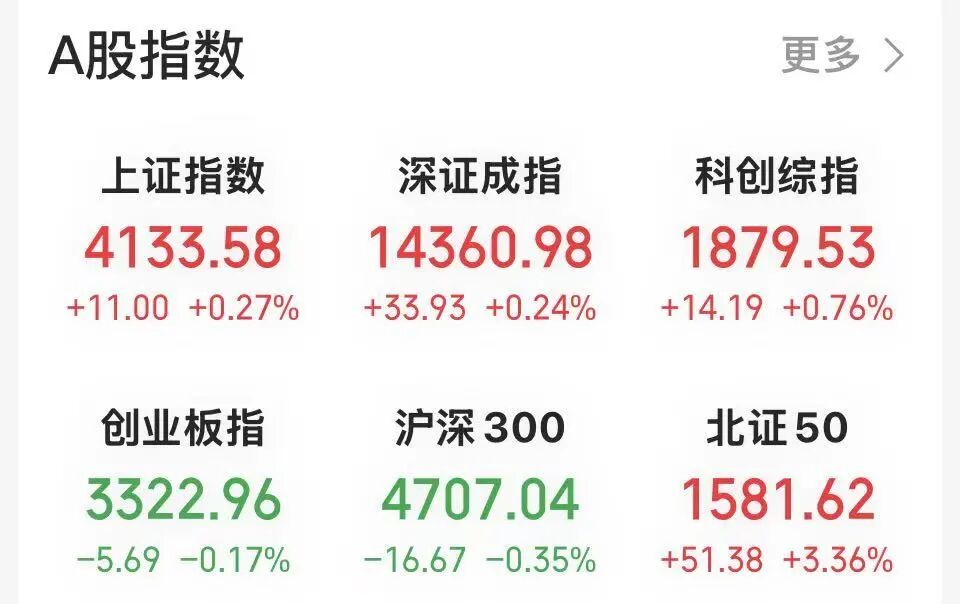
Market Overview - A-shares continued to experience sideways fluctuations, with strong performance in non-ferrous metals and new energy sectors, while technology themes like semiconductors showed adjustments, leading to a divergence in major stock indices [1] - As of the midday break, the Shanghai Composite Index was at 4133.58 points, up 0.27%, the Shenzhen Component Index rose 0.24%, the ChiNext Index fell 0.17%, and the Sci-Tech Innovation Index increased by 0.76% [1] Space Photovoltaics Sector - The space photovoltaic concept significantly heated up, with the Shenwan Photovoltaic Equipment Index soaring by 6.89%, and several stocks such as Maiwei Co., Jiejia Weichuang, and Dongfang Risheng hitting the daily limit of 20% [4] - The space photovoltaic energy refers to utilizing solar photovoltaic technology to obtain and supply energy in outer environments like space or the moon, with the ability to wirelessly transmit electricity to the ground [6] - Traditional fossil energy faces high storage risks and supply difficulties in space, while nuclear energy has complex technology and strict safety controls, making photovoltaic technology a more suitable option for extreme space environments [6][7] Commercial Aerospace Sector - The commercial aerospace concept has seen a resurgence, with stocks like Feiwo Technology and Zhenlei Technology hitting their daily limit of 20%, with some stocks reaching historical highs [13] - Blue Arrow Aerospace's IPO status has changed to "inquired," marking a significant step towards becoming the first commercial rocket company listed on the Sci-Tech Innovation Board [15] - SpaceX is accelerating its layout, planning to launch its second-generation Starlink satellite system by 2027, with the U.S. Federal Communications Commission approving its application to deploy an additional 7,500 satellites [15]
A股异动丨马斯克力挺!太空光伏概念暴涨,爱旭股份、钧达股份等涨停
Ge Long Hui A P P· 2026-01-23 02:42
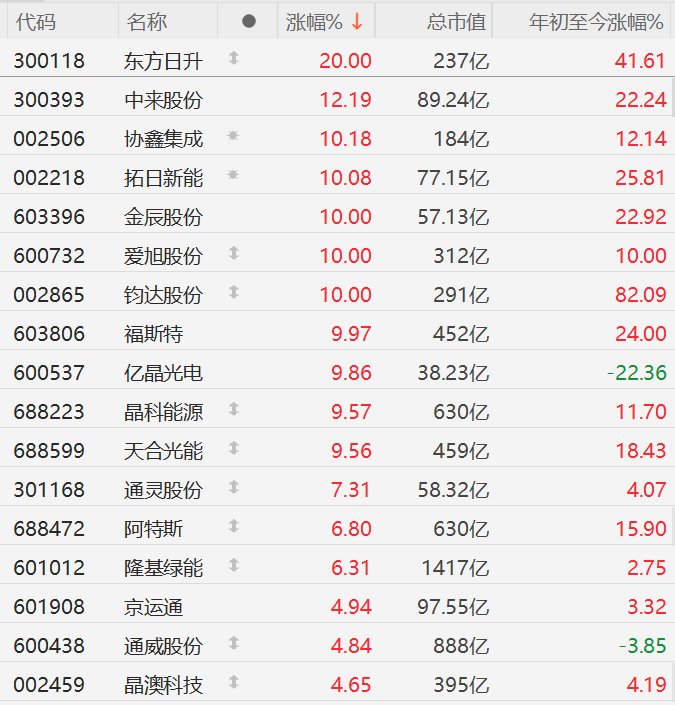
Group 1 - The A-share market has seen a significant surge in space photovoltaic concept stocks, with companies like Maiwei Co., Ltd. and Dongfang Risheng hitting the daily limit of 20%, while Zhonglai Co., Ltd. rose over 12% [1] - Tesla CEO Elon Musk expressed strong support for space photovoltaics during a discussion at the World Economic Forum, revealing plans for a solar manufacturing capacity of 100GW annually within three years [1] - Huaxi Securities highlighted that space photovoltaic energy involves utilizing solar technology in outer space to supply energy, marking a strategic solution for commercial aerospace and high-end applications [1] Group 2 - Shenwan Hongyuan's report indicated that over 200,000 satellite constellation applications have been submitted in China, signaling a new phase of large-scale deployment in commercial aerospace, which will drive long-term demand for space photovoltaics [2] - The technology evolution path for space photovoltaics is expected to transition from high-efficiency gallium arsenide to large-scale silicon-based HJT, and eventually to perovskite tandem cells [2] Group 3 - A detailed table of stock performance shows significant gains for various companies, with Dongfang Risheng at a 20% increase and a total market value of 23.7 billion, while Zhonglai Co., Ltd. has a market value of 8.9 billion and a year-to-date increase of 22.24% [3] - Other notable performers include Xiexin Integration with a 10.18% increase and a market value of 18.4 billion, and Tuorich New Energy with a 10.08% increase and a market value of 7.7 billion [3] - The overall trend indicates a positive momentum in the sector, with many companies experiencing substantial year-to-date gains, reflecting investor optimism in the space photovoltaic market [3]