
砷化镓

Search documents
半导体原材料,告罄!
半导体行业观察· 2026-03-15 02:20
Core Insights - The ongoing Middle East conflict and China's export restrictions have led to a significant increase in the prices of key metals used in chip manufacturing, with gallium prices rising dramatically [3] - The price of gallium has surged to approximately $2,100 per kilogram, marking a 123% increase since the beginning of 2025 [3] - Major aluminum production has been disrupted due to the conflict, pushing aluminum prices to a four-year high of $3,418 per ton [3] - There is a persistent shortage of indium phosphide substrates used in high-frequency optical communication and telecom components, with no immediate relief in sight [3] Industry Response - Companies like Samsung and SK Hynix are actively monitoring helium inventories, as Qatar supplies over one-third of the global helium supply, which is critical for semiconductor manufacturing [4] - Manufacturers are abandoning just-in-time inventory models and are beginning to stockpile raw materials while diversifying their supplier base [4] - Firms are willing to accept potential losses from price declines to prioritize supply chain security [4] Applications and Impact - Gallium nitride and gallium arsenide components are widely used in consumer electronics, including power semiconductors in PC power supplies and laptop chargers, as well as RF chips in Wi-Fi 7 and networking devices [4]

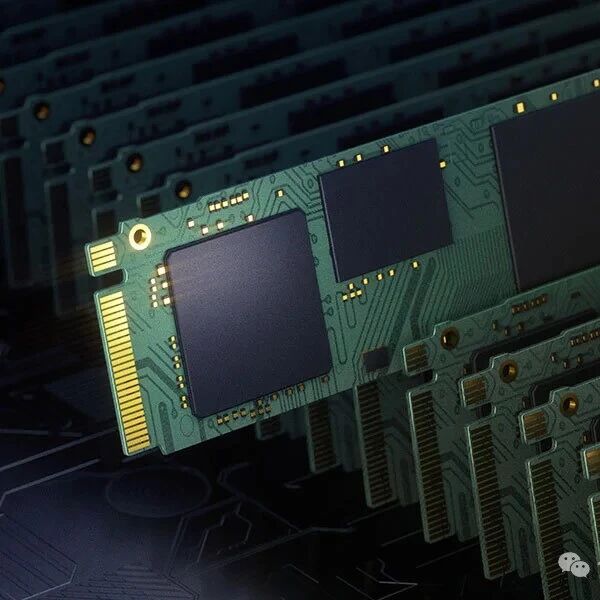
砷化镓板块强势 三安光电涨幅居前
Xin Lang Zheng Quan· 2026-02-10 02:19
Group 1 - The gallium arsenide sector is experiencing strong performance, with companies like Sanan Optoelectronics showing significant gains [1] - As of 10:15 AM, the stock prices in this sector are rising sharply, indicating positive market sentiment [1]

"太空光伏"概念走热,部分企业触发交易异常,业内: 目前仍处于0到1阶段
Di Yi Cai Jing· 2026-02-02 07:45
Core Viewpoint - The "space photovoltaic" concept has become a major focus in the secondary market, significantly influenced by Tesla CEO Elon Musk's endorsements, with the relevant index rising 19.83% in the past month, outperforming the CSI 300 index's 1.18% increase [1] Group 1: Market Performance - The space photovoltaic concept index has seen a substantial increase, with notable stocks such as JunDa Co., Ltd. rising by 84.62%, Mingyang Smart Energy increasing by 60.22%, and Jiejia Weichuang up by 44.04% over the past 20 days [1] - Several photovoltaic companies have experienced significant stock price surges, triggering trading anomalies, with stocks like Dongfang Risen and Laplace exceeding a cumulative price deviation of 30% over multiple trading days [3] Group 2: Technology and Feasibility - Space photovoltaic energy involves utilizing solar photovoltaic technology in outer space to generate and supply energy, with the potential for direct power transmission to Earth or powering satellites and space stations [3] - The feasibility of space photovoltaic technology is supported by the abundant sunlight in space and the ability to deploy photovoltaic components on satellites, with near-Earth orbit satellites experiencing over 60% sunlight exposure [3] - Despite the market enthusiasm, the industry faces significant uncertainties regarding the maturity and long-term reliability of the technology, as well as the economic viability required for large-scale commercialization [4][5] Group 3: Industry Insights - Industry insiders indicate that the application scenarios for space photovoltaic technology are still in the exploratory phase, with many companies in the secondary market not yet supplying products to commercial space satellite companies [4] - Analysts emphasize that space photovoltaic technology is currently in the early stages, requiring validation of technical routes and economic benefits for large-scale commercial applications [5] - The current cost of space photovoltaic energy is estimated to be around $2-3 per kilowatt-hour, significantly higher than ground photovoltaic costs of $0.03-0.05 per kilowatt-hour, highlighting the economic challenges ahead [6] Group 4: Future Outlook - Companies like Trina Solar and HaiMuxing express optimism about the future of space photovoltaic technology, with ongoing collaborations with leading aerospace institutions to accumulate practical experience [6] - The commercial viability of space photovoltaic technology is projected to gradually materialize over the next 10 to 15 years, driven by decreasing launch costs and breakthroughs in battery technology [7]




未知机构:天风电新砷化镓专家交流要点02011-20260202
未知机构· 2026-02-02 02:00
Summary of GaAs Expert Exchange Points Industry Overview - The focus is on Gallium Arsenide (GaAs) technology in the space energy sector, which is currently the mainstream route with sufficient validation [1][3]. Key Advantages of GaAs - GaAs is preferred for satellite batteries due to high maturity and stability requirements. Silicon-based solar cells, despite achieving 33% efficiency in laboratory settings, have not undergone long-term validation and are considered risky for space applications [1]. - GaAs exhibits superior radiation resistance compared to silicon, making it advantageous for high-orbit and large-load satellites [2][5]. Cost and Pricing Breakdown - GaAs epitaxial wafers are available in 4-inch and 6-inch sizes, with the 4-inch wafers being more common. The price for a single 4-inch wafer is 3,000 RMB, with a corresponding cost of 1,600 RMB, which includes a substrate cost of 600-700 RMB and other components around 1,000 RMB [5]. - The cost of GaAs chips ranges from 2,000 to 3,000 RMB per piece, with the epitaxial wafer cost being a significant portion of this [5]. Cost Reduction Strategies - There is potential for at least a 30% reduction in current costs, with greater reductions possible through economies of scale in substrate and chip production, as well as labor costs [5]. - Increased domestic production, such as raising the domestic rate of graphite components to 80%, could reduce costs by 50% [5]. - Internationally, GaAs substrates (not germanium) are already being used to produce flexible solar wings, contributing to cost reduction [6]. Production Barriers - The epitaxial wafer production is a critical bottleneck, with only a few companies (Qianzhao, Kaixun, Dehua) capable of producing them. The production equipment, MOCVD, is primarily imported from Germany, with a 10-month ordering cycle, and domestic MOCVD equipment is not yet mature [7]. - The difficulty in expanding substrate production is manageable, but the key issue lies in yield rates [8]. Technological Advancements - The current mainstream technology is triple-junction cells, with future developments aimed at designing epitaxial structures for different wavelengths, potentially leading to four-junction and five-junction cells. The theoretical maximum conversion efficiency is estimated to be around 60%-70%, with current five-junction efficiency at 43.5% [9]. - Epitaxial wafer companies are moving towards integrated layouts with downstream chip and power system production, although this integration has a long validation cycle of approximately 2-3 years, requiring satellite launches for quality verification [9].
研报掘金丨东吴证券:维持明阳智能“买入”评级,风机历史质量事故风险释放
Ge Long Hui· 2026-01-29 06:46
Core Viewpoint - Mingyang Smart Energy is expected to achieve a net profit attributable to shareholders of 800 to 1,000 million yuan in 2025, representing a year-on-year growth of 131% to 189% [1] Financial Performance - The net profit for Q4 2025 is projected to be between 34.24 million and 234.24 million yuan, marking a turnaround from a loss of 460 million yuan in Q4 2025, with a quarter-on-quarter change of -78% to +50% [1] - The gross profit margin for wind turbines in Q4 2025 is expected to perform well, leading to an upward revision of the profit forecast for 2025 [1] Strategic Developments - The company has released historical quality accident risks related to wind turbines and is advancing into the domestic satellite power Tier 1 market through the acquisition of Dehua Chip [1] - Zhongshan Dehua Chip Technology Co., Ltd. has passed the AS9100D quality system certification and was selected as a national-level specialized and innovative "little giant" enterprise in 2023, receiving 15 million yuan in project support for key R&D plans in Guangdong Province for 2024 [1] - Following the acquisition, the company will leverage GaAs, perovskite, and HJT technologies simultaneously, and both parties will collaborate on energy management systems and other areas to enhance application validation and commercialization, thereby improving the company's overall competitiveness in the photovoltaic sector [1]

未知机构:天风电新明阳智能对标电科蓝天德华砷化镓一体化布局优势明显0127-20260128
未知机构· 2026-01-28 02:15
Summary of Conference Call Notes Industry and Company Involved - The focus is on the gallium arsenide (GaAs) industry, specifically highlighting 德华 (Dehua) and its integrated layout advantages in the GaAs sector [1][2][3]. Core Points and Arguments - 德华 is identified as the only non-state-owned enterprise with the capability to develop the entire GaAs industry chain, which includes materials such as epitaxial wafers, chips, solar wings, and energy systems [1][2]. - The energy system business model is categorized into two types: 1. "System Integrators" who purchase core components for assembly, exemplified by companies like 馥昶空间 (Fuchang Space). 2. "System Developers" who conduct independent research and development starting from the base materials, represented by 电科蓝天 (Electric Science Blue Sky) and 德华 [3]. - The high technical barriers associated with integrated layouts are emphasized, indicating that successful implementation can significantly reduce costs and enhance order acquisition capabilities [4]. - The energy system segment requires high customer development efforts, with 德华 holding all three military certifications. In 2023, its energy system products were validated in space, and it has developed the world's lightest, most compact, and highest efficiency rollable flexible solar wing, which is set for space validation in September 2025 and has already secured orders from 星网 (StarNet) [5]. Additional Important Insights - Investment recommendations suggest a positive outlook on 德华's integrated energy system layout, projecting a market share increase from over 10% currently to a long-term target of 40%, positioning it among the top tier alongside 电科蓝天, which is expected to achieve a market capitalization of 100 billion [5]. - 明阳 (Mingyang) is projected to achieve a net profit of 2.4 billion by 2026, with price increases in domestic wind turbines and unique offshore wind exports indicating potential for upward valuation adjustments, estimated at 15-20x, leading to a market cap of 360-480 billion [5]. - The gallium arsenide business is valued at 360 billion based on a 20% market share calculation, with further upward adjustment potential. The perovskite/HJT tandem batteries have begun large-scale validation, contributing an estimated market cap of 240 billion. The combined valuation of the main business is projected to be between 960-1080 billion, maintaining a strong recommendation for investment [5].
太空光伏概念拉升,关注光伏50ETF(159864)
Mei Ri Jing Ji Xin Wen· 2026-01-28 01:33
Core Viewpoint - The space photovoltaic sector is gaining traction, with the photovoltaic 50 ETF (159864) rising by 0.82% on January 27, indicating growing investor interest in this technology [1]. Group 1: Space Photovoltaic Overview - Space photovoltaic refers to the technology that converts solar energy into electrical energy in space environments, such as satellite orbits and space stations, which face extreme conditions [2]. - Low Earth orbit (LEO) resources are becoming a new battleground for major powers, with China applying for frequency and orbital resources for 203,000 satellites by December 2025 to secure valuable orbital resources [2]. - The global commercial space boom is expected to benefit space photovoltaic technology, with companies like SpaceX and Tesla aiming to increase solar energy production to 100 GW annually [2]. Group 2: Space Computing Power - Space computing power involves deploying data centers in space to address energy and space limitations, utilizing solar energy and the vacuum's ultra-low temperature for efficient power and cooling solutions [2]. - The rising operational costs of ground-based computing power highlight the advantages of space computing, which may lead to increased demand for photovoltaic technology [2]. Group 3: Technological Choices for Space Photovoltaics - Gallium arsenide (GaAs) is the current mainstream choice for space photovoltaics due to its radiation resistance, high conversion efficiency, and long lifespan, although it faces limitations in production capacity and cost [3]. - Crystalline silicon is progressing faster in industrialization due to its strong radiation resistance and lower production costs, making it suitable for low Earth orbit satellites [3]. - Perovskite solar cells show potential with high theoretical efficiency and better radiation resistance than silicon, but their practical application remains limited due to a lack of empirical data and a less mature supply chain [3]. Group 4: Investment Opportunities - Investors interested in the photovoltaic sector can consider the photovoltaic 50 ETF (159864) for a comprehensive investment in the entire photovoltaic supply chain, including silicon materials, wafers, cells, modules, and equipment [3].
国泰海通 · 晨报260127|商业航天发展提速,太空光伏迎布局良机
国泰海通证券研究· 2026-01-26 14:03
Core Viewpoint - The rapid development of commercial aerospace presents significant opportunities for space photovoltaics, as solar energy is the only reliable energy source in this sector, with solar irradiance in space being 5-10 times stronger than on Earth, leading to a substantial increase in power generation [2]. Group 1: Investment Recommendations - The growth of commercial aerospace will benefit space photovoltaics, with companies leveraging cost and technological advantages in silicon and perovskite technologies for energy supply in space data centers [2]. - The current mainstream technology for space energy is gallium arsenide, but the cost and efficiency of silicon and perovskite technologies are improving, making them viable alternatives [2]. - The economic viability of developing space data centers will be crucial, with silicon components showing significant manufacturing cost advantages and perovskite components offering benefits in reducing launch costs due to their power-to-weight ratio [2]. Group 2: Market Outlook - Elon Musk's goal of deploying 100GW of AI computing power in space annually could lead to a surge in satellite demand, with an estimated increase of 680,000 satellites per year if this target is met, compared to the current global satellite inventory of just over 10,000 [3].

光伏50ETF(159864)大涨点评
Mei Ri Jing Ji Xin Wen· 2026-01-23 05:46
Group 1 - The solar photovoltaic sector is experiencing significant growth, with the photovoltaic 50 ETF rising over 5.9% and the carbon neutrality 50 ETF increasing over 4% in early trading [1] - The competition in space resources is intensifying, with the U.S. leveraging SpaceX's lead in low Earth orbit communication satellites, as the FCC has approved the deployment of an additional 7,500 second-generation Starlink satellites [1] - China plans to submit an application for 203,000 satellites' frequency and orbital resources to the ITU by December 2025, aiming to secure valuable orbital resources [1] Group 2 - The commercial space sector is witnessing a resurgence, with space photovoltaics poised for development opportunities, utilizing energy sources such as gallium arsenide, crystalline silicon, and perovskite [2] - The National Development and Reform Commission is addressing chaotic price competition, promoting rational pricing in the industry, which is expected to enhance high-quality development [3] - The industry is expected to gradually alleviate oversupply pressures through self-discipline, capacity consolidation, and technological iteration, leading to a recovery in profitability across the entire supply chain [3] Group 3 - SpaceX plans to launch its second-generation Starlink system by 2027 to provide faster internet services [4] - Gallium arsenide is currently the mainstream choice for space photovoltaics due to its strong radiation resistance and high conversion efficiency, although it faces limitations in production capacity and raw material costs [4] - Crystalline silicon is advancing rapidly in industrialization and is suitable for low Earth orbit satellites, while perovskite shows potential for future applications but lacks substantial empirical data for large-scale deployment [4]
上市公司TOP5济安评估 (1月12日至1月16日)|上市公司观察
Xin Lang Cai Jing· 2026-01-22 05:49
Group 1 - Institutional research activity decreased this week, with a reduction in the number of companies being surveyed, but top stocks received increased attention [1] - Xiangyu Medical (688626) was favored by 208 institutions, focusing on rehabilitation medical devices, with strong growth potential driven by aging population and health awareness [1] - The company has a solid capital structure rated BBB, indicating better financial stability compared to most listed companies, but faces challenges in operational efficiency and asset quality [1] Group 2 - SWOT analysis for Xiangyu Medical shows strengths in capital structure, but weaknesses in operational efficiency and scale, with significant room for improvement in multiple dimensions [2][3] - Opportunities exist for Xiangyu Medical to enhance operational efficiency and scale, with potential growth in market channels and cost control [2] - Threats include a notable decline in core capabilities, particularly in operational efficiency and profitability, indicating increased operational pressure [3] Group 3 - Lio Group (002131) was surveyed by 40 institutions, focusing on its dual business model of mechanical manufacturing and digital marketing, with strong interest in its growth potential in emerging sectors [5] - The company has strong scale strength rated AA, indicating significant competitive advantages, but faces challenges in cash flow and debt repayment capabilities [6] - SWOT analysis reveals Lio Group's strengths in asset quality and scale, but weaknesses in cash flow and development capabilities, with opportunities for improvement in emerging markets [7][8] Group 4 - Weichuang Electric (688698) was the subject of a survey by 35 institutions, focusing on its core products in industrial automation and its competitive advantages in the market [10] - The company has strong profitability and asset quality ratings, but faces challenges in cash flow and debt repayment capabilities [11] - SWOT analysis indicates strengths in profitability and operational efficiency, but weaknesses in cash flow and capital structure, with opportunities for growth in high-demand sectors [12][13] Group 5 - Light Optoelectronics (688150) was surveyed by 34 institutions, focusing on its core products in OLED materials and its competitive position in the market [15] - The company has strong debt repayment capabilities and a solid capital structure, but faces challenges in scale and operational efficiency [16] - SWOT analysis shows strengths in financial stability and profitability, but weaknesses in scale and operational efficiency, with significant opportunities for growth in emerging markets [17][18] Group 6 - Yunnan Ge Industry (002428) was surveyed by 32 institutions, focusing on its complete germanium industry chain and its strategic position in the market [20] - The company has a strong development capability rating, but faces significant challenges in cash flow, profitability, and operational efficiency [21] - SWOT analysis indicates strengths in development capability, but weaknesses in scale and financial stability, with opportunities for growth in commercial aerospace and semiconductor sectors [22][23]


