头皮精华

Search documents
2025头皮护理行业消费趋势报告
Sou Hu Cai Jing· 2025-09-11 04:10
Core Insights - The scalp care market is experiencing rapid growth, with market size projected to increase from 17.6 billion yuan in 2023 to 21 billion yuan in 2024, reflecting a growth rate of 19.6% [40] - Social media engagement related to scalp care has surged, with a year-on-year increase of 158% in related content [41] - Key consumer demands include anti-hair loss, oil control, and itch relief, with a strong preference for safe and natural ingredients [9][24] Consumer Insights - Young consumers (ages 18-24) represent 52.4% of the market, with over 60% of the population actively concerned about scalp health [12][13] - The main scalp issues faced by consumers are hair loss (65.6%), dandruff (52.3%), and oily scalp (45.9%) [18] - When purchasing scalp care products, consumers prioritize efficacy (73.3%), ingredients (66.8%), and user experience (42.8%) [20][21] Market Trends - Three major trends are emerging: the deepening of the "one skin" concept for scalp and face, the rise of niche products targeting specific demographics, and an increased focus on emotional value in product offerings [2][9] - Brands like Kérastase and FGF are leading the market, while domestic brand Kelin has gained traction with its unique ingredient offerings [2][9] - Social media platforms like Xiaohongshu and Douyin are key marketing channels, with Xiaohongshu focusing on tutorials and product reviews, while Douyin emphasizes immersive content [2][9] Product Preferences - Consumers show a strong preference for ingredients such as amino acids and minoxidil, with nearly 90% expressing interest in natural plant extracts like Artemisia and Platycladus [26][30] - The most sought-after product benefits include anti-hair loss, itch relief, and gentle, nourishing properties [24][25] - The primary usage scenarios for scalp care products are daily routines (74.1%) and work settings (67.6%), with a focus on oil control and refreshing experiences [33]


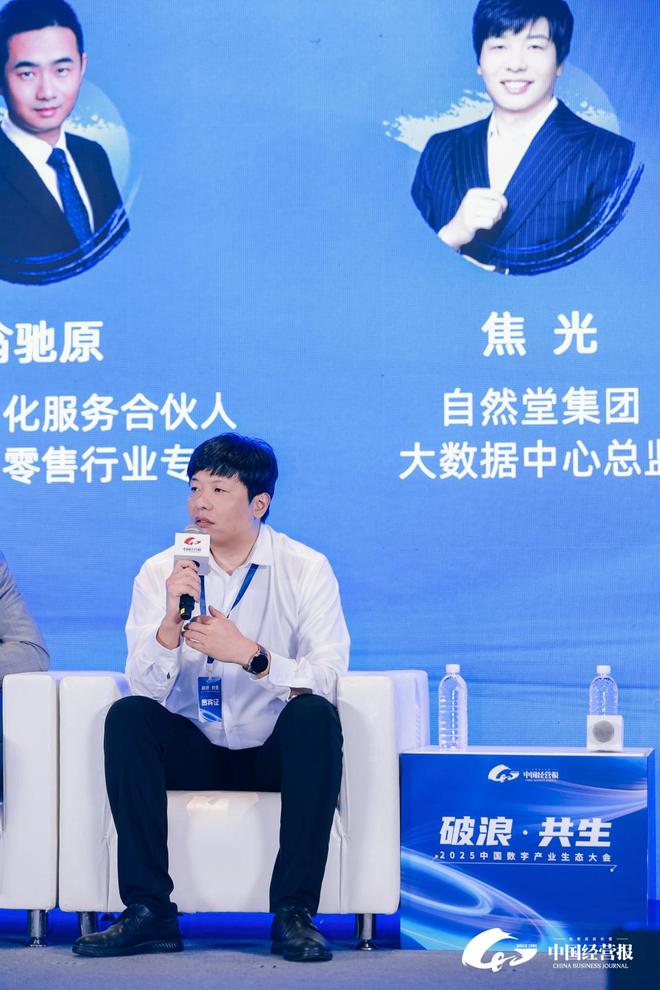
自然堂集团大数据中心总监焦光:数字化的目标是为消费者服务
Zhong Guo Jing Ying Bao· 2025-07-31 07:51
Core Insights - The core message emphasizes that the digital transformation of the company focuses solely on serving consumers through innovative technologies and AI applications [1]. Group 1: Digital Transformation and AI Applications - The company has developed an "AI Makeup Mirror" solution to address the lack of physical experience in online shopping, allowing consumers to upload photos for virtual try-ons of lipstick colors, closely mimicking in-store experiences [3]. - Digitalization not only enhances consumer service but also helps the company reduce costs and improve product development by leveraging a vast consumer database to shift from traditional market-following strategies to focusing on local consumer needs [4]. - The company aims to provide the best cosmetics for Eastern consumers, exemplified by the introduction of a "Scalp Essence" product line based on consumer interest in scalp health [4]. Group 2: Supply Chain and Operational Efficiency - The company has upgraded its supply chain through a national intelligent distribution and order scheduling system, ensuring delivery within 36 hours of order placement [4]. - AI algorithms are utilized to optimize packaging by accurately matching delivery boxes to product dimensions, resulting in a reduction of nearly 2,000 tons of cardboard in 2024, which has been recognized as a national ESG classic case [4]. - AI applications have significantly improved operational efficiency, with AI customer service increasing service efficiency by 50%, and AI-generated short videos being used for brand content production [4]. Group 3: AI as a Support Tool - The company emphasizes that AI does not replace human roles but serves as an assistant to enhance efficiency in various functions, such as formulation and procurement [5]. - The ultimate goal of the company's digital initiatives is to ensure that consumers can easily access products and emotional value [5].
20%高增速领跑,上半年洗护市场为什么“爆了”?
FBeauty未来迹· 2025-07-24 12:02
Core Viewpoint - The hair care market is experiencing significant growth, with online transaction value reaching 340.37 billion yuan in the first half of 2025, marking a year-on-year increase of 20.67% [4][5]. Market Performance - The hair care segment outperformed other beauty categories, driven by a 131.5% surge in men's hair care and steady performances from international brands like Kérastase, L'Oréal, and Pantene [2][4]. - The overall beauty market saw a total online transaction value of 3,060.39 billion yuan, with hair care being one of the fastest-growing segments [5]. Segment Breakdown - The hair care subcategories showed robust growth: - Hair cleansing: 179.72 billion yuan, up 21.56% - Hair care: 74.00 billion yuan, up 19.59% - Hair dyeing and perming: 57.44 billion yuan, up 17.20% - Hair styling: 20.76 billion yuan, up 16.64% - Men's hair care: 5.12 billion yuan, up 131.50% [7]. Brand Landscape - The market share of the top five brands (CR5) decreased from 19% in 2024 to 16%, indicating increased competition from emerging domestic brands and private labels [8]. - New domestic brands like Off&Relax and others are gaining traction, with several entering the top 20 rankings [11]. Consumer Trends - There is a shift towards efficacy-driven products, with consumers seeking solutions for specific scalp issues and multi-functional products [14][19]. - The introduction of "face-care level" ingredients in hair care products is becoming a trend, enhancing the overall consumer experience [19][21]. Innovation and New Products - Over 25 brands launched new products in the first half of 2025, with a focus on scalp care and multi-functional benefits [13]. - Brands are emphasizing rapid effectiveness, with products claiming visible results in as little as one to three minutes [17]. Future Outlook - The competition in the hair care market is expected to intensify, particularly in the areas of anti-hair loss and scalp care, with a focus on patented technologies and quick results [26][29]. - The potential for growth in differentiated segments like scalp oils is significant, as brands explore new opportunities [23][26].