
安心筑

Search documents
根治农民工欠薪,数字人民币方案上新
Sou Hu Cai Jing· 2026-02-17 14:22
Core Viewpoint - The digital RMB wallet integrates account management, mobile payments, interest accrual, and programmability, positioning itself as a potential digital entry point for personal financial services [2][5]. Group 1: Digital RMB Implementation - The first digital RMB salary payment for migrant workers was successfully executed in Chengdu, with over 1 million yuan disbursed by Bank of Communications [3]. - The digital RMB's interest-bearing mechanism was officially launched on January 1, 2026, marking a significant transition from "digital cash" to "digital deposits" [3][15]. - The digital RMB wallet is expected to become a "super" digital financial entry point for commercial banks, combining various financial functionalities [5][18]. Group 2: Smart Contract Applications - Smart contracts are highlighted as a key advantage of the digital RMB wallet over traditional bank accounts, enabling precise control and automation of fund usage [10]. - The digital RMB's smart contract system is designed to be compatible with both bank account-based and blockchain-based contracts, facilitating seamless integration [10][11]. - The application of smart contracts in salary payments aims to enhance transparency and reduce risks associated with fund misappropriation [9][14]. Group 3: Opportunities for Banks - The digital RMB 2.0 era presents new commercial opportunities for banks, including low-cost, high-retention core liabilities and the potential to reclaim strategic control over payment channels [18]. - Banks are focusing on integrating digital RMB into existing product systems, covering major business areas such as deposits, loans, and investments [17][19]. - The digital RMB wallet's capabilities allow banks to create customized smart contracts and offer high-value services, leading to new revenue streams distinct from traditional transaction fees [18].





全国首单落地!数字人民币到了新level:让农民工工资秒到账、不截留
第一财经· 2026-02-11 02:11
Core Viewpoint - The article highlights the successful implementation of the first digital RMB smart contract for wage payments to migrant workers in Chengdu, showcasing a significant innovation in ensuring timely and full payment of wages, addressing long-standing issues in traditional payment methods [1][3]. Group 1: Digital RMB Smart Contract Implementation - The digital RMB smart contract allows for automatic wage payments, targeted fund disbursement, and full traceability, effectively addressing concerns related to wage payment for migrant workers [3][4]. - The initiative is a collaboration involving multiple parties and technological innovations, marking a breakthrough in applying digital RMB smart contracts in critical livelihood scenarios [3][4]. - The first application involved the issuance of over 1 million RMB in wages to 104 workers, with funds directly reaching their digital wallets, ensuring transparency and immediate payment [3][4]. Group 2: Advantages and Features - The "Anxin Zhu" platform developed by a local company provides accurate business data, enhancing the precision of wage payments and addressing issues like "separation of people and cards" in the traditional construction industry [4]. - The digital RMB smart contract system is characterized by standardization, automation, and traceability, which eliminates human intervention and supports cross-institutional interoperability [4][5]. Group 3: Broader Applications and Future Prospects - Beyond wage payments, digital RMB smart contracts have been piloted in areas such as prepaid fund management and supply chain finance, with a total of 486,400 contracts signed and a transaction amount of 316 million RMB as of January 2026 [5][6]. - In supply chain finance, these contracts ensure that credit funds are used specifically for production, reducing the risk of fund misuse [7]. - The digital RMB smart contract can operate on both blockchain and off-chain environments, allowing banks to customize product services based on their business scenarios [7][8].
聚焦数智化 一智科技解码产业互联网“基因密码”
Sou Hu Cai Jing· 2025-11-28 12:35
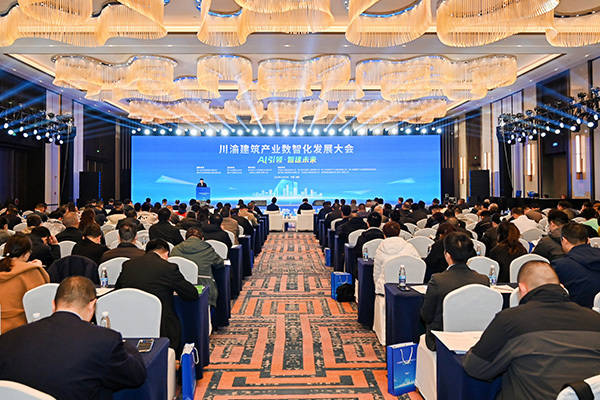
Group 1 - The "Chuan-Yu Construction Industry Digital Transformation Conference" was held in Chengdu, focusing on the application of AI and new information technologies in the construction sector to promote digital transformation and high-quality development in the Chuan-Yu region [1] - The conference gathered over 400 participants, including industry association leaders, academicians, experts, executives from leading companies, and representatives from relevant institutions and universities [1] Group 2 - Liu Yonggang, founder of Yizhi Technology (Chengdu) Co., delivered a keynote speech emphasizing the importance of building a "trusted data space" as the "genetic code" for the construction industry internet [3] - Yizhi Technology utilizes three engines: "knowledge engine, contract engine, and drawing engine" to activate the internal dynamics of the industry [3] Group 3 - In a sub-forum on "AI-driven Intelligent Construction and Project Management Innovation," CEO Wen Ling shared a report on how Anxin Zhu is innovating internet products through a four-layer structure: business scenario layer, trusted data layer, expert model layer, and ecological application layer [5] - Anxin Zhu has obtained over 50 national invention patents and 3 international invention patents, becoming a typical case in the national third batch of "data element x" governance in the construction industry [5] - The company has successfully piloted projects in multiple regions across China, including Guangdong, Jiangsu, Fujian, and Xiong'an New Area, receiving positive feedback [5]
“人工智能+建造” 有望巧解建筑领域多年痛点?
Zhong Guo Jing Ying Bao· 2025-08-31 14:25
Core Insights - The construction industry is poised for a technological revolution driven by smart construction practices, integrating AI, IoT, and Building Information Modeling (BIM) to enhance safety, quality, and sustainability while reducing costs [1][4] Group 1: Smart Construction Development - The Chinese government has issued guidelines to promote high-quality urban development, emphasizing the need for smart construction and modernization of the construction industry [1] - The "Anxin Zhu" platform showcased at the 10th Internet Conference for Engineering Construction highlights the urgent need for deep technological upgrades in the construction sector [1][2] Group 2: Worker Empowerment through Technology - The implementation of the Anxin Zhu system allows construction workers to track their work orders and payments in real-time, significantly improving their motivation and job satisfaction [2] - The system employs a "factory-style dispatch" model, breaking down tasks into smaller units and ensuring clear accountability and traceability throughout the construction process [2] Group 3: Market Growth Projections - The smart construction market in China is projected to exceed 1.2 trillion yuan in 2024, with an expected growth to 1.5 trillion yuan by 2025, maintaining a compound annual growth rate of over 25% [3] - Specific segments within the smart construction market, such as smart construction, BIM software, and construction robotics, are expected to see significant growth rates, with construction robotics projected to grow by 80% [3] Group 4: Policy Support for Smart Construction - The recent issuance of the "Artificial Intelligence +" action plan by the State Council marks a strategic push for integrating AI into various sectors, including construction, with specific targets set for 2027 [4] - Local governments are also implementing policies to support smart construction, with initiatives in Guangdong and Sichuan aimed at fostering innovation and development in this area [5][6]