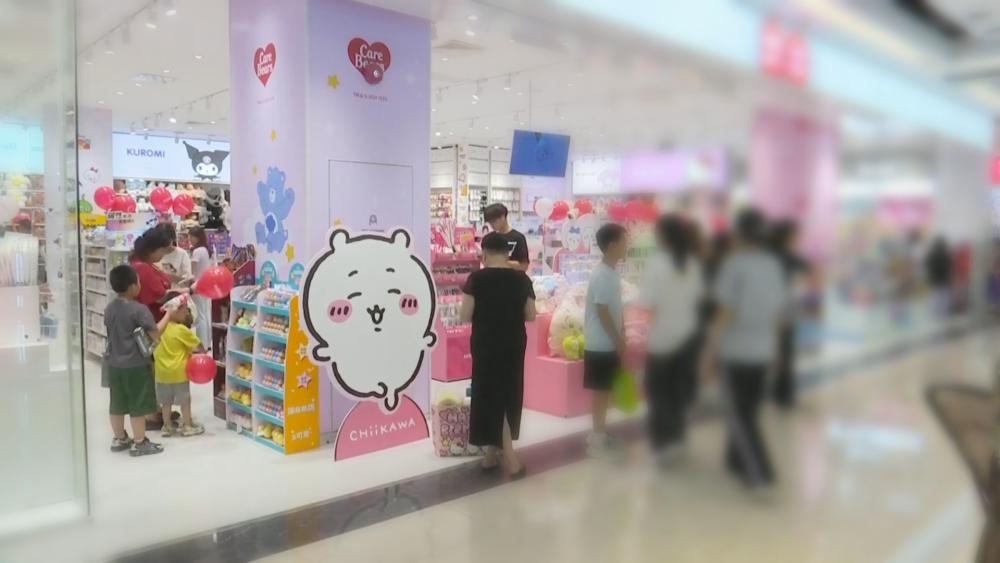
定制化商品

Search documents
中国银河证券:看好零食量贩行业发展新趋势带来投资机会 收入增长仍具持续性&盈利能力提升
智通财经网· 2026-01-27 03:15
Core Viewpoint - The report from China Galaxy Securities highlights the investment opportunities arising from the new trends in the snack retail industry, indicating a shift from rapid expansion to high-quality growth, with leading companies driving revenue and profitability improvements [1] Downstream - The traditional snack retail sector has significant room for expansion, with an expected increase to nearly 50,000 stores by 2025, creating a total potential of about 74,000 stores, which represents an increase of over 20,000 stores [2] - Profitability is expected to continue improving, with adjusted net profit margins for Mingming Hen Mang rising from 2.3% to 3.9% and Wancheng's net margin increasing from -1.6% to 4.4% from 2023 to the first three quarters of 2025, driven by reduced store opening subsidies and category structure adjustments [2] - New store formats are supporting expansion and improving single-store performance, with both Mingming Hen Mang and Wancheng planning to open discount supermarket formats by 2025, currently accounting for less than 20% of new store formats, with potential for further growth [2] - The development of private label products is boosting revenue and gross margins, with the share of private label income for the two leading companies expected to be in the single digits, indicating significant room for growth compared to competitors like Don Quijote, where private label shares are around 20-30% [2] Upstream - Downstream stores are expanding their product categories to include dairy, baked goods, and frozen foods, which is expected to benefit related upstream supply chain companies, particularly mid-tier brands with significant revenue elasticity [3] - The focus on developing private label products by downstream stores may lead to market share differentiation among supply chain companies, as the relationship between upstream and downstream evolves from simple trade to deep product collaboration, favoring manufacturers with strong product development and customization capabilities [3]

中国银河发布食品饮料行业研报:鸣鸣很忙港股上市,关注产业链投资新趋势
Mei Ri Jing Ji Xin Wen· 2026-01-26 23:49
Core Viewpoint - China Galaxy has issued a report recommending the food and beverage industry, highlighting the upcoming IPO of "Mingming Hen Mang," which is set to become the first stock in the bulk snack sector in Hong Kong, with a positive market response and significant investor interest [1] Group 1: Downstream Developments - The traditional store model has substantial room for expansion, with an expected increase to nearly 50,000 snack retail stores by 2025, indicating a total potential of about 74,000 stores, with over 20,000 new openings anticipated [2] - Profitability is expected to continue improving, with adjusted net profit margins for "Mingming Hen Mang" rising from 2.3% to 3.9% and "Wancheng" from -1.6% to 4.4% from 2023 to the first three quarters of 2025, driven by reduced store subsidies and category structure adjustments [2] - New store formats are supporting expansion and improving single-store performance, with both "Mingming Hen Mang" and "Wancheng" planning to open discount supermarket formats by 2025, currently representing less than 20% of new store formats [2] - Development of proprietary products is boosting revenue and gross margins, with both companies focusing on customized and private label products, which currently account for a single-digit percentage of revenue, indicating significant growth potential compared to competitors [2] Group 2: Upstream Opportunities - Downstream store category expansion into dairy, baking, and frozen foods is expected to benefit related upstream supply chain companies, particularly mid-tier brands with significant revenue elasticity [3] - The push for proprietary products in downstream stores may lead to market share differentiation among supply chain companies, with those possessing strong product development and customization capabilities likely to gain market share [3] Group 3: Investment Recommendations - The food retail industry is transitioning from rapid expansion to a phase of high-quality growth, with "Wancheng Group" recommended and "Mingming Hen Mang" noted for attention due to their revenue growth and profitability improvements [4] - Upstream, companies benefiting from the expansion into new product categories include "New Dairy" and "Lihigh Foods," with "Yiming Foods" also noted for attention [4] - As downstream stores increase their proprietary product share, supply chain companies with strong R&D and customization capabilities are expected to gain market share, with "Jinzai Foods" recommended and "Yanjin Foods," "Weilong," "Youyou Foods," and "Ganyuan Foods" noted for attention [4]
推动零售业创新转型,进一步扩大内需
2 1 Shi Ji Jing Ji Bao Dao· 2025-12-16 22:47
Core Viewpoint - The central economic work conference emphasizes the importance of domestic demand and aims to build a strong domestic market as the primary goal for economic work in the coming year [1] Group 1: Retail Industry's Role - The retail sector is crucial for both livelihood security and tax revenue, contributing 13.8 trillion yuan to GDP in 2024, accounting for 10.2% of GDP, and employing approximately 135 million people [3] - The retail industry is positioned as a key focus for cultivating a complete domestic demand system and enhancing domestic circulation, with strategic significance in the new dual circulation development pattern [3] Group 2: Current Development Trends - The retail industry is showing an overall positive development trend, supported by various initiatives from the Ministry of Commerce and the Ministry of Finance, including pilot projects in 38 cities aimed at transforming existing commercial facilities [3][4] - Despite progress, challenges remain, such as urban-rural development imbalances, insufficient supply-demand matching, and low operational efficiency of commercial facilities [3][4] Group 3: Innovative Models for High-Quality Development - Several innovative models focusing on quality and service have emerged, including service enhancement models, experiential scene models, and digital integration models [4] - Examples include the "service-driven" market value model represented by brands like Pang Donglai, and immersive consumption scenes in projects like Beijing's Zhonghai Dajixiang [4] Group 4: Key Strategies for Future Development - Strengthening top-level design and expanding pilot experiences to enhance rural commercial service capabilities is essential [5] - Promoting channel integration through mutual flow, experience complementarity, and data sharing to break down online and offline barriers is critical [5] - Improving supply quality and addressing supply-demand mismatches by encouraging direct connections between retail enterprises and upstream producers is necessary [6]