
实验仪器

Search documents
泰坦科技股价涨9.83%,诺德基金旗下1只基金重仓,持有5.51万股浮盈赚取13.89万元
Xin Lang Cai Jing· 2026-01-12 01:54
Group 1 - Titan Technology's stock rose by 9.83% to 28.16 CNY per share, with a trading volume of 15.98 million CNY and a turnover rate of 0.35%, resulting in a total market capitalization of 4.631 billion CNY [1] - The company, established on October 18, 2007, and listed on October 30, 2020, provides integrated technical solutions for scientific services, including research reagents, biological consumables, analytical consumables, laboratory instruments, smart lab equipment, research informatization, specialty chemicals, and related comprehensive technical services [1] - The revenue composition of Titan Technology includes 42.70% from research reagents, 28.42% from research instruments and consumables, 26.48% from specialty chemicals, 2.37% from laboratory construction and research informatization, and 0.02% from other sources [1] Group 2 - Nord Fund has a significant holding in Titan Technology, with the Nord Quantitative Core A fund (006267) owning 55,100 shares, representing 1.04% of the fund's net value, making it the seventh-largest holding [2] - The Nord Quantitative Core A fund was established on November 22, 2018, with a latest scale of 93.2332 million CNY, achieving a year-to-date return of 4.45% and a one-year return of 51.39% [2] - The fund manager, Wang Hengnan, has been in position for 7 years and 54 days, with total assets under management of 24.5 million CNY and a best fund return of 59.71% during his tenure [3]

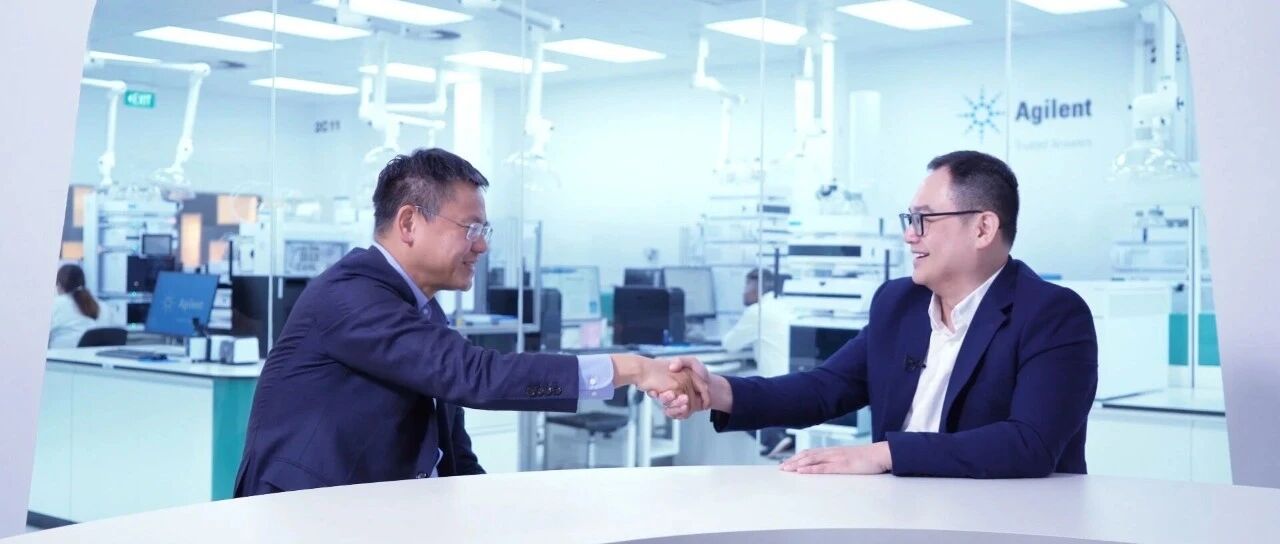
安捷伦科技全球副总裁曹伟胜:推进数字化运营是最值得做的无悔之举
麦肯锡· 2025-10-23 00:59
Core Insights - Agilent Technologies has four factories recognized in the Global Lighthouse Network, showcasing leadership in advanced manufacturing through the application of Fourth Industrial Revolution (4IR) technologies [2][3] - The company's mission focuses on improving human life quality through reliable answers and insights, emphasizing the importance of optimizing supply chains and technologies to meet customer needs [3][4] Group 1: Digital Transformation Journey - The four lighthouse factories are part of Agilent's broader journey to place customers, employees, and the environment at the core of its operations while pursuing productivity and profitability [3][4] - A significant aspect of the transformation is the emphasis on human capital, fostering a culture that encourages independent thinking and creativity among employees [5][6] - The Singapore lighthouse factory achieved an 80% increase in capacity, enhancing product delivery speed and accelerating research and development [5][6] Group 2: Implementation of 4IR Technologies - The German Waldbronn factory successfully implemented 20 4IR use cases, resulting in a 44% increase in productivity and a 48% growth in capacity [6][7] - AI-assisted inspection processes have been redefined using AI visual sensors, big data, and IoT technologies, leading to a 47% reduction in product quality costs and improved consistency [6][7] - Agilent's Shanghai factory has over 50 use cases and has achieved low-cost scalability, demonstrating an integrated ecosystem that serves as a model for small and medium enterprises [7][8] Group 3: Sustainable Practices and Recommendations - Companies are encouraged to embrace a circular economy as a sustainable alternative to traditional linear production models [8][9] - Agilent's factories have made significant strides in sustainability, with the Singapore factory increasing output by 61% while reducing chemical waste per instrument by 44% [8][9] - The company advocates for a strong leadership commitment and strategic planning as essential elements for successful digital transformation and sustainable practices [6][9]


泰坦科技跌2.04%,成交额5021.25万元,主力资金净流出408.18万元
Xin Lang Cai Jing· 2025-10-14 02:58
Company Overview - Titan Technology Co., Ltd. is located at 89 Shilong Road, Xuhui District, Shanghai, established on October 18, 2007, and listed on October 30, 2020 [1] - The company provides integrated technical solutions for scientific services, including research reagents, biological consumables, analytical consumables, laboratory instruments, smart laboratory equipment, research information technology, specialty chemicals, and related comprehensive technical services [1] Financial Performance - For the first half of 2025, Titan Technology achieved operating revenue of 1.219 billion yuan, a year-on-year decrease of 12.70%, while the net profit attributable to shareholders increased by 91.55% to 9.7652 million yuan [2] - The company has distributed a total of 86.6205 million yuan in dividends since its A-share listing, with 40.1089 million yuan distributed over the past three years [3] Stock Performance - As of October 14, Titan Technology's stock price decreased by 2.04% to 24.53 yuan per share, with a market capitalization of 4.034 billion yuan [1] - Year-to-date, the stock price has increased by 35.00%, with a slight increase of 0.74% over the last five trading days, a decrease of 3.12% over the last 20 days, and an increase of 0.33% over the last 60 days [1] Shareholder Information - As of June 30, the number of shareholders increased by 12.61% to 7,718, while the average circulating shares per person decreased by 11.19% to 21,305 shares [2] Industry Classification - Titan Technology belongs to the Shenwan industry classification of basic chemicals - chemical products - other chemical products, and is associated with concepts such as small-cap stocks, pension concepts, margin financing, and buybacks [2]
中期策略:蓄力新高——聚焦龙头化、国产化、全球
2025-06-23 02:09
Summary of Key Points from Conference Call Records Industry or Company Involved - Focus on the Chinese stock market, particularly A-shares and Hong Kong stocks, with emphasis on technology and emerging industries [1][4][5] Core Insights and Arguments - **De-dollarization Trend**: Global funds are shifting away from the US dollar, leading to increased investment in Chinese markets, including A-shares and Hong Kong stocks [1][4] - **Policy Reforms**: Since September 2024, China's policy reforms and collaboration with the Hong Kong Stock Exchange have accelerated capital market reforms, particularly benefiting technology and emerging industries [1][4] - **Investment Opportunities**: PCB (Printed Circuit Board) and overseas computing power are highlighted as key investment areas, with a focus on "leading, localization, and globalization" as future development directions [1][5] - **Economic Challenges and Opportunities**: Current economic challenges include macroeconomic pressures and poor trade data, but long-term opportunities exist in new consumption and technology sectors [2] - **Profitability Concentration**: The trend of leading companies gaining market share is evident, especially in industries like machinery, public utilities, and transportation, where capacity utilization is high [3][17] - **Domestic and Foreign Capital**: Both foreign and domestic capital are crucial for driving equity asset growth, with foreign capital holdings exceeding 3 trillion yuan and domestic capital increasingly influencing pricing in Hong Kong stocks [12][13] Other Important but Possibly Overlooked Content - **Globalization Impact**: Young leaders (born in the 80s and 90s) are more inclined to implement globalization strategies, leading to sustained growth in overseas revenues for their companies [3][30][31] - **Sector-Specific Trends**: Significant progress in domestic substitution rates in sectors like carbon fiber, special gases, and industrial robots, indicating a steady advancement in localization efforts [8][23] - **Emerging Market Influence**: Emerging markets are becoming significant drivers of Chinese exports, with countries like Indonesia and Saudi Arabia increasing their reliance on Chinese imports [26] - **ETF Influence**: ETFs have become a major source of incremental funds in the A-share market, with significant purchases observed since September 2024 [15][16] - **Traditional vs. New Materials**: Traditional industries and new material sectors are both showing strong potential for overseas expansion, with specific companies highlighted for their performance [28][29] This summary encapsulates the key points from the conference call records, focusing on the Chinese stock market's dynamics, investment opportunities, and the impact of globalization and domestic policies.