
富国新兴产业股票C

Search documents
近3年连续大幅跑赢基准,这么稀缺?
Sou Hu Cai Jing· 2025-12-10 05:43
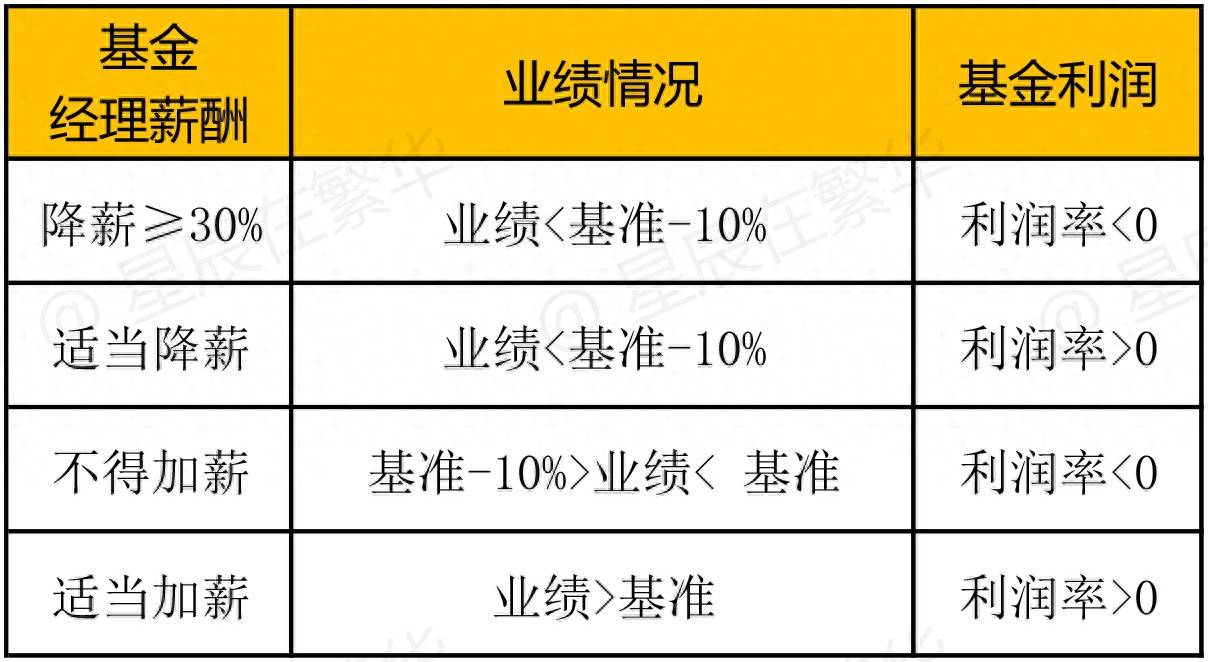
Core Viewpoint - The management has released a draft guideline requiring fund companies to establish performance-based salary adjustment mechanisms for active equity fund managers based on their performance relative to benchmarks over the past three years and fund profitability [1]. Group 1: Salary Adjustment Mechanism - Fund managers will face a salary reduction of at least 30% if their performance is below the benchmark by 10% [2]. - A moderate salary reduction is applicable if performance is below the benchmark by 10% [2]. - Fund managers cannot receive salary increases if their performance is within 10% of the benchmark [2]. - A moderate salary increase is allowed if performance exceeds the benchmark [2]. Group 2: Performance Analysis - Only five active equity funds have consistently outperformed their benchmarks by 5% over the past three years [3]. - The identified funds include "Fuguo Emerging Industry Stock C," "Zhaoshang Quantitative Selected Stock Initiation A/C," "Penghua Preferred Value Stock A," and "Guolian An Dividend Mixed" [3]. - Notably, these funds are managed by lesser-known fund managers rather than widely recognized figures [4]. Group 3: Fund Performance Metrics - "Fuguo Emerging Industry Stock C" achieved the highest annualized return of 28.26%, followed by "Dongwu New Energy Vehicle Stock (A/C)" with over 20%, and "Zhaoshang Quantitative Selected Stock Initiation (A/C)" around 16% [4]. - The Sharpe ratio for "Fuguo Emerging Industry Stock C" and "Zhaoshang Quantitative Selected A" is 0.71, indicating relatively good performance [5]. - "Dongwu New Energy Vehicle Stock A/C" experienced a significant drop in excess performance this year, likely due to valuation corrections in the high-growth new energy vehicle sector [5]. Group 4: Industry Insights - The new guidelines aim to strengthen the alignment of interests between fund managers and investors through quantitative metrics, addressing previous ambiguities [7]. - The market will increasingly demand that fund managers not only excel in generating alpha but also in capturing market beta [7]. - The funds mentioned are positioned within the optimal scale range of 1-5 billion yuan for active equity funds [6].

提升锐度与成长性 投顾组合进攻姿态尽显
Zhong Guo Zheng Quan Bao· 2025-08-17 22:07
Core Viewpoint - The A-share market has seen a significant upward trend, leading investment advisory firms to increase equity positions and focus on growth-oriented funds while reducing fixed-income allocations [1][2]. Group 1: Portfolio Adjustments - Investment advisory firms are enhancing the growth aspect of their portfolios by increasing allocations to growth-style funds, such as Jin Ying Technology Innovation Stock C and Fu Guo Emerging Industry Stock C [2]. - Equity investment positions have been generally increased across various advisory portfolios, with examples like E Fund's stock fund allocation rising from 52% to 55.3% since July [3]. - Some firms, like Xingzheng Global, have adjusted their holdings to favor growth styles over value funds, optimizing their Hong Kong stock allocations in response to market changes [3]. Group 2: Popular Fund Types - Technology and healthcare theme funds have become popular choices for increasing portfolio elasticity, with firms adding funds like the China Securities Robotics Index A and the China Securities Semiconductor Industry ETF [4]. - Funds focused on innovative pharmaceuticals are also favored, with examples including Fu Guo Precision Medicine Mixed C being added to portfolios [4]. - Not all firms are uniformly bullish on innovative pharmaceuticals; for instance, some have reduced exposure to this sector, indicating a selective approach to fund allocations [4]. Group 3: Quantitative Products and Market Sentiment - Many advisory products are incorporating strong growth-style quantitative products to enhance portfolio flexibility, such as the addition of Bo Dao Growth Smart Navigation Stock C [5]. - There is a trend of reducing positions in previously high-performing sectors like gold stocks, reflecting a shift in investment strategy [5]. - Current market sentiment indicates a cautious approach towards risk assets, with some firms highlighting the potential impact of external factors like U.S. Federal Reserve policies on market dynamics [7].
提升锐度与成长性投顾组合进攻姿态尽显
Zhong Guo Zheng Quan Bao· 2025-08-17 20:07
Core Viewpoint - The A-share market is experiencing a bullish trend, prompting investment advisors to increase equity positions and focus on growth-oriented funds while reducing fixed income allocations [1][2]. Group 1: Portfolio Adjustments - Investment advisors are enhancing the growth aspect of their portfolios by increasing allocations to growth-style funds, such as Jin Ying Technology Innovation Stock C and Fu Guo Emerging Industry Stock C [1]. - The equity investment ratio has been raised across various portfolios, with E Fund Stock-Bond Balance increasing its stock fund holding to 55.3% as of August 14 [2]. - Many advisors are adjusting their portfolios to reflect a positive outlook on growth styles, with a notable shift from value funds to growth funds [2]. Group 2: Sector Preferences - Technology and healthcare theme funds are gaining popularity among investment advisors, with significant additions to tech-focused index funds like the China Securities Robotics Index A [2][3]. - Funds heavily invested in innovative pharmaceuticals are also favored, such as Fu Guo Precision Medicine Mixed C, which has seen increased allocations [3]. - Some advisors are reducing exposure to certain sectors, like innovative pharmaceuticals, while reallocating to sectors like robotics and semiconductors [3]. Group 3: Market Outlook - Investment managers are cautious about the current market dynamics, noting that the anticipated Federal Reserve rate cuts may not yield the same market reactions as in previous years [4]. - There is a focus on sectors benefiting from "anti-involution" policies and a recommendation to consider large-cap indices and dividend-paying stocks [5]. - The market is advised to be wary of over-concentration in small-cap stocks and convertible bonds, which may face risk release pressures [5].
