寿司郎

Search documents
中国穷鬼寿司,干翻日本料理
盐财经· 2025-11-28 10:25
Core Viewpoint - The entry of Haidilao into the sushi market with its brand "如鮨寿司" (Yì Sushi) is reshaping the sushi landscape in China, targeting the growing demand for affordable sushi options among young consumers [3][7][15]. Group 1: Market Performance and Consumer Behavior - 如鮨寿司 has achieved impressive performance metrics, including a weekend table turnover rate of 8 rounds and daily customer reception exceeding 1,000 [3][31]. - The target demographic for 如鮨寿司 primarily consists of young adults in their twenties and thirties, particularly in areas with a high concentration of university students [4][6]. - The pricing strategy of 如鮨寿司, with signature dishes priced at 15 yuan and 19.9 yuan, positions it as a cost-effective alternative to traditional high-end sushi [6][11]. Group 2: Competitive Landscape - The sushi market in China is experiencing a price war, with brands like Sushi Lang and Bin Sushi gaining popularity, leading to a democratization of sushi dining experiences [7][10]. - 如鮨寿司 is often compared to Sushi Lang, with consumers noting that it offers lower prices and shorter wait times [11][12]. - The sushi market is projected to grow, with the overall market size expected to reach 690 billion yuan in 2024, indicating significant potential for affordable sushi brands [15][17]. Group 3: Business Strategy and Expansion - 如鮨寿司 is part of Haidilao's "Red Pomegranate Plan," which aims to diversify its brand portfolio and has already successfully launched 14 new restaurant brands [18][20]. - The brand's operational efficiency is highlighted by its high table turnover rates, which are crucial for profitability in the competitive restaurant industry [20][31]. - Plans for rapid expansion into major cities like Beijing and Shanghai are underway, indicating a strategic move to capture a larger market share in the affordable sushi segment [22][31]. Group 4: Supply Chain and Quality Control - The success of 如鮨寿司 relies heavily on an efficient supply chain that ensures the freshness of ingredients while maintaining low prices [29][35]. - The brand's focus on local sourcing and optimizing supply chain processes is essential for delivering quality products at competitive prices [29][35]. - Maintaining product quality while keeping prices low is a critical challenge for 如鮨寿司 and similar brands in the market [27][34].


高盛:寿司郎母公司Food & Life前景光明 首予“买入”评级
智通财经网· 2025-08-26 06:06
Group 1 - Goldman Sachs initiates coverage of Food & Life Companies with a "Buy" rating and a target price of 9,500 JPY [1] - The company operates Japan's largest conveyor sushi chain, Sushiro, and is actively expanding into overseas markets, primarily in Asia [1] - Goldman Sachs highlights Food & Life's competitive advantages, including high operational automation and economies of scale achieved through group purchasing [1] Group 2 - Food & Life maintains high profitability and asset turnover, with its return on operating assets exceeding that of other peers in the Japanese restaurant industry [1] - Goldman Sachs views Food & Life as a rare company among consumer stocks, demonstrating medium to long-term growth potential in both domestic and international markets [1]
日本市场业绩增速不如国际市场 寿司郎母公司:积极拓展新店
Nan Fang Du Shi Bao· 2025-08-19 16:42
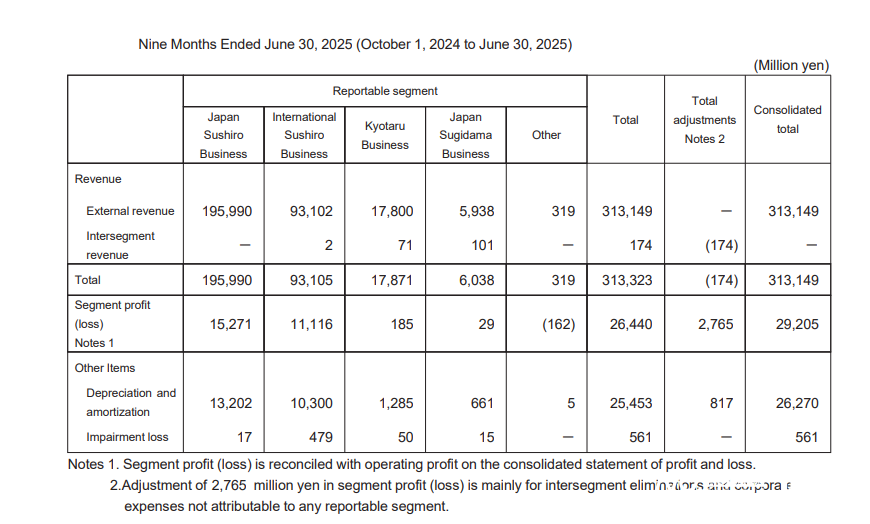
Core Insights - FOOD&LIFE COMPANIES (F&LC) reported a revenue increase of 18.3% year-on-year to 313.149 billion yen for the fiscal year 2025 third quarter, with a net profit growth of 74.3% to 18.072 billion yen [1] - The company operates multiple restaurant brands, including Sushiro, Sugidama, Kyotaru, and Misaki, with a total of 1,180 stores, an increase of 25 stores year-on-year [1] - Sushiro remains the primary revenue driver, with a significant performance difference between domestic and international markets [2] Financial Performance - For the first three quarters of fiscal year 2025, Sushiro's net sales in Japan grew by 11.6% to 195.99 billion yen, while international sales surged by 41.2% to 93.105 billion yen [2][3] - Segment profit for Sushiro in Japan was 15.271 billion yen, while international segment profit reached 11.116 billion yen, reflecting a strong international performance [3] Market Expansion - Sushiro has expanded its international presence, with 212 stores outside Japan, a 38-store increase year-on-year, while the domestic market saw a decrease of 12 stores to 960 [1] - F&LC plans to continue expanding its international footprint while carefully evaluating the business environment in various regions [4] Economic Context - The recovery of Japan's economy is attributed to rising personal consumption and increased demand from overseas tourists, although challenges remain due to global political instability and prolonged yen depreciation [3] - The restaurant industry faces ongoing challenges, including rising prices of raw materials and energy, as well as a long-term labor shortage [3]