如鮨寿司

Search documents
餐饮行业深度报告:餐饮边际复苏得验,可持续性高看
Soochow Securities· 2026-03-11 11:35
Investment Rating - The report gives an "Accumulate" rating for the restaurant industry, indicating a positive outlook for investment opportunities in this sector [1]. Core Insights - The restaurant industry is showing signs of marginal recovery, with expectations for sustainability in growth. Key restaurant brands are expected to benefit from upcoming service consumption and restaurant stimulus policies [5][10]. - The report highlights that the competitive landscape is improving, with a notable differentiation among brands. Major players are stabilizing after a period of closures and adjustments, indicating potential for upward momentum [5][42]. - The report emphasizes the importance of consumer confidence and the impact of external factors such as stimulus policies on restaurant performance [28][29]. Summary by Sections 1. Introduction - The restaurant data shows improvement, with expectations for enhanced continuity in 2026. Factors such as market effects and high dividend expectations are contributing to positive indicators in customer metrics [10]. 2. Demand Side - Since October, the growth rate of restaurant revenue has outpaced overall retail sales, indicating a strong recovery in consumer spending [11][13]. - The report notes that the external delivery market has intensified competition, leading to a rationalization among brands, which is beneficial for the overall industry structure [23][24]. - Policies aimed at expanding service consumption are expected to have a short-term positive impact on restaurant performance, although long-term consumer confidence recovery remains gradual [28][29]. 3. Supply Side - The competitive landscape is stabilizing, with a significant number of surveyed chain restaurants reporting flat or declining average sales per store in 2025. This indicates a challenging environment for profitability [33][34]. - The report identifies a trend of brand differentiation, with major players like Haidilao and Yum China showing low valuation multiples compared to historical averages, suggesting potential for growth [46][47]. - The number of new store openings is increasingly concentrated among leading brands, with significant growth in stores for those with over 10,000 locations [42][49]. 4. Investment Recommendations - The report recommends focusing on key players in the restaurant sector, including Haidilao, Yum China, and emerging brands like Meet You Noodle and Green Tea Group, as they are expected to continue improving their performance [83].

海底捞(06862):动态跟踪报告:经营多点开花,全力再造一个海底捞
EBSCN· 2026-03-05 07:07
Investment Rating - The report maintains a "Buy" rating for Haidilao [7] Core Insights - Haidilao is undergoing a strategic transformation, marking a "second entrepreneurship" phase with a focus on core business stability and breakthrough strategies, led by founder Zhang Yong returning as CEO [2][18] - The "Pomegranate Plan" aims to diversify from a single hotpot model to a multi-brand strategy, with significant growth in subsidiary brand revenues [3][45] - The main brand is showing signs of recovery, with improved customer spending and operational metrics validating demand resilience [4][66] - A high dividend policy is in place, providing a safety net for investors, with a dividend payout ratio increasing from 40% in 2022 to 90% in 2023 [4][67] Summary by Sections 1. Strategic Transformation - In early 2026, Haidilao is at a strategic turning point with a focus on upgrading management and operations, shifting from cost-cutting to maintaining core business and focusing on breakthroughs [2][18] - The management structure has been revamped, with experienced female executives joining the board to enhance operational efficiency [19][31] 2. Pomegranate Plan - The "Pomegranate Plan" is designed to break through the ceiling of the hotpot category and incentivize talent, with 14 brands and 126 stores launched by mid-2025, achieving a revenue growth of 227% year-on-year for subsidiary brands [3][45] - Key focus areas include seafood restaurants, sushi, and takeout services, with a strong emphasis on fresh ingredients and customer experience [3][49][52] 3. Main Brand Performance - The main brand has stabilized, with an average customer spending of 97.9 yuan in the first half of 2025, showing a recovery trend [4][59] - The restaurant's turnover rate has improved since July 2025, with significant customer traffic during holiday periods, confirming the brand's market strength [4][66] 4. Dividend Policy - Haidilao has significantly increased its dividend payout ratio, with plans for a 95% payout in 2024 and maintaining this level in the first half of 2025, resulting in a dividend yield of 5.4% [4][67]
海底捞的破局与坚守:“红石榴计划”开花结果,新品牌矩阵验证其组织效能可复制性
Cai Jing Wang· 2025-12-29 09:39
Core Insights - Haidilao is expanding its brand through innovative new concepts while maintaining its core strengths in restaurant management and supply chain efficiency [1][4][5] Group 1: New Brand Initiatives - Haidilao is implementing the "Pomegranate Plan" to systematically support the creation and operation of new brands, including sushi and barbecue [1][3] - The new sushi brand "Ruyushi" features over 200 dishes, with Norwegian salmon delivered via Haidilao's cold chain system, achieving a table turnover rate of over 9 times during peak hours [2][3] - The "Dapaidang Hotpot" concept in Guangzhou allows customers to select fresh ingredients themselves, enhancing the dining experience by making it interactive and engaging [3] Group 2: Operational Efficiency and Safety - Haidilao has launched 14 new brands with a total of 126 stores, generating nearly 600 million yuan in revenue, more than double the previous year's figures [3] - An AI system is used in the kitchens to monitor operations and food safety, replacing traditional manual checks with real-time digital tracking [3][4] - Employees undergo food safety training and participate in a "one-day food safety officer" program to foster a culture of responsibility [4] Group 3: Supply Chain Management - Haidilao emphasizes standardized management of key ingredients from sourcing to transportation, collaborating with industry associations to improve safety standards [4] - The company maintains transparency by allowing public access to its kitchens, with approximately 2,000 visitors each month, reinforcing its commitment to food safety [4] Group 4: Strategic Vision - Haidilao's approach combines exploration of new opportunities with a strong focus on quality and safety, ensuring long-term stability and growth in a changing market [5][6] - The dual strategy of innovation and quality control is seen as essential for the sustainable development of the brand [6]
新潮涌动,价值共生:2025年度财经网新消费·新经济评选榜单揭晓
Cai Jing Wang· 2025-12-29 08:38
Core Insights - The traditional methods of consumer engagement are becoming obsolete as Generation Z gains more influence, leading companies to adapt to new consumer demands for personalized and unique experiences [1][3] - The shift from standardized products to flexible customization is evident, with businesses focusing on tailored experiences rather than a one-size-fits-all approach [1][3] - Companies are increasingly recognizing the importance of value co-creation and social responsibility as key drivers for sustainable growth in the evolving market landscape [7][9] Industry Trends - The restaurant industry is witnessing a trend towards unique and innovative dining experiences, with brands like Haidilao and Domino's Pizza introducing new concepts and collaborations to enhance customer engagement [3][4] - Health-conscious products are gaining traction, with brands like Nayuki and Yuanqi Forest redefining the health beverage market by focusing on clear nutritional benefits [4][5] - The dairy and condiment sectors are exploring new marketing strategies, leveraging popular culture and collaborations to enhance brand visibility and consumer connection [5][6] Company Innovations - Nayuki's "Slim Green Bottle" has sold over 20 million cups since its launch, establishing itself as a symbol of health consumption [4] - Mengniu's low-temperature yogurt factory in Wuhan has been recognized as the world's largest single-unit low-temperature yogurt factory, showcasing the company's commitment to production efficiency [8] - The collaboration between brands and cultural events, such as Mengniu's marketing efforts linked to the film "Nezha 2," highlights the importance of storytelling in modern marketing strategies [5][6] Social Responsibility - Companies like Yili are actively engaging in social initiatives, such as the "Golden Crown 50°C Extraordinary Guardian" program, aimed at addressing infant nutrition challenges in underserved regions [8] - The emphasis on sustainability and social responsibility is becoming a core aspect of brand identity, with companies like Bawang Tea and IKEA China recognized for their contributions to ESG (Environmental, Social, and Governance) efforts [8][9]


海底捞“红石榴计划”再落子 大排档火锅在广州开启内测
Zheng Quan Shi Bao Wang· 2025-12-12 10:07
Core Insights - Haidilao is testing its new "Dapaidang Hotpot" concept in Guangzhou, aiming to create a dining experience that blends hotpot with a market-style atmosphere, appealing to both young and family customers [1] - The first Dapaidang Hotpot store features over 200 products displayed in distinct functional areas, with pricing based on a per-plate system using color-coded tableware [1] - The restaurant emphasizes a relaxed and engaging dining experience, allowing customers to see fresh ingredients and make their own selections [1] Company Developments - The Dapaidang Hotpot is part of Haidilao's strategy to diversify its dining offerings, with plans to open additional locations in cities like Qingdao, Shanghai, Wuhan, Hangzhou, and Nanning [2] - Haidilao has also launched a new sushi brand, "Rushi Sushi," in Hangzhou, indicating a broader expansion into various dining segments [2] - As of June 30, Haidilao operated 1,363 restaurants, including 41 franchise locations [2] Financial Performance - In its latest financial report, Haidilao reported a revenue of 20.703 billion yuan for the first half of the year, a decrease of 3.7% year-on-year, with a net profit of 1.755 billion yuan, down 13.7% [2] - The company's core operating profit was 2.408 billion yuan, reflecting a 14% decline compared to the previous year [2] - The "Red Pomegranate Plan" has successfully launched 14 new restaurant brands, with a total of 126 stores under this initiative, generating 0.597 billion yuan in revenue, a significant increase of 227% year-on-year [3]
中国穷鬼寿司,干翻日本料理
盐财经· 2025-11-28 10:25
Core Viewpoint - The entry of Haidilao into the sushi market with its brand "如鮨寿司" (Yì Sushi) is reshaping the sushi landscape in China, targeting the growing demand for affordable sushi options among young consumers [3][7][15]. Group 1: Market Performance and Consumer Behavior - 如鮨寿司 has achieved impressive performance metrics, including a weekend table turnover rate of 8 rounds and daily customer reception exceeding 1,000 [3][31]. - The target demographic for 如鮨寿司 primarily consists of young adults in their twenties and thirties, particularly in areas with a high concentration of university students [4][6]. - The pricing strategy of 如鮨寿司, with signature dishes priced at 15 yuan and 19.9 yuan, positions it as a cost-effective alternative to traditional high-end sushi [6][11]. Group 2: Competitive Landscape - The sushi market in China is experiencing a price war, with brands like Sushi Lang and Bin Sushi gaining popularity, leading to a democratization of sushi dining experiences [7][10]. - 如鮨寿司 is often compared to Sushi Lang, with consumers noting that it offers lower prices and shorter wait times [11][12]. - The sushi market is projected to grow, with the overall market size expected to reach 690 billion yuan in 2024, indicating significant potential for affordable sushi brands [15][17]. Group 3: Business Strategy and Expansion - 如鮨寿司 is part of Haidilao's "Red Pomegranate Plan," which aims to diversify its brand portfolio and has already successfully launched 14 new restaurant brands [18][20]. - The brand's operational efficiency is highlighted by its high table turnover rates, which are crucial for profitability in the competitive restaurant industry [20][31]. - Plans for rapid expansion into major cities like Beijing and Shanghai are underway, indicating a strategic move to capture a larger market share in the affordable sushi segment [22][31]. Group 4: Supply Chain and Quality Control - The success of 如鮨寿司 relies heavily on an efficient supply chain that ensures the freshness of ingredients while maintaining low prices [29][35]. - The brand's focus on local sourcing and optimizing supply chain processes is essential for delivering quality products at competitive prices [29][35]. - Maintaining product quality while keeping prices low is a critical challenge for 如鮨寿司 and similar brands in the market [27][34].

“焦虑”海底捞,欲批量制造餐饮品牌
2 1 Shi Ji Jing Ji Bao Dao· 2025-11-07 12:26
Core Insights - Haidilao is actively expanding its brand portfolio and experimenting with new restaurant concepts to adapt to changing consumer preferences and market conditions [2][8][10] Group 1: Brand Expansion and Strategy - Haidilao has launched the "Red Pomegranate Plan," which encourages employees to develop new restaurant brands through internal entrepreneurship and acquisitions [8][10] - The brand "Jugaogao," acquired from former Haidilao employees, offers a self-service hot pot experience at a significantly lower price point of 59.9 yuan per person, appealing to cost-conscious consumers [3][4] - The rapid expansion of Jugaogao has resulted in over 50 locations across nine provinces within six months, with high demand leading to long wait times [5][10] Group 2: Market Position and Consumer Response - Despite the initial success, there are concerns regarding service quality and operational issues at new locations, with some consumers reporting inconsistent food quality and slow service [7][10] - The overall dining market is experiencing a downturn, with average consumer spending in the restaurant sector declining, which poses challenges for Haidilao's growth strategy [11][12] Group 3: Financial Performance and Challenges - Haidilao's aggressive expansion strategy has led to significant financial losses in the past, prompting a reevaluation of its growth approach [12][13] - The company is now focusing on a dual strategy: expanding into new consumer segments while also introducing high-end dining options to enhance brand value [11][13] - Despite the increase in brand numbers and store count, the new brands have yet to contribute significantly to overall revenue, indicating potential challenges in achieving sustainable growth [10][13]
21特写|“焦虑”海底捞,欲批量制造餐饮品牌
2 1 Shi Ji Jing Ji Bao Dao· 2025-11-07 12:09
Core Insights - Haidilao is actively expanding its brand portfolio and experimenting with new restaurant concepts to adapt to changing consumer preferences and market conditions [3][9][12] Group 1: Brand Expansion and Strategy - Haidilao has launched the "Red Pomegranate Plan" to encourage internal entrepreneurship and develop new restaurant brands across various price segments [9][10] - The brand "Jugaogao," acquired from former Haidilao employees, offers a self-service hot pot experience at a significantly lower price point of 59.9 yuan per person, attracting high customer traffic [4][5][11] - The company has rapidly expanded "Jugaogao" to over 50 locations within six months, indicating a strong market demand for affordable dining options [6][11] Group 2: Market Position and Consumer Response - Despite the initial success of new brands, there are concerns about service quality and operational issues, with some consumers reporting inconsistent food quality and slow service [8][11][14] - The overall dining market is experiencing a downturn, with average consumer spending in the restaurant sector declining, which poses challenges for Haidilao's growth strategy [12][13] Group 3: Financial Performance and Challenges - Haidilao's aggressive expansion strategy has led to significant financial losses in the past, prompting a reevaluation of its growth approach [13][14] - The company's market valuation has fluctuated significantly since its IPO, reflecting a shift from high-growth expectations to a focus on sustainable profitability [13][14] - The new brands launched under the "Red Pomegranate Plan" have yet to contribute significantly to overall revenue, highlighting the challenges of scaling new concepts effectively [11][14]
叫板寿司郎,中国版「穷鬼寿司」来了
36氪· 2025-11-03 13:35
Core Insights - The article discusses the rising trend of affordable sushi restaurants in China, highlighting the entry of Haidilao's new sushi brand "Rushi Sushi" into a competitive market dominated by established players like Sushi Lang and Bin Sushi [4][12][14]. Market Overview - The affordable sushi segment is experiencing significant growth, with brands like Sushi Lang gaining popularity and achieving impressive sales figures, including a net sales of over 588 billion yen in the Chinese market, with a profit of 64 billion yen, marking a nearly 99% year-on-year increase [16]. - Sushi Lang's pricing strategy, with sushi priced between 10 to 28 yuan, has made it accessible to younger consumers, allowing for a dining experience under 100 yuan per person [10][11]. Haidilao's Strategy - Haidilao's "Rushi Sushi" aims to replicate the successful model of Sushi Lang, utilizing a conveyor belt sushi format and a similar pricing structure, with menu items priced at 8, 9.9, 15, 19.9, and 28 yuan [14][20]. - The brand has seen promising initial performance, with weekend customer traffic averaging 800 to 1000 people per day, indicating a strong market reception [15]. Competitive Landscape - The article notes that the sushi market is undergoing a "de-high-end" transformation, with high-priced sushi restaurants facing declining customer traffic, while affordable sushi options are becoming more popular [15]. - Both Sushi Lang and Bin Sushi have been in the Chinese market for several years but are now experiencing a surge in popularity, with plans for rapid expansion in the coming years [16][17]. Supply Chain and Quality Challenges - The success of sushi restaurants heavily relies on the quality of ingredients and supply chain efficiency. Rushi Sushi is leveraging Haidilao's supply chain advantages but faces challenges in maintaining consistent quality and sourcing fresh seafood [21][22]. - The article highlights the importance of established relationships with seafood suppliers, which Sushi Lang and Bin Sushi have developed over years, providing them with a competitive edge in sourcing high-quality ingredients [21]. Conclusion - The future of Rushi Sushi in the competitive landscape remains uncertain, as it attempts to carve out a niche amidst established brands. The effectiveness of its strategies and ability to maintain quality will be crucial for its success [23].

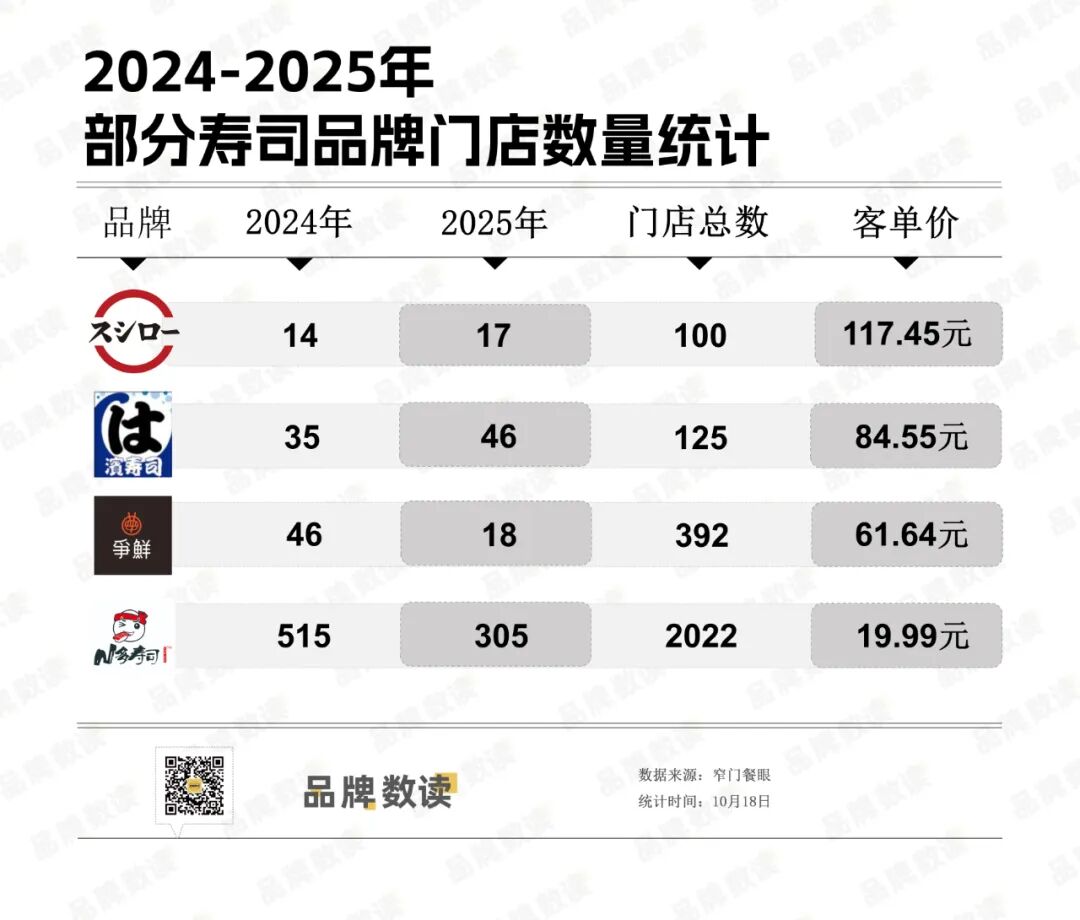
海底捞入局,寿司郎、滨寿司加速扩张,百亿日料市场回暖了?
3 6 Ke· 2025-10-31 03:17
Core Insights - The launch of "如鮨寿司," the first sushi brand incubated by Haidilao, in Hangzhou is seen as a signal of industry recovery and structural opportunities in the sushi market [1][3] - The sushi market, particularly the affordable segment, is becoming increasingly competitive with multiple players expanding aggressively [2][5] Market Dynamics - Haidilao's entry into the sushi market is a strategic move to capture market share, with "如鮨寿司" positioned under its "红石榴计划" to diversify its dining offerings [3][8] - The new store in Hangzhou has over 500 square meters and offers more than 200 SKUs, with price points ranging from 8 to 28 yuan, primarily focusing on 9.9 and 15 yuan items [3][8] - The market is witnessing a bifurcation where high-priced sushi brands like Sushi Lang are expanding cautiously, while lower-priced brands like Bin Sushi are aggressively increasing their store counts [5][21] Competitive Landscape - Bin Sushi plans to open over 70 new stores in the 2025 fiscal year and aims for more than 100 in the following year, with a long-term goal of 1,000 stores nationwide [5][8] - Sushi Lang aims to increase its total stores in Greater China to approximately 190 by 2026, with a cautious expansion strategy [4][5] - The sushi market's recovery is driven by consumer demand for high cost-performance sushi, supported by a localized supply chain [8][21] Strategic Positioning - Brands are focusing on high-line cities and premium shopping centers, with over 90% of Sushi Lang and Bin Sushi's stores located in first and new first-tier cities [9][12] - The competition is not yet saturated, allowing leading brands to proactively position themselves for future growth [15][16] - The market is shifting towards a "high cost-performance" competition rather than just low pricing, indicating a structural growth opportunity in the sushi segment [18][23] Future Outlook - The sushi market in China is projected to recover to a scale of 700 billion yuan by 2025, with sushi becoming a key growth direction due to its standardized preparation and high turnover rates [18][21] - The competition will intensify between foreign brands with established supply chains and local brands that can innovate and adapt to consumer preferences [21][22] - The trend towards affordable, localized, and digitalized sushi offerings is expected to deepen, although brands will face challenges in maintaining growth and brand trust [23][24]