小五

Search documents
具身智能,国产机器人为美好生活赋能
Xin Hua She· 2025-12-31 08:48
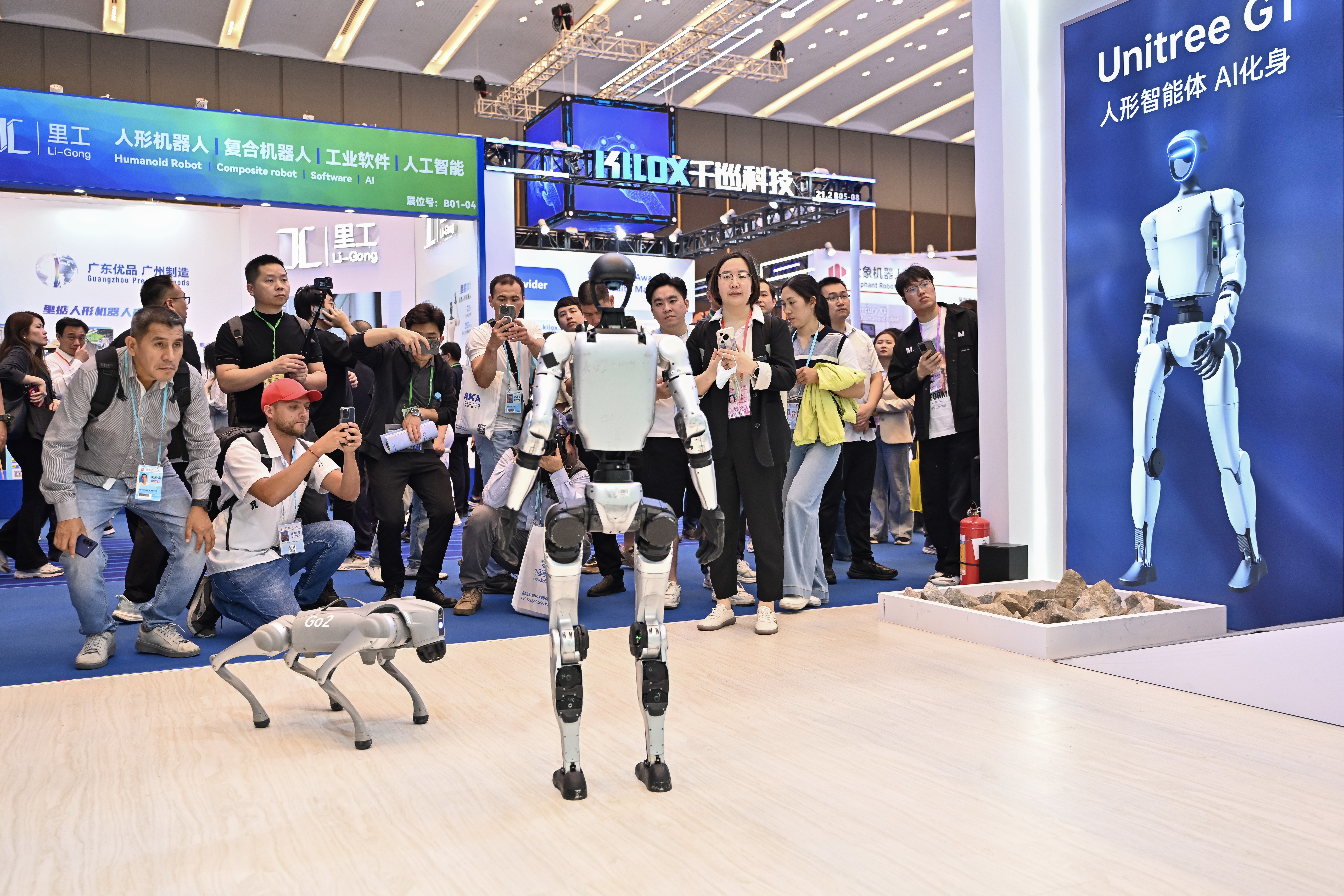
Core Insights - The article emphasizes the rapid integration of domestic robots into daily life by 2025, showcasing their diverse applications in various sectors such as entertainment, healthcare, and agriculture [1][12][21] Industry Developments - By 2025, domestic humanoid robots have achieved multiple breakthroughs, including the first human-like robot to perform a front flip and a marathon completion, indicating significant advancements in robotics technology [3][5] - The launch of the T800 humanoid robot by Zhongqing Robotics highlights the technological integration capabilities of domestic robots, featuring advanced materials and systems for enhanced performance [4][5] Technological Advancements - The core technological upgrades in humanoid robots are driven by the collaboration of their "brain," "small brain," and body design, which collectively enhance their operational capabilities [5][11] - The development of autonomous battery-swapping systems for humanoid robots by Youbixuan enables continuous operation without human intervention, significantly improving efficiency in industrial applications [9][10] Market Applications - The demand for humanoid robots in the elderly care sector is increasing due to the growing aging population in China, with robots being utilized for assistance in daily activities and health monitoring [12][13] - The industrial sector is identified as the primary training ground for humanoid robots, with significant orders and applications in assembly, transportation, and maintenance processes [10][11] Challenges and Opportunities - Despite the rapid growth, the industry faces challenges such as technological limitations, narrow application scopes, and the need for standardized practices across the sector [14][15][16] - The article suggests that policy support and market-driven initiatives are crucial for overcoming current obstacles and fostering high-quality development in the domestic robot industry [18][19] Future Outlook - The future of the domestic robot industry is projected to align with the growth of smart technologies, with expectations of significant advancements in the next 5 to 15 years [19][20] - The integration of robots into everyday life is anticipated to evolve gradually, starting with low-intelligence applications before expanding into more complex domestic roles [20][21]


人形机器人系列(九):从Components到Functions,看手眼协作、大小脑协同的投资机会
Changjiang Securities· 2025-05-06 14:58
Investment Rating - The report maintains a "Positive" investment rating for the humanoid robotics industry [2]. Core Insights - The humanoid robotics industry is rapidly advancing, yet it still faces application pain points. The focus is on the integration of visual, motion control, and hand-eye coordination as critical sub-architectures for development [7][9]. - The domestic humanoid robotics development is expected to exceed expectations due to supportive policies and active participation from component manufacturers in global supply chains [29][33]. Summary by Sections Industry Progress and Challenges - The humanoid robotics industry is progressing quickly, with significant advancements in product forms and diversity. However, there are still application pain points that need to be addressed [9][34]. - Tesla's Optimus hardware design has set a benchmark, with expectations of a global market demand of over 100 million units [11][13]. Policy and Innovation Centers - High-level policies and the establishment of innovation centers are crucial catalysts for the development of humanoid robotics in China. The government is actively promoting industrialization through various initiatives [21][23]. - Multiple innovation centers have been established across China, focusing on key technologies and fostering collaboration between government, industry, and academia [22][23]. Component Supply Chain - The supply chain for humanoid robotics components is diversifying, with more manufacturers entering the market. Core components like servo motors and harmonic reducers are becoming standardized industrial products [26][34]. - Domestic manufacturers are increasingly involved in the supply chains of international players like Tesla and Figure AI, enhancing the competitive edge of local firms [33][34]. Functional Development and Bottlenecks - The current capabilities of humanoid robots are limited by functional bottlenecks, particularly in achieving generalized capabilities across various applications. The integration of visual systems and motion control is essential for overcoming these challenges [45][49]. - The report emphasizes the importance of developing functional components, as the capabilities of humanoid robots are closely tied to the performance of their "brain" and "body" systems [60][61]. Visual Systems and Hand-Eye Coordination - The humanoid robots require advanced visual systems to achieve perception and measurement functions, which are critical for tasks like navigation and interaction [64][67]. - The integration of visual and motion control systems is highlighted as a key area for development, enabling robots to perform complex tasks in dynamic environments [90].






大厂暗战人形机器人:阿里百度构建生态 腾讯美团突入研发深水区
Bei Ke Cai Jing· 2025-04-17 11:17
Group 1 - The humanoid robot industry is undergoing a paradigm shift driven by breakthroughs in AI technology and industrial upgrades [5][6] - Major Chinese tech giants are competing in the humanoid robot and embodied intelligence sectors, with strategies varying between investment and building in-house teams [6][7][19] - Tencent has increased its stake in Zhiyuan Robotics, while Cloud Whale, a household cleaning robot company, raised $100 million in funding led by Tencent and Beijing Robotics Industry Development Fund [6][22] Group 2 - Baidu and Alibaba are focusing on ecological logic in their investments, emphasizing the importance of the founding team's diverse backgrounds and experiences [10][13][16] - Baidu Venture Capital has participated in multiple funding rounds for companies like Weita Power and Zhiyuan Robotics, highlighting a trend of increased investment activity in the sector [12][15] - Alibaba's CEO has indicated that the company will significantly increase its investment in cloud and AI infrastructure over the next three years [18] Group 3 - Tencent and Meituan are not only investing but also building their own robotics teams, with Tencent's RoboticsX lab focusing on cloud computing and big data [19][23] - Meituan has made substantial investments in robotics, becoming a major external shareholder in companies like Yushu Technology and Galaxy General Robotics [24][26] - The strategic investments by these companies aim to create synergies with their existing business models, emphasizing the importance of hardware in their operations [27][29]