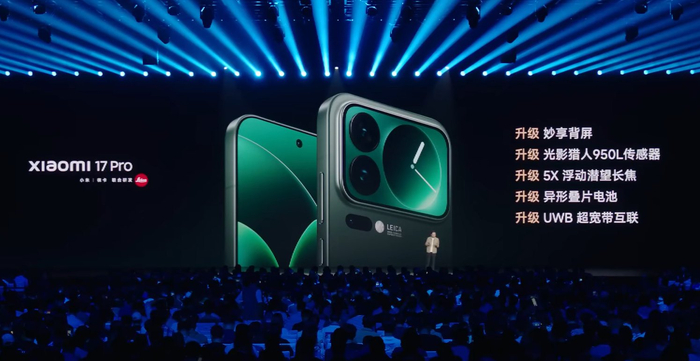
小米17 Pro系列手机

Search documents
新华社实锤小米,一切都结束了!
商业洞察· 2025-12-12 10:11
Core Viewpoint - The article discusses the controversy surrounding Xiaomi's advertising practices, particularly the use of small print disclaimers that mislead consumers, and highlights a recent shift in Xiaomi's approach to advertising transparency [5][14][30]. Group 1: Xiaomi's Advertising Practices - Xiaomi has been criticized for its use of "small print" disclaimers in advertisements, which can mislead consumers about product features and performance [5][16][30]. - The article references a specific instance where Xiaomi's promotional claims were scrutinized, leading to public backlash and comparisons to industry-wide practices [5][14]. - In response to criticism, Xiaomi has made changes to its advertising, such as removing small print disclaimers and providing clearer information about product features [8][21]. Group 2: Industry Implications - The article emphasizes that the issue of misleading advertising is not unique to Xiaomi but is a widespread problem across the consumer market, affecting various sectors including electronics and automotive [13][14]. - It argues that the prevalence of "small print" tactics undermines consumer trust and calls for a shift towards more transparent advertising practices across the industry [16][32]. - The article suggests that Xiaomi's decision to change its advertising approach could set a precedent for other companies, potentially leading to a broader industry reform [21][32]. Group 3: Consumer Impact - Consumers are often unaware of the implications of small print disclaimers, which can lead to misunderstandings about product capabilities and safety [15][18]. - The article warns that misleading advertising can result in significant consumer dissatisfaction and safety risks, particularly in high-tech sectors like electric vehicles [17][18]. - It advocates for a more honest advertising environment where consumers do not have to scrutinize every detail to understand product offerings [32]. Group 4: Public Relations and Corporate Responsibility - The article criticizes Xiaomi's lack of communication following the controversy, suggesting that proactive engagement could enhance its reputation and influence in the industry [24][25]. - It highlights the importance of corporate responsibility in advertising, noting that companies should prioritize consumer trust over short-term marketing gains [20][28]. - The article concludes that a commitment to transparency and honesty in advertising will ultimately benefit both consumers and companies in the long run [33].



新华社痛击小米,雷军天要塌了
Xin Lang Cai Jing· 2025-12-09 20:15
Core Viewpoint - The article criticizes the marketing tactics of certain companies, particularly focusing on the misleading use of large and small text in advertisements, which can mislead consumers and undermine trust in the brand [2][4][24]. Group 1: Marketing Tactics - Companies are increasingly using the tactic of "big text for attention, small text for disclaimers," which has become prevalent in various industries, including automotive and technology [6][9]. - The media has summarized this tactic as "three blows": exaggerating effects, inflating sales, and overstating discounts [6]. - An example highlighted is a smartphone advertisement that prominently claims to be the "King of Backlight," while a small disclaimer states that this is merely a design goal, raising questions about the legitimacy of such claims [6][9]. Group 2: Specific Company Examples - Xiaomi's marketing strategies have come under scrutiny, particularly regarding the promotion of its 17 Pro series smartphone, which has been accused of misleading advertising practices [9][11]. - The controversy extends to other Xiaomi products, such as the SU7 Ultra, which claimed to be the "fastest four-door production car," but included a small disclaimer stating it was a goal rather than a fact [12][20]. - Consumers have expressed frustration over Xiaomi's marketing, feeling deceived by the use of aspirational language that does not reflect actual product capabilities [20][24]. Group 3: Industry Implications - The article suggests that such marketing practices, while potentially profitable in the short term, could ultimately damage consumer trust and the overall market environment [24][33]. - There is a call for the industry to establish clearer marketing standards, emphasizing that creativity in marketing should not come at the expense of honesty [24][33]. - Xiaomi has begun to adjust its marketing approach in response to public criticism, moving towards more transparent and straightforward advertising [25][27].
魅族高管疑似“暗讽”同行:补充限定词不要让人有被误导观
Xin Lang Ke Ji· 2025-09-30 01:31
Core Viewpoint - The discussion around the use of "small print" in advertisements has been highlighted, with companies emphasizing the importance of clarity to avoid misleading consumers [1] Group 1: Company Responses - Wan Zhiqiang, CMO of Meizu Group in China, stated that the intention behind using small print is to comply with regulations, and companies aim to make disclaimers as clear as possible to avoid misleading consumers [1] - Xiaomi's promotional material for the 17 Pro series prominently features the slogan "King of Backlight," while also including a small print note stating that this is a product design goal [1] - Vivo claims that its X Fold 5 phone aims to be the "strongest folding flagship," indicating a similar approach to marketing and product positioning [1]
魅族高管疑似“暗讽”小米:补充限定词不要让人有被误导,产品观中包含价值观
Xin Lang Ke Ji· 2025-09-29 09:44
Core Viewpoint - The discussion around the use of "small print" in advertising has been highlighted, with a focus on regulatory compliance and the importance of clarity to avoid misleading consumers [1] Group 1: Company Statements - Wan Zhiqiang, CMO of Meizu Group in China, emphasized the need for clear supplementary terms in advertising to ensure that consumers are not misled, while still adhering to regulatory requirements [1] - Meizu's internal guidelines stress the importance of maintaining the context and semantics of the product while making any additional clarifications as obvious as possible [1] Group 2: Industry Practices - The phenomenon of using prominent slogans alongside small print disclaimers is not unique to Meizu, as evidenced by Xiaomi's recent promotional materials for the Xiaomi 17 Pro series, which featured a bold claim alongside a small-font clarification [1]
8点1氪丨胖东来宣布刑释人员全部录取;小米17系列手机正式发布,售价4499元起;西贝删除争议文章
3 6 Ke· 2025-09-25 23:53
Group 1 - Macro Beverage has applied for multiple "Wawa Xiaozong" trademarks, with classifications involving food, beer beverages, and advertising sales [9] - Xibei has deleted a controversial article from its public account that received criticism for being overly sentimental [3] - Xibei has launched a promotional campaign offering 100 yuan dining vouchers to customers in response to recent controversies [10] Group 2 - Lei Jun announced the release of the new Xiaomi 17 series smartphones, with starting prices of 4499 yuan for the base model [7][2] - Xiaomi's automotive division plans to significantly accelerate vehicle delivery times, with some models potentially available up to 6 weeks earlier than originally scheduled [14] - Xiaomi has committed to investing at least 50 billion yuan in self-developed chips over the next decade [7] Group 3 - Huang Renxun, CEO of Nvidia, has sold shares worth hundreds of millions of dollars over the past four months [15][16] - The U.S. stock market saw a collective decline in major indices, while many Chinese concept stocks experienced gains [6] - NIO, XPeng Motors, and Bilibili saw stock increases of over 4% [6] Group 4 - The market regulatory authority is overseeing the recall of over 700,000 defective power banks from several companies, including Romoss and Anker [14] - NIO's market capitalization has surpassed 1.8 trillion yuan, overtaking Kweichow Moutai [12]

小米17 Pro起售价4999元
Ge Long Hui A P P· 2025-09-25 13:04
Group 1 - The core point of the article is the launch of the new Xiaomi 17 Pro series smartphone by CEO Lei Jun, with a starting price of 4999 yuan [1] Group 2 - The Xiaomi 17 Pro series is positioned as a premium product in the smartphone market [1] - The launch event highlights Xiaomi's commitment to innovation and competitiveness in the technology sector [1] - The pricing strategy indicates Xiaomi's approach to attract both existing and new customers in a competitive landscape [1]