小米17系列手机

Search documents
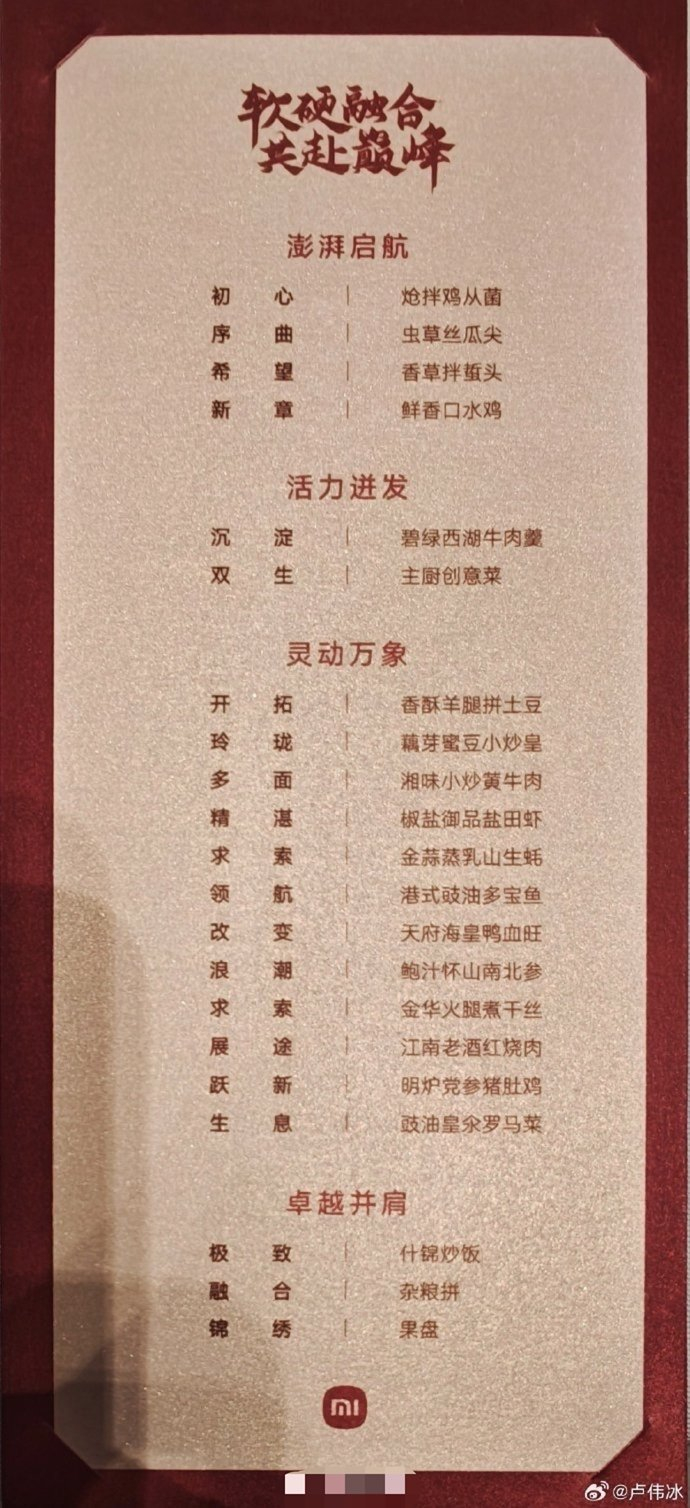
卢伟冰晒小米庆功会菜单,18道菜品对应初心希望开拓
3 6 Ke· 2025-11-23 16:53
Core Insights - Xiaomi recently held a celebration for the launch of the Xiaomi 17 series and the new Surge OS 3, emphasizing the theme of "soft and hard integration" [1] Group 1: Product Launch - The Xiaomi 17 series was launched in September this year, consisting of three versions: standard, Pro, and Pro Max [1] - Surge OS 3 was released in August, introducing the "Xiaomi Super Island" feature, which allows for two-way message synchronization between Xiaomi phones and Apple iPhones [1] Group 2: Celebration Event - The celebration featured a menu with 18 dishes, divided into four chapters: "Surge Initiation," "Vitality Launch," "Dynamic Transformation," and "Exquisite Integration," with each dish name reflecting key themes such as "original intention," "hope," and "exploration" [1][2] - The menu included various creative dishes, showcasing culinary innovation and aligning with the company's branding efforts [2][3]


雷军的反击:小米单日斥资5亿回购 小米汽车今年将交付超40万辆车
Sou Hu Cai Jing· 2025-11-20 15:00
Core Viewpoint - Xiaomi Group's stock price has been declining, leading to a market capitalization drop below 1 trillion HKD, prompting the company to initiate a significant share buyback to signal confidence in its future prospects [2][4]. Group 1: Stock Performance and Buyback - Xiaomi's stock price fell to 37.7 HKD, with a market cap of 981.8 billion HKD as of the latest close [2]. - On November 20, Xiaomi announced a buyback of 13.5 million shares at an average price of 37.61 HKD, totaling over 507 million HKD, marking the largest single-day buyback since its listing [2]. - The buyback had a positive effect, with the stock price recovering by 2.89% at the close of trading [2]. Group 2: Automotive Milestone - Xiaomi celebrated the production of its 500,000th vehicle, achieved in just over 1 year and 7 months, which signifies a major milestone for the company [4]. - CEO Lei Jun emphasized that this achievement validates Xiaomi's capabilities across the entire automotive value chain and marks a new phase of scaling for Xiaomi's automotive business [4][6]. Group 3: Financial Performance - In Q3 2025, Xiaomi reported revenue of 113.12 billion CNY, a 22.3% increase from 92.5 billion CNY year-over-year, with operating profit rising by 150.1% to 15.11 billion CNY [7][9]. - The operating profit margin reached 13.4%, the highest in recent years [7]. - Xiaomi's electric vehicle segment generated 28.3 billion CNY in revenue, with a notable achievement of turning a profit in this segment for the first time, reporting 700 million CNY in operating income [9]. Group 4: Challenges and Market Perception - Despite strong financial results, Xiaomi's stock has faced significant declines due to various factors, including underperformance in smartphone sales and external market pressures [9]. - Criticism has been directed at Xiaomi's management regarding dividend policies and product quality, particularly in comparison to established competitors [10]. - The company is urged to improve product quality and investor relations to mitigate negative market sentiment and restore confidence [11].
小米法务:“雷军不懂结构,发的微博不算数”
Sou Hu Cai Jing· 2025-11-20 08:14
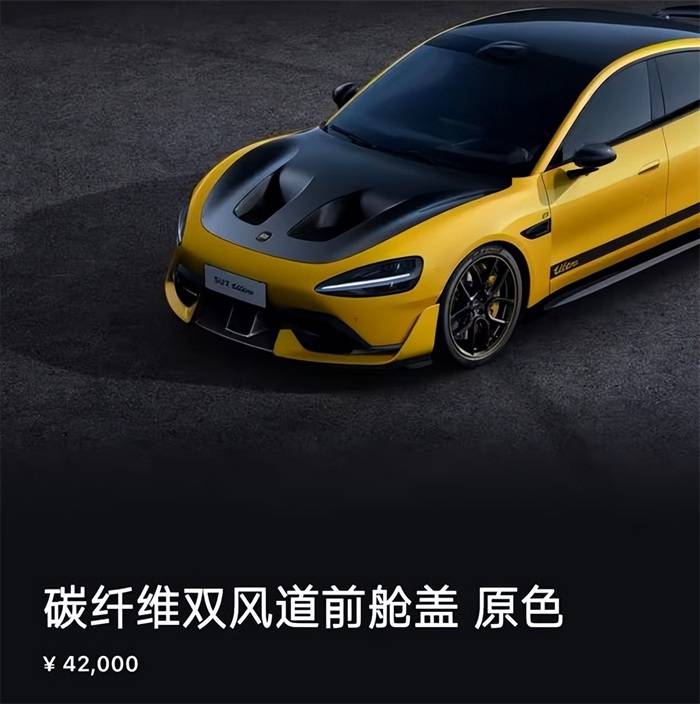
Core Insights - Xiaomi's automotive division achieved significant revenue growth and profitability in Q3 2025, reporting total revenue of 113.12 billion yuan, a year-on-year increase of 22.3%, and an adjusted net profit of 11.31 billion yuan, up 81% [10][11] - However, the company faces a public relations crisis due to a lawsuit regarding false advertising related to its carbon fiber hood, which has led to a loss of consumer trust [1][5] Financial Performance - In Q3 2025, Xiaomi's automotive business delivered 108,796 vehicles, a year-on-year increase of 173.4%, generating revenue of 28.3 billion yuan, which is a 197.9% increase compared to the previous year [10][11] - The gross margin for the automotive segment reached 25.5%, an increase of 8.4 percentage points from the same period last year [10][11] - Xiaomi's R&D investment for the first three quarters of 2025 was 23.5 billion yuan, with a workforce of 24,871 in R&D [14] Legal and Brand Challenges - The controversy began with the launch of the SU7 Ultra, which was marketed with exaggerated claims about its carbon fiber hood's performance, leading to customer dissatisfaction and a lawsuit from over 100 car owners [3][4] - Xiaomi's legal defense strategy, which included statements undermining the credibility of CEO Lei Jun's endorsements, has further damaged the brand's reputation [10][12] - The market reacted negatively to the news of the lawsuit, with Xiaomi's stock price dropping to 38.82 HKD, a decline of 4.81% in a single day, reflecting investor concerns about brand management and consumer trust [11][12] Market Position and Future Outlook - The current situation highlights a common challenge for emerging automotive companies: transitioning from reliance on the founder's personal brand to establishing trust based on product quality and performance [12][14] - To restore consumer confidence, Xiaomi must provide credible product testing data or offer more substantial compensation to affected customers [14] - The company needs to gradually separate its brand identity from Lei Jun's personal image, focusing on product quality, technological strength, and customer service as the foundation for long-term growth [14]

长盈精密:公司为小米17系列手机提供屏蔽件产品
Zheng Quan Shi Bao Wang· 2025-11-19 11:17
Group 1 - The company Changying Precision (300115) confirmed on November 19 that it supplies shielding components for the Xiaomi 17 series smartphones [1]

淄博琉璃跨界解锁文化新韵
Da Zhong Ri Bao· 2025-11-11 02:17
Core Insights - The collaboration between Xiaomi and Zibo Liuli has brought traditional craftsmanship into modern technology, allowing ancient art to reach a wider audience through smartphone screens [1] - The rise of micro-dramas as a new medium for promoting Zibo Liuli culture has been significant, with the series "Liuli Qiyuan" achieving high viewership shortly after its release [2] - The integration of technology and traditional art forms is seen as a pathway for cultural preservation and innovation, appealing to younger generations [3] Group 1: Collaboration and Cultural Integration - The "Liuli" art exhibition in Zibo showcases the fusion of traditional craftsmanship with modern design, featuring works that reflect Confucian culture and natural symbols [1] - Xiaomi's partnership aims to make intangible cultural heritage more accessible, transforming smartphone screens into platforms for cultural appreciation [1] Group 2: Micro-Dramas and Audience Engagement - The micro-drama "Liuli Qiyuan" has gained significant popularity, entering the top four of the drama rankings shortly after its premiere, indicating a successful strategy for cultural dissemination [2] - The production involved extensive research and collaboration with over 50 artisans to ensure authenticity, enhancing the narrative's connection to traditional craftsmanship [2] Group 3: Future Directions and Youth Engagement - Young artisans like Sun Qiye are exploring contemporary aesthetics in their work, bridging the gap between traditional art and modern tastes, thus attracting a younger audience [2] - The Zibo Liuli Museum is committed to exploring diverse integration paths for intangible cultural heritage, including technology and tourism, to enhance the cultural landscape of Shandong [3]
淄博|淄博琉璃跨界解锁文化新韵
Da Zhong Ri Bao· 2025-11-11 01:08
Core Insights - The collaboration between Xiaomi and Zibo glass art has brought traditional craftsmanship into modern technology, allowing cultural heritage to reach a wider audience through smartphone screens [2][3] - The integration of Zibo glass art into micro-dramas has diversified the channels for cultural dissemination, making it more appealing to younger generations [3][4] Group 1: Cultural Integration - The "Liuli" technology art exhibition in Zibo showcases the fusion of traditional glass art with modern design, featuring works that embody Confucian culture and natural symbols [2] - The glass art, known as "fire sculpture," is crafted at high temperatures, emphasizing the meticulous nature of the traditional techniques [2] Group 2: Media and Popularity - The micro-drama "Liuli Qiyuan" has gained significant traction, ranking in the top four on streaming platforms shortly after its release, indicating a strong interest in the cultural narrative [3] - The production team conducted extensive research, interviewing over 50 artisans to ensure authenticity in portraying traditional glass-making techniques [3] Group 3: Youth Engagement - Young artisans like Sun Qiye are modernizing Zibo glass art to resonate with contemporary aesthetics, thereby attracting a younger audience [3][4] - The museum is exploring various integration paths for intangible cultural heritage with technology and tourism to enhance the visibility of Zibo glass art [4]
小米,突发!
券商中国· 2025-11-06 10:37
Core Viewpoint - Hedge funds have turned bearish on Xiaomi stock, with significant short positions expected to persist until the earnings report, citing a lack of catalysts and safety concerns as primary reasons for the negative sentiment [1][4]. Group 1: Stock Performance and Market Sentiment - Xiaomi's stock has declined nearly 30% since reaching a historical high in June [1][2]. - Goldman Sachs reported a 53% increase in short positions on Xiaomi stock over the past week, indicating a strong bearish sentiment among institutional investors [4]. - The consensus among hedge funds is that Xiaomi is a common target for short selling in the short term due to various concerns, including delayed factory construction and challenges in the electric vehicle sector [4]. Group 2: Financial Projections and Analyst Ratings - CITIC Securities projects that Xiaomi will achieve total revenue of 113.2 billion yuan in Q3 2025, a year-on-year increase of 22.3%, with a Non-IFRS net profit of 10.2 billion yuan, up 63% [1]. - Despite current pressures, CITIC Securities maintains a positive long-term outlook for Xiaomi, expecting it to remain a leading technology ecosystem company globally [4]. - Ping An International also reiterated a "buy" rating for Xiaomi, anticipating that the automotive business may achieve profitability for the first time in a single quarter [4]. Group 3: Product Performance and Market Position - According to Canalys, Xiaomi's smartphone shipments reached 43.4 million units in Q3 2025, a 1% year-on-year increase, maintaining a 14% market share globally [5]. - In the Chinese market, Xiaomi's smartphone shipments were 10 million units, a decline of approximately 2%, resulting in a 15% market share, ranking fourth [5]. - Xiaomi's high-end smartphone series, launched in September 2025, achieved record sales shortly after release, indicating a positive trend in product structure optimization [5]. Group 4: Automotive and IoT Business Developments - Xiaomi has delivered 400,000 vehicles since launching its automotive division, with monthly deliveries exceeding 40,000 units in September and October 2025 [6]. - The company introduced a tax subsidy scheme to enhance consumer benefits, aiming for a break-even point in its automotive business [6]. - Despite a slowdown in national subsidies, Xiaomi's IoT business remains competitive, supported by product quality and supply chain management [7].

中信建投:予小米集团-W(01810)“买入”评级 17系列结构改善&高端化持续
智通财经网· 2025-11-04 09:11
Core Viewpoint - Citic Securities forecasts Xiaomi Group's revenue for 2025 and 2026 to reach 473.9 billion and 606.6 billion CNY respectively, with year-on-year growth of 30% and 28% [1] - The adjusted net profit is expected to be 43.3 billion and 54.4 billion CNY for the same years, reflecting year-on-year growth of 59% and 25% [1] - The target price is set at 58.8 HKD, with a "Buy" rating, indicating a favorable valuation for Xiaomi [1] Revenue and Profit Forecast - Xiaomi's revenue for Q3 is projected to reach 110.1 billion CNY, representing a year-on-year increase of 19% [1] - The adjusted net profit for Q3 is expected to exceed 10.1 billion CNY, with a year-on-year growth of 62% [1] - The automotive segment is anticipated to achieve profitability in Q3, with a delivery volume of 109,000 units [2] Smartphone Segment Analysis - The global smartphone shipment for Xiaomi in Q3 2025 is estimated at approximately 43.5 million units, showing a year-on-year growth of 1.8% [1] - Xiaomi's global market share remains stable at 13.5% year-on-year [1] - The average selling price (ASP) of smartphones is expected to decline slightly due to changes in product mix, while the gross margin is projected to decrease to 11% [1] IOT and Internet Business - The IOT segment is expected to see a revenue growth of 5% year-on-year, despite high base effects and increased competition [2] - The internet business continues to show steady growth, maintaining strong gross margins [2] Automotive Business Outlook - The automotive segment is projected to see significant capacity improvements in the coming year, with a focus on new models and international expansion [2] - The ASP for vehicles is expected to increase due to higher deliveries of the YU7 model, although the gross margin may slightly decline to over 25% [2] - The delivery volume in September surpassed 40,000 units, with expectations for continued growth in October [2]

小米集团-W(01810.HK):汽车交付量及小米17系列销量亮眼
Ge Long Hui· 2025-10-30 11:34
Group 1 - The core viewpoint is that Xiaomi's automotive delivery volume is expected to exceed 40,000 units by September 2025, showcasing its enhanced product innovation and operational capabilities [1] - Xiaomi's monthly delivery volume of automobiles surpassed 30,000 units for the first time in July 2025 and further exceeded 40,000 units in September 2025, indicating strong production capacity expansion [1] - The company has introduced a tax subsidy scheme to encourage consumers to place orders by the end of November 2025, which is expected to support the achievement of annual delivery targets and future growth in the automotive business [1] Group 2 - In the smartphone sector, Xiaomi maintained a global market share of 14% in Q3 2025, ranking third globally [2] - The launch of the new Xiaomi 17 series, featuring innovative functions, has driven a 30% increase in sales compared to the previous generation, with Pro versions accounting for over 80% of sales [2] - The company forecasts earnings per share of 1.63, 2.06, and 2.60 yuan for 2025-2027, with a target price of 71.65 HKD based on a 32x PE valuation for comparable companies in 2026 [2]
东方证券:维持小米集团-W买入评级 目标价71.65港元
Zhi Tong Cai Jing· 2025-10-30 02:50
Core Viewpoint - Oriental Securities predicts Xiaomi Group-W (01810) earnings per share for 2025, 2026, and 2027 to be 1.63, 2.06, and 2.60 CNY respectively, with a target price of 71.65 HKD based on a 32x PE valuation for comparable companies in 2026, maintaining a buy rating [1] Group 1: Automotive Business - Xiaomi's monthly car delivery exceeded 40,000 units in September 2025, showcasing strong production capacity expansion [3] - The company launched a tax subsidy scheme on October 24, 2025, allowing consumers to lock in orders by the end of November 2025, which is expected to support the annual car delivery target and future growth [3] Group 2: Product Innovation - Xiaomi's innovation and execution capabilities have significantly improved, enhancing its competitive edge in technology and product manufacturing, which is expected to drive growth across its automotive, home, and mobile businesses [2] - The Xiaomi 17 series smartphone, launched on September 25, 2025, features multiple innovative functions and has seen a 30% increase in sales compared to the previous generation, with the Pro version accounting for over 80% of sales [4] Group 3: Market Position - In Q3 2025, Xiaomi maintained a stable global smartphone market share of 14%, ranking third worldwide [4]