
尚客优7酒店

Search documents
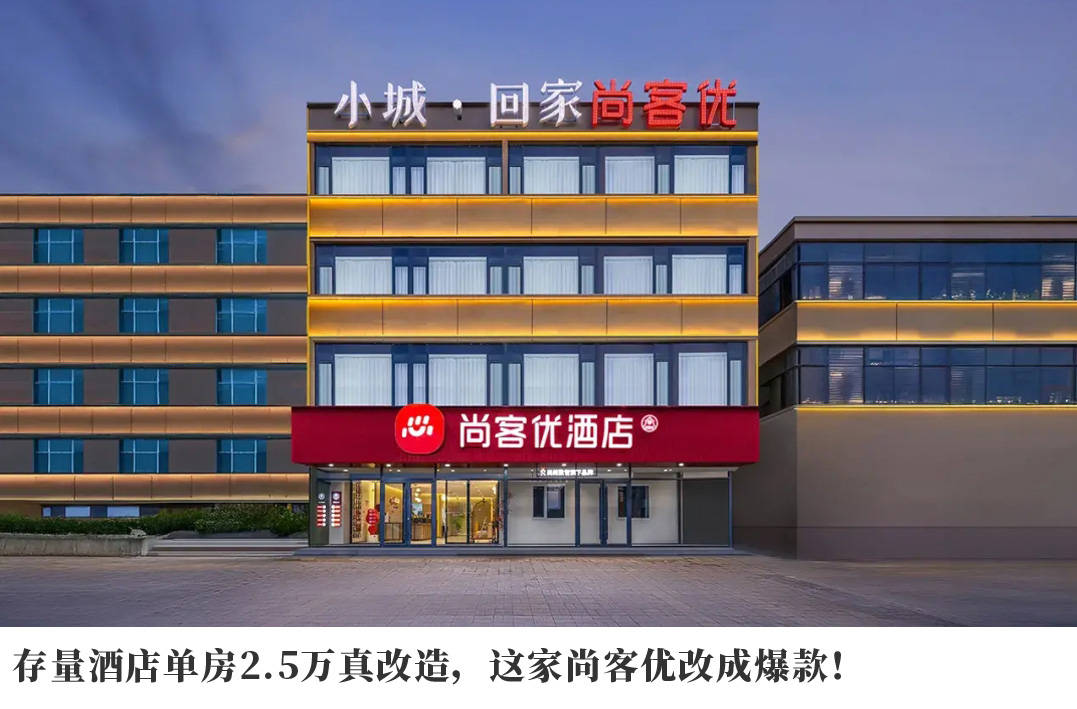
存量酒店面对经营困局,如何避免被割韭菜
Sou Hu Cai Jing· 2026-02-24 09:04
Core Insights - The hotel industry in China faces a mismatch between supply and demand, particularly with the rise of Generation Z as a mainstream consumer group, leading to a need for upgrading existing hotels [2][3] - The focus on upgrading existing hotels should consider brand reputation, market dynamics, and consumer demographics, especially for economic hotels that are in urgent need of renovation [3][15] Group 1: Current State of the Hotel Industry - As of 2024, approximately 60% of hotels in China have been operating for over five years, with economic hotels making up 77.80% of this segment [3] - There are around 430,000 hotels with fewer than 30 rooms, representing 70% of the total accommodation facilities in China, predominantly economic hotels [3] - Many of these hotels are outdated and lack modern management systems, relying heavily on OTA platforms for customer acquisition [5][14] Group 2: Challenges Faced by Existing Hotels - Many small hotels are considered "backward capacity" and struggle with low occupancy rates and pricing power due to outdated facilities [4][8] - The pandemic exacerbated the situation, leading to a significant number of small hotels being eliminated from the market [7] - The average occupancy rate for some hotels, like the 尚客优成都武侯祠锦里酒店, was only 35% before renovation, indicating poor performance [10] Group 3: Renovation and Upgrading Strategies - Successful renovation can significantly improve performance metrics; for instance, the 尚客优 hotel saw a nearly 60% increase in occupancy and a substantial rise in RevPAR after renovation [10][30] - The renovation process must balance cost, operational efficiency, and the need to attract younger consumers who demand better experiences [15][22] - Brands like 尚客优 are focusing on innovative room types and smart technology to enhance the guest experience and meet the expectations of younger travelers [15][29] Group 4: Investment Considerations - Investors are advised to focus on low-cost, quick-return renovation strategies, with a single room renovation cost ideally kept below 40,000 RMB to maintain attractiveness [21][18] - The importance of brand strength and market positioning is emphasized, as brands with a strong growth trajectory and appeal to younger demographics are more likely to succeed [22][23] - The trend towards brand standardization and adaptability in renovation plans is crucial for attracting investment in small hotels [23][24]

2025年11月亚洲(中国)酒店业发展报告
3 6 Ke· 2025-12-16 02:32
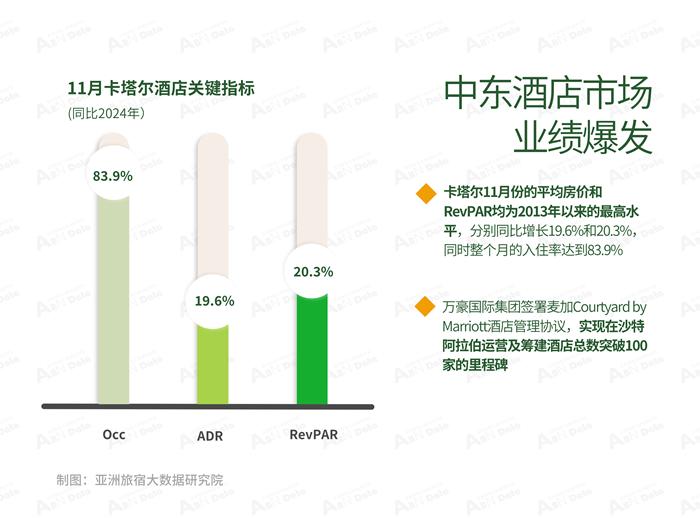
Group 1: Global Hotel Industry Trends - The Middle East has emerged as the hottest hotel market globally, with Qatar's average room rate and RevPAR reaching their highest levels since 2013, increasing by 19.6% and 20.3% year-on-year, respectively [2] - During the Doha Film Festival on November 24, the overall market occupancy rate peaked at 94.2%, the highest since February of this year [2] - In Saudi Arabia, Marriott International signed a management agreement for the Courtyard by Marriott in Mecca, marking a milestone of over 100 hotels in operation and development in the country [2] Group 2: Asia-Pacific Market Developments - In Singapore, two legacy hotels are rebranding to international chains, with a notable acquisition of the Miramar Hotel for 160 million SGD to transform it into a Hilton Garden Inn [4] - Hilton announced plans to expand its luxury and lifestyle hotel brands in Southeast Asia, signing 17 new hotel projects across six countries, adding nearly 4,000 rooms [4] - In Australia, Melbourne's hotel market achieved record highs in ADR and RevPAR, with RevPAR increasing by 8.6% year-on-year, driven by major events [5] Group 3: Personnel Changes in Hotel Groups - Eight hotel groups announced significant personnel changes, including the appointment of three new Vice Presidents for Greater China at InterContinental Hotels Group [7] - Kempinski Hotels appointed Paul Lonergan as Chief Operating and Asset Management Officer to drive performance and asset optimization [7] - Wyndham Hotels announced the departure of its CFO Michele Allen, with Kurt Albert appointed as interim CFO [7] Group 4: Mergers and Acquisitions in Hotel Groups - Junting Hotels approved a cash acquisition of a 21% stake in Zhejiang Junlan Hotel Management for 79.8 million CNY, making it a wholly-owned subsidiary [10] - Marriott International completed the integration of its brand and asset-light business with Another Star, the parent company of citizenM hotels, which will continue to operate under a long-term franchise agreement [10] Group 5: Hotel Asset Transactions - In November, 82 hotel assets were reported for sale, with significant transactions including the sale of two Wanda Hotels for 3.31 billion CNY and 3.28 billion CNY [12] - The Ritz-Carlton in Sanya is listed for sale at 2.265 billion CNY, marking it as the first Ritz-Carlton in a resort area in China [12] - Beijing's Le Meridien Hotel is publicly listed for sale at 3 billion CNY, while the CHAO Hotel in Sanlitun has a starting bid of approximately 1.177 billion CNY [12] Group 6: Hotel Openings and Signings in China - In November, 236 new hotels opened in China, with 29 in the high-end segment, including 20 international brands [14] - A total of 105 hotels were signed, showing a significant increase from the previous month, with notable signings from InterContinental and Wyndham [15] - The construction market in China remains strong, with 3,695 projects totaling 656,873 rooms planned as of the end of Q3 [16] Group 7: Luxury Hotel Rankings and Analysis - The ABN Index for luxury hotels shows high search and new media indices, with Shangri-La Hotels leading the rankings [20][28] - The average score for the search index was 61.32, with top searches focused on hotel openings and acquisitions [28] - The media index saw a slight decline, averaging 108.94, with marketing themes centered around Christmas and New Year events [28]


尚美数智酒店集团发布“尚客优7酒店”
Bei Jing Shang Bao· 2025-11-21 03:18
Core Insights - Shangmei Smart Hotel Group officially launched the new brand "Shangkeyou 7 Hotel" and the "Heart Beautiful Smart Hotel" version 3.0, aiming to enhance hotel investment returns through product innovation and smart upgrades [1][2] Group 1: Product Features - The "Shangkeyou 7 Hotel" features several highlights in product design, including a CLUB social lobby targeting young guests, local culture room cards with "tap" functionality, mini executive suites, 200-inch theater-level viewing rooms, and indoor infinity pool rooms [1] - Three flagship room types were introduced: mini executive suites (25-30 square meters, cost 70,000 yuan per room), "200 theater-level viewing rooms" (18-24 square meters, cost 80,000 yuan per room), and "indoor infinity pool rooms" (approximately 28 square meters, cost 80,000 yuan per room) [1] Group 2: Smart Services and Efficiency - The hotel incorporates smart services such as the Heart Beautiful Smart Body, Huawei anti-spy technology, and features like QR code check-in and late check-out, enhancing guest experience [1] - The upgraded "Heart Beautiful Smart Hotel 3.0" focuses on three product lines: "Smart Body," "Flexible Stay," and "Smart Rooms," with a new generation of smart speakers that can reduce labor costs by 30% and improve service response time to under 10 seconds [2] - The expected increase in revenue from late check-out orders is projected to be 5% to 10% per store [2]