山姆会员店会员卡

Search documents
中产为什么还没放弃山姆?
创业家· 2026-01-19 10:29
Core Viewpoint - The article discusses the competitive landscape of the food delivery and instant retail market in China, focusing on Sam's Club's rapid expansion and the challenges it faces amid rising consumer expectations and scrutiny [4][5][12]. Group 1: Market Competition and Expansion - The food delivery market in China is experiencing a cooling phase, with the State Administration for Market Regulation investigating the competitive status of delivery platforms [4]. - Major players in the instant retail sector, including Meituan, Taobao Shanguo, and JD, are heavily investing in this space, indicating a shift from traditional food delivery to broader instant retail opportunities [5][6]. - Sam's Club, a subsidiary of Walmart, has significantly contributed to Walmart China's growth, achieving strong performance with double-digit growth in transaction volume in 2025 [9][12]. Group 2: Consumer Trust and Brand Image - Despite facing multiple controversies, including product quality issues and negative media coverage, Sam's Club has maintained a strong brand image and consumer loyalty among the middle-class demographic [11][22]. - The willingness of consumers to pay membership fees reflects their trust in Sam's product selection and quality assurance, with annual fees ranging from 260 to 680 yuan [15][17]. - The article highlights that the middle-class consumers' attachment to Sam's Club is reinforced by its ability to meet their quality and identity needs, making it difficult for them to switch to competitors [18][23]. Group 3: Challenges of Rapid Expansion - Sam's Club has accelerated its expansion, opening 10 new stores in 2025, a significant increase compared to previous years [9][32]. - The rapid growth has led to quality control issues, as the supply chain struggles to keep pace with the increased demand, resulting in product quality concerns [32][34]. - The management changes, including the appointment of a former Alibaba executive as CEO, are part of a strategy to achieve scale, but they also bring scrutiny and challenges in maintaining quality standards [33][34].


郑州胖东来再迎新进展!山姆、永辉慌不慌?
3 6 Ke· 2025-12-04 02:29
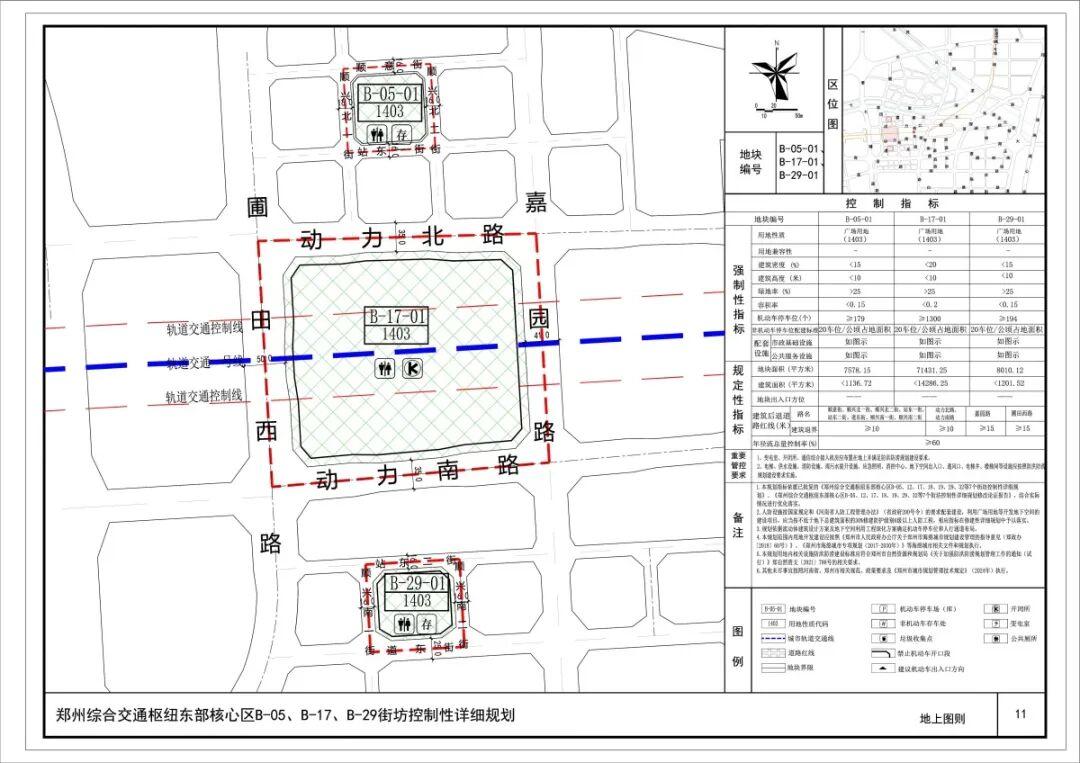
Core Insights - The news highlights the upcoming opening of the first "Fat Donglai" store in Zhengzhou, with significant planning developments for the site [1][7]. Group 1: Site and Planning Details - The B-17-01 plot, where the Fat Donglai store will be located, covers approximately 107 acres (71,431.25 square meters) and is designated as a public square with strict construction guidelines [2][4]. - The above-ground construction is limited to a height of 10 meters, with a building density of no more than 20% and a green space coverage of at least 25% [2][4]. - The underground space will be developed up to three levels, allowing for a maximum depth of 20 meters, with a total building area not exceeding 205,130.34 square meters [4][6]. Group 2: Business Model and Strategy - Fat Donglai's core operational area will be located on the first underground level, with an estimated commercial area of 30,000 to 40,000 square meters, significantly larger than its existing stores in Xuchang and Xinxiang [6][9]. - The company emphasizes a strong service culture, offering full refunds without proof for unsatisfactory products, and plans to distribute 1.5 billion yuan in net profits to employees in 2025 [7][9]. - Fat Donglai's procurement and operations are closely integrated, allowing for rapid adjustments based on consumer demand, enhancing efficiency [7][9]. Group 3: Competitive Landscape - The retail market in Henan is set for a significant transformation, with Fat Donglai projected to achieve sales of 16.964 billion yuan in 2024, while Sam's Club has surpassed 100 billion yuan in sales [9][10]. - The consumer market in Henan shows robust growth, with a retail sales total of 2.76 trillion yuan in 2024, reflecting a 6.1% increase [10][11]. - Local retailers are adapting strategies in response to the competition, with plans to enhance product offerings and service quality to meet evolving consumer preferences [11].
260 元会员费买了个寂寞?山姆货架上的好丽友们,戳破多少中产的精致幻觉?
Sou Hu Cai Jing· 2025-07-17 09:54
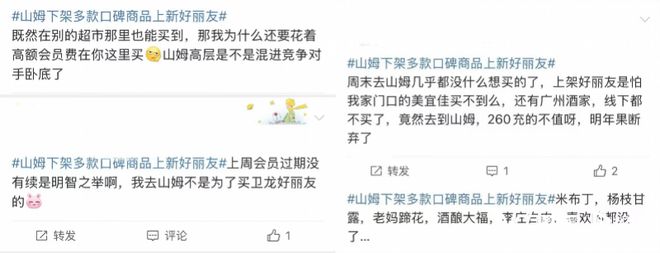
Core Viewpoint - The trust crisis at Sam's Club arises from the introduction of common brands, leading to member dissatisfaction and a decline in perceived value of the membership [1][3][10] Group 1: Membership and Brand Perception - Sam's Club has positioned itself as a symbol of middle-class identity in China, with over 5 million effective members and annual membership revenue exceeding 1.3 billion yuan [2] - The introduction of common brands like Holley Friend and Xu Fu Ji has sparked outrage among members, who feel deceived by the perceived downgrade in product quality [1][3][4] Group 2: Product Quality and Consumer Trust - The launch of the "low-sugar special edition" Holley Friend cake, which was criticized for its taste, has further damaged the brand's image and member trust [3][5] - Reports of food safety issues, such as suspected worm eggs in pork and live insects in milk, have raised concerns about product quality and safety [7][9] Group 3: Management and Strategic Changes - A shift in management has led to a significant reduction in the proportion of imported goods from 42% to 28%, raising concerns about quality in favor of cost-cutting [6][10] - The cancellation of member benefits, such as the right to purchase premium products and changes in cashback rules, has contributed to a sense of diminished value among members [8][9] Group 4: Social Media and Public Response - The hashtag Sam's Selection Downgrade has garnered over 10 million views on social media, indicating widespread discontent among members [1] - Sam's Club's response to the backlash has been criticized for lacking empathy, further alienating its customer base [9][10]
山姆上架好丽友派登上热搜,配料表成分问题引发争议
Nan Fang Du Shi Bao· 2025-07-15 11:24
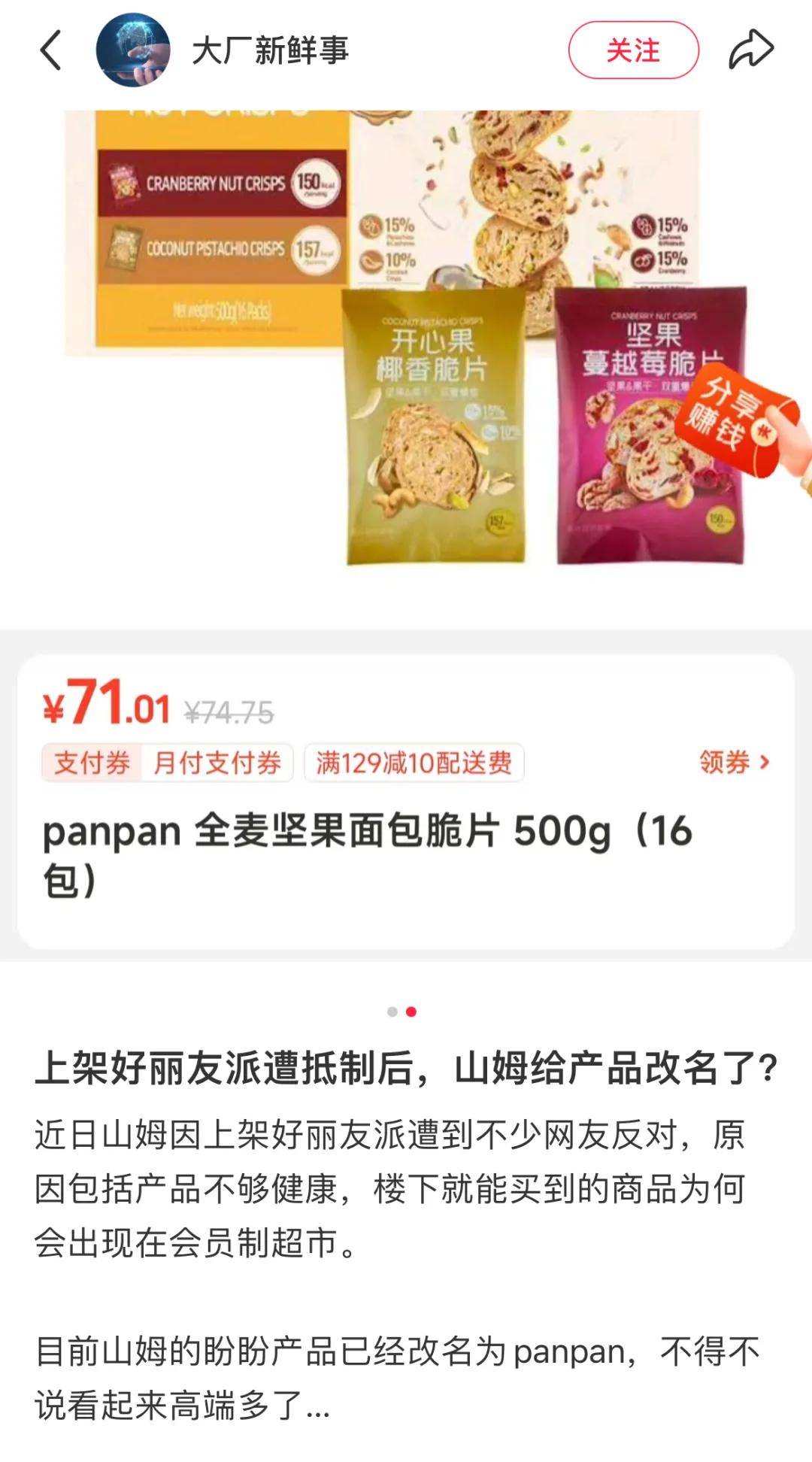
Core Viewpoint - The recent introduction of low-sugar Orion Choco Pie at Sam's Club has sparked significant consumer backlash, primarily due to product selection issues and perceived quality decline, leading to discussions on social media platforms [1][3][5]. Product Launch and Consumer Feedback - Sam's Club launched the low-sugar Orion Choco Pie priced at 49.9 yuan for 48 pieces, averaging 1.04 yuan per piece, which is lower than the official Tmall price range of 1.21 to 1.37 yuan per piece [3]. - Despite the claim of an 80% reduction in sugar content, many consumers reported dissatisfaction with the sweetness level, indicating that the product did not meet their expectations [5]. - The product has received over 9,000 positive reviews on the Sam's app, but there are 406 negative reviews, with many complaints focusing on the sweetness [5]. Ingredient Concerns - The ingredient list of the low-sugar Choco Pie includes shortening, which has raised health concerns due to its potential trans fat content, although the product is labeled as "0 trans fat" [5]. - The cocoa content in the new product has increased by 30% compared to previous versions, now exceeding 3.7%, while the sugar content is reported to be 4.7 grams [3]. Consumer Sentiment and Brand Reputation - The backlash against the new product is compounded by previous controversies surrounding Orion's ingredient transparency, particularly the use of different ingredients in domestic versus international markets [9]. - Consumers have expressed frustration over the removal of popular products from Sam's Club, such as rice pudding and other favorites, which has contributed to negative sentiment [11]. Membership and Revenue Insights - Sam's Club, a subsidiary of Walmart, has seen significant growth in membership revenue, with a reported increase of over 40% in the first quarter ending April 30, 2025 [12]. - The average annual fee for a standard membership is 260 yuan, while the premium membership costs 680 yuan, with over 500,000 active members contributing to annual revenue exceeding 1.3 billion yuan [12]. - Despite the growth in membership revenue, Sam's Club has faced multiple fines for issues related to false advertising and food safety, indicating ongoing challenges in maintaining consumer trust [12].