
左氧氟沙星片

Search documents
原料药龙头东亚药业预亏近亿,转型之路仍崎岖
Xin Lang Zheng Quan· 2026-01-30 06:56
Group 1 - The company East Asia Pharmaceutical is expected to report a net loss of between 75 million to 90 million yuan for the year 2025, indicating a continued decline in performance despite a narrowing loss compared to the previous year [1] - The company's revenue has decreased from 1.356 billion yuan in 2023 to 596 million yuan in the first three quarters of 2025, while the net profit has shifted from a profit of 121 million yuan to a loss of approximately 72.41 million yuan [2] - The asset-liability ratio has increased from 39.72% in 2023 to 46.46% in the third quarter of 2025, highlighting growing financial risks [2] Group 2 - The antimicrobial drug market is under pressure due to strict regulations on the use of antimicrobial drugs in medical institutions, significantly compressing market space [3] - The company has a high dependency on antimicrobial products, which limits its ability to withstand industry policy changes and market fluctuations [3] Group 3 - The company has proposed a "raw material drug formulation integration" strategy to enhance competitiveness, but the progress of this transformation has been slow [4] - Only one product, levofloxacin tablets, has been approved so far, while most others are still in the application stage, making it difficult to achieve significant contributions in the short term [4] - Internal governance issues have emerged, as the company received a regulatory warning from the Shanghai Stock Exchange for inaccurate disclosure of fundraising purposes and failure to follow review procedures [4] Group 4 - The company's ability to successfully scale its formulation business, optimize its product structure, and improve internal governance will be crucial for overcoming its loss situation and achieving sustainable development [5]
东亚药业去年预亏或高达9000万元,转型效果未达预期
Bei Ke Cai Jing· 2026-01-23 11:49
Core Viewpoint - Dongya Pharmaceutical is expected to report a net loss of between 75 million to 90 million yuan for 2025, showing a continued decline in performance due to various challenges in the industry [1] Revenue Factors - The company's revenue is impacted by domestic price reductions from centralized procurement, intensified market competition, and significant changes in demand for its products, particularly cephalosporins, leading to a revenue decline of 1.08 billion yuan year-on-year [1][4] - The operating income for 2023, 2024, and the first three quarters of 2025 were 1.356 billion yuan, 1.198 billion yuan, and 596 million yuan, reflecting year-on-year changes of -15.00%, -11.66%, and -38.08% respectively [4] Expense Factors - Increased fixed asset depreciation and bank loan interest expenses have negatively impacted the company's performance by approximately 32 million yuan [2] Asset Factors - The company plans to make provisions for asset impairment, including a 35 million yuan provision for inventory write-downs due to expected net realizable values being lower than costs [3] Strategic Response - In response to industry challenges, Dongya Pharmaceutical is implementing an integrated raw material and formulation strategy, focusing on maintaining market share and enhancing its product pipeline through continuous R&D investment [3][6] - The company has submitted applications for several new drug registrations, including cephalosporins and other formulations, but the progress has been slower than expected, with only one of over ten applications approved so far [6] Market Challenges - The antibiotic market has been shrinking due to stricter regulations on antibiotic usage, which has directly compressed market space for Dongya Pharmaceutical [5][6] - The company's high reliance on antibiotic products poses significant market and policy risks, as the competitive landscape for these products is intense [6] Governance Issues - In October 2024, the company faced regulatory warnings for information disclosure violations, which could affect investor confidence and financing capabilities [7]
浙江东亚药业股份有限公司2025年度业绩预告
Shang Hai Zheng Quan Bao· 2026-01-22 19:02
Core Viewpoint - Zhejiang Dongya Pharmaceutical Co., Ltd. expects a significant net loss for the fiscal year 2025, with projected losses ranging from 75 million to 90 million yuan [2][4]. Group 1: Performance Forecast - The performance forecast period is from January 1, 2025, to December 31, 2025 [3]. - The company anticipates a net profit attributable to shareholders of the listed company to be between -90 million yuan and -75 million yuan [2][4]. - The expected net profit, excluding non-recurring gains and losses, is projected to be between -102 million yuan and -87 million yuan [2][5]. Group 2: Previous Year Performance - In the same period last year, the total profit was -118.17 million yuan, with a net profit attributable to shareholders of -100.66 million yuan [6]. - The net profit, excluding non-recurring gains and losses, was -98.41 million yuan [6]. - The earnings per share for the previous year were -0.90 yuan per share [7]. Group 3: Reasons for Expected Loss - The primary reasons for the expected loss include: - **Revenue Side**: The company faced a decline in revenue due to domestic centralized procurement price reductions, industry-related policies, and intensified market competition, particularly affecting cephalosporin products [8]. - **Cost Side**: Increased fixed asset depreciation and bank loan interest expenses due to new projects being completed and capitalized, impacting the company's performance by approximately 32 million yuan [9]. - **Asset Side**: The company plans to make provisions for asset impairment, including a provision for inventory depreciation of around 35 million yuan, based on the principle of prudence and current operational conditions [10]. Group 4: Strategic Response - Despite the challenges, the company is committed to its integrated development strategy of raw materials and formulations, aiming to enhance product lines and competitiveness [10]. - The management is focused on maintaining market share, adjusting product structures, and investing in research and development to enrich the product pipeline [10].
东亚药业发预亏,预计2025年度归母净亏损7500万元至9000万元
Zhi Tong Cai Jing· 2026-01-22 08:30
Core Viewpoint - East Asia Pharmaceutical (605177.SH) forecasts a net loss attributable to shareholders of 75 million to 90 million yuan for the fiscal year 2025 [1] Group 1: Financial Performance - The company anticipates a net loss of 75 million to 90 million yuan for 2025 [1] Group 2: Product Development - During the reporting period, the company has submitted a batch of applications for raw materials and formulations [1] - The company has obtained its first formulation approval for Levofloxacin tablets, marking a significant breakthrough in its integrated development strategy of raw materials and formulations [1] - This approval will enrich the company's product line, enhance its competitiveness, and contribute to sustainable and stable development [1] - The experience gained from this approval will be valuable for future formulation registration certificate applications [1]
东亚药业(605177.SH)发预亏,预计2025年度归母净亏损7500万元至9000万元
智通财经网· 2026-01-22 08:28
Core Viewpoint - East Asia Pharmaceutical (605177.SH) forecasts a net loss attributable to shareholders of 75 million to 90 million yuan for the fiscal year 2025 [1] Group 1: Financial Performance - The company anticipates a net loss of 75 million to 90 million yuan for 2025 [1] Group 2: Product Development - During the reporting period, the company has applied for a batch of new approvals for raw materials and formulations [1] - The company has obtained its first formulation approval for Levofloxacin tablets, marking a significant breakthrough in its integrated development strategy of raw materials and formulations [1] - This approval will enrich the company's product line, enhance its competitiveness, and promote sustainable, stable, and healthy development [1] - The experience gained from this approval will be valuable for future formulation registration certificate applications [1]
第十二批集采8个品种备战!千亿市场大跌,复方注射剂飙涨219%,这家南京药企起飞
Xin Lang Cai Jing· 2026-01-08 11:37
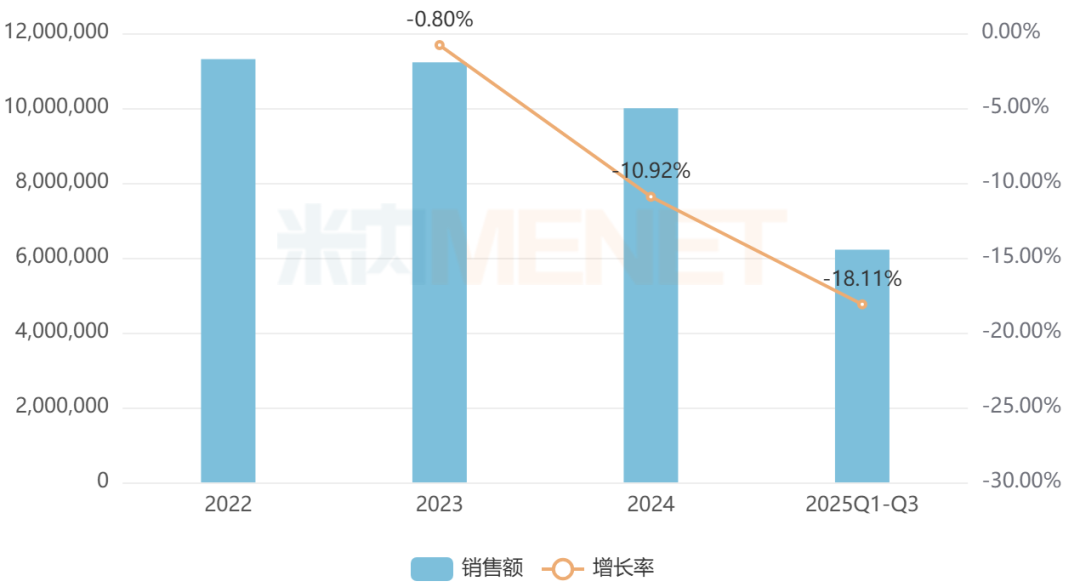
Core Viewpoint - The antibacterial drug market in China is under pressure, with sales expected to drop below 100 billion yuan in 2024 and continue declining by approximately 18% in the first three quarters of 2025, reaching over 60 billion yuan [1][14]. Market Performance - The total sales of systemic antibacterial drugs in public medical institutions in China have been declining, with a significant drop in sales from 2024 to 2025 [1][14]. - The market for systemic antibacterial drugs includes 12 major therapeutic categories, with cephalosporins leading but experiencing four consecutive years of sales decline from 2022 to the first three quarters of 2025 [3][16]. Company Rankings - In the ranking of major companies, Pfizer, China National Pharmaceutical Group, and North China Pharmaceutical Group hold the top three positions, with sales exceeding 6.2 billion yuan, 2.1 billion yuan, and 1.9 billion yuan respectively in the first three quarters of 2025 [5][18]. - Nanjing Youke Biological, ranked fifteenth, showed remarkable growth with a year-on-year increase of 137.17%, marking its first entry into the top 20 groups [5][18]. Product Performance - The top 20 systemic antibacterial drugs accounted for over 50% of the market share, with the leading product, injectable cefoperazone/sulbactam (2:1), achieving sales of over 4.5 billion yuan [21][22]. - Notably, the compound injection of cefoperazone/sulbactam saw a dramatic increase of 219.32%, marking a significant rise in its market presence [21][23]. National Procurement Impact - Among the top 20 products, 15 have been included in the national procurement program, with 13 experiencing double-digit declines in sales [21][23]. - The tenth batch of national procurement saw injectable piperacillin/tazobactam drop by 55.61%, while the eleventh batch saw injectable cefoperazone/sulbactam decline by 47.56% [21][23]. New Drug Development - Currently, there are no domestic class 1 new drugs among the top 20 systemic antibacterial products, although five class 1 new antibacterial drugs have been approved since 2021 [25][26]. - Eight products meet the criteria for national procurement inclusion, with seven being injectable forms and one oral formulation [25][26].



仿制药上市越来越难了!不到一个月百款药物上市申请被拒
Di Yi Cai Jing· 2025-12-23 11:24
Core Viewpoint - The recent surge in drug notification letters from the National Medical Products Administration indicates a tightening of approval processes for generic drugs in China, with a significant increase in rejected or withdrawn applications in December compared to November [1][5]. Group 1: Drug Approval Trends - As of December 19, 2023, a total of 167 drug notification letters were issued, with 102 related to generic drug applications, marking a doubling in rejections or withdrawals compared to November [1]. - The therapeutic areas affected include cardiovascular, metabolic diseases, nervous system, respiratory, anti-infection, oncology, ophthalmology, dermatology, and digestive systems, with specific drugs like sacubitril/valsartan and sitagliptin/metformin among those impacted [1]. - Multiple manufacturers faced challenges with the same drug, such as the allergy treatment bilastine, which had six companies involved in unsuccessful applications [2]. Group 2: Reasons for Rejections - Some companies, like Jiutian Pharmaceutical, have publicly stated that their withdrawal was due to the need for further data refinement after discussions with the National Drug Review Center [3]. - Manufacturers of rejected generic drugs indicated that the primary issues were related to raw materials rather than the formulations themselves [3]. Group 3: Regulatory Changes - The approval process for generic drugs is tightening, as indicated by the recent drafts of guidelines from the National Medical Products Administration, which outline significant deficiencies in pharmaceutical research and bioequivalence studies [5][6]. - The new guidelines suggest that applications with major deficiencies will not be allowed to supplement their materials, leading to more rejections based on existing documentation [5]. Group 4: Market Dynamics - The Chinese generic drug market is facing increased competition, with a significant number of companies vying for approval of similar products, leading to market saturation [7]. - The report from the Chinese Academy of Medical Sciences indicates that by 2024, generic drugs will still account for 50% of the overall pharmaceutical market, with a notable increase in the number of approved generic varieties [7]. - The market concentration remains low, with the top ten companies holding around 22% of the market share, indicating ongoing challenges for profitability in the generic sector [7]. Group 5: Industry Insights - Industry experts have noted that the increasing number of generic drug projects, often with lower development costs compared to innovative drugs, contributes to market saturation and competition [8]. - Concerns about "internal competition" in the generic drug sector have prompted calls for regulatory adjustments to optimize the approval process and reduce unnecessary resource expenditure [8].
昂利康第三季度净利同比增长164.77% 抗癌创新药进展顺利打开成长空间
Zheng Quan Ri Bao Zhi Sheng· 2025-10-28 09:41
Core Viewpoint - Zhejiang Anglikang Pharmaceutical Co., Ltd. reported significant growth in revenue and net profit for the first three quarters of 2025, driven by product structure optimization and high-margin products [1][3]. Financial Performance - The company achieved a revenue of 1.055 billion yuan and a net profit of 77.6899 million yuan, marking a year-on-year increase of 55.59% [1]. - In Q3 alone, revenue reached 331 million yuan, up 20.67% year-on-year, with net profit soaring by 164.77% to 11.7647 million yuan [1]. Strategic Developments - Anglikang is transitioning towards a "combination of generics and innovation" model, with its innovative drug pipeline progressing well, particularly the ALK-N001 project entering Phase I clinical trials [1]. - The collaboration with Shanghai Qinhuali Biopharmaceutical Technology Co., Ltd. on the ALK-N002/IMD-1005 project enhances Anglikang's position in the oncology drug market [2]. Product Pipeline and Market Position - ALK-N002/IMD-1005 is a novel IgG1 subtype antibody targeting CD47, showing promising preclinical results in inhibiting tumor growth in specific cancer models [2]. - The partnership is expected to enrich Anglikang's product matrix in the anti-tumor innovation drug sector, boosting its competitive strength [2]. Industry Context - The pharmaceutical industry is undergoing structural adjustments and innovation upgrades, with Anglikang successfully navigating these changes through clear strategic planning [3]. - Short-term support for Anglikang's business comes from the market expansion of generic drugs like levofloxacin and effective cost control [3]. - Long-term growth potential is linked to the clinical advancement of the ALK series innovative drug projects and the realization of value from industry chain investments [3].
昂利康三季度净利增幅超160%,抗癌创新药进展顺利打开未来成长空间
Quan Jing Wang· 2025-10-27 01:32
Core Viewpoint - The company, Anglikang, reported significant growth in revenue and net profit for the first three quarters of the year, indicating a strong recovery in its financial performance and a shift towards accelerated profitability release [1][2]. Financial Performance - For the first three quarters, Anglikang achieved a revenue of 1.006 billion yuan and a net profit attributable to shareholders of 77.69 million yuan, marking a year-on-year increase of 55.59% [1]. - In the third quarter alone, the company generated revenue of 331 million yuan, a year-on-year growth of 20.67%, and a net profit of 11.76 million yuan, which represents a substantial year-on-year increase of 165% [1]. Product Strategy - The growth in profitability is attributed to the company's ongoing product structure optimization strategy, with a continuous increase in the proportion of high-margin products, leading to a gross margin rise to 38.59%, up by 7.15 percentage points year-on-year [1]. - Anglikang is transitioning towards a "combination of generics and innovation" development model, with its innovative drug pipeline progressing well [1]. Innovation and Collaboration - The ALK-N001 project has entered Phase I clinical trials, and the company has reached an agreement with a partner for the second innovative drug project, ALK-N002/IMD-1005, further enhancing its innovative drug research and development capabilities [1][2]. - ALK-N002/IMD-1005 is a globally innovative targeted antibody drug that may provide new immunotherapy options for cancer patients, showing promising preclinical results in tumor models [2]. Market Position and Future Outlook - The partnership with the collaborator is expected to enrich the company's product matrix in the anti-tumor innovative drug field, enhancing its overall competitiveness [2]. - Anglikang's investment in its subsidiary, Haichang Bio, which plans to apply for a Hong Kong stock listing, is anticipated to inject new momentum into its development and open new paths for value growth [2]. - The current pharmaceutical industry is undergoing structural adjustments and innovation upgrades, and Anglikang's clear strategic layout positions it well for breakthroughs in this environment [2].
挪用募资、信披违规被罚,亏损中的东亚药业转型路在何方?
Bei Ke Cai Jing· 2025-10-23 10:03
Core Viewpoint - Zhejiang Dongya Pharmaceutical Co., Ltd. is facing regulatory scrutiny due to discrepancies in the use of raised funds compared to what was disclosed in its IPO prospectus, leading to a warning for its former board secretary and ongoing financial challenges for the company [1][2][3]. Group 1: Regulatory Issues - Zhejiang Securities Regulatory Bureau found that Dongya Pharmaceutical's actual use of raised funds did not align with the disclosures made in its IPO prospectus, and the company failed to follow internal review procedures for these changes [2]. - The company has been ordered to rectify these issues, and the violations will be recorded in the securities market's integrity archives [2][3]. Group 2: Financial Performance - Dongya Pharmaceutical's revenue for 2022, 2023, 2024, and the first half of 2025 were reported at 1.18 billion, 1.36 billion, 1.20 billion, and 416 million respectively, with year-on-year growth rates of 65.62%, 15.00%, -11.66%, and -35.85% [4]. - The net profit attributable to shareholders for the same periods was 104 million, 121 million, -101 million, and -30.23 million, with year-on-year growth rates of 52.46%, 16.11%, -183.02%, and -193.09% [4]. - The company's debt-to-asset ratio has increased from 25.56% in 2022 to 47.70% in the first half of 2025, indicating rising financial leverage [4]. Group 3: Business Challenges - Dongya Pharmaceutical's core antibacterial drug business is under significant pressure due to the government's "antibiotic restriction orders," which have limited the market space for antibacterial drugs [5][6]. - The company has attempted to implement a "raw material drug formulation integration" strategy, but progress has been slow, with only one of over ten submitted formulations receiving approval [7]. - The existing product structure remains heavily reliant on antibacterial drugs, exposing the company to substantial market and policy risks [7].