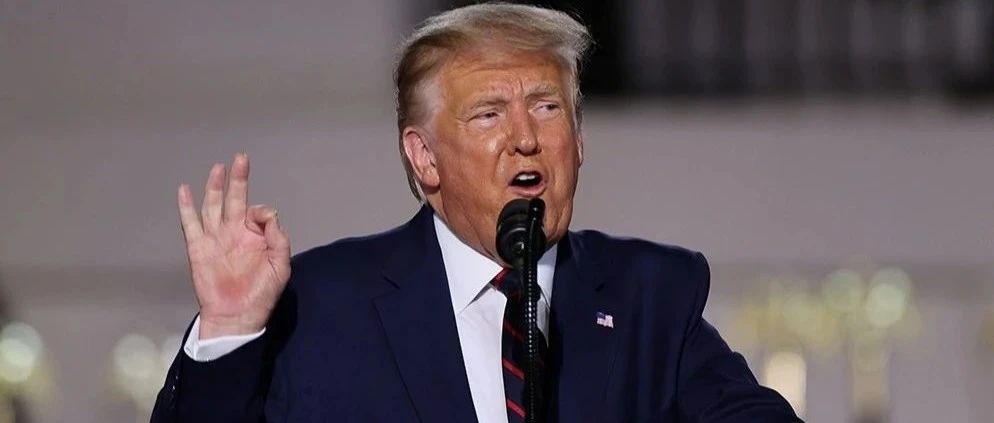
巴西商品

Search documents
决不妥协!巴西已经出手,卢拉誓言反制美国关税,特朗普发出的“最后通牒”无效?白宫吞下苦果
Sou Hu Cai Jing· 2025-07-15 11:57
Group 1 - The Brazilian government, represented by Agriculture Minister Carlos Favaro, criticized the U.S. decision to impose a 50% tariff on Brazilian goods as an "unfair measure" and plans to seek alternative markets in the Middle East and South Asia [1] - Brazilian President Lula indicated that the government could take various actions in response to the U.S. tariffs, including filing a complaint with the WTO and implementing reciprocal measures based on the recently passed economic equivalence law [1] - The Brazilian government has expressed dissatisfaction with the U.S. tariffs and has summoned the U.S. chargé d'affaires for clarification regarding comments made about former President Bolsonaro [1] Group 2 - The Brazilian newspaper "O Estado de S. Paulo" suggested that imposing a 50% tariff on Brazilian products would not alleviate the legal troubles faced by former President Bolsonaro and would be counterproductive to U.S. economic goals [3] - China's Foreign Ministry emphasized that tariffs should not be used as tools for coercion or interference in other countries' internal affairs, highlighting the principle of sovereign equality [3] Group 3 - President Trump announced plans to impose a uniform tariff of 15% or 20% on nearly all remaining trade partners, indicating a broader strategy of increasing tariffs [5] - The U.S. has already sent tariff warning letters to countries like South Korea and Japan, which have been described as lacking negotiation sincerity and reducing dialogue opportunities [5] Group 4 - The German automotive industry is facing significant losses due to U.S. tariffs, with calls for a swift resolution to the trade conflict [7] - Economic experts warn that the imposition of high tariffs on EU goods could lead to substantial trade disruptions and an escalation of economic conflict between the U.S. and EU [7] - Recent data indicates that U.S. companies are beginning to feel the impact of tariffs, with prices for imported steel and aluminum rising nearly 30% from January to May, affecting various sectors reliant on these materials [7]

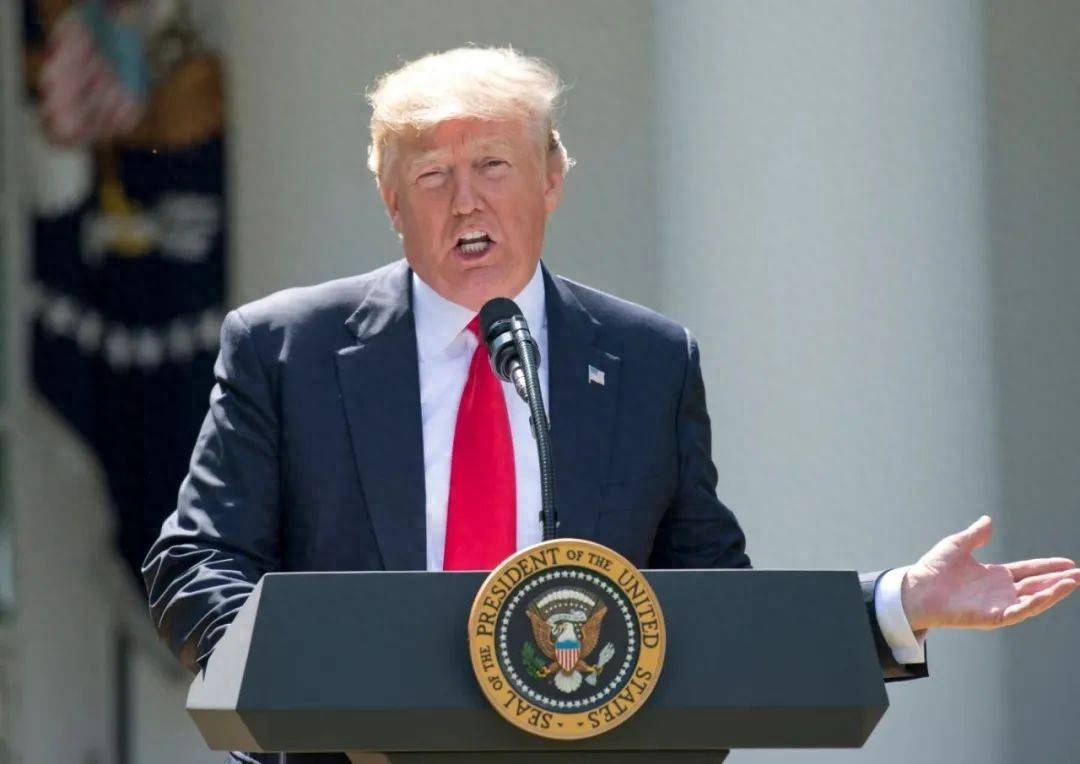
最新!巴西总统称将与美国进行关税谈判,若无效将采取对等反制措施!加拿大工业部长也强硬回应美关税措施......
Mei Ri Jing Ji Xin Wen· 2025-07-10 22:31
Group 1 - The core issue revolves around the U.S. imposing a 50% tariff on Brazilian goods starting August 1, prompting Brazil to consider retaliatory measures and engage in negotiations with the U.S. [1][5] - Brazilian President Lula has stated that Brazil will prioritize negotiations and may file a complaint with the World Trade Organization if talks fail [4][5] - Brazil's Economic Reciprocity Law allows for countermeasures against countries that impose unfavorable trade measures, which could include imposing a 50% tariff on U.S. exports to Brazil [4] Group 2 - Brazil's Agriculture Minister Carlos Favaro criticized the U.S. tariff as an "unjust action" and indicated a shift in focus towards markets in the Middle East and South Asia as alternative export options [5] - The Brazilian government has formally rejected a letter from former U.S. President Trump regarding the tariff and has summoned the U.S. chargé d'affaires for clarification on comments made about former President Bolsonaro [5][6] - Bolsonaro is currently under investigation by Brazil's Supreme Court for alleged involvement in a coup attempt following his electoral defeat in 2022 [6] Group 3 - Canadian Industry Minister Mélanie Joly has responded strongly to the U.S. tariff on copper imports, stating that Canada will firmly oppose the measure, although specific counteractions were not disclosed [8] - The U.S. tariff on copper is set to take effect on August 1, with Canada exporting approximately CAD 9.3 billion worth of copper and copper-based products in 2023, half of which goes to the U.S. [8]
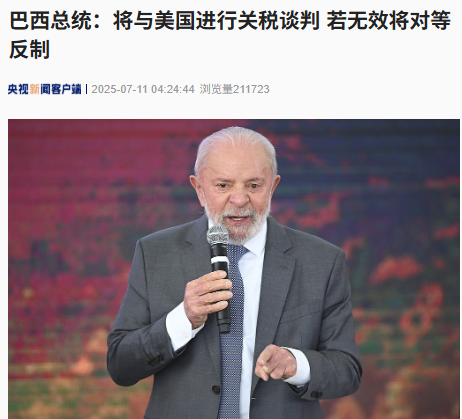
关税突发!特朗普宣布→
第一财经· 2025-07-10 00:01
Group 1 - The core viewpoint of the article is that the U.S. is imposing new tariffs on products from eight countries, with varying rates based on the country, starting from August 1, 2025 [2] - The tariffs include a 20% rate on products from the Philippines, 25% on products from Brunei and Moldova, 30% on products from Algeria, Iraq, Sri Lanka, and Libya, and a significant 50% on products from Brazil [2] - Brazil's Vice President criticized the U.S. tariffs as unfair, highlighting that Brazil has a trade surplus with the U.S. and questioning the rationale behind the increased tariffs [3] Group 2 - The Vice President of Brazil pointed out that the new tariffs could harm the U.S. economy, as the trade relationship is interconnected, particularly in sectors like steel and metallurgical coal [3]