
贸易冲突

Search documents
软商品日报:震荡延续-20260226
Guan Tong Qi Huo· 2026-02-26 11:07
Group 1: Report Industry Investment Rating - No relevant content Group 2: Report's Core View - Cotton's rebound was interrupted by potential trade conflicts, and whether the tariff conflict will actually form is an important factor affecting near - term supply and demand. The supply - demand structure of US cotton is gradually tightening, but the impact of US tariff policy adjustments on demand expectations needs attention. The outcome of the Sino - US sixth round of economic and trade consultations will also affect the sentiment [1]. - The supply of white sugar is loose and demand is insufficient. The Brazilian sugar production is less than expected, but the sugar production in the Northern Hemisphere, especially in India, pressures the price. The inner - market Zheng sugar is eager to move, but the weakness of raw sugar leads to an expansion of import profits, and it is estimated that white sugar will continue to fluctuate at the bottom [2]. Group 3: Summary by Related Catalog Cotton - After the US Supreme Court rejected Trump's global reciprocal tariff, Trump announced a general tariff of 10% which would rise to 15%. China is closely monitoring and will evaluate US measures and may adjust counter - measures. The supply - demand structure of US cotton is tightening, with reduced planting area expectations in Brazil and China. The US tariff policy and Sino - US trade negotiations are key factors to watch [1]. White Sugar - As of February 25, the number of ships waiting to load sugar in Brazilian ports decreased from 43 to 41, and the quantity of sugar waiting to be shipped decreased from 157.7 million tons to 146.17 million tons. The estimated cost of processing and paying taxes for Brazilian sugar within the quota is 3847 yuan/ton, and outside the quota is 4881 yuan/ton. The estimated profit within the quota is 1603 yuan/ton, and outside the quota is 569 yuan/ton. Brazilian sugar production is less than expected, but Indian sugar production in the Northern Hemisphere pressures the price. The outer - market raw sugar 03 contract faces a huge delivery of 1.7 million tons, indicating loose supply and insufficient demand. The inner - market Zheng sugar may continue to fluctuate at the bottom [2].
天然橡胶日度策略报告-20260225
Fang Zheng Zhong Qi Qi Huo· 2026-02-25 01:53
Group 1: Report Summary - The report is a daily strategy report on natural rubber by the Futures Research Institute of Fangzheng Mid-term [3] - It was written on February 24, 2026 [1] Group 2: Investment Ratings - No investment ratings provided in the report Group 3: Core Views - After the Spring Festival, the chemical industry and the stock market rose sharply, boosting the rubber futures price to challenge the previous high. The overseas spot price of rubber was stable to firm during the holiday, and the suspension of production in rubber-producing areas supported the rubber price [3] - In the US, the GDP growth rate in Q4 2025 was 1.4% quarter-on-quarter annualized, lower than the market expectation of 2.5% and the revised value of 4.4% in Q3. The PCE price index rose 2.9%, higher than the previous value of 2.8%. The core CPI annual rate in January 2026 dropped to 2.5%, a five - year low. The expectation of interest rate cuts has increased [3] - The confrontation between the US and Iran has escalated, and the Russia - Ukraine negotiation has not made substantial progress, causing the crude oil price to gap up, which in turn drove up the synthetic rubber price. However, the potential decline in geopolitical sentiment and the rise in macro - hedging sentiment could lead to a retracement of the crude oil price premium [3] - The US President Trump signed an executive order to impose a 10% global tariff on all countries, increasing market concerns about a new round of trade conflicts [4] - As of February 8, 2026, the social inventory of natural rubber in China was 1.296 million tons, a month - on - month increase of 15,000 tons or 1.2%, which is a major risk factor for the current rise in rubber prices [4] - The rubber - producing areas are gradually entering the off - season, and the raw material price is stable to firm. The downstream is in the seasonal off - season with weak terminal demand, and the finished product inventory is increasing. The supply - demand surplus pattern is expected to gradually improve in the long - term [4] - For rubber trading, take partial profits on long single - sided positions at high levels and avoid chasing the market at high levels due to the volatile macro sentiment [4] Group 4: Section Summaries Part I: Rubber Variety View Summary - For rubber, the recommended strategy is to buy on dips. The main logic is the continuous small increase in domestic spot inventory, stable overseas supply, firm spot price, and the boost from macro sentiment. The support range is 15,500 - 15,800, and the pressure range is 16,300 - 16,500. The market is expected to fluctuate upwards [10] - For 20 - number rubber, the recommended strategy is also to buy on dips. The main logic is that the dark - colored rubber has reached an inventory turning point, the Thai glue price is firm, and the output in Q4 is declining. The support range is 12,700 - 12,800, and the pressure range is 13,420 - 13,805. The market is expected to recover from the bottom [10] Part II: Futures Market Review I. Futures Market Review - The closing price of the rubber continuous contract was 17,030, with a daily increase of 3.90% or 640. The trading volume was 245,962, and the open interest was 162,068 [10] - The closing price of the 20 - number rubber continuous contract was 13,795, with a daily increase of 3.96% or 525. The trading volume was 66,703, and the open interest was 47,522 [10] - The closing price of the Singapore TSR20 continuous contract was 194, with a daily increase of 0.57% or 1. The trading volume was 1,899, and the open interest was 24,490 [10] II. Futures Market Warehouse Receipts - The latest warehouse receipt quantity of 20 - number rubber was 50,601, a year - on - year change of - 4.20%. The warehouse receipts have rebounded from a low level, and the market's expectation of inventory accumulation has resurfaced [14] - The latest warehouse receipt quantity of rubber was 112,570, a year - on - year change of - 40.42%. A large number of warehouse receipts were cancelled today, and the futures inventory has dropped sharply year - on - year, increasing the delivery risk of futures contracts and supporting the RU futures price [14] Part III: Spot Market Trends - The spot price of natural rubber was 16,283 yuan/ton, a month - on - month decrease of 109 yuan/ton and a year - on - year decrease of 853 yuan/ton [19] - The price of Yunnan glue was 14,200 yuan/ton, unchanged month - on - month and a year - on - year decrease of 1,800 yuan/ton [19] - The price of Thai Haie glue was 62 Thai baht/kg, unchanged month - on - month and a year - on - year decrease of 4 Thai baht/kg [19] - The price of Thai Haie cup rubber was 57 Thai baht/kg, a month - on - month increase of 1 Thai baht/kg and a year - on - year decrease of 5 Thai baht/kg [19] - The price of Thai 20 - number standard rubber in Qingdao Free Trade Zone was 1,980 US dollars/ton, unchanged month - on - month and a year - on - year decrease of 170 US dollars/ton [19] Part IV: Basis and Spread Situation - The basis of the RU main contract was - 32, a month - on - month increase of 10 and a year - on - year increase of 437 [24] - The basis of the NR main contract was 1,820, a month - on - month increase of 90 and a year - on - year increase of 115 [24] - The non - standard basis of Thai mixed - RU was - 985, a month - on - month decrease of 55 and a year - on - year increase of 250 [24] - The non - standard basis of SVR3L - RU was 235, a month - on - month decrease of 100 and a year - on - year increase of 570 [24] - The cross - variety spread of RU - NR was 3,235, a month - on - month increase of 100 and a year - on - year increase of 695 [24] - The spread between light and dark - colored rubber (whole milk - Thai mixed) was 720, a month - on - month increase of 55 and a year - on - year decrease of 30 [24] Part V: Inter - month Spread Situation - For rubber, the 5 - 9 spread was 200, a month - on - month increase of 80 and a year - on - year increase of 345. It is expected to fluctuate within a range, and the recommended strategy is to wait and see [26] - For 20 - number rubber, the 3 - 4 spread was - 70, a month - on - month decrease of 10 and a year - on - year decrease of 365. It is expected to fluctuate within a range, and the recommended strategy is to wait and see [26] Part VI: Industrial Supply, Demand and Inventory Situation - No specific data summaries were provided in the text, only the figure descriptions related to supply, demand and inventory were given [30] Part VII: Option - related Data - No specific data summaries were provided in the text, only the figure descriptions related to option data were given [34]
天然橡胶周度策略报告-20260224
Fang Zheng Zhong Qi Qi Huo· 2026-02-24 05:27
1. Report Industry Investment Rating There is no information provided in the report regarding the industry investment rating. 2. Core Viewpoints of the Report - After the Spring Festival, the opening price of industrial products is likely to be higher. It is recommended to temporarily observe rubber unilaterally, and avoid chasing high prices due to the fluctuating macro - sentiment. For the RU main contract, the support level is between 15,700 - 15,800, and the pressure level is between 16,100 - 16,400. For the NR main contract, the support level is between 12,800 - 13,000, and the pressure level is between 13,420 - 13,800 [3]. - The rubber is recommended to be bought on dips. The domestic spot inventory is continuously accumulating slightly, overseas supply has no obvious fluctuations, the spot price is firm, and the macro - sentiment boosts the commodity market. It is expected to fluctuate and rise. The 20 - number rubber is also recommended to be bought on dips. The dark - colored rubber has reached an inventory inflection point, the Thai glue price is firm, the output in the fourth quarter has declined, and there is still support below. It is expected to rebound from the bottom [9]. 3. Summary According to the Directory First Part: Rubber Variety Viewpoint Summary - **Rubber**: The recommended strategy is to buy on dips. The supporting logic is that the domestic spot inventory is continuously accumulating slightly, overseas supply has no obvious fluctuations, the spot price is firm, and the macro - sentiment boosts the commodity market. The support range is 15,500 - 15,800, the pressure range is 16,300 - 16,500, and the market is expected to fluctuate and rise [9]. - **20 - number rubber**: The recommended strategy is to buy on dips. The supporting logic is that the dark - colored rubber has reached an inventory inflection point, the Thai glue price is firm, the output in the fourth quarter has declined, and there is still support below. The support range is 12,700 - 12,800, the pressure range is 13,420 - 13,805, and the market is expected to rebound from the bottom [9]. Second Part: Futures Market Review 1. Futures Market Review | Variety | Closing Price | Daily Change (%) | Daily Change Value | Trading Volume | Open Interest | | --- | --- | --- | --- | --- | --- | | Rubber Main Contract | 16,315 | - 1.42 | - 235 | 165,470 | 140,235 | | 20 - number Rubber Main Contract | 13,180 | - 1.90 | - 255 | 47,212 | 47,785 | | Singapore TSR20 Main Contract | 193 | 0.42 | 1 | 10 | 24,540 | [9] 2. Futures Market Warehouse Receipt Situation - The latest warehouse receipt volume of 20 - number rubber is 50,803, with a year - on - year change of - 20.13%. The warehouse receipt has rebounded from a low level recently, and the market's inventory accumulation expectation has resurfaced. - The latest warehouse receipt volume of rubber is 112,570, with a year - on - year change of - 38.86%. The warehouse receipt was significantly cancelled again today, the futures inventory has dropped sharply year - on - year, the delivery risk of futures contracts has increased, which supports the RU futures price [13]. Third Part: Spot Market Trends | Variety | Spot Price | Month - on - Month Change | Year - on - Year Change | | --- | --- | --- | --- | | Natural Rubber (Yuan/ton) | 16,283 | - 109 | - 853 | | Yunnan Glue (Yuan/ton) | 14,200 | 0 | - 1,800 | | Thai Hat Yai Glue (Thai Baht/kg) | 62 | 0 | - 4 | | Thai Hat Yai Cup Rubber (Thai Baht/kg) | 55 | 1 | - 5 | | Thai 20 Standard Rubber in Qingdao Bonded Area (US dollars/ton) | 1,980 | 0 | - 170 | [18] Fourth Part: Basis and Spread Situation | Futures | Spread Type | Current Value | Month - on - Month Change | Year - on - Year Change | | --- | --- | --- | --- | --- | | RU Main Contract Basis | Basis | - 32 | 10 | 437 | | NR Main Contract Basis | Basis | 1,820 | 90 | 115 | | Thai Mixed - RU | Non - standard Basis | - 985 | - 55 | 250 | | SVR3L - RU | Non - standard Basis | 235 | - 100 | 570 | | RU - NR | Cross - variety Spread | 3,135 | 0 | 540 | | Whole Milk - Thai Mixed | Light - and Dark - colored Rubber Spread | 720 | 55 | - 30 | [23] Fifth Part: Inter - month Spread Situation | Variety | Spread | Current Value | Month - on - Month Change | Year - on - Year Change | Forecast | Recommended Strategy | | --- | --- | --- | --- | --- | --- | --- | | Rubber | 5 - 9 | 120 | 0 | 265 | Range - bound | Observe | | 20 - number Rubber | 3 - 4 | - 60 | 0 | - 295 | Range - bound | Observe | [25] Sixth Part: Industrial Supply, Demand and Inventory Situation There is no specific text description in the report, but there are relevant figures such as the overall supply - demand situation of ANRPC member countries, the year - on - year change of the import volume of natural and synthetic rubber, the year - on - year change of China's automobile production, the operating rates of domestic semi - steel tires and all - steel tires, the inventory days of all - steel tires and semi - steel tires, and the social inventory of Chinese natural rubber [29]. Seventh Part: Option - related Data There is no specific text description in the report, but there are relevant figures such as the trading volume and open interest of natural rubber options, the put - call ratio of natural rubber options, the 60 - day historical volatility of rubber options, and the weighted implied volatility of rubber options [33].
早盘直击|今日行情关注
申万宏源证券上海北京西路营业部· 2026-02-24 02:13
Group 1 - The core viewpoint of the article highlights the upward trend in major global stock indices and rising oil prices during the Spring Festival holiday, indicating a positive market sentiment [1] - The article notes that the intensity of domestic travel during the Spring Festival continues to rise, with both traditional and specialty tourism experiencing increased popularity [1] - In terms of hot topics, there is a significant interest in AI large models, humanoid robots, and price increases within the electronic supply chain [1]


黄金多头强势回归,牛回来了吗?
Sou Hu Cai Jing· 2026-02-23 07:02
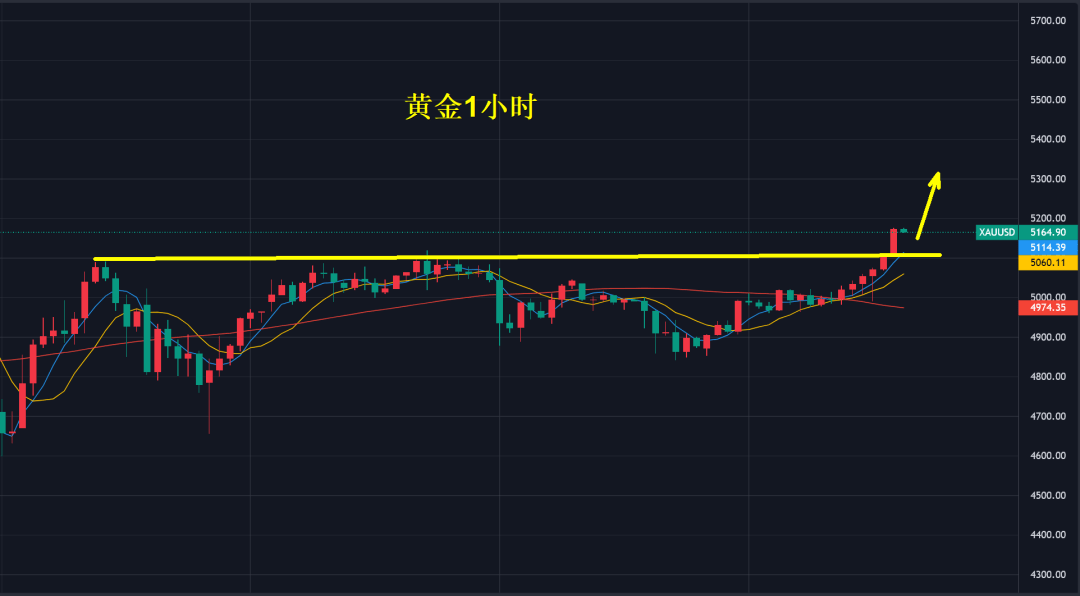
Core Viewpoint - Trump's announcement of increasing tariffs on imported goods from 10% to 15% has sparked significant market reactions and legal challenges from businesses, highlighting the impact of his unilateral actions on market sentiment and behavior [2][3]. Market Impact - The market's focus is not on the legality of Trump's actions but rather on the implications and consensus surrounding them. The prevailing sentiment is that Trump's tendency to operate outside traditional norms is expected and even welcomed by him [2]. - Market reactions are driven by three main factors: the anticipation of events rather than their outcomes, the prevailing fear and concern over geopolitical risks, and the emotional consensus that forms around market trends [3]. Gold Market Analysis - Following Trump's announcement, gold and silver prices experienced a significant jump, with gold reaching $5,180, breaking through previous resistance levels of $5,100-$5,120, indicating a bullish trend [5]. - The technical outlook for gold suggests that after breaking the $5,100 resistance, the next target levels are $5,250-$5,300, and subsequently $5,400. The market is expected to maintain a bullish stance, with support levels identified around $5,120-$5,130 and $5,150 for potential buying opportunities [7].
转眼黄金5600美元,距离6000美元远吗?
Sou Hu Cai Jing· 2026-01-29 05:05
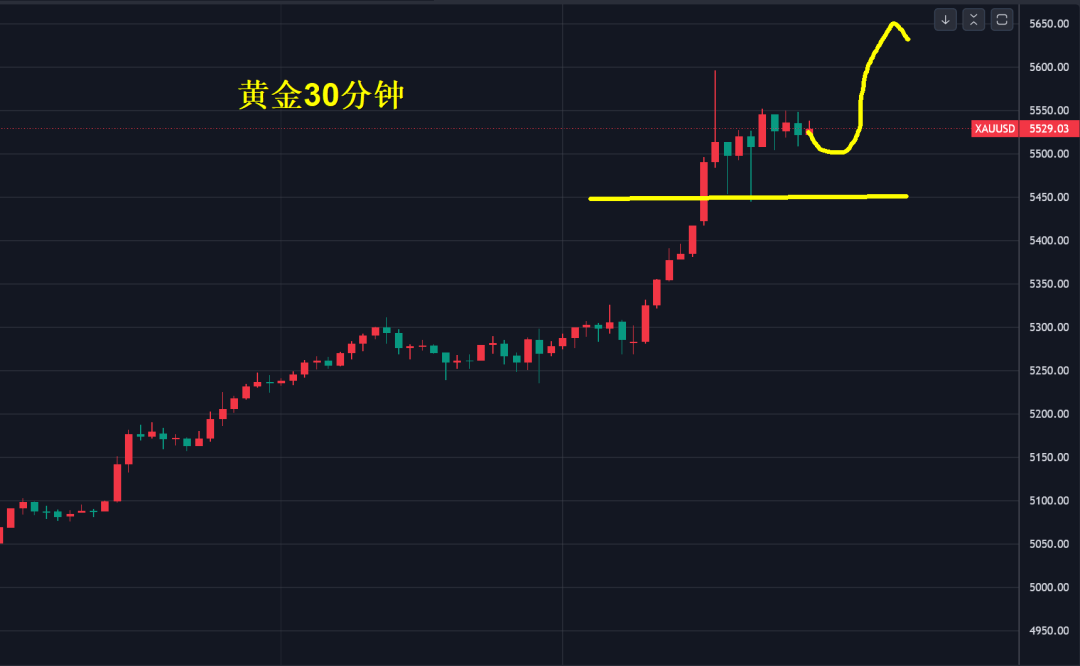
Group 1 - The current gold market is driven by "courage" rather than technical analysis or experience, with prices reaching $5,600, reflecting a rapid increase [1] - The Federal Reserve's decision to maintain interest rates in January is less significant than the market's disregard for negative news, indicating a preparation for larger price increases [2] - The gold price has surged by $1,200 in just one month, with the speed of increases compressing timeframes and eliminating previous resistance levels [3] Group 2 - After reaching $5,600, gold prices briefly fell to $5,450, but such fluctuations are normal in the current market, with daily price swings of $300 [5] - The market sentiment remains bullish for gold, with a key support level identified around $5,330, indicating strong buying interest [5]
US Investors Seek Govt. Probe into South Korea over Alleged Unfair Treatment Post Coupang’s Data Breach
Retail News Asia· 2026-01-26 06:22
Core Viewpoint - Two prominent American investors are seeking a formal investigation into perceived prejudiced actions by the South Korean government against Coupang Inc. following a significant data breach [1][2]. Group 1: Investor Actions - Greenoaks and Altimeter have initiated arbitration proceedings against South Korea, citing the US–Korea Free Trade Agreement (KORUS) and accusing the government of an aggressive campaign against Coupang after a consumer data breach [2][4]. - The investors have petitioned the US Trade Representative (USTR) to scrutinize South Korea's actions and impose "appropriate trade remedies," which could include sanctions and tariffs [4][10]. Group 2: Data Breach Impact - Coupang disclosed in November that the personal data of approximately 33 million South Korean customers had been compromised, leading to public and political backlash, comprehensive investigations, and multiple lawsuits [3][9]. - Since the data breach disclosure, Coupang's shares on the New York Stock Exchange have fallen by around 27% [9]. Group 3: Government Response - South Korean President Lee Jae Myung has advocated for stringent penalties following the data incident, emphasizing an impartial approach adhering to legal frameworks [6]. - South Korea's Trade Minister Yeo Han-koo dismissed accusations of discrimination, arguing that the government's response to the data breach should be viewed separately from trade issues [7][8]. Group 4: Future Implications - The formal notice sent via KORUS initiates a 90-day 'cooling-off' period for consultation before full arbitration proceedings commence, with the USTR having up to 45 days to determine whether to initiate a formal investigation [10]. - This dispute could escalate into a government-to-government trade issue, potentially resulting in US sanctions and tariffs against South Korea [13][14].


100%关税!特朗普,突发威胁!刚刚,加拿大回应
券商中国· 2026-01-25 02:01
Core Viewpoint - The relationship between the United States and Canada is deteriorating, with Canada responding to U.S. threats of tariffs by promoting domestic products and seeking to diversify its trade partnerships [2][3][4]. Group 1: U.S.-Canada Tensions - President Trump threatened to impose a 100% tariff on Canadian goods if Canada reaches agreements with certain countries [2][3]. - Canadian Prime Minister Trudeau called on citizens to "buy Canadian" in response to external threats, emphasizing the need for Canada to focus on what it can control [3][4]. - Trudeau's remarks at the World Economic Forum indicated a significant shift in Canada's policy towards the U.S., advocating for medium powers to collaborate and avoid becoming victims of U.S. hegemony [4]. Group 2: Economic Impact - Since Trump's return to the White House, relations have worsened, leading to Canadian public backlash against U.S. products and travel [6]. - A Pew Research Center poll indicated that by 2025, 64% of Canadians held a negative view of the U.S., the highest in over two decades, with 77% expressing distrust in Trump [6]. - The trade conflict has already caused a 2% decline in Canadian exports to the U.S. by 2025, attributed to increased costs from tariffs [6][7]. Group 3: Economic Strategy - The Canadian economy contracted by 1.6% in the second quarter of 2025, with exports down by 7.5%, largely due to U.S. trade actions [7]. - The Canadian government is pursuing an economic transformation focused on diversification and resilience, aiming to double exports to non-U.S. markets over the next decade [7].

准备收网?特朗普通告全世界:税率加到200%!首个牺牲国已浮现
Sou Hu Cai Jing· 2026-01-23 08:26
Core Viewpoint - The current international economic situation is complex and filled with uncertainties, as highlighted during the recent Davos Forum, where calls for free trade and the rejection of unilateralism were emphasized [1] Group 1: Economic Coercion and Its Impacts - Economic coercion has emerged as a tactic for achieving political objectives, which poses significant risks to global supply chains and economic stability [3] - The U.S. has imposed a 200% tariff on French wine, directly targeting France's political stance and demonstrating the intertwining of economic and political actions [3][4] - France's wine and champagne exports, valued at €4.5 billion annually, are crucial to its economy, and the sudden tariffs will severely impact related industries and employment [4] Group 2: U.S.-France Relations and European Unity - The U.S. is using economic measures to send political warnings to Europe, with tariffs ranging from 10% to 25% being applied to other European nations as well [5] - French President Macron has condemned U.S. policies, warning of potential impacts on NATO and the Western alliance, while considering alliances with other nations to counteract U.S. actions [5] - Internal divisions within Europe, exemplified by Germany's quick withdrawal from Greenland, weaken collective support for France, which may benefit U.S. interests [4][9] Group 3: Broader Economic Consequences - The escalating U.S.-France tensions have led to significant market reactions, including a 2.1% drop in the S&P 500 and increased gold prices, indicating rising investor anxiety [7] - The burden of U.S. tariffs primarily falls on American consumers and importers, leading to domestic dissatisfaction and complicating the economic landscape [7] - The initial conflict stemmed from Trump's proposal to purchase Greenland, which, after failing, triggered a series of economic retaliations, highlighting the interconnectedness of political and economic strategies [9][11] Group 4: Future Outlook - The ongoing tensions between Europe and the U.S. may evolve into a broader trade conflict, further destabilizing global financial markets [11] - The situation underscores the need for cooperation and trust among nations to prevent greater economic damage in an increasingly complex international landscape [11]
美元跌至两周低谷!格陵兰岛争端升级 汇市动荡持续加剧
Zhi Tong Cai Jing· 2026-01-20 11:27
Group 1 - The article highlights the decline of the US dollar to its lowest level in two weeks due to President Trump's aggressive stance on Greenland and threats of new tariffs on France, leading to increased foreign exchange hedging costs [1] - The Bloomberg Dollar Spot Index has fallen to its weakest level since January 6, indicating a significant downturn in the dollar's performance over the past month [1] - Concerns over potential trade conflicts have risen as Trump threatens tariffs on European countries opposing his Greenland acquisition plan, with a specific proposal for a 200% tariff on French wine and champagne following President Macron's refusal to join a peace initiative [1] Group 2 - The market is experiencing heightened short-term exchange rate volatility, with a notable increase in euro options trading volume reflecting demand for risk hedging and investor sentiment shifting towards betting on euro appreciation [1] - Deutsche Bank's Jim Reid noted that while the market has reacted, further escalation of related comments could lead to greater volatility in exchange rates [1] - Data from US depository trusts and clearing companies indicate a trend towards shorting the dollar, with investors favoring long positions in euro and Australian dollar against the US dollar since the beginning of the week [2]