广州新机场

Search documents
广州新机场,为何选址佛山
21世纪经济报道· 2026-03-26 11:53
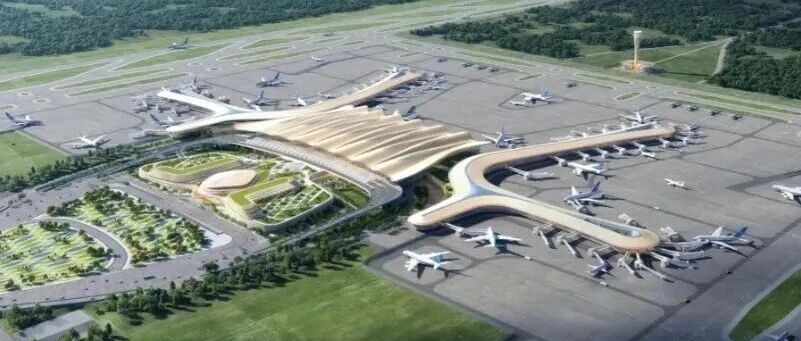
Core Viewpoint - The construction of the Guangzhou New Airport marks a significant milestone in addressing the "east strong, west weak" pattern of airport distribution in the Guangdong-Hong Kong-Macao Greater Bay Area, aiming to enhance the region's aviation resource balance and promote collaborative development among airports [1][3][4]. Investment and Development - The total investment for the Guangzhou New Airport project is 41.808 billion yuan, with completion targeted for 2030 and operations expected during the 14th Five-Year Plan period [1][4]. - The airport is designed to serve over 20 million people from the Guangzhou-Foshan-Zhaoqing area and will feature two long-distance parallel runways, a terminal building of approximately 260,000 square meters, and 94 parking positions [4][5]. Strategic Importance - The new airport is expected to handle an annual passenger throughput of 30 million, cargo throughput of 500,000 tons, and 260,000 aircraft movements, addressing the increasing demand for air travel in the region [5]. - The airport will complement Guangzhou Baiyun International Airport, with both airports functioning collaboratively to enhance Guangzhou's status as an international aviation hub [5]. Regional Connectivity - The airport will integrate with multiple high-speed rail lines and a comprehensive road network, facilitating seamless passenger transfers and enhancing regional connectivity [5][9]. - The project aims to explore new collaborative development models, reflecting a shift from single-point hubs to a more integrated and coordinated airport cluster approach [5][9]. Future Projections - By 2025, the passenger throughput for the Greater Bay Area's airport cluster is projected to reach 237 million, with cargo throughput expected to hit 9.72 million tons, positioning it among the top global aviation hubs [7]. - The region's economic output is anticipated to exceed 15 trillion yuan by 2025, driving a robust demand for air transport services [7]. Collaborative Development - The construction of the Guangzhou New Airport is part of a broader strategy to enhance the airport cluster's capabilities, with ongoing projects including the expansion of existing airports and the development of new facilities [7][8]. - The focus will be on creating a high-density, high-quality air route network that supports high-value industries and strengthens supply chain resilience [8][9].

国家发改委:近日下达2026年提前批两重建设项目清单和中央预算内投资计划 共计约2950亿
Feng Huang Wang· 2025-12-31 02:15
Core Viewpoint - The National Development and Reform Commission (NDRC) plans to enhance investment stability with significant funding and infrastructure projects in 2026 [1] Group 1: Investment Plans - The NDRC has organized and announced an early batch of construction project lists and central budget investment plans for 2026, totaling approximately 295 billion yuan [1] - There will be an acceleration in the disbursement and utilization of various funds [1] Group 2: Infrastructure Projects - The NDRC has recently approved and authorized several major infrastructure projects, including the new Guangzhou Airport and the construction of the Zhanjiang to Haikou cross-sea ferry and related transportation facilities [1]
新一批重大项目获批复,中国基础设施投资拉动经济效果立竿见影
Huan Qiu Wang· 2025-12-31 00:58
Group 1 - The National Development and Reform Commission has approved a new batch of major projects with a total investment exceeding 400 billion yuan, including significant infrastructure initiatives such as the Guangzhou New Airport and the Dadu River Danba Hydropower Station [1] - Former advisor to the People's Bank of China, Yu Yongding, highlighted that while direct consumption stimulus has some effectiveness, challenges such as slow income growth and weak confidence may hinder demand recovery, making infrastructure investment crucial for immediate economic stimulation [1] Group 2 - Following the 2008 financial crisis, China implemented ten measures to expand domestic demand, estimating an investment of 4 trillion yuan, which was 12% of the GDP at that time; if similar measures were to be applied now, it would require approximately 16 trillion yuan based on 2024 GDP [4] - In the first half of 2025, infrastructure investment in China is projected to grow by 4.6% year-on-year, with significant increases in water management (15.4%) and water transportation (21.8%), indicating a shift in investment focus towards these sectors amid a slowdown in real estate and traditional infrastructure [4]

城市24小时 | 经济大省省会,正在加速“缝合”
Mei Ri Jing Ji Xin Wen· 2025-11-26 16:37
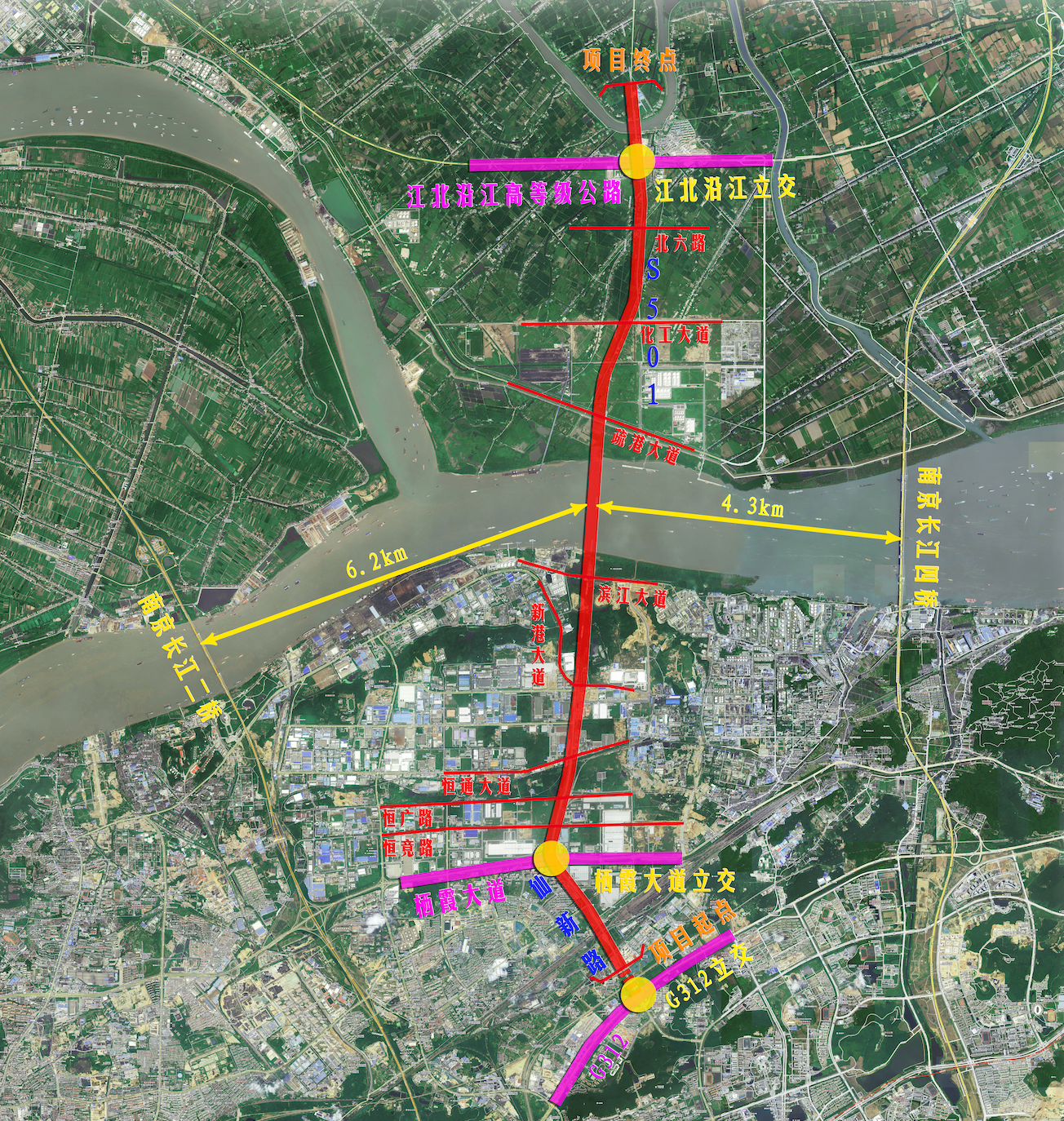
Core Viewpoint - The opening of the Xinxingwei Yangtze River Bridge marks a significant development in Nanjing's transportation infrastructure, enhancing connectivity between the main city and the Jiangbei New Area, and supporting the city's "embracing the river" development strategy [1][3][4]. Infrastructure Development - The Xinxingwei Yangtze River Bridge is the sixth free crossing in Nanjing, reducing travel time from one hour to under ten minutes between the main city and Jiangbei New Area [1]. - The bridge spans approximately 13.17 kilometers with a main bridge length of 1,760 meters, making it the "first in China and third in the world" [3]. - Nanjing has accelerated the construction of river crossings, with three completed during the 14th Five-Year Plan period, bringing the total to 13 completed and 4 under construction [10]. Urban Development Strategy - Nanjing's "embracing the river" strategy aims to enhance the development of the Jiangbei New Area, which is crucial for regional economic growth and modernization efforts in Jiangsu [4]. - The city plans to construct 24 crossings by 2035, transitioning from a "single center" to a "multi-center network" urban structure, thereby improving resource allocation efficiency [10]. Economic Impact - The development of river crossings is expected to alleviate pressure on the main city and support the establishment of a globally influential industrial and technological innovation center [10].