
万亿级消费领域

Search documents
到2027年,我国将形成3个万亿级消费领域!
Ren Min Wang· 2025-11-28 01:08
Core Insights - The implementation plan aims to enhance the adaptability of supply and demand in consumer goods, targeting a significant optimization of the supply structure by 2027, with the formation of three trillion-level consumption sectors and ten hundred-billion-level consumption hotspots [1][2] Group 1: Implementation Plan Overview - The plan focuses on supply-side structural reforms, accelerating brand leadership, standard upgrades, and new technology applications to stimulate the domestic demand market's multiplier effect and structural dividends [1] - By 2027, the plan is expected to create a new consumption market worth several trillion yuan in key areas [1] Group 2: Consumption Trends and Opportunities - The three trillion-level consumption sectors include elderly products, smart connected vehicles, and consumer electronics, with the elderly products market projected to grow from 2.6 trillion yuan in 2014 to 5.4 trillion yuan by 2024, reflecting a compound annual growth rate of 7.3% [3] - The ten hundred-billion-level consumption hotspots encompass baby products, smart wearable devices, cosmetics, fitness equipment, outdoor products, pet food, civilian drones, trendy toys, jewelry, and national trend clothing, showcasing strong growth momentum and significant development potential [3] - The rise of health-conscious living and the concept of national fitness has led to increased demand for outdoor products and fitness equipment, while the IP economy aligns with the consumption preferences of younger demographics, driving the rapid popularity of trendy toy products globally [3]
3个万亿、10个千亿,多部门点明这些消费热点
21世纪经济报道· 2025-11-27 15:28
Core Viewpoint - The article discusses the implementation plan by the Ministry of Industry and Information Technology and other departments to enhance the adaptability of supply and demand in consumer goods, aiming to promote consumption and economic growth through structural reforms and innovation [1][3]. Group 1: Implementation Goals - The plan sets two main goals: to establish three trillion-level consumption sectors and ten hundred-billion-level consumption hotspots by 2027, and to create a high-quality development pattern of mutual promotion between supply and consumption by 2030 [1][3]. - The focus is on transforming production from quantity to quality, encouraging enterprises to produce more suitable and better products to meet consumer demands [3][5]. Group 2: Key Consumption Areas - The three trillion-level consumption sectors identified are elderly products, smart connected vehicles, and consumer electronics [6][10]. - The ten hundred-billion-level consumption hotspots include baby products, smart wearable devices, cosmetics, fitness equipment, outdoor products, pet food, civilian drones, trendy toys, jewelry, and national trend clothing, all showing strong growth potential [6][10]. Group 3: Supply-Side Structural Reforms - The plan emphasizes supply-side structural reforms, focusing on brand leadership, standard upgrades, and new technology applications to stimulate the domestic demand market [5][10]. - The total variety of consumer goods in China has reached 230 million, with over 100 categories leading global production [7][10]. Group 4: Addressing Supply-Demand Mismatches - The plan aims to address structural mismatches in supply and demand, particularly in areas like elderly care, cultural tourism, and smart consumption, where demand is high but supply is insufficient [10][12]. - The elderly products market is projected to grow from 2.6 trillion yuan in 2014 to 5.4 trillion yuan by 2024, with a compound annual growth rate of 7.3% [13]. Group 5: Promoting New Consumption Models - The article highlights the importance of promoting new consumption models, including personalized and customized services to meet diverse consumer needs [12][13]. - The government plans to support the development of new consumption areas such as health, digital, and green consumption, aiming to create new growth points in the economy [16][17].

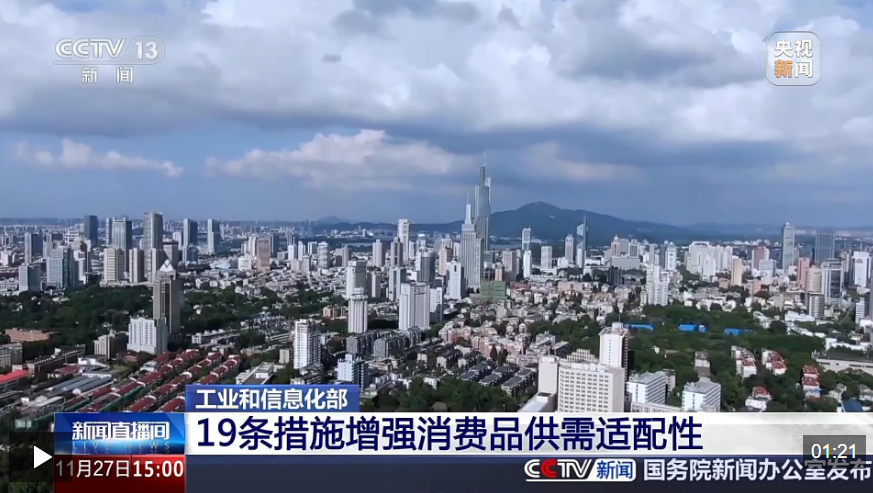
实现供需双向奔赴、形成3个万亿级消费领域……多部门联合印发促进消费新方案
Yang Shi Xin Wen Ke Hu Duan· 2025-11-27 11:44
Core Viewpoint - The Ministry of Industry and Information Technology, along with five other departments, has introduced a plan to enhance the adaptability of supply and demand in consumer goods, aiming to stimulate consumption and align production with consumer preferences [1][2]. Group 1: Key Measures and Goals - The plan outlines 19 key tasks focused on five areas: accelerating the application of new technologies and models, expanding the supply of unique and new products, cultivating new consumption scenarios and business formats, and enhancing scene empowerment [2][3]. - By 2027, the plan aims to establish three trillion-level consumption sectors and ten hundred-billion-level consumption hotspots, with a vision for a high-quality development pattern of mutual promotion between supply and consumption by 2030 [7][8]. Group 2: Targeted Consumption Areas - The trillion-level consumption sectors identified include elderly products, smart connected vehicles, and consumer electronics, with the elderly products market projected to grow from 2.6 trillion yuan in 2014 to 5.4 trillion yuan by 2024, reflecting a compound annual growth rate of 7.3% [7][8]. - The hundred-billion-level consumption hotspots include baby products, smart wearable devices, cosmetics, fitness equipment, outdoor products, pet food and supplies, civilian drones, trendy toys, jewelry, and national trend clothing, indicating strong growth potential [9][11]. Group 3: Supply and Demand Dynamics - The current supply of consumer goods has entered a new development stage characterized by quality and price, although structural mismatches in supply and demand still exist in certain areas [12][13]. - The government plans to address these mismatches by increasing resource investment and efforts to achieve a higher level of dynamic balance in supply and demand over the next five years, ensuring consumers have access to better quality products and services [14].
城市24小时 | 经济大省省会,正在加速“缝合”
Mei Ri Jing Ji Xin Wen· 2025-11-26 16:37
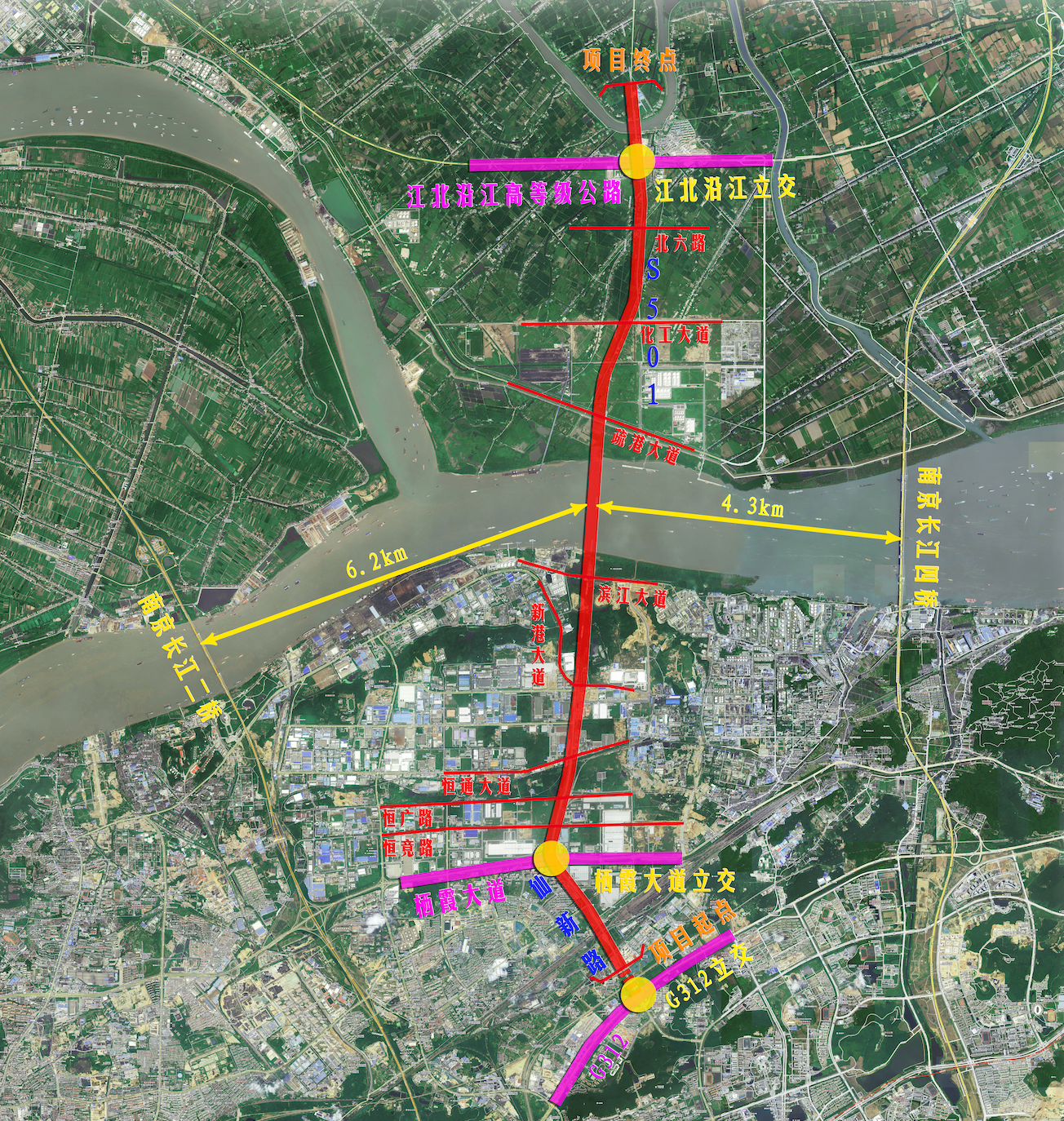
Core Viewpoint - The opening of the Xinxingwei Yangtze River Bridge marks a significant development in Nanjing's transportation infrastructure, enhancing connectivity between the main city and the Jiangbei New Area, and supporting the city's "embracing the river" development strategy [1][3][4]. Infrastructure Development - The Xinxingwei Yangtze River Bridge is the sixth free crossing in Nanjing, reducing travel time from one hour to under ten minutes between the main city and Jiangbei New Area [1]. - The bridge spans approximately 13.17 kilometers with a main bridge length of 1,760 meters, making it the "first in China and third in the world" [3]. - Nanjing has accelerated the construction of river crossings, with three completed during the 14th Five-Year Plan period, bringing the total to 13 completed and 4 under construction [10]. Urban Development Strategy - Nanjing's "embracing the river" strategy aims to enhance the development of the Jiangbei New Area, which is crucial for regional economic growth and modernization efforts in Jiangsu [4]. - The city plans to construct 24 crossings by 2035, transitioning from a "single center" to a "multi-center network" urban structure, thereby improving resource allocation efficiency [10]. Economic Impact - The development of river crossings is expected to alleviate pressure on the main city and support the establishment of a globally influential industrial and technological innovation center [10].
2027年形成3个万亿级消费领域,哪些上市公司将成最大受益者?
Sou Hu Cai Jing· 2025-11-26 10:15
Group 1 - The implementation plan aims to enhance the adaptability of supply and demand in consumer goods, with a goal to optimize the supply structure by 2027, creating three trillion-level consumption sectors and ten hundred-billion-level consumption hotspots [1][3] - By 2030, a high-quality development pattern characterized by positive interaction between supply and consumption is expected to be established, with a steady increase in the contribution of consumption to economic growth [1][3] Group 2 - The plan outlines 19 key tasks across five areas: accelerating the application of new technologies and models, expanding the supply of distinctive and new products, precisely matching the needs of different demographics, cultivating new consumption scenarios and business formats, and creating a favorable development environment [3][4] - Emphasis is placed on accelerating innovation in key industries such as smart connected vehicles, smart home products, consumer electronics, modern textiles, food, and green building materials, with initiatives to develop flagship products and innovative enterprises [3][4] - The plan encourages the development of leisure and sports products, focusing on new demands from event economies, outdoor activities, and winter sports, while promoting high-quality sports equipment [3][4] - Support for health product innovation includes enhancing the research and development of health foods and special dietary foods, as well as recognizing traditional food production areas and local specialty food industries [3][4] Group 3 - The plan aims to expand the influence of historical classic products, supporting industries such as arts and crafts, traditional stationery, silk, tea, and traditional Chinese medicine, while promoting creative design competitions and the development of traditional craft innovation bases [4] - Companies like Zhejiang specialize in outdoor sports products and have developed a unique vertical integration supply chain, selling products to developed regions such as Europe and North America [4][5] - Nobon Co., a leader in differentiated water-jet non-woven fabrics, focuses on a full-chain growth strategy, enhancing its global supply position through technological upgrades and brand development [4][5] - Chuangyuan Co. operates in the cultural education and sports sectors, aiming to resonate with domestic markets through a diversified product matrix and an "IP + technology + cultural creativity" approach [5] - Pianlong Pharmaceutical has extensive experience in the traditional Chinese medicine sector, focusing on brand integration and collaborative innovation in the production of traditional Chinese medicine [5] - Joyful Intelligence leads in the recyclable packaging sector, offering comprehensive packaging solutions and promoting a leasing model to lower barriers for clients [5]





新华社消息丨六部门发文提出2027年形成3个万亿级消费领域
Xin Hua Wang· 2025-11-26 09:33
Core Insights - The article discusses the recent developments in the investment banking sector, highlighting key trends and shifts in market dynamics [1] Group 1: Industry Trends - Investment banking is experiencing a significant transformation due to technological advancements and changing client demands [1] - There is an increasing focus on sustainable finance, with more banks integrating environmental, social, and governance (ESG) criteria into their investment strategies [1] Group 2: Company Performance - Major investment banks reported a mixed performance in their latest earnings, with some showing growth in advisory services while others faced declines in trading revenues [1] - The competition among investment banks is intensifying, leading to strategic mergers and acquisitions as firms seek to enhance their market position [1]
工信部等6部门:到2027年形成3个万亿级消费领域
Bei Ke Cai Jing· 2025-11-26 07:56
Core Insights - The Ministry of Industry and Information Technology, along with five other departments, has issued a plan to enhance the adaptability of supply and demand in consumer goods, aiming for significant structural optimization by 2027 [1] - The plan targets the creation of three trillion-level consumption sectors and ten billion-level consumption hotspots, focusing on high-quality consumer goods with cultural significance by 2027 [1] - By 2030, a high-quality development pattern characterized by positive interaction and mutual promotion between supply and consumption is expected to be established, with a steady increase in the contribution of consumption to economic growth [1]