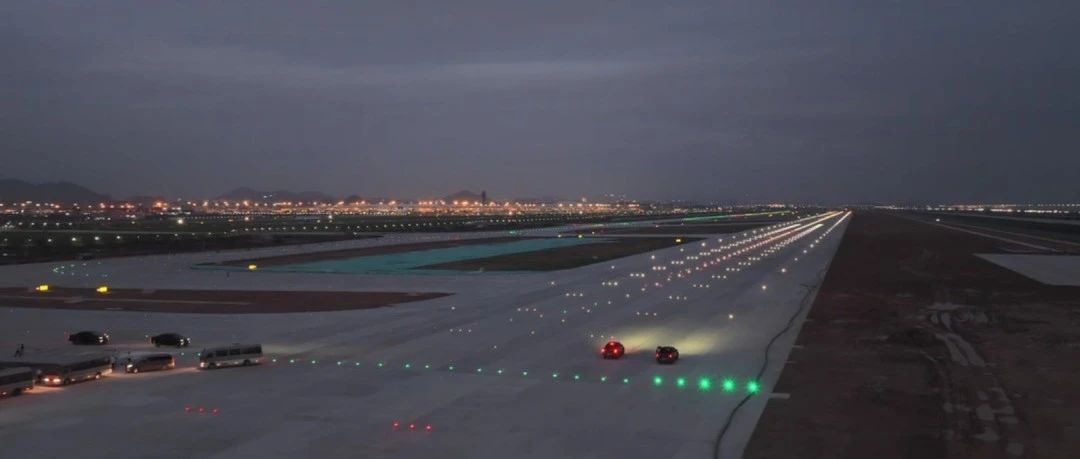
粤港澳大湾区世界级机场群

Search documents
广州新机场,为何选址佛山
21世纪经济报道· 2026-03-26 11:53
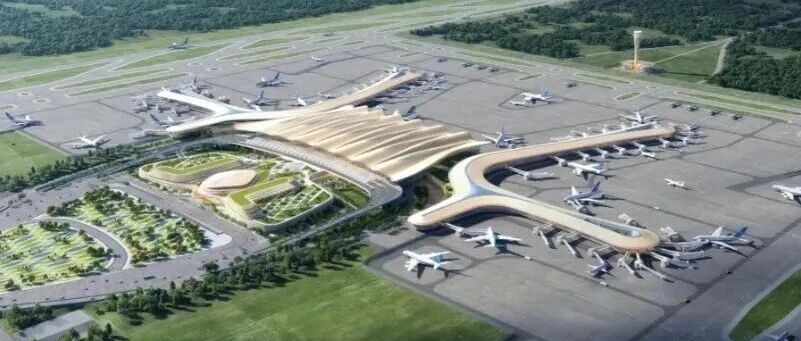
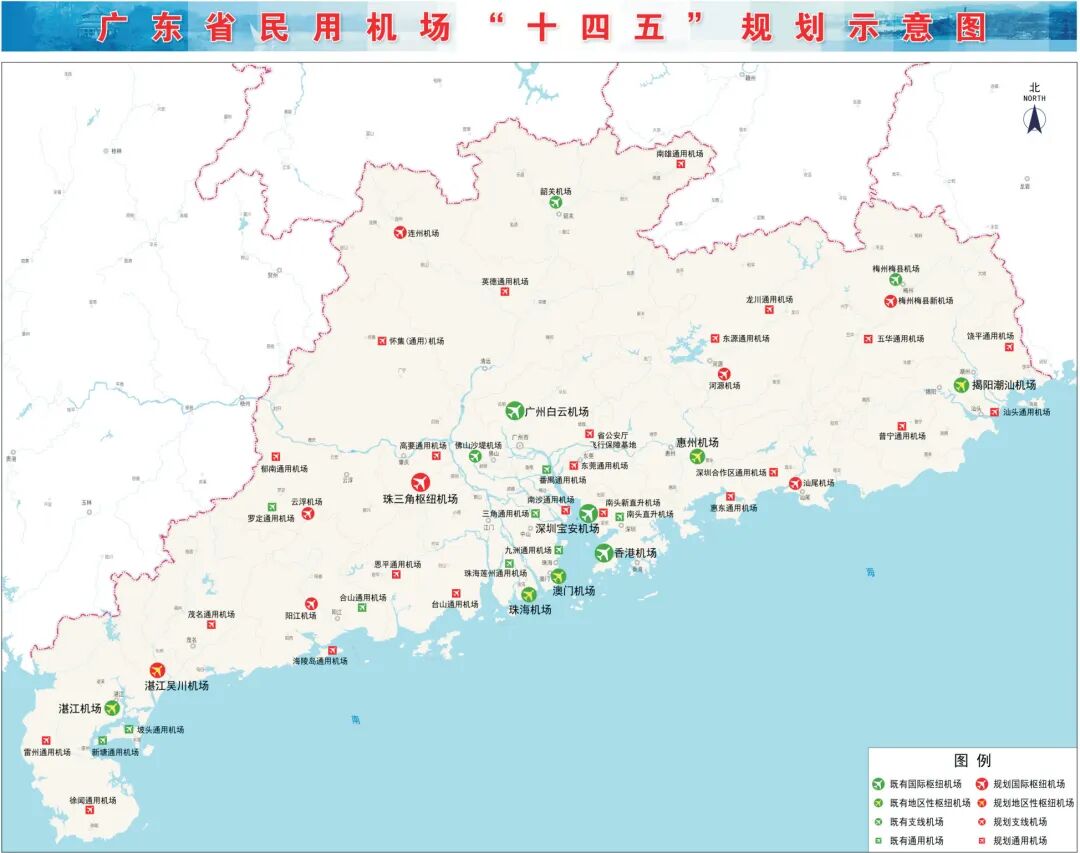
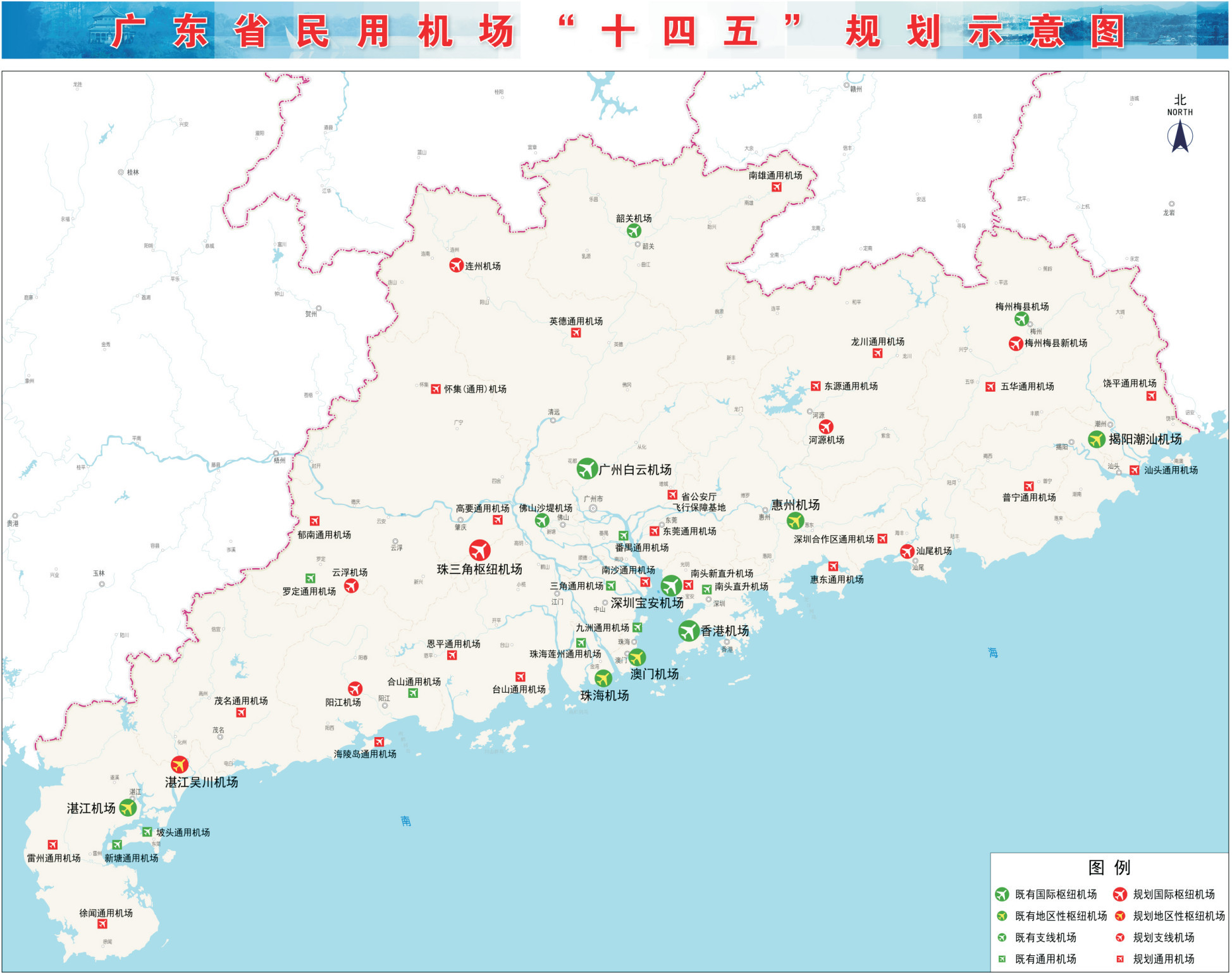
Core Viewpoint - The construction of the Guangzhou New Airport marks a significant milestone in addressing the "east strong, west weak" pattern of airport distribution in the Guangdong-Hong Kong-Macao Greater Bay Area, aiming to enhance the region's aviation resource balance and promote collaborative development among airports [1][3][4]. Investment and Development - The total investment for the Guangzhou New Airport project is 41.808 billion yuan, with completion targeted for 2030 and operations expected during the 14th Five-Year Plan period [1][4]. - The airport is designed to serve over 20 million people from the Guangzhou-Foshan-Zhaoqing area and will feature two long-distance parallel runways, a terminal building of approximately 260,000 square meters, and 94 parking positions [4][5]. Strategic Importance - The new airport is expected to handle an annual passenger throughput of 30 million, cargo throughput of 500,000 tons, and 260,000 aircraft movements, addressing the increasing demand for air travel in the region [5]. - The airport will complement Guangzhou Baiyun International Airport, with both airports functioning collaboratively to enhance Guangzhou's status as an international aviation hub [5]. Regional Connectivity - The airport will integrate with multiple high-speed rail lines and a comprehensive road network, facilitating seamless passenger transfers and enhancing regional connectivity [5][9]. - The project aims to explore new collaborative development models, reflecting a shift from single-point hubs to a more integrated and coordinated airport cluster approach [5][9]. Future Projections - By 2025, the passenger throughput for the Greater Bay Area's airport cluster is projected to reach 237 million, with cargo throughput expected to hit 9.72 million tons, positioning it among the top global aviation hubs [7]. - The region's economic output is anticipated to exceed 15 trillion yuan by 2025, driving a robust demand for air transport services [7]. Collaborative Development - The construction of the Guangzhou New Airport is part of a broader strategy to enhance the airport cluster's capabilities, with ongoing projects including the expansion of existing airports and the development of new facilities [7][8]. - The focus will be on creating a high-density, high-quality air route network that supports high-value industries and strengthens supply chain resilience [8][9].

首个拥有4个千万级机场的省份出现了
2 1 Shi Ji Jing Ji Bao Dao· 2026-01-26 02:44
Core Insights - Guangdong has become the first province in China to have four airports with an annual passenger throughput of over 10 million, marking a significant milestone in its aviation industry [2] - The expansion of Guangzhou Baiyun Airport and Shenzhen Bao'an Airport is a revolutionary development, with Baiyun Airport becoming the first in China to have five operational runways [2][3] - The construction of a "super air corridor" in Guangdong is enhancing its connectivity to global markets, facilitating rapid logistics and transportation for local industries [5] Summary by Sections - **Airport Capacity and Expansion** - The annual passenger throughput of Guangdong's airports has reached 180 million, with the addition of Chaozhou Shantou Airport pushing the total number of million-level airports in the province to four [1][2] - Baiyun Airport's new T3 terminal and fifth runway, with an investment of 53.77 billion yuan, officially commenced operations on October 30, 2025 [2] - Shenzhen Bao'an Airport's third runway also began operations on November 29, 2025, marking its entry into the "three-runway era" [3] - **Economic Impact and Logistics** - The proximity of manufacturing hubs in Dongguan, Huizhou, and Foshan to the airports allows for rapid logistics, enabling "Made in Guangdong" products to reach global markets swiftly [5] - The development of the Guangdong-Hong Kong-Macao Greater Bay Area is accelerating the formation of a world-class airport cluster, enhancing the region's global competitiveness [5]

首个拥有4个千万级机场的省份出现了
21世纪经济报道· 2026-01-26 02:37
Core Insights - Guangdong's air traffic has reached unprecedented levels, with over 1.8 billion annual passenger throughput and more than a thousand flight routes, establishing it as an "aerial super crossroads" [1][14] Group 1: Airport Developments - Chaoshan International Airport has surpassed 10 million annual passenger throughput, expanding Guangdong's list of airports with over 10 million passengers from Guangzhou, Shenzhen, and Zhuhai to include the eastern region [3][5] - Guangzhou Baiyun Airport is set to become the first in China with five commercial runways, with the new T3 terminal and fifth runway scheduled to open on October 30, 2025, involving an investment of 53.77 billion [7] - Shenzhen Bao'an Airport has officially opened its third runway, which is 3,600 meters long and can accommodate all current large passenger and cargo aircraft, marking the airport's transition into the "three-runway era" [9] Group 2: Economic Implications - The rapid development of airports in Guangdong facilitates quick logistics, allowing products from Dongguan's molds, Huizhou's batteries, and Foshan's home appliances to reach the airport in just 45 minutes, enhancing the efficiency of the "Made in Guangdong" brand for global express delivery [11] - The construction of an "aerial super passage" is enabling Guangdong to connect globally, reflecting the region's ambition for future growth and development [14]
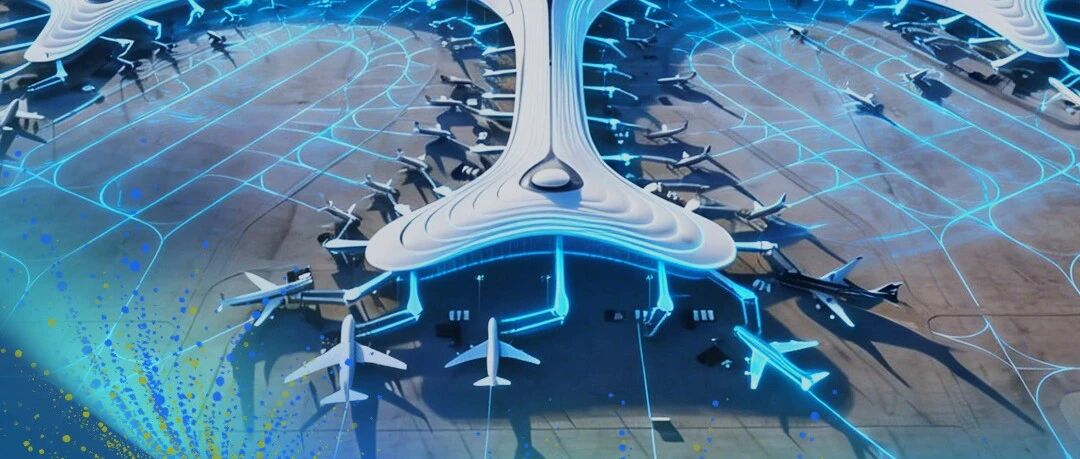
世界级机场群,呼之欲出
3 6 Ke· 2025-12-03 02:21
Group 1 - Shenzhen Airport has officially entered the "three-runway era," enhancing its role as a composite international aviation hub and injecting new vitality into the construction of a world-class airport cluster in the Guangdong-Hong Kong-Macao Greater Bay Area [1] - The passenger throughput at Shenzhen Airport is expected to exceed 60 million in 2024 and reach 65 million in 2025, with cargo throughput projected to surpass 2 million tons for the first time [1] - The airport is accelerating the construction of a "3+3+3+1" infrastructure layout, which includes three terminals, three cargo areas, three runways, and one satellite hall, aiming to meet an annual passenger throughput demand of 80 million and cargo throughput of 4.5 million tons [1] Group 2 - The Greater Bay Area is becoming one of the regions with the highest airport runway density globally, with seven airports and 15 runways across 56,000 square kilometers [2] - The development plan for the Greater Bay Area emphasizes the construction of a world-class airport cluster, with significant expansions at Shenzhen, Guangzhou, and Hong Kong airports expected to optimize industrial layout and activate regional resources [4] - The establishment of a collaborative mechanism among the five major airports in the Pearl River Delta aims to address competition and enhance cooperation, with each airport focusing on different market segments [4][5]
城市24小时 | 世界级机场群,呼之欲出
Mei Ri Jing Ji Xin Wen· 2025-12-02 14:25
Core Insights - Shenzhen Airport has officially entered the "three-runway era," enhancing its role as a composite international aviation hub and injecting new vitality into the construction of a world-class airport cluster in the Guangdong-Hong Kong-Macao Greater Bay Area [1] - The airport's passenger throughput is expected to exceed 60 million in 2024 and reach 65 million in 2025, with cargo throughput surpassing 2 million tons for the first time [1] - The Greater Bay Area is experiencing an unprecedented expansion of its airport infrastructure, with multiple airports undergoing significant upgrades and expansions [2][4] Infrastructure Development - Shenzhen Airport is constructing a "3+3+3+1" infrastructure layout, which includes three terminals, three cargo areas, three runways, and one satellite hall, aiming to accommodate an annual passenger throughput of 80 million and cargo throughput of 4.5 million tons [1] - Other airports in the Greater Bay Area, such as Guangzhou Baiyun International Airport and Hong Kong International Airport, are also expanding their facilities to enhance operational capacity [2][4] Competitive Landscape - The Greater Bay Area is becoming one of the regions with the highest airport runway density globally, with seven airports and 15 runways [2] - The airports in the region are focusing on different market segments: Guangzhou Airport on a broad route network, Hong Kong Airport on high-end international passenger and cargo transport, and Shenzhen Airport on cross-border business and e-commerce logistics [4] Economic Impact - The development of the airport cluster is expected to optimize industrial layout and activate regional resources, providing essential infrastructure and service capabilities for the Greater Bay Area's international competitiveness [4] - The region's population of nearly 100 million and an economic output of approximately 15 trillion yuan can support multiple international aviation hubs, fostering healthy competition that reduces travel and logistics costs [4]

一座新航站楼背后:大湾区世界级机场群“起飞”
2 1 Shi Ji Jing Ji Bao Dao· 2025-11-07 23:13
Core Insights - Guangzhou Baiyun International Airport's T3 terminal officially commenced operations on October 30, significantly increasing its capacity to handle 120 million passengers and 3.8 million tons of cargo annually, with a terminal capacity of 140 million passengers and 6 million tons of cargo [1][2] - The Greater Bay Area (GBA) has established 11 civil transport airports, with 7 located within the GBA, collectively projected to handle over 227.94 million passengers and 9.3573 million tons of cargo in 2024 [1][2] - The T3 terminal's design incorporates an integrated transport system for seamless air, land, and rail transfers, enhancing the airport's role as a critical hub for the GBA's logistics and transportation network [3][4] Capacity and Growth - The T3 terminal is expected to accommodate 150 aircraft movements per hour and 2,100 flights daily, marking a substantial increase from the previous capacity [2] - In October, Baiyun Airport recorded over 7.6 million passengers, a year-on-year increase of over 11%, setting a new monthly record [2] - The airport's target to double its capacity from 70 million to 140 million passengers is driven by the rapid growth in air traffic demand in the GBA [2][5] Regional Airport Network - The GBA's airport network includes three major airports—Baiyun, Shenzhen Bao'an, and Hong Kong International Airport—each handling over 50 million passengers annually, forming the core of the regional aviation network [3][4] - In 2024, Baiyun Airport is projected to achieve a passenger throughput of 76.369 million, a 20.89% increase from the previous year, while Shenzhen and Hong Kong airports are also experiencing significant growth in passenger and cargo volumes [3][4] Future Developments - The GBA is advancing towards the establishment of a world-class airport cluster, with ongoing projects including the new Guangzhou airport, the third runway at Shenzhen Bao'an, and expansions at Macau International Airport and Hong Kong International Airport [5] - The future growth potential for air transport in the GBA remains substantial, driven by economic expansion, population growth, and increased demand for air travel [5]
拿下“世界级”,广州要重返全国第一?
Mei Ri Jing Ji Xin Wen· 2025-10-31 14:02
Core Viewpoint - The expansion of Guangzhou Baiyun International Airport marks a significant milestone, positioning it as China's first airport with five operational runways, capable of handling an annual passenger throughput of 120 million and cargo capacity of 3.8 million tons, thus earning the title of "world's largest single terminal airport" [4][12]. Group 1: Airport Expansion and Capacity - The newly opened T3 terminal and the fifth runway enhance Guangzhou Airport's capacity, allowing it to meet the growing demand for passenger and cargo transport [4][12]. - The airport's expansion comes at a time when it aims to reclaim its status as the top airport in China, having previously held the title in 2020 before being surpassed by Shanghai [4][8]. - The airport's design capacity was previously constrained, with T1 and T2 terminals designed for a combined total of 80 million passengers, which has now been exceeded due to the expansion [6][12]. Group 2: Economic Impact and Trade Growth - Guangzhou's foreign trade has seen a significant increase, with a total import and export value of 923.68 billion yuan in the first three quarters of the year, marking a growth rate of 12.5% [13]. - The cross-border e-commerce sector has been a key driver of this growth, with exports maintaining a high growth rate of over 20% [13][17]. - The airport's enhanced cargo capacity is expected to support the booming cross-border e-commerce market, which has seen a substantial increase in export volumes [18][21]. Group 3: Regional Competition and Coordination - The development of the Greater Bay Area airport cluster presents both opportunities and challenges, as Guangzhou competes with Shenzhen and Hong Kong for air traffic and logistics [22][23]. - The ongoing construction of the new airport in the Pearl River Delta aims to complement Guangzhou Airport, potentially creating a combined capacity of 220 million passengers across the region [24][26]. - Effective coordination among the different airport management systems in the Greater Bay Area is crucial for optimizing the overall development of the airport cluster [26].
“3座航站楼+5条跑道”“智慧+文化”,亮点拉满!多视角解锁这座大型航空枢纽
Yang Shi Wang· 2025-10-30 05:02
Core Points - The Guangzhou Baiyun International Airport Phase III expansion project officially commenced operations on October 30, 2023, featuring the new T3 terminal and the fifth runway, enhancing the airport's capacity and supporting the development of a world-class airport cluster in the Guangdong-Hong Kong-Macao Greater Bay Area [1][3]. Investment and Economic Impact - The total investment for the Guangzhou Baiyun International Airport Phase III expansion is approximately 53.77 billion yuan, with the T3 terminal covering an area of 422,000 square meters, consisting of five above-ground floors and two underground levels [3]. - The new facilities will boost Guangzhou's air passenger and cargo transport capabilities, attracting more businesses in the aviation industry, including aircraft maintenance, aviation materials trade, and cross-border e-commerce, thereby accelerating the integration of the aviation industry with regional economic development [5]. Transportation and Connectivity - The expansion includes a comprehensive transportation center that integrates metro, intercity, and high-speed rail lines, creating a seamless multi-modal transport hub. This allows for a 30-minute access to downtown Guangzhou and a 60-minute reach to various cities in the Greater Bay Area, establishing a "one-hour traffic circle" [5]. Technological Advancements - The T3 terminal features advanced technology, including facial recognition for check-in and security processes, significantly enhancing efficiency and passenger experience. The system can complete identity verification every six seconds with an error rate of less than 0.1% [9]. - Luggage tracking is improved through an underground system with visual scanning capabilities, allowing passengers to monitor their luggage in real-time via a mobile app [10]. Architectural Design and Features - The T3 terminal's design is inspired by the theme of "flowers," reflecting Guangzhou's cultural identity. It includes a unique skylight design and a large-scale stainless steel roof that is both aesthetically pleasing and functional for the region's climate [19][18]. - The terminal also features the only outdoor observation deck in a Chinese airport, providing a panoramic view of the airport's operations [22][24]. Cultural Integration - A distinctive commercial street within the terminal incorporates traditional Lingnan architectural styles, offering dining and shopping options that enhance the travel experience [20].

广州白云机场T3航站楼投运 助力大湾区世界级机场群加速形成
Xin Lang Cai Jing· 2025-10-30 02:55
Core Viewpoint - Guangzhou Baiyun International Airport's T3 terminal and the fifth runway officially commenced operations, marking a significant enhancement in its operational capacity and positioning it as the first airport in China with five commercial runways, thereby elevating its hub status and contributing to the acceleration of the Guangdong-Hong Kong-Macau Greater Bay Area's development into a world-class airport cluster [1] Group 1 - The new operational capacity includes "five runways + three terminals," which signifies a major upgrade in the airport's infrastructure [1] - The airport's status as the first in China to have five commercial runways enhances its competitive edge in the aviation industry [1] - This development is expected to support the formation of a world-class airport cluster in the Guangdong-Hong Kong-Macau Greater Bay Area [1]
又一新跑道亮灯!深圳“世界级航空枢纽梦”近了?
第一财经· 2025-05-31 06:26
Core Viewpoint - Shenzhen is on track to become China's 12th city with more than three airport runways, enhancing its status as an international aviation hub and supporting the development of the Guangdong-Hong Kong-Macao Greater Bay Area's world-class airport cluster [2][4][9]. Group 1: Airport Development - The construction of the third runway at Shenzhen Bao'an International Airport is nearing completion, with the project entering its final stages as of May 30, 2025 [2]. - The third runway will significantly improve the operational capacity of Shenzhen Airport, which is crucial for its role in the Greater Bay Area's airport network [2][5]. - In 2024, Shenzhen Airport achieved record passenger throughput of 61.48 million, cargo volume of 1.881 million tons, and 428,000 flight operations, marking a substantial increase in its operational metrics [5]. Group 2: Competitive Landscape - The Greater Bay Area currently has 13 operational runways across major airports, with plans for further expansion, positioning the region as one of the highest runway density areas globally [2][11]. - Shenzhen Airport's international passenger volume grew by 34.08% year-on-year in Q1 2025, indicating a strong recovery and increasing competitiveness against neighboring airports [5][11]. - The strategic development plan for Shenzhen Airport aims for an annual passenger throughput of 100 million and cargo throughput of 3.5 million tons by 2035, with a focus on enhancing international connectivity [9][12]. Group 3: Strategic Positioning - Shenzhen is being positioned as a key international transportation hub in national transportation strategies, with plans to enhance its global influence and connectivity [8][9]. - The city aims to develop a complementary relationship with Hong Kong and Guangzhou airports, focusing on international route expansion and collaborative development [12][13]. - The Guangdong provincial transportation department projects that by 2035, the Greater Bay Area will handle 420 million passengers and over 20 million tons of cargo annually, indicating a robust growth potential for multiple major airports [13].