建信嘉薪宝A

Search documents
近百只产品破1%,货币基金还是“宝”吗?
Sou Hu Cai Jing· 2025-12-28 05:15
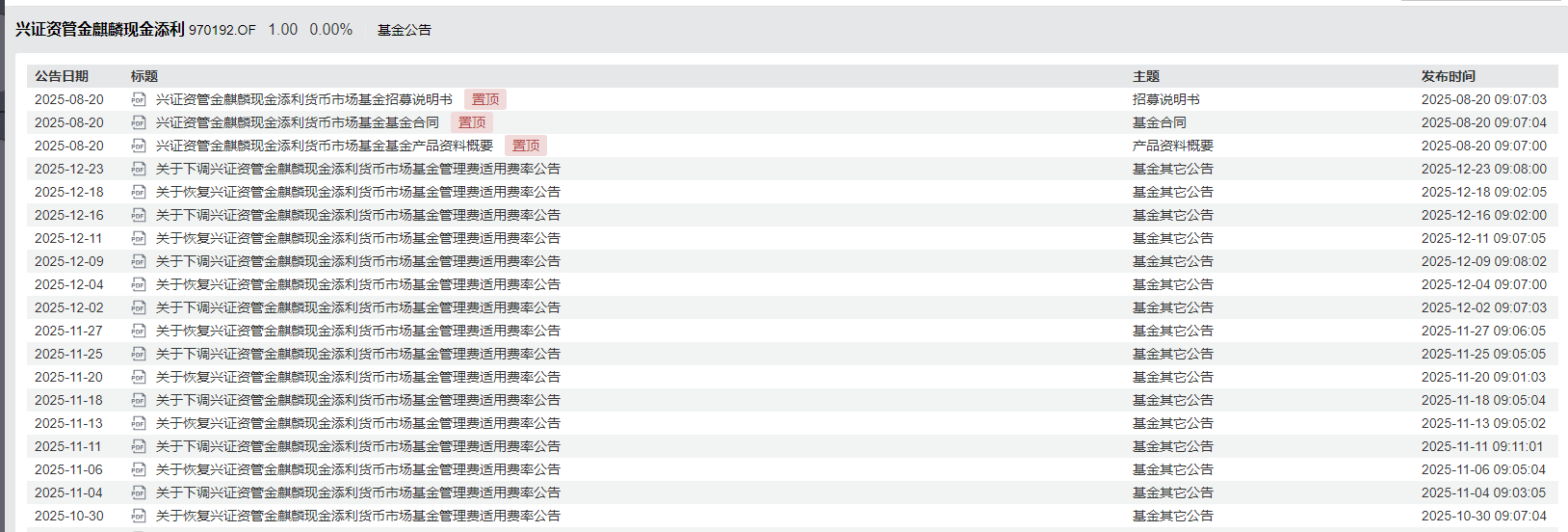
Core Viewpoint - The article discusses the significant decline in the yields of money market funds in China, highlighting a shift from previously high returns to current low rates, raising concerns about the sustainability of these funds as investment vehicles. Group 1: Yield Decline - As of December 22, the median annualized yield of money market funds is 1.24%, with 93 funds falling below 1% and over 280 funds between 1% and 1.2% [5][6] - The era of 6% yields is over, with historical yields peaking during the "money shortage" in June 2013, where some funds exceeded 6% [3][6] - By late 2024, most money market funds are expected to have yields below 1.5%, with some already dropping below 1% since late last year [3][5] Group 2: Fee Structure and Adjustments - The current market size of money market funds is 14.68 trillion yuan, accounting for 47% of the total public fund market, leading to discussions about whether management fees are too high [6][8] - Some funds have temporarily reduced management fees due to low yields, but these adjustments are often short-lived, raising concerns about the actual benefit to investors [7][8] - Recent regulatory guidance has encouraged the reduction of management and custody fees for money market funds, with some funds announcing fee cuts for the first time in years [8][9] Group 3: Investor Behavior and Market Outlook - Despite low yields, some investors continue to use money market funds for their liquidity and convenience, while others are shifting to short-term bond funds for better returns [9][10] - The total scale of money market funds has seen a slight increase, with expectations for continued growth in the fourth quarter due to high-interest deposits maturing and regulatory changes enhancing liquidity [9][10] - The core value of money market funds remains in liquidity management rather than yield, suggesting that they will continue to attract funds seeking safety and liquidity [10]

“破1”潮下,货币基金规模逆势增超万亿
第一财经· 2025-12-24 01:43
Core Viewpoint - The decline in money market fund yields has raised questions about their value, yet their total scale continues to grow, indicating their ongoing importance as a cash management tool [3][10]. Group 1: Yield Trends - The average 7-day annualized yield of money market funds has dropped to 1.24%, down from 1.6% a year ago, and significantly lower than 2.18% in 2023, marking a decline of over 40% [5]. - No money market fund currently exceeds a 7-day annualized yield of 2%, with the highest yield being 1.86% for a specific fund, compared to 57 funds exceeding 2% last year [5]. - The number of funds with yields below 1% has increased 2.4 times year-on-year, with 93 funds currently in this category [5]. Group 2: Fund Management Fees - The decline in yields has triggered several funds to activate fee reduction clauses, with some adjusting management fees from 0.7% to 0.3% when yields fall below certain thresholds [6][8]. - A total of 17 funds have experienced similar fee adjustments in the past month, indicating a trend among funds with higher management fees [8]. Group 3: Market Position and Growth - Despite declining yields, the total scale of money market funds has surpassed 15.05 trillion yuan, accounting for 40.73% of the market, with an increase of 1.44 trillion yuan since the beginning of the year [10]. - The number of accounts holding money market funds has exceeded 2 billion, with an increase of nearly 7 million accounts in the first half of the year [10]. Group 4: Investment Value - Industry experts assert that money market funds remain essential for cash management, especially for novice investors or those with low risk tolerance, serving as a foundational investment product [11][12]. - For more experienced investors, money market funds provide liquidity and flexibility in asset allocation, while for institutional investors, they are crucial for cash management [12]. - The core reason for the growth of money market funds, despite yield declines, is their unchanged role as cash management tools, with a significant likelihood of continued stability in scale [12]. Group 5: Consumer Behavior and Product Integration - Many money market products are deeply integrated with consumer scenarios, enhancing user habits and solidifying their role as essential financial infrastructure [13]. - Fund companies are encouraged to deepen integration with market demands and improve user retention through fee reductions and enhanced service offerings [13].

“破1”潮下,货币基金规模逆势增超万亿
Di Yi Cai Jing Zi Xun· 2025-12-24 00:11
Core Insights - The average 7-day annualized yield of money market funds has dropped to 1.24%, with nearly 100 products yielding below 1%, raising questions about their investment value [2][3] - Despite declining yields, the scale of money market funds has surpassed 15 trillion yuan, indicating a continued interest from investors [2][7] - Industry experts believe that the core value of money market funds as cash management tools remains unchanged, suggesting future growth in scale [2][8] Yield Trends - The overall yield of money market funds has shown a downward trend, with the average yield dropping from 1.6% last year to 1.24% this year, a decrease of 0.36 percentage points [2][3] - No money market fund currently exceeds a 7-day annualized yield of 2%, with the highest being 1.86% [3] - A significant number of funds, 93, have yields below 1%, a 2.4-fold increase compared to last year [3][4] Fund Management Fees - The decline in yields has led to adjustments in management fees for several money market funds, with some reducing fees to maintain investor interest [4][6] - As of December 23, 17 funds have announced similar fee adjustments in response to yield changes [6] - Many of these funds have higher management fees due to their origins as asset management products, which may not align with typical public fund fee structures [6] Market Position and Growth - The scale of money market funds has increased by 1.44 trillion yuan since the beginning of the year, accounting for 40.73% of the total market [7] - The number of accounts holding money market funds has surpassed 2 billion, with an increase of nearly 7 million accounts in the first half of the year [7] - The growth in money market fund scale is attributed to funds moving from bond funds and the inclusion of money market funds in some wealth management products [7][8] Investment Value - Industry professionals assert that despite lower yields, money market funds remain essential for cash management, especially for novice investors [8][9] - For more experienced investors, money market funds serve as a foundational asset allocation tool, ensuring liquidity and flexibility [8][9] - The inherent characteristics of money market funds as cash management tools have not changed, suggesting limited potential for significant scale reduction in the future [9]

收益率“破1”进行时 货基规模为何能逆势创高
Sou Hu Cai Jing· 2025-12-23 17:07
Core Insights - The average 7-day annualized yield of money market funds has dropped to 1.24%, with nearly 100 products yielding below 1%, raising questions about their investment value [1][5] - Despite declining yields, the scale of money market funds has surpassed 15 trillion yuan, increasing by over 1 trillion yuan since the beginning of the year, indicating continued investor interest [1][5] - The number of accounts holding money market funds has exceeded 2 billion, with an increase of nearly 70 million accounts in the past six months, reflecting their ongoing appeal [1][5] Yield Trends - The overall yield of money market funds has shown a downward trend, with the average 7-day annualized yield falling from 1.6% last year to 1.24% this year, a decrease of 0.36 percentage points [1][2] - Currently, no money market fund has a yield exceeding 2%, with the highest being 1.86%, compared to 57 funds exceeding 2% last year [2] - A significant number of funds, 93, have yields below 1%, a 2.4-fold increase year-on-year [2] Fee Adjustments - Several funds have adjusted their management fees in response to declining yields, with some reducing fees to 0.3% when yields fall below certain thresholds [3][4] - A total of 17 funds have implemented similar fee adjustments recently, indicating a trend among funds transitioning from asset management products to money market funds [3][4] - High management fees have been noted in some funds, with 21 funds having fees exceeding 0.5%, which is relatively high compared to the average [3][4] Value Proposition of Money Market Funds - Industry experts assert that despite lower yields, money market funds remain essential for cash management, providing liquidity and stability for investors [5][6] - Money market funds are viewed as a foundational asset for both novice and experienced investors, offering a safe entry point into investment [6][7] - The integration of money market funds with consumer payment scenarios has solidified their role as a fundamental financial infrastructure, making them less replaceable [7]
“破1”潮下规模逆势增超万亿!货基靠什么“圈粉”?
Di Yi Cai Jing· 2025-12-23 12:03
Core Viewpoint - The decline in average 7-day annualized yield of money market funds (MMFs) to 1.24% has raised questions among investors about the value of investing in these funds, especially as nearly 100 products yield below 1% [1][7] - Despite the low yields, the total scale of MMFs has increased, surpassing 15 trillion yuan, indicating a continued demand for these funds as cash management tools [1][7] Group 1: Yield Trends - The average 7-day annualized yield for MMFs has decreased significantly from 1.6% last year to 1.24%, marking a decline of 0.36 percentage points [1][2] - No MMFs currently yield over 2%, with the highest yield being 1.86%, compared to 57 funds yielding over 2% last year [2] - A significant number of funds, 93, now have yields below 1%, a 2.4 times increase year-on-year [2] Group 2: Fund Size and Investor Behavior - The total scale of MMFs has grown by over 1 trillion yuan since the beginning of the year, reaching 15.05 trillion yuan, which constitutes 40.73% of the total market [7] - The number of accounts holding MMFs has exceeded 2 billion, with an increase of nearly 7 million accounts in the first half of the year [8] - The growth in MMF size is attributed to funds being redirected from bond funds and the inclusion of MMFs in some wealth management products [8] Group 3: Fee Adjustments and Management - Several MMFs have adjusted their management fees in response to declining yields, with some lowering fees to 0.3% when yields fall below certain thresholds [3][5] - A trend of passive fee reductions has been observed, with 17 funds making similar adjustments in the past month [4][5] - High management fees are prevalent in some MMFs, particularly those designed for institutional clients, which may not align with the general market fee levels [6] Group 4: Value Proposition of MMFs - Industry experts assert that despite declining yields, MMFs retain their core value as essential cash management tools, particularly in a low-interest-rate environment [1][9] - MMFs are viewed as suitable for risk-averse investors and as foundational assets for more sophisticated investors, providing liquidity and flexibility [9][10] - The integration of MMFs with consumer payment scenarios has solidified their role as a fundamental financial infrastructure, making them less replaceable [9][10]
百余只货基收益率破“1”,基金公司集体限购保收益
Zheng Quan Shi Bao· 2025-12-21 23:52
Core Viewpoint - The yield of money market funds is rapidly declining, with over 100 funds now yielding below 1%, leading to management fee adjustments and purchase limits to protect returns [1][2][5]. Group 1: Yield Decline - As of December 19, 123 money market funds have a seven-day annualized yield below 1%, with some funds like Tianfeng Jin Guanjia and Guangfa Cash Treasure A dropping below 0.5% [2]. - The largest money market fund, Tianhong Yu'ebao, has seen its yield fall to 1.02%, previously dipping to 1.001% on December 4, indicating a critical threshold [2]. - Other leading funds such as Jianxin Jiaxinbao A and Huaxia Caifubao A have yields of 1.15% and 1.06%, respectively [2]. Group 2: Management Fee Adjustments - Over 30 money market funds have been forced to lower management fees due to contractual obligations as their yields fell below twice the rate of demand deposits [4][5]. - For instance, Guangda Baodexin Fund adjusted the management fee from 0.90% to 0.25% when the yield fell below the stipulated threshold [4]. - Similarly, the Zhaoshang Asset Management fund also reduced its management fee to 0.30% under similar conditions [4]. Group 3: Purchase Limits - Several fund companies have announced purchase limits or even suspended subscriptions to protect existing investors [6][7]. - For example, the Shangyin Hui Profit E fund set a limit of 100,000 yuan for single-day purchases starting December 22 [6]. - The Tianzhi Tiande Li money market fund suspended subscriptions from December 18, while still allowing transactions through direct sales channels [6]. Group 4: Market Conditions - Analysts attribute the decline in yields to multiple factors, including a decrease in the risk-free interest rate and an oversupply of liquidity leading to an "asset shortage" [3]. - Some funds have managed to maintain yields around 2% by employing more aggressive duration and leverage strategies [3]. - Despite the downward trend in yields, the total share of money market funds increased to 15.05 trillion units by the end of October, reflecting a growth of over 3.8 million units since September [5].
百余只货基收益率破“1” 基金公司集体限购保收益
Xin Lang Cai Jing· 2025-12-21 18:36
Core Viewpoint - The yield of money market funds is rapidly declining, with over 123 funds now yielding below 1%, prompting management fee reductions and purchase limits to protect returns [1][4][7]. Group 1: Current Yield Trends - As of December 19, 123 money market funds have a seven-day annualized yield below 1%, with some funds like Tianfeng Jin Guanjia and Guangfa Cash Treasure A even dropping below 0.5% [1] - The largest money market fund, Tianhong Yu'ebao, has seen its yield fall to 1.02%, previously dipping to 1.001% on December 4 [1] - Other leading funds such as Jianxin Jiaxinbao A and Huaxia Caifubao A have yields of 1.15% and 1.06%, respectively [1][2] Group 2: Reasons for Yield Decline - The decline in yields is attributed to a decrease in the risk-free interest rate and an "asset shortage" due to ample market liquidity, leading funds to lower leverage and shorten duration to manage risks [2][3] - Some funds still maintain yields around 2%, such as Bank of China Ru Yi Bao A at 1.99% [2] Group 3: Management Fee Adjustments - Over 30 money market funds have been forced to lower management fees due to contractual obligations as their yields fell below twice the rate of demand deposits [4] - For instance, Guangda Baodexin Fund adjusted its management fee from 0.90% to 0.25% when its yield fell below the threshold [4] Group 4: Fund Size and Purchase Limits - Despite declining yields, the total share of money market funds increased to 15.05 trillion shares by the end of October, up by over 3.8 million shares since September [5] - Many fund companies have announced purchase limits or even suspended subscriptions to protect existing investors, with some funds limiting daily investments to 100,000 yuan [7][8]

百余只货基收益率“破1”!基金公司集体限购保收益......
券商中国· 2025-12-21 14:27
Core Viewpoint - The yield of money market funds is rapidly declining, with over 100 funds now yielding below 1%, indicating a broader trend of decreasing returns in the market [1][2][3]. Group 1: Current Market Situation - As of December 19, 123 money market funds have seen their seven-day annualized yields drop below 1%, with some products like Tianfeng Jin Guanjia and Guangfa Cash Treasure A falling below 0.5% [3]. - The largest money market fund, Tianhong Yu'ebao, has a seven-day annualized yield of 1.02%, having briefly dipped to 1.001% on December 4 [3]. - Other leading funds such as Jianxin Jiaxinbao A and Huaxia Caifubao A have yields of 1.15% and 1.06%, respectively [3]. Group 2: Reasons for Yield Decline - The decline in money market fund yields is attributed to a decrease in the risk-free interest rate, which has led to lower returns on bank deposits and bond repurchase agreements [4]. - Market liquidity has increased, resulting in an asset shortage, compelling funds to reduce leverage and shorten duration to manage risk, further impacting yield performance [4]. - Despite the overall decline, some funds like Bank of China Ruyi Bao A maintain yields around 2%, employing more aggressive duration and leverage strategies [4]. Group 3: Management Fee Adjustments - Due to falling yields, several funds have been forced to lower management fees as per their contractual obligations. For instance, Guangda Baodexin Fund adjusted its management fee to 0.25% when the yield fell below a certain threshold [5][6]. - In December alone, over 30 funds have adjusted their management fees due to yields dropping below twice the rate of demand deposits [6]. Group 4: Fund Subscription Restrictions - Many fund companies have announced subscription limits or even suspended new subscriptions to protect existing investors and ensure stable fund operations [7]. - For example, funds like Shenyin Wanguo and Tianzhi Tiande Li have implemented limits on large subscriptions, while others have completely halted new subscriptions [7]. - The recent subscription restrictions are partly in response to regulatory requirements aimed at improving liquidity management and preventing practices that dilute existing investors' interests [8].