
开喉剑喷雾剂

Search documents
医药周报:基药目录前瞻、JPM大会看点
Guolian Minsheng Securities· 2026-01-22 02:45
Investment Rating - The report maintains a positive investment rating for the pharmaceutical sector [6] Core Insights - The pharmaceutical sector experienced a week-on-week decline of 0.68%, underperforming compared to the ChiNext and CSI 300 indices, ranking 17th among all industries [2][36] - The report emphasizes the importance of innovation, international expansion, and overcoming challenges as key themes for investment in 2026, with a focus on BD 2.0, small nucleic acids, and supply chain opportunities [3][4] - The upcoming adjustment of the National Essential Drug List is seen as critical, aiming to address clinical needs that have evolved since the last update in 2018, particularly in pediatrics, oncology, and rare diseases [5][14] Summary by Sections National Essential Drug List Adjustment Analysis - The current drug list has not been updated since 2018, leading to a disconnect with clinical needs, necessitating a systematic adjustment [14] - The adjustment will focus on filling gaps in disease coverage, particularly in pediatrics, oncology, and rare diseases, while also solidifying the integration of collective procurement and national negotiation outcomes [18][19] - The report identifies potential beneficiaries in traditional Chinese medicine, particularly in areas with previously weak coverage [28] JP Morgan Conference Overview - The 44th JP Morgan Health Conference highlighted strategic developments from major global pharmaceutical companies, showcasing their core pipeline advancements and key clinical milestones for 2026 [33] - Companies like Pfizer, Merck, and Eli Lilly presented their focus on innovative treatments and upcoming clinical trials, indicating a robust pipeline for future growth [34][35] Pharmaceutical Market Review and Hotspot Tracking - The pharmaceutical sector's performance in early 2026 has shown a 7.08% increase, outperforming both the CSI 300 and ChiNext indices [36] - The report notes a shift in market sentiment, with certain innovative sectors like AI healthcare and medical robotics showing strong performance, while traditional sectors faced adjustments [2][3]
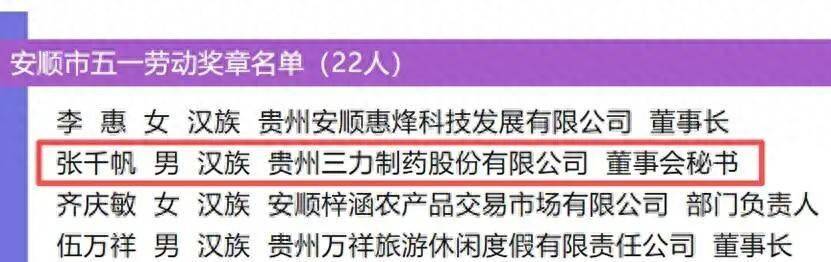
三力制药“劳模”董秘卸任,最年轻女高管上位
Sou Hu Cai Jing· 2026-01-14 01:36
Core Viewpoint - The appointment of Ju Lingke as the new Secretary of the Board at Sanli Pharmaceutical marks a significant transition in the company's governance, as she takes over from Zhang Qianfan, who held multiple roles and is now focusing on strategic and operational aspects of the company [1][9][18]. Group 1: Leadership Transition - Ju Lingke, a 34-year-old with a master's degree, has a clear career trajectory starting from financial institutions and moving to Sanli Pharmaceutical, where she has rapidly advanced from a financial manager to the Secretary of the Board in just over two years [4][6][7]. - Zhang Qianfan, the previous Secretary, had been in the role for nearly 11 years and will continue to serve as a director and vice chairman, indicating a strategic shift to allow him to focus on broader company operations [8][9]. - The company is undergoing a critical self-adjustment phase, and Ju Lingke's role will be pivotal in managing internal operations and external communications [1][18]. Group 2: Company Profile and Performance - Sanli Pharmaceutical specializes in the research, production, and sales of traditional Chinese medicine, with key products including various herbal formulations [20]. - The company's major shareholder, Zhang Hai, holds 40.91% of the shares, indicating a strong control over the company [21]. - Recent financial performance shows a decline, with revenue of 1.038 billion yuan for the first three quarters of 2025, down 28.24% year-on-year, and a net profit of 80.79 million yuan, down 58.39% year-on-year [23]. Group 3: Regulatory and Compliance Issues - Sanli Pharmaceutical has faced regulatory challenges, including a credit rating of "general" dishonesty due to past issues involving kickbacks related to its products [23][24]. - The company has engaged in a significant transaction with Hainan University, acquiring a candidate drug for Alzheimer's disease for 200 million yuan, which is seen as a strategic move into innovative pharmaceuticals [22].


三力制药:与海南大学签署总额2亿元技术转让合同
Zhong Zheng Wang· 2025-12-22 11:53
Core Viewpoint - Sanli Pharmaceutical has signed a technology transfer contract with Hainan University for the acquisition of the compound HXW2324 and related patent application rights, aiming to enhance its innovative drug product portfolio and align with its long-term strategic goals [1] Group 1: Technology Transfer Agreement - The total transfer price for the invention patent rights or patent application rights is set at 200 million yuan, which includes a milestone payment of 20 million yuan (tax included) and a sales commission of 180 million yuan (tax included) [1] - The compound HXW2324 is a preclinical candidate for developing new treatments for Alzheimer's disease [1] Group 2: Company Background and Financials - Sanli Pharmaceutical's main business includes the research, production, and sales of pharmaceuticals, with key products such as throat spray for children, Qi Jiao Sheng Bai capsules, and others [1] - In the first three quarters of this year, the company achieved operating revenue of 1.038 billion yuan and a net profit attributable to shareholders of 81 million yuan [1]
三力制药与海南大学签署技术转让合同,拓展创新药产品布局
Zheng Quan Shi Bao Wang· 2025-12-22 10:32
Core Viewpoint - The company has signed a technology transfer contract with Hainan University to acquire the patent application rights for the HXW2324 compound, aimed at developing a new treatment for Alzheimer's disease, enhancing its innovative drug product portfolio and market competitiveness [1][2]. Group 1: Technology Transfer Agreement - The total transfer price for the patent rights is set at 200 million RMB, which includes a milestone payment of 20 million RMB and a sales commission of 180 million RMB [2]. - The initial milestone payment of 3 million RMB is contingent upon Hainan University conducting efficacy studies on the HXW2324 compound using three classic Alzheimer's disease animal models, with results needing mutual agreement for further research [2][3]. Group 2: Project Terms and Conditions - The project can be terminated by either party if deemed unnecessary, and sales commissions will be paid at a rate of 2 RMB per box (including VAT) until the total sales commission reaches 180 million RMB or five years have passed since the first commission withdrawal [3]. - The company has indicated that the contract's execution will not significantly impact its financial status or operating performance for the current year, although drug development is inherently risky and subject to various unpredictable factors [3]. Group 3: Company Strategy and Brand Image - The company has changed its stock abbreviation from "Guizhou Sanli" to "Sanli Pharmaceutical" to better reflect its main business and strengthen its brand image [4]. - The company has established a biopharmaceutical fund with a total scale of 500 million RMB, focusing on equity investment projects in biotechnology and health management, aiming to build a comprehensive investment ecosystem in the innovative drug sector [4].
贵州三力: 贵州三力制药股份有限公司2025年半年度报告
Zheng Quan Zhi Xing· 2025-08-27 09:59
Core Viewpoint - Guizhou Sanli Pharmaceutical Co., Ltd. reported a decline in revenue and profit for the first half of 2025, attributed to decreased product sales and increased operational costs due to channel expansion efforts [2][13][14]. Company Overview and Financial Indicators - The company’s main business includes the research, production, and sales of pharmaceuticals, with key products such as the Kaihoujian spray [7][21]. - Major financial data for the first half of 2025 includes: - Revenue: CNY 701.83 million, down 23.73% from CNY 920.23 million in the same period last year [2]. - Total profit: CNY 93.91 million, down 32.62% from CNY 139.38 million [2]. - Net profit attributable to shareholders: CNY 83.06 million, down 29.04% from CNY 117.06 million [2]. - Basic earnings per share: CNY 0.20, down 31.03% from CNY 0.29 [2]. Industry Overview - The pharmaceutical manufacturing industry in China experienced a slight decline in revenue and profit, with a 1.2% decrease in revenue and a 2.8% decrease in total profit for large-scale enterprises [13]. - The industry is undergoing transformation driven by policy reforms, demographic changes, and innovation [13][18]. - The aging population is expected to increase demand for chronic disease treatment and health management, with projections indicating a rise in the population aged 60 and above from 320 million to 390 million between 2025 and 2030 [13]. Business Model and Sales Strategy - The company employs a dual-channel sales strategy, focusing on both prescription and OTC (over-the-counter) markets, with a significant emphasis on academic promotion for prescription sales [12][21]. - The company has expanded its OTC channel network, establishing 13 provincial branches and a professional marketing team of over 1,700 members [13][14]. Challenges and Strategic Responses - The company faces challenges due to reduced demand for respiratory-related products and increased operational costs from channel expansion [13][14]. - To address these challenges, the company is implementing cost control measures and refining its marketing strategies to enhance efficiency and profitability [14][18]. Investment and Growth Initiatives - The company has made strategic investments in subsidiaries to enhance control over its supply chain and improve product offerings [15][21]. - A biopharmaceutical fund has been established to focus on innovative drug development, with several projects in clinical trial phases [17]. Commitment to Shareholder Returns - The company emphasizes shareholder returns through cash dividends and share buybacks, with a commitment to distribute at least 50% of its distributable profits as cash dividends annually [17][18].