
异质结技术

Search documents
中国—中东能源合作向全产业链纵深推进
中国能源报· 2025-12-04 14:58
Core Viewpoint - The forum highlighted the evolution of energy cooperation between China and the Middle East, transitioning from traditional oil and gas trade to a comprehensive, multi-dimensional strategic collaboration centered on green and low-carbon initiatives [2][4]. Group 1: Historical Context and Cooperation Foundations - The historical ties between China and Arab countries date back over a thousand years, with the establishment of the China-Arab States Cooperation Forum in 2004 marking a new phase of institutional cooperation [4]. - The Belt and Road Initiative proposed in 2013 has significantly boosted energy cooperation between China and Arab nations, evolving from mere trade to encompassing oil and gas exploration, technology exchange, and joint clean energy projects [4][5]. Group 2: Current Energy Transition and Investment Opportunities - The Middle East is undergoing a significant energy transition, with countries like Saudi Arabia and the UAE outlining ambitious plans such as the "Vision 2030" and "2050 Energy Strategy," which aim to reduce dependence on oil and diversify their economies [8]. - The region's shift towards renewable energy creates substantial investment opportunities for global investors, particularly in clean energy, hydrogen, and emerging energy sectors [8][10]. Group 3: Strategic Collaboration Dynamics - The collaboration between China and Middle Eastern countries has evolved from a one-way trade model to a synergistic approach combining Chinese technology, Gulf capital, and local application scenarios, creating a powerful collaborative force [6]. - The complementary strengths of China as the largest oil importer and the Middle East as a major oil exporter, along with China's advanced renewable energy capabilities, form the basis for deepening energy cooperation [5][6]. Group 4: Technological Innovations and Future Prospects - Chinese companies are rapidly integrating into the Middle East's energy transition, with firms like China Energy Engineering, BYD, and Huawei leading the charge in renewable energy projects [8][10]. - Innovations in technologies such as heterojunction solar cells and PEM electrolysis for hydrogen production are being explored, with the potential to significantly reduce costs and enhance efficiency in the region's energy landscape [9][10]. Group 5: Challenges and Strategic Recommendations - The complexity of the Middle Eastern market, characterized by diverse histories, cultures, and regulations, necessitates a thorough understanding and careful planning by Chinese enterprises looking to invest [12][13]. - Successful collaboration relies on building trust through local connections, understanding market dynamics, and leveraging local policy advantages while ensuring compliance and risk management [12][13].


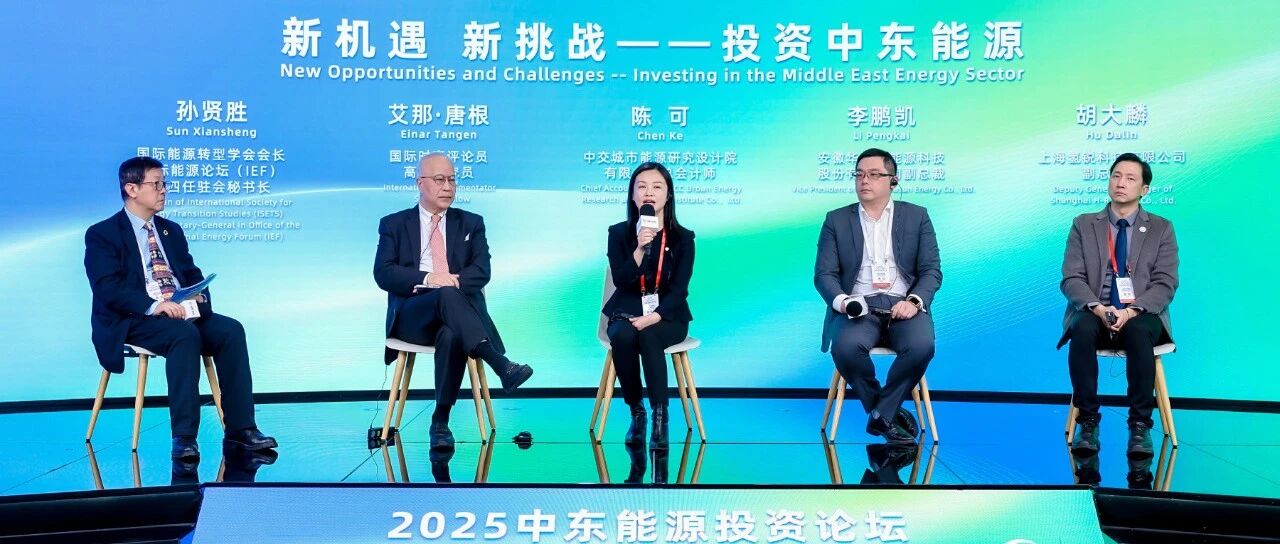
圆桌对话丨投资中东能源:机遇与挑战并存
中国能源报· 2025-12-04 12:16
Core Viewpoint - The Middle East is at a historical crossroads in energy investment, balancing its traditional hydrocarbon advantages with the development of renewable energy and economic diversification, presenting both opportunities and challenges for global investors [4][6]. Group 1: Investment Opportunities and Risks - The global energy transition is accelerating, and the Middle East, as a core hub for oil and gas supply, is undergoing profound restructuring in its energy investment strategies and risk challenges [6]. - Investors must possess precise risk judgment capabilities to assess whether project risks are manageable, especially in the hydrogen sector, which has faced challenges leading some companies to exit while others continue to pursue opportunities [6][8]. Group 2: Localization and Collaboration - Investors should deeply understand local conditions, including language and business culture, to navigate the diverse historical backgrounds and perspectives across the Middle East [8]. - Southern countries should actively seek collaboration opportunities to create a new economic force, recognizing the strategic importance of traditional resources even as they decline [8]. Group 3: Infrastructure and Global Strategy - China Communications Construction Company (CCCC) has achieved success in its globalization strategy through market brand advantages, regional deepening, and localized personnel [11]. - CCCC has established substantial operations in 158 countries, with over 3,000 projects globally, particularly in the Middle East, including the UAE and Kuwait [11]. Group 4: Technological Advancements in Renewable Energy - Anhui Huasheng New Energy Technology Co., Ltd. focuses on heterojunction technology, which is well-suited for the Middle East's environment, offering significant advantages in temperature coefficient and bifaciality [14][15]. - The company aims to commercialize its technology within five years, with a clear roadmap for industrialization, and is actively involved in establishing collaborative platforms for the solar energy industry [14][15]. Group 5: Hydrogen Energy Development - Shanghai Hydrogen Technology Co., Ltd. sees the Middle East as a key region for its global strategy, focusing on the development of green hydrogen ecosystems in collaboration with local enterprises [18]. - The company emphasizes the importance of technology and application scenarios in driving market expansion, despite some companies exiting the hydrogen sector [18].
光伏破“内卷”离不开法律和自律
Zhong Guo Neng Yuan Wang· 2025-08-04 08:16
Core Viewpoint - The Chinese photovoltaic industry is facing severe "involution" challenges, characterized by chaotic capacity expansion, price wars, and technological homogenization, necessitating a shift towards high-quality development and innovation [1][2][5] Group 1: Policy and Regulatory Changes - The National Development and Reform Commission (NDRC) and the State Administration for Market Regulation are soliciting opinions on the draft amendment to the Price Law, which aims to address the core issues of vicious competition by prohibiting price manipulation and below-cost dumping [2][3] - The amendment is designed to promote fair competition and optimize resource allocation, aligning with the photovoltaic industry's need to move away from price wars and focus on technology and value creation [2][4] Group 2: Industry Self-Regulation and Government Role - The industry must awaken to the need for self-regulation alongside legal constraints, as strong self-discipline can reduce regulatory costs and enhance legal enforcement efficiency [3][4] - Local governments need to shift from being irrational promoters of investment to guardians of rules and cultivators of ecosystems, ensuring fair competition and preventing blind expansion driven by excessive incentives [4][5] Group 3: Technological Innovation and Development - The industry should focus resources on disruptive technologies, such as perovskite tandem cells and cost-reducing heterojunction technologies, to escape the homogenization trap and ascend the global value chain [4][5] - Embracing grid transformation and participating in friendly technology development for the grid are essential for overcoming integration challenges and enhancing energy storage applications [4][5]