PEM电解水制氢技术

Search documents
电投产融:百万千瓦级压水堆核电机组普遍配套建设一定规模的制氢系统
Zheng Quan Ri Bao Wang· 2026-01-13 09:14
Core Viewpoint - The company Electric Power Investment Corporation (000958) is actively exploring the integration of hydrogen production and seawater desalination with its nuclear power projects, leveraging the capabilities of its CAP1000 and CAP1400 reactor models [1] Group 1: Hydrogen Production - The CAP1000 and CAP1400 nuclear reactor models are designed to support hydrogen production systems, primarily for internal equipment hydrogen supply [1] - These reactors can utilize stable and clean base-load power to enable water electrolysis for hydrogen production, integrating with established PEM electrolysis technologies [1] Group 2: Seawater Desalination - The CAP1000 and CAP1400 models also possess the capability to implement seawater desalination using membrane or thermal methods [1] - The company plans to adapt its nuclear energy applications to meet the economic and social development needs of specific project locations [1]

中国—中东能源合作向全产业链纵深推进
中国能源报· 2025-12-04 14:58
Core Viewpoint - The forum highlighted the evolution of energy cooperation between China and the Middle East, transitioning from traditional oil and gas trade to a comprehensive, multi-dimensional strategic collaboration centered on green and low-carbon initiatives [2][4]. Group 1: Historical Context and Cooperation Foundations - The historical ties between China and Arab countries date back over a thousand years, with the establishment of the China-Arab States Cooperation Forum in 2004 marking a new phase of institutional cooperation [4]. - The Belt and Road Initiative proposed in 2013 has significantly boosted energy cooperation between China and Arab nations, evolving from mere trade to encompassing oil and gas exploration, technology exchange, and joint clean energy projects [4][5]. Group 2: Current Energy Transition and Investment Opportunities - The Middle East is undergoing a significant energy transition, with countries like Saudi Arabia and the UAE outlining ambitious plans such as the "Vision 2030" and "2050 Energy Strategy," which aim to reduce dependence on oil and diversify their economies [8]. - The region's shift towards renewable energy creates substantial investment opportunities for global investors, particularly in clean energy, hydrogen, and emerging energy sectors [8][10]. Group 3: Strategic Collaboration Dynamics - The collaboration between China and Middle Eastern countries has evolved from a one-way trade model to a synergistic approach combining Chinese technology, Gulf capital, and local application scenarios, creating a powerful collaborative force [6]. - The complementary strengths of China as the largest oil importer and the Middle East as a major oil exporter, along with China's advanced renewable energy capabilities, form the basis for deepening energy cooperation [5][6]. Group 4: Technological Innovations and Future Prospects - Chinese companies are rapidly integrating into the Middle East's energy transition, with firms like China Energy Engineering, BYD, and Huawei leading the charge in renewable energy projects [8][10]. - Innovations in technologies such as heterojunction solar cells and PEM electrolysis for hydrogen production are being explored, with the potential to significantly reduce costs and enhance efficiency in the region's energy landscape [9][10]. Group 5: Challenges and Strategic Recommendations - The complexity of the Middle Eastern market, characterized by diverse histories, cultures, and regulations, necessitates a thorough understanding and careful planning by Chinese enterprises looking to invest [12][13]. - Successful collaboration relies on building trust through local connections, understanding market dynamics, and leveraging local policy advantages while ensuring compliance and risk management [12][13].


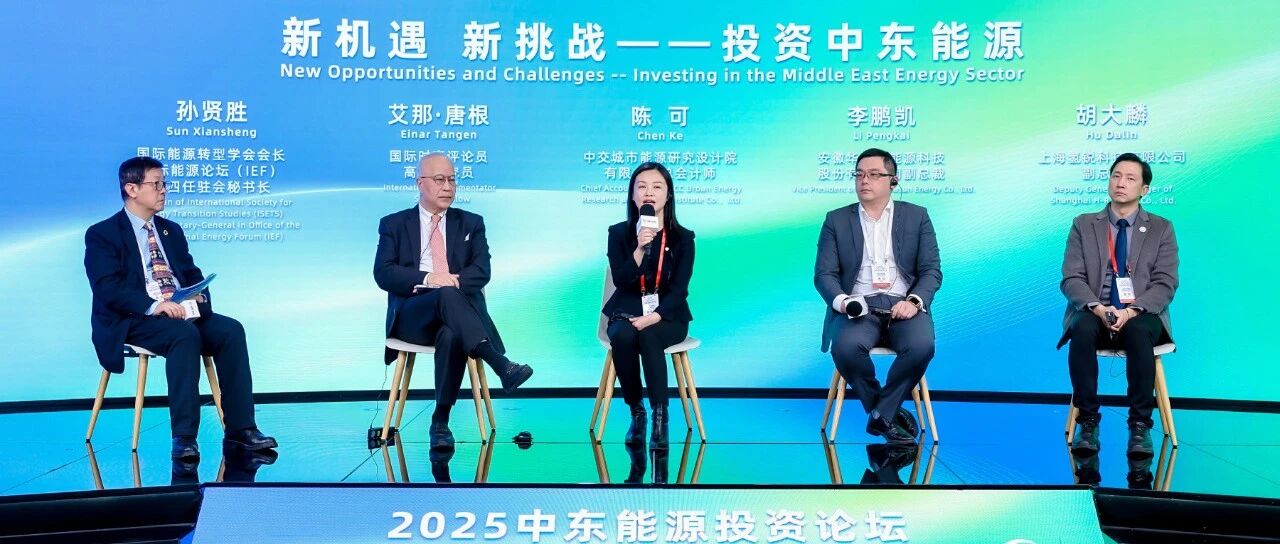
圆桌对话|投资中东能源:机遇与挑战并存
Sou Hu Cai Jing· 2025-12-04 13:00
Core Insights - The Middle East is at a historical crossroads in energy investment, balancing its traditional hydrocarbon advantages with a push towards renewable energy and economic diversification [6][4] - Global investors face both significant opportunities and complex challenges in the region, necessitating precise risk assessment and project evaluation [6][4] Group 1: Investment Opportunities and Challenges - The global energy transition is accelerating, with the Middle East being a key hub for oil and gas supply, undergoing profound changes in investment strategies and risk dynamics [6] - Investors must develop localized strategies, understanding cultural and historical contexts to navigate the diverse Middle Eastern markets effectively [8][9] - The region's traditional oil resources are diminishing, yet their strategic importance as raw materials is increasing, prompting new collaborative models between China and Middle Eastern countries [8] Group 2: Technological Innovations and Industry Trends - Anhui Huasheng New Energy Technology Co., Ltd. is pioneering heterojunction technology, which is well-suited for the Middle Eastern environment, promising lower costs and higher efficiency in solar energy production [15][16] - The company has established a collaborative innovation platform for heterojunction technology, aiming for commercial application within five years [16] - Shanghai Hydrogen Technology Co., Ltd. views the Middle East as a critical area for hydrogen energy development, leveraging the region's renewable resources to establish a green hydrogen ecosystem [20] Group 3: Strategic Collaborations and Local Engagement - China Communications Construction Company emphasizes the importance of building strong local partnerships and understanding regional regulations and cultural differences to ensure successful project execution [12][13] - The company has successfully implemented over 3,000 projects globally, with a focus on establishing good relationships with local governments and communities [12] - The establishment of trust and collaboration is essential for long-term success in the Middle Eastern market, with a focus on integrating local financial advantages into business models [17]
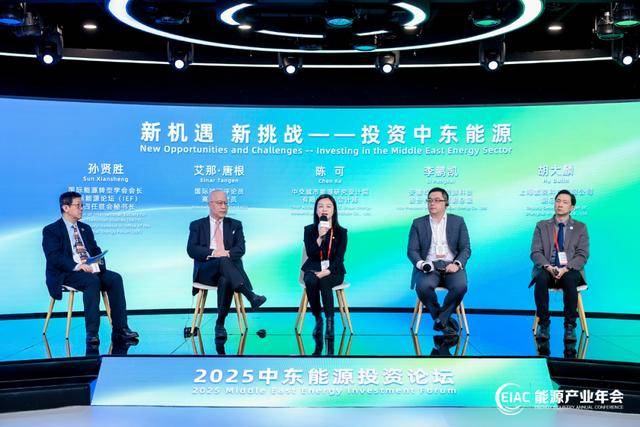
圆桌对话丨投资中东能源:机遇与挑战并存
中国能源报· 2025-12-04 12:16
Core Viewpoint - The Middle East is at a historical crossroads in energy investment, balancing its traditional hydrocarbon advantages with the development of renewable energy and economic diversification, presenting both opportunities and challenges for global investors [4][6]. Group 1: Investment Opportunities and Risks - The global energy transition is accelerating, and the Middle East, as a core hub for oil and gas supply, is undergoing profound restructuring in its energy investment strategies and risk challenges [6]. - Investors must possess precise risk judgment capabilities to assess whether project risks are manageable, especially in the hydrogen sector, which has faced challenges leading some companies to exit while others continue to pursue opportunities [6][8]. Group 2: Localization and Collaboration - Investors should deeply understand local conditions, including language and business culture, to navigate the diverse historical backgrounds and perspectives across the Middle East [8]. - Southern countries should actively seek collaboration opportunities to create a new economic force, recognizing the strategic importance of traditional resources even as they decline [8]. Group 3: Infrastructure and Global Strategy - China Communications Construction Company (CCCC) has achieved success in its globalization strategy through market brand advantages, regional deepening, and localized personnel [11]. - CCCC has established substantial operations in 158 countries, with over 3,000 projects globally, particularly in the Middle East, including the UAE and Kuwait [11]. Group 4: Technological Advancements in Renewable Energy - Anhui Huasheng New Energy Technology Co., Ltd. focuses on heterojunction technology, which is well-suited for the Middle East's environment, offering significant advantages in temperature coefficient and bifaciality [14][15]. - The company aims to commercialize its technology within five years, with a clear roadmap for industrialization, and is actively involved in establishing collaborative platforms for the solar energy industry [14][15]. Group 5: Hydrogen Energy Development - Shanghai Hydrogen Technology Co., Ltd. sees the Middle East as a key region for its global strategy, focusing on the development of green hydrogen ecosystems in collaboration with local enterprises [18]. - The company emphasizes the importance of technology and application scenarios in driving market expansion, despite some companies exiting the hydrogen sector [18].
圆满落幕,下届再会 | 2025第五届可再生能源制氢产业发展论坛
DT新材料· 2025-07-25 15:43
Core Viewpoint - The forum focused on the development of the renewable energy hydrogen production industry, discussing technological innovations and market trends in hydrogen production systems and key components, aiming to promote high-quality development in the sector [3][68]. Group 1: Forum Overview - The "2025 Renewable Energy Hydrogen Production Industry Development Forum" was held in Suzhou, Jiangsu, organized by DT New Energy and the Shanghai Hydrogen Science and Technology Research Association, featuring nearly 200 industry experts and representatives [1][3]. - The forum included 20 specialized reports addressing various topics such as ALK/PEM/AEM hydrogen production technologies, innovation in key components, and new trends in green hydrogen project applications [3]. Group 2: Key Technological Insights - Yang Fuyuan from Tsinghua University discussed the high cost issues of PEM electrolysis and proposed key technological paths for achieving low-cost, high-performance PEM electrolysis, emphasizing high current density and durability [6][7]. - Yu Ende from Shenzhen Tsinghua University introduced seawater electrolysis technology, highlighting its wide water quality tolerance and addressing challenges such as chlorine ion reactions and electrode corrosion [9][10]. - Wang Xiaoyu analyzed the hydrogen-ammonia-alcohol project, identifying challenges and opportunities in technology bottlenecks, biomass storage, and green certification [11][12]. Group 3: Innovations in Electrolysis Technology - Zhang Bo from Fudan University emphasized the importance of low iridium/non-iridium catalyst material innovations and efficient manufacturing processes to reduce costs and improve reliability in PEM electrolysis systems [22][24]. - Li Haipeng from China Shipbuilding (Handan) discussed the need for safety and maintenance systems in large-scale renewable energy hydrogen production, focusing on alkaline electrolysis technology [30]. - Xu Xiaochuan from Evonik highlighted advancements in anion exchange membrane technology, which is crucial for the stability and efficiency of AEM electrolysis systems [41][46]. Group 4: Industry Challenges and Future Directions - The industry faces dual challenges of cost and safety, necessitating effective risk management measures to ensure safe operations in hydrogen-related scenarios [31]. - Li Yangyang discussed the challenges in the commercialization of composite membranes and electrodes, emphasizing the need for continuous innovation in material systems and processes [35][36]. - The forum concluded with a call for ongoing professional courses and demand matching services to foster technical exchanges and industry development in the renewable energy hydrogen sector [69][70].
下周三启动!中石化/万华化学/赢创/东丽/世索科/东材/贺利氏/博世/中能建/中集/中核/国电投......
DT新材料· 2025-07-03 13:38
Core Viewpoint - The article emphasizes the importance of innovation in driving the transformation of the renewable hydrogen industry, highlighting the upcoming 2025 Renewable Energy Hydrogen Production Industry Development Forum in Suzhou, Jiangsu, which will focus on advancements in hydrogen production technologies and applications [1][2]. Group 1: Event Overview - The 2025 Renewable Energy Hydrogen Production Industry Development Forum will take place on July 10-11, 2025, in Suzhou, Jiangsu, organized by DT New Energy [2][3]. - The forum will cover key topics such as the current market development of ALK/PEM/AEM hydrogen production technologies, innovations in key materials and systems, and new trends in green hydrogen project applications [2][3]. Group 2: Agenda Highlights - The agenda includes a series of thematic discussions, starting with the current status and development trends of renewable energy electrolysis hydrogen production [10]. - Key sessions will address high-performance versus stable technologies in alkaline/PEM hydrogen production, advancements in AEM electrolysis technology, and the integration of green hydrogen in various applications [10][12][14]. Group 3: Featured Activities - The forum will feature a PEM hydrogen production industry innovation development seminar, aimed at connecting executives from key material and equipment companies with academic leaders to discuss industry challenges and solutions [20]. - A supply-demand matching initiative will be introduced to facilitate collaboration among research institutions, enterprises, and government bodies involved in the renewable hydrogen sector [21]. - Attendees will have the opportunity to visit Bosch's Intelligent Manufacturing Solutions Division, with limited slots available for registration [23].