绿氢产业

Search documents
黄金创近43年来最大单周跌幅
21世纪经济报道· 2026-03-22 12:54
Core Viewpoint - The recent significant decline in gold prices has raised market concerns, with gold futures dropping below $4,500 per ounce, marking the largest weekly decline since March 1983, with a drop of over 10% [1] Group 1: Gold Market Performance - Gold futures for April delivery fell from $5,061.70 per ounce last Friday to below $4,500, with a weekly decline exceeding 10%, the largest in nearly 43 years [1] - The spot gold price and futures both dropped below $4,500, marking the eighth consecutive day of decline [1] - Silver futures also saw a significant drop, falling from above $80 per ounce to below $70, with a weekly decline of over 14% [2] Group 2: Market Dynamics - The decline in gold prices is attributed to conflicting forces: geopolitical tensions typically favoring safe-haven assets and a macroeconomic environment characterized by rising yields and a stronger dollar [3] - Despite some demand for gold due to geopolitical tensions, macroeconomic factors have largely suppressed this demand [4] - Historical data suggests that gold prices may still have a potential decline of around 5% based on past performance during geopolitical conflicts [14]


近5000股下跌,但4000点守住了
第一财经· 2026-03-19 07:35
Market Overview - A-shares experienced a collective decline on March 19, with the Shanghai Composite Index down by 1.39%, the Shenzhen Component Index down by 2.02%, and the ChiNext Index down by 1.11% [3][4] - Nearly 5000 stocks in the market saw a drop [3] Sector Performance - The energy metals sector faced significant adjustments, with Weiling Co. hitting the daily limit down, and Yongxing Materials dropping over 8% [5] - Other notable declines included Huayou Cobalt and Shengxin Lithium Energy, both down over 6% [5][6] Top Gainers and Losers - The oil and gas sector showed strength, with Blue Flame Holdings hitting the daily limit up and Shouhua Gas rising over 13% [8] - In contrast, precious metals, energy metals, and chemical fiber sectors experienced declines [7] Capital Flow - Main capital inflows were observed in public utilities, computers, and communications sectors, while there were outflows from electronics, basic chemicals, and defense industries [10] - Specific stocks with net inflows included Jiuan Medical, Zhongyou Capital, and Jinkai New Energy, attracting 2.326 billion, 2.099 billion, and 1.894 billion respectively [11] - Conversely, stocks like Baiwei Storage, Shenghong Technology, and Zhongji Xuchuang faced net outflows of 1.864 billion, 1.755 billion, and 1.397 billion respectively [12] Institutional Insights - CITIC Securities predicts that profits for leading oil transportation companies may reach new highs in 2026 [13] - Huatai Securities suggests that 2026 could be a pivotal year for the green hydrogen industry [14] - CICC anticipates that the Federal Reserve may maintain interest rates in the first half of the year, with a potential delay in rate cuts until the second half [15]



国内氢能政策落地催化产业拐点
HTSC· 2026-03-18 06:50
Investment Rating - The report maintains a "Buy" rating for stocks such as 双良节能 (Shuangliang Energy), 隆基绿能 (LONGi Green Energy), and 阳光电源 (Sungrow Power), while giving an "Accumulate" rating for 运达股份 (Yunda Co) [8][17]. Core Insights - The report highlights that the recent policy shift from the Ministry of Industry and Information Technology, Ministry of Finance, and National Development and Reform Commission marks a significant turning point for the hydrogen energy industry in China, with a focus on multi-scenario applications rather than just vehicle subsidies [1][2]. - It anticipates that 2026 will be a pivotal year for the green hydrogen industry, driven by intensified domestic policies and stricter overseas carbon emission regulations, alongside global energy price fluctuations due to geopolitical tensions [1][2]. - The report outlines four major upgrades in the hydrogen energy policy, including the tightening of global carbon emission constraints, rising traditional energy prices, and the acceleration of green hydrogen achieving price parity [2][3]. Summary by Sections Policy Developments - The new policy aims for large-scale applications of hydrogen energy across transportation, industry, and energy sectors by 2030, with a trial period of four years for each urban cluster and a maximum reward of 1.6 billion yuan per cluster [2][3]. - The report emphasizes the economic viability of green hydrogen as a low-carbon fuel, particularly in maritime and aviation sectors, as traditional fossil fuel prices rise [2]. Production Costs and Market Dynamics - Domestic green hydrogen production costs are estimated at 16 yuan/kg, significantly lower than the 33 yuan/kg for overseas production, positioning China favorably in the global market [3]. - The report notes that rising natural gas prices will enhance the competitiveness of China's green hydrogen-derived products, such as fertilizers, in international markets [3]. Industry Beneficiaries - Recommended companies include: - Domestic green hydrogen project operators: 运达股份 (Yunda Co) - Equipment suppliers for ammonia and methanol production: 航天工程 (Aerospace Engineering), 中国一重 (China First Heavy Industries), 兰石重装 (Lanshi Heavy Industry), 国机重装 (China National Machinery Industry Corporation) [3]. - Electrolyzer suppliers: 阳光电源 (Sungrow Power), 隆基绿能 (LONGi Green Energy), 双良节能 (Shuangliang Energy) [3]. Application Scenarios - The report identifies six major application scenarios for hydrogen energy, including fuel cell vehicles, green ammonia and methanol, hydrogen metallurgy, and innovative applications, with a strong emphasis on industrial applications [9][10]. - It sets a target for hydrogen prices in various applications to not exceed 25 yuan/kg, with specific regions aiming for as low as 15 yuan/kg for fuel cell vehicles [9]. Financial Projections - The report provides financial forecasts for key companies, projecting significant growth in revenues and net profits for the years 2025-2027, driven by advancements in technology and market demand [18][21][22].






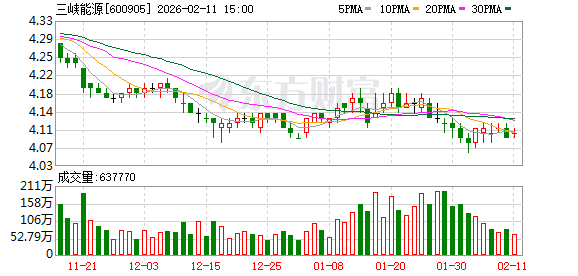
三峡能源:公司已签发江苏如东H6等4个海风项目CCER
Zheng Quan Ri Bao· 2026-02-11 10:13
Core Viewpoint - The company is focusing on promoting the utilization of renewable energy and ensuring the stability of the power system through innovative energy storage research and demonstration applications [2] Group 1: New Energy Storage Initiatives - The company has integrated over 2.7 million kilowatts of new energy storage capacity through various forms such as renewable energy paired storage and independent storage [2] - The development and pressure for the consumption of renewable energy are driving the green hydrogen industry from small-scale trials to large-scale demonstration explorations [2] Group 2: Green Hydrogen Business Development - The commercial development of the green hydrogen sector relies on technological advancements across the industry chain and market acceptance [2] - The company is strategically exploring its green hydrogen business layout in alignment with the needs of its renewable energy operations, policy guidance, and technological maturity [2] Group 3: CCER Projects and Revenue - The company has issued CCER for four offshore wind projects, including the Jiangsu Rudong H6 project, and has completed the registration of the Fujian Pingtan offshore wind CCER project [2] - To date, the company has achieved CCER revenue exceeding 45 million yuan [2]

新型储能行业2025年发展回顾及未来形势展望
电力规划设计总院&中国新型储能产业创新联盟· 2026-02-09 08:30
Overview of Energy Storage Development - By the end of November 2025, China's installed capacity of wind and solar power reached 1.76 billion kW, accounting for 45.8% of total installed capacity[11]. - In the first 11 months of 2025, nearly 35 million kW of new renewable energy capacity was added, with wind and solar power growing by 22.4% and 41.9% year-on-year, respectively[11]. Energy Storage Capacity Projections - The new energy storage capacity in China is expected to reach 130 million kW by 2025, with provinces like Xinjiang and Shandong exceeding 10 million kW[15]. - The demand for new energy storage resources is increasing rapidly due to the growth of renewable energy sources[11]. Technological Innovations - Long-duration energy storage technologies, such as compressed air and hydrogen storage, are accelerating in industrialization, with increasing applications in various scenarios[21][22]. - The integration of artificial intelligence across the energy storage industry is enhancing operational efficiency and safety monitoring[25][105]. Market Dynamics and Policies - In 2025, 253 new policies related to energy storage were issued by national and local governments, indicating a strong push for the sector's development[155]. - The market is transitioning from policy-driven to market-driven, with energy storage expected to become an independent market entity[161]. Financial Aspects - Independent energy storage stations can generate revenue through energy trading, capacity compensation, and frequency regulation services, with projected annual earnings of approximately 3 million yuan for a 100,000 kW station[165]. - The capacity compensation rate is set at 0.0705 yuan per kW, reflecting a shift in market dynamics[167].

摩洛哥与投资方签署绿氢项目土地预留协议
Shang Wu Bu Wang Zhan· 2026-02-07 03:33
Core Viewpoint - Morocco is actively promoting the development of the green hydrogen industry, leveraging its natural resources and skilled workforce to achieve energy self-sufficiency [1] Group 1: Project Development - Moroccan Prime Minister Akhannouch met with representatives of green hydrogen project investors on February 5 in Rabat [1] - A preliminary agreement for land reservation for the project was signed during the meeting [1] Group 2: Government Support - The government expressed gratitude to the investors and stakeholders for their efforts in advancing the green hydrogen initiative [1] - The development of the green hydrogen sector is seen as a key component in Morocco's strategy for energy independence [1]
破局“贵”金属锁喉:枡水低铱催化剂如何解开PEM电解槽成本之痛?
势银能链· 2026-02-04 03:02
Core Viewpoint - The article discusses the challenges and innovations in the PEM electrolysis hydrogen production industry, particularly focusing on the reliance on iridium and the advancements made by Shuangshui Technology in reducing iridium usage while maintaining performance [1][4]. Group 1: Cost Challenges - The price fluctuations of iridium significantly impact the cost of PEM electrolysis cells, as iridium is a major component of the anode catalyst [2]. - The rising global price of iridium poses severe cost challenges for electrolysis cells, with a notable increase from 1,137.14 CNY/g on December 1, 2025, to approximately 1,800 CNY/g by February 2, 2026, marking a 58% increase in less than two months [5]. Group 2: Shuangshui Technology's Innovations - Shuangshui Technology has successfully reduced the iridium loading in membrane electrodes to 0.6 mg/cm² while achieving impressive performance, thanks to a perfect core-shell structure that enhances the utilization of iridium [4]. - The low iridium catalyst design demonstrates excellent dynamic response and stability, with minimal voltage decay during rapid switching tests and a low degradation rate of 3.2 μV/h over 2,750 hours of constant current testing [6][8]. Group 3: Economic Benefits of Low Iridium Technology - The optimization of iridium loading from 1.0 mg/cm² to 0.6 mg/cm² can lead to a direct cost reduction of approximately 24% in the total material cost of the membrane electrode, based on the high iridium price of 1,800 CNY/g [17]. - Further advancements to a 0.4 mg/cm² iridium loading could reduce total costs by over 36% compared to the standard 1.0 mg/cm² process, providing strong financial stability against future iridium price spikes [17]. Group 4: Future of Green Hydrogen - Shuangshui Technology's low iridium technology is positioned to eliminate cost barriers in the green hydrogen industry, paving the way for a new era of cost-effective PEM hydrogen production [18].

百亿级绿氢产业园项目,启动!
Zhong Guo Hua Gong Bao· 2026-02-03 08:47
Core Insights - The Baowu Clean Energy (Yangjiang) Green Hydrogen Industrial Park project, with a total investment of 11.09 billion yuan, officially launched on January 23 in Yangjiang, Guangdong Province [1] Group 1: Project Overview - The project is invested and constructed by Baowu Clean Energy Co., a subsidiary of China Baowu Steel Group [1] - It innovatively utilizes offshore wind power for direct hydrogen production, integrating the entire wind and hydrogen energy supply chain [1] - The project plans to establish an annual production base for 80,000 tons of green hydrogen, along with green ammonia product lines and advanced hydrogen equipment production bases [1] Group 2: Research and Development - The Baowu Clean Energy (Yangjiang) Green Hydrogen Industrial Innovation Research Institute was inaugurated, focusing on breakthrough technologies for new hydrogen production and transformative nano key components [1] Group 3: Infrastructure Development - Yangjiang will initiate hydrogen pipeline construction to significantly reduce transportation costs [1] - Plans include a hydrogen pipeline from Yangjiang to Zhanjiang to supply green hydrogen to the Zhanjiang Baowu Steel Base, as well as potential pipelines to the Pearl River Delta and Hong Kong to serve the Guangdong-Hong Kong-Macao Greater Bay Area hydrogen market [1]
势银数据|2025年电解水制氢设备需求增幅141%
势银能链· 2026-02-03 04:21
Core Insights - As of the end of 2025, China is projected to have 903 green hydrogen projects, a year-on-year increase of 27%, with a total production capacity reaching 261,200 tons per year, exceeding national targets [1][3][2] - The demand for hydrogen production equipment in China is primarily driven by large-scale demonstration projects, with a projected demand of 4.03 GW by 2025, reflecting a 141% year-on-year growth [10][2] - The competitive landscape in the hydrogen production equipment industry is intensifying, with a notable increase in market concentration and the emergence of new players [15][16] Group 1: Green Hydrogen Projects - By the end of 2025, there will be 903 green hydrogen projects in China, with a total hydrogen production capacity of over 261,200 tons per year [3][1] - The number of green hydrogen projects is expected to exceed 1,100 by 2026, with a production capacity potentially surpassing 420,000 tons per year [3][2] - The growth in project numbers is supported by large-scale demonstration projects such as those by Jidian Co., China Energy Construction, and Envision [2][7] Group 2: Equipment Demand and Market Dynamics - The demand for hydrogen production equipment is projected to reach 4.03 GW in 2025, driven by the completion of several large-scale projects [10][2] - The top five companies in the hydrogen production equipment market include Sunshine Hydrogen, Huadian Technology, and Longi Hydrogen, with Sunshine Hydrogen leading the market for two consecutive years [13][10] - The market is experiencing a shift with increased participation from state-owned enterprises, which now account for approximately 53% of green hydrogen projects [15][16] Group 3: Technological Advancements - Various technological routes for hydrogen production, including ALK, PEM, and AEM, are being developed concurrently, with ALK maintaining a dominant position [2][9] - The successful implementation of large-scale projects is accelerating the iteration of hydrogen production technologies, establishing a cycle of application-driven technological advancement [9][2] - The PEM hydrogen production equipment demand is expected to exceed 100 MW in 2025, marking a significant milestone in its market development [18][23] Group 4: Global Market Context - Globally, the number of electrolysis hydrogen projects has reached 2,355, with an 8% year-on-year increase, primarily concentrated in Europe, China, and the Middle East [24][26] - Despite challenges in the global hydrogen market, China's hydrogen sector is expected to maintain a leading position due to supportive policies and technological advancements [26][29] - Chinese hydrogen companies are actively expanding into international markets through various strategies, including joint ventures and local production [29][30]

以“乐高式”模块化终结制氢BOP五大核心痛点
势银能链· 2026-01-28 04:22
Core Viewpoint - The article emphasizes the critical role of Balance of Plant (BOP) in the green hydrogen industry, highlighting its importance in ensuring the long-term, stable, and efficient operation of hydrogen production systems, despite often being underestimated compared to electrolyzer technology [1][3]. Group 1: Industry Challenges - BOP is described as the "central nervous system" and "circulatory system" of hydrogen projects, directly influencing the transition from demonstration to large-scale production and from "feasible" to "economical" [3]. - The industry faces five core pain points regarding BOP: lack of flexible adaptation to different technology routes, long customization delivery cycles, high failure rates due to system integration defects, insufficient post-delivery support, and a tendency of suppliers to focus on equipment rather than integrated solutions [3][4]. Group 2: Company Solutions - The company aims to provide "certainty" in the industry by leveraging its strong technical foundation, which includes a comprehensive team of system engineers covering process, mechanical, electrical, and automation disciplines [4]. - By employing synchronous simulation of process, electrical, and structural designs, the company ensures safety, energy efficiency, and maintainability from the project initiation phase, thus mitigating risks associated with traditional segmented outsourcing [4]. Group 3: Innovative Approaches - The company proposes a "modular revolution" to address the customization challenges of BOP by breaking down complex systems into functionally independent, standardized subsystems, allowing for "plug-and-play" capabilities [5]. - This modular approach enables quick adaptation to various technology routes (ALK, PEM, AEM), reduces delivery cycles by over 30%, and enhances system reliability by 40%, while significantly lowering initial investment and long-term operational costs for clients [5]. Group 4: Strategic Positioning - The company positions itself as a "turnkey" service provider for electrolyzer manufacturers that do not produce BOP, aiming to become their preferred supplier, while also serving as a reliable technical backup for manufacturers that do [7]. - The company emphasizes a technology-neutral stance, focusing on being a trusted "system OEM" integration partner rather than competing in the electrolyzer market [7]. Group 5: Future Outlook - The company plans to deepen its modular technology to enhance flexible adaptation, strengthen intelligent integration, and introduce digital twin technology for predictive maintenance, while exploring low-carbon design to promote carbon reduction across the green hydrogen value chain [8]. - The company expresses a commitment to collaborating with industry peers to solidify the foundation for large-scale green hydrogen production, transitioning from a follower to a leader in the hydrogen sector [8]. Group 6: Recognition - The company was awarded the "2025 Product Power Award" at the TrendBank Hydrogen Annual Conference for its leading modular BOP system and containerized hydrogen equipment [10].