
产业链供应链稳定

Search documents
中国国际贸易学会常务理事何伟文:在多边舞台上深化中德协作
Huan Qiu Wang· 2026-02-28 01:23
Core Insights - The visit of German Chancellor Merz, accompanied by executives from 30 leading German companies, aims to strengthen high-level communication and practical cooperation between China and Germany amidst complex international circumstances [1][2] - The stability and development of Sino-German relations are crucial not only for the two countries but also for maintaining the global multilateral trade system and supply chain security [1][2] Political Trust Enhancement - Understanding Sino-German economic relations requires a political perspective, with Merz's visit reaffirming the cooperative tone of the comprehensive strategic partnership [2] - Despite existing differences, the primary focus remains on maintaining multilateralism and international order, with the visit solidifying this political foundation [2] Economic Cooperation - The delegation included executives from major German companies such as Volkswagen, BMW, Siemens, and Bayer, indicating significant economic discussions and potential outcomes [2] - The bilateral trade volume between China and Germany is projected to reach €251.8 billion by 2025, with China surpassing the U.S. as Germany's largest trading partner [3] Industry Collaboration - Sino-German industrial cooperation has evolved into a deep integration phase, characterized by mutual dependency and collaboration across various sectors, including automotive, chemicals, and machinery [3][4] - German companies like Merck have established R&D centers in China, contributing to a robust global supply chain and enhancing the interconnectedness of both countries' industries [4] Practical Cooperation Pathways - There is a strong cooperative atmosphere, with local leaders showing respect and willingness to collaborate with German enterprises [4] - Suggestions for enhancing service to German companies include dedicated project tracking and support mechanisms, as demonstrated by successful practices in Anhui province [4] Global Governance and Multilateral Cooperation - The cooperation between China and Germany extends to global governance, emphasizing the importance of supporting the multilateral trade system centered around the WTO [5][6] - There is significant potential for collaboration in climate change and green transition, as well as in the digital economy, where both countries can jointly establish international rules [6][7] Conclusion - Merz's visit represents a significant diplomatic action amidst rising protectionism, highlighting the deepening and broadening of Sino-German cooperation across multiple dimensions, including political trust, economic integration, and global governance [7]


超级工程重塑四川经济地理
Zhong Guo Fa Zhan Wang· 2026-01-16 06:26
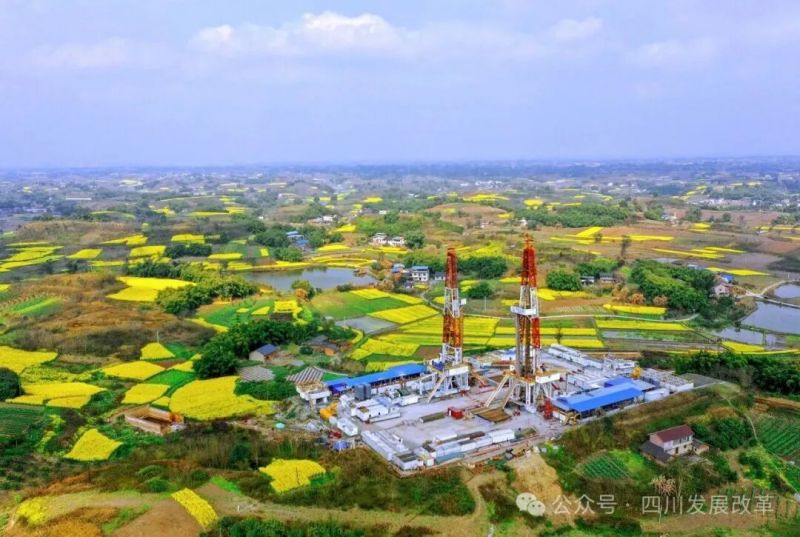
Core Viewpoint - The completion of several major infrastructure projects in Sichuan by the end of 2025 marks a significant advancement in the region's transportation and energy capabilities, enhancing its economic geography and strategic importance in national development [5][20]. Infrastructure Development - The Jinshang-Hubei ±800 kV UHVDC project, completed on December 18, 2025, enables clean electricity to be transmitted 1,900 kilometers to East China in just 6 milliseconds, setting a record for the highest altitude UHV project [1]. - The Leshan-Xichang Expressway, which opened on December 31, 2025, features a high bridge-tunnel ratio of 82% and incorporates innovative heating systems to address winter snow challenges [3]. - Sichuan has invested nearly 8.8 trillion yuan in over 1,600 key provincial projects during the 14th Five-Year Plan, with over 4 trillion yuan already completed, focusing on transportation, energy, water resources, and new infrastructure [5]. Energy Sector Advancements - By December 19, 2025, Sichuan's hydropower installed capacity surpassed 100 million kilowatts, making it the first province in China to reach this milestone, capable of supplying electricity for approximately 500 million people annually [17]. - The province's total power generation capacity exceeded 150 million kilowatts by the end of 2025, marking significant progress in transitioning to a clean energy structure [18]. Transportation Network Expansion - The completion of the Chengdu-Yibin high-speed railway and the operation of the Yuxi-Kunming high-speed railway have significantly improved connectivity in the region, with the Chengdu-Yibin line alone transporting over 29 million passengers in two years [9][11]. - Sichuan's highway network has expanded by over 3,000 kilometers in five years, connecting 15 previously isolated counties to national transportation arteries [12]. Economic Impact - The development of these infrastructure projects is expected to stimulate local economies, with increased tourism evidenced by over 7 million visitors to Jiuzhaigou in 2025, a 27% increase year-on-year [14]. - The establishment of the Chengdu-Europe Railway Express has facilitated the export of various goods, including agricultural products, to over a hundred cities globally, enhancing Sichuan's role in international trade [15]. Environmental Considerations - Infrastructure projects in Sichuan are increasingly incorporating green development principles, such as the relocation of power lines to protect migratory bird pathways and the successful transplantation of endangered plant species [22].

揭牌!中远海运特运华北分部正式成立!
Xin Lang Cai Jing· 2026-01-15 14:14
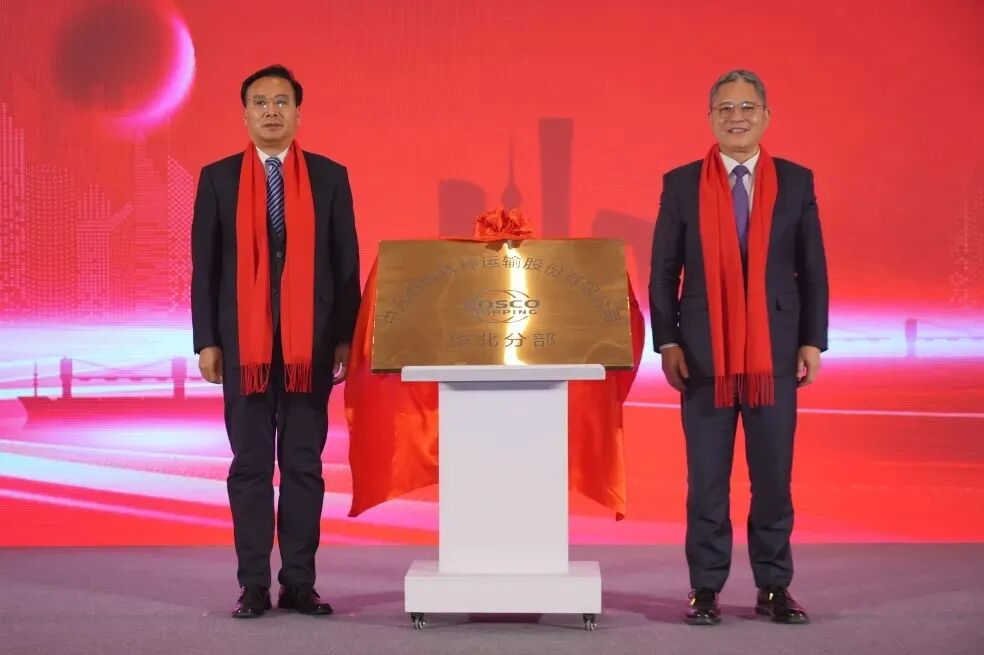
Core Viewpoint - COSCO Shipping Specialized Carriers Co., Ltd. (referred to as "COSCO Shipping Specialized") has established a new branch in North China, enhancing its regional operations and logistics support in line with national strategies for coordinated development in the Beijing-Tianjin-Hebei area [3][11]. Group 1: Establishment of North China Branch - The unveiling ceremony for the North China branch took place in Beijing, attended by over 200 representatives from more than 100 partner organizations, including government departments and key state-owned enterprises [1][9]. - This new branch follows the establishment of the East China branch in Shanghai last year, marking a significant step in the company's strategy of "professionalization, regionalization, and localization" [3][11]. Group 2: Strategic Focus Areas - COSCO Shipping Specialized aims to deepen its integration into the Beijing-Tianjin-Hebei coordinated development by focusing on three key principles: optimizing cooperation through layout, strengthening synergy through resource aggregation, and advancing service through localized management [5][13]. - The company plans to create a one-stop service platform that is responsive and leverages a global network to provide customized and resilient logistics solutions [5][13]. Group 3: Goals and Service Enhancement - The North China branch will emphasize being closer to customers, providing more efficient services, and achieving precise operations, aligning with the company's value pursuit of "everything produced can be transported, and everything transported is optimal" [7][15]. - During the event, COSCO Shipping Specialized introduced its marketing strategies, basic port development, and channel construction, engaging with industry clients and partners to discuss upgrades in regional port and shipping collaboration [7][15].


中欧电动汽车案实现“软着陆”,欧方将发布价格承诺指导文件
Xin Hua Cai Jing· 2026-01-13 00:07
Core Points - The Ministry of Commerce announced progress in negotiations regarding the EU-China electric vehicle case, indicating a "soft landing" after multiple rounds of discussions [1][2] - The EU will issue guidelines for Chinese exporters of pure electric vehicles to submit price commitment applications, aiming to address concerns in a practical and WTO-compliant manner [1] - The EU has committed to a non-discriminatory principle, ensuring that all price commitment applications will be evaluated based on the same legal standards in an objective and fair manner [1] Group 1 - The negotiations reflect the spirit of dialogue and the results achieved between China and the EU, demonstrating their capability and willingness to resolve differences within the framework of WTO rules [2] - Successfully addressing the EU's anti-subsidy case against Chinese electric vehicles is a common expectation among the upstream and downstream industries in both regions, promoting the stability of the relevant supply chains [2] - The dialogue and mutual respect between China and the EU have led to a successful push for a "soft landing" of the case after several rounds of negotiations [2]
事关电动汽车出口,商务部最新通报
Zheng Quan Shi Bao Wang· 2026-01-12 10:39
Core Viewpoint - The Ministry of Commerce of China announced progress in negotiations regarding the EU's electric vehicle case, emphasizing mutual respect and the need for guidance on price commitments for Chinese exporters [1][2] Group 1: Negotiation Progress - The Ministry of Commerce reported that multiple rounds of negotiations were held to address the EU's concerns regarding electric vehicles from China [1] - Both parties agreed on the necessity of providing general guidance on price commitments to Chinese exporters of pure electric vehicles [1] - The EU will issue a document confirming that it will adhere to non-discrimination principles and apply the same legal standards to all price commitment applications [1] Group 2: Industry Impact - The China Chamber of Commerce for Import and Export of Machinery and Electronic Products noted positive outcomes from the negotiations, highlighting the issuance of the guidance document by the EU [2] - The guidance document allows Chinese electric vehicle companies to submit price commitment applications, which can replace anti-subsidy duties for eligible companies [2] - The resolution of the EU's anti-subsidy case is seen as beneficial for the stability of the supply chain and the overall economic cooperation between China and the EU [2]

重磅!事关电动汽车出口,商务部最新通报
Xin Lang Cai Jing· 2026-01-12 09:47
Group 1 - The core viewpoint of the article is that the China-EU negotiations regarding electric vehicles have made positive progress, with both parties agreeing on the need to provide general guidance on price commitments for Chinese exporters of pure electric vehicles to the EU [2][6][7] - The European side will issue a guidance document on submitting price commitment applications, ensuring that all applications are evaluated based on the same legal standards in an objective and fair manner [2][6][7] - The Ministry of Commerce of China emphasizes that this reflects the spirit of dialogue and the results of negotiations, indicating the capability and willingness of both sides to resolve differences within the framework of WTO rules [2][6][7] Group 2 - The China Chamber of Commerce for Import and Export of Machinery and Electronic Products acknowledges the positive outcomes of the negotiations, stating that the guidance document will allow Chinese electric vehicle companies to submit price commitment applications [3][7] - The chamber believes that resolving the EU's anti-subsidy case against Chinese electric vehicles is a common expectation among the industry, which will help stabilize the supply chain and promote healthy economic cooperation between China and the EU [3][7] - The chamber expresses gratitude to the Ministry of Commerce for its efforts in protecting industry interests and encourages affected companies to utilize the negotiation outcomes to secure their export rights to the EU [3][7]
重磅!事关电动汽车出口,商务部最新通报→
证券时报· 2026-01-12 09:46
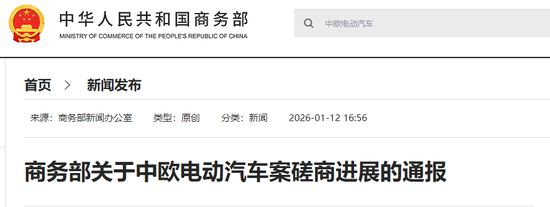
Group 1 - The core viewpoint of the article is that China and the EU have made progress in negotiations regarding the electric vehicle anti-subsidy case, emphasizing mutual respect and dialogue to resolve trade issues [1][2][4]. - The Chinese Ministry of Commerce announced that both parties agreed on the necessity of providing general guidance on price commitments for Chinese exporters of pure electric vehicles to the EU, aiming for a practical and WTO-compliant resolution [2][4]. - The EU will issue a guidance document for submitting price commitment applications, ensuring that all applications will be evaluated based on the same legal standards in an objective and fair manner [2][4]. Group 2 - The China Chamber of Commerce for Import and Export of Machinery and Electronic Products noted the positive outcomes from the negotiations, highlighting that Chinese electric vehicle companies can submit price commitment applications based on the new guidance [4]. - The Chamber expressed that resolving the EU's anti-subsidy case against Chinese electric vehicles is a common expectation among the industry, which will help stabilize the supply chain and promote healthy economic cooperation between China and the EU [4]. - The Chamber thanked the Ministry of Commerce for its efforts in protecting industry interests and encouraged affected companies to leverage the negotiation outcomes to secure their export rights to the EU [4].
中国有色金属工业协会锡业分会发布倡议书:价格的非理性上涨已经对产业链供应链造成冲击
Xin Lang Cai Jing· 2025-12-23 05:21
Core Viewpoint - The recent surge in tin prices is driven by multiple factors including the extension of a six-month ban on artisanal mining in the Democratic Republic of Congo, ongoing M23 conflicts, and slow recovery in Myanmar's mining sector, leading to record highs in tin prices [3][11]. Supply and Demand Analysis - Supply from major producing countries like the Democratic Republic of Congo and Myanmar is stabilizing, with exports from Wa State reaching nearly 1,000 tons per month. Domestic tin smelting capacity has been fully released, with refined tin production from January to November reaching 189,000 tons, a year-on-year increase of 6.2% [4][12]. - Both LME and SHFE tin inventories remain stable at around 10,000 tons, indicating no supply tightness. Despite growth in demand from emerging sectors like photovoltaics and automotive electronics, traditional sectors show stable demand, with global tin consumption expected to grow by nearly 3% in 2025, lagging behind production growth by about 0.5 percentage points [4][12]. Impact on Industry - The irrational price increase is disrupting the supply chain, causing challenges for upstream and downstream companies. Upstream firms may benefit in the short term, but volatility disrupts production planning and long-term investment decisions. Downstream users, particularly in solder, tinplate, and chemicals, face significant cost pressures, with some small to medium enterprises struggling to afford raw materials and fulfill long-term contracts [5][13]. - The electronic manufacturing sector, a major consumer of tin-based solder, is particularly affected, with rising costs in PCB manufacturing and semiconductor packaging severely eroding profits. Small electronic manufacturers are caught in a squeeze, facing soaring raw material prices while being unable to quickly raise end-product prices [5][13]. Long-term Risks - The volatility in tin prices poses a serious threat to the high-quality development of the tin industry. Unsustainable high prices may lead to a sharp decline once speculative funds withdraw, creating a rollercoaster effect that could further impact the entire supply chain. Speculative-driven price distortions hinder effective resource allocation, diverting focus from technological innovation and green transformation [6][14]. - The cyclical nature of price surges and drops undermines the overall risk resilience of the tin industry, which is crucial for establishing a stable and modern industrial system [6][14]. Strategic Importance of Tin - Tin is a critical strategic metal, essential for various sectors including electronic soldering, renewable energy, high-end equipment manufacturing, green tin plating, and national defense. The stability of tin supply and prices is directly linked to the stability and competitiveness of the domestic industrial chain [7][15]. - To maintain market order and create a stable environment, industry associations are calling for rational and cautious market behavior, urging stakeholders to avoid blind speculation and to collaboratively guide prices back to reasonable levels while improving long-term market mechanisms [7][15].

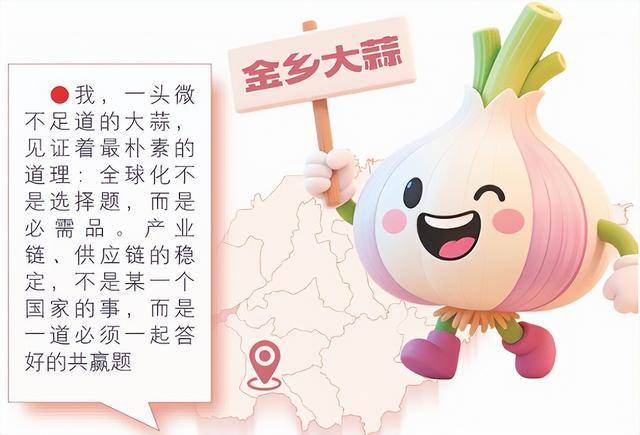
我,全球贸易中的“一头蒜”
Sou Hu Cai Jing· 2025-12-07 04:19
Core Insights - The article highlights the significance of Chinese garlic in the global market, emphasizing its role in international trade and the interconnectedness of supply chains [2][5]. Industry Overview - China produces 80% of the world's garlic, with Jinxiang accounting for two-thirds of the national trading volume, indicating its dominance in the global garlic market [2]. - The garlic industry in Jinxiang has a mature supply chain that includes planting, storage, processing, and trade, which connects local producers to global enterprises [2]. Market Dynamics - The garlic from Jinxiang is highly valued in various international markets, particularly in Indonesia, where it is essential for local cuisine, with annual imports ranging from 350,000 to 400,000 tons [2]. - The processing capabilities in foreign markets allow for the transformation of raw garlic into high-value products, increasing its market price significantly [4]. Trade Relationships - The article illustrates successful trade partnerships, such as a barter deal where a Jinxiang company exchanged garlic for Thai durian, showcasing innovative trade practices that reduce costs and enhance cooperation [4]. - The narrative emphasizes that the stability of global supply chains is crucial, as disruptions could adversely affect producers, consumers, and businesses across countries [5].
推动尽快恢复 中日韩自贸协定谈判
Zheng Quan Shi Bao· 2025-11-03 07:49
Group 1 - The core viewpoint emphasizes the need for China and South Korea to expedite the resumption of the China-Japan-South Korea Free Trade Agreement negotiations to jointly uphold free trade and multilateralism [1] - Both parties discussed maintaining the stability of industrial and supply chains, as well as enhancing regional and bilateral cooperation [1] - China expresses willingness to implement the important consensus reached by the leaders of both countries and aims to achieve new developments in China-South Korea economic and trade relations [1] Group 2 - The discussion included strengthening communication and coordination through mechanisms such as the China-South Korea supply chain cooperation hotline, export control dialogue, and trade remedy cooperation [1] - There is a focus on collaboration within frameworks like the World Trade Organization and the Regional Comprehensive Economic Partnership to promote the swift resumption of the China-Japan-South Korea Free Trade Agreement negotiations [1]