
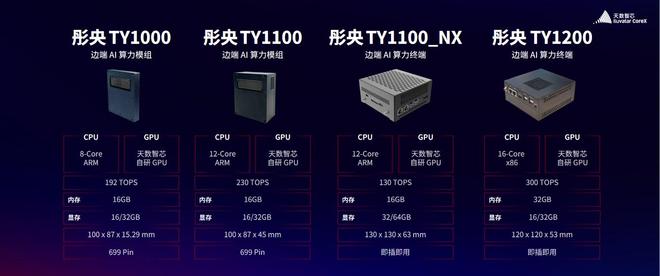
彤央系列产品

Search documents
“国产AI芯片六小龙”竞速 上海赚大了
Shang Hai Zheng Quan Bao· 2026-02-07 02:57
Core Viewpoint - The domestic AI chip unicorn, Hanbo Semiconductor, has completed its guidance for the Sci-Tech Innovation Board IPO, alongside Suiyuan Technology, marking a significant moment for the AI chip sector in China as it gathers six notable companies in the capital market, showcasing the rapid development of artificial intelligence [1] Group 1: Company Developments - Hanbo Semiconductor is advancing its IPO process and is recognized for its commercial success in both general AI and rendering applications, leading in the domestic data center AI and edge computing sectors [3][5] - Suiyuan Technology has developed four generations of cloud AI chips and aims to raise 6 billion yuan for the R&D and industrialization of its fifth and sixth-generation products [5] - The "Six Little Dragons" of AI chips, including companies like Moer Thread and Muxi, are focusing on technological advancements and product updates, with Muxi launching a new GPU product line [2][3][4] Group 2: Market Trends - The domestic general GPU market share is expected to rise from 8.3% in 2022 to 17.4% in 2024, with projections indicating it could exceed 50% by 2029 [13] - The AI chip market is experiencing structural changes, with companies transitioning from relying on external support to achieving self-sustained growth [13] - The upcoming IPOs of these companies are anticipated to strengthen the trend of domestic AI chip localization, providing a stable financial foundation and increasing market recognition [12] Group 3: Government Support and Investment - Shanghai has positioned itself as a leader in the integrated circuit industry, ranking first in China and fourth globally, and is actively supporting local AI chip companies through funding and policy initiatives [7][8][10] - Significant investments have been made by Shanghai's state-owned enterprises in companies like Wallen Technology and Suiyuan Technology, facilitating their growth and technological advancements [9][10]
人形机器人“大脑”,迎来国产替代新方案
Guan Cha Zhe Wang· 2026-01-28 03:45
Core Insights - The article discusses the emergence of domestic alternatives to NVIDIA's dominance in humanoid robot "brain" chip modules, highlighting the launch of the "Tongyang" series by domestic GPU company TianShu ZhiXin [1][10]. Group 1: Product Features - The Tongyang series is compatible with the CUDA ecosystem, allowing seamless switching between TianShu ZhiXin's products and NVIDIA's Orin series, thus providing more options for industrial applications in embodied intelligence [3][10]. - The Tongyang series includes four products with distinct features: - Tongyang TY1000, a compact module with industry-level computing power [3]. - Tongyang TY1100, which integrates an ARM v9 12-core CPU and a self-developed GPU module [3]. - Tongyang TY1100_NX, known for its larger memory and cost-effectiveness [3]. - Tongyang TY1200, offering up to 300 TOPS performance, aimed at advanced applications like AIPC and embodied intelligence [4][6]. Group 2: Performance Comparison - The Tongyang series boasts measured dense computing power ranging from 100 TOPS to 300 TOPS, surpassing the capabilities of NVIDIA's Orin series [4][6]. - In practical tests across various scenarios, the performance of Tongyang TY1000 has been reported to exceed that of NVIDIA's AGX Orin [4][6]. Group 3: Market Context - The year 2025 is projected to be a pivotal year for humanoid robot mass production, with IDC estimating global shipments to reach approximately 18,000 units, over 60% of which will come from Chinese manufacturers [6]. - Despite advancements, there remains a significant gap in AI computing power for humanoid robots, with Intel and NVIDIA still holding a dominant position in the market [7][8]. Group 4: Competitive Landscape - The article notes that while domestic alternatives like the RK3588 chip from Rockchip have made progress in the "small brain" segment, they fall short in AI computing power, with a maximum of 6 TOPS [7][8]. - The article highlights the potential of the Diguo Robot's new generation chip, which can achieve 560 TOPS, indicating a move towards more competitive domestic solutions [8]. Group 5: Migration and Cost Considerations - TianShu ZhiXin's adherence to the GPGPU route and compatibility with the CUDA ecosystem positions its products as a more convenient option for migration compared to other domestic alternatives [10]. - The high migration costs associated with transitioning algorithms from NVIDIA's platform to other architectures could significantly impact the development speed of domestic companies [10].


“国产GPU四小龙”之一,发布产品架构路线图
Shang Hai Zheng Quan Bao· 2026-01-26 15:50
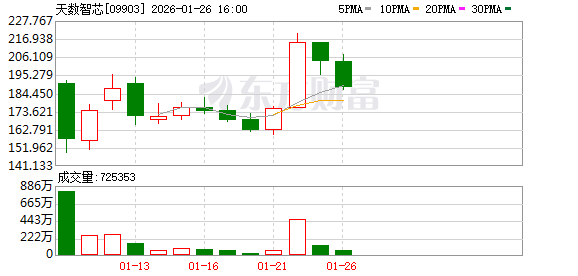
Core Viewpoint - TianShu ZhiXin, one of the "Four Little Dragons" of domestic GPUs, has released a roadmap for its fourth-generation architecture, aiming to surpass NVIDIA's architectures in the coming years [2][4]. Group 1: Architecture Development - The TianShu TianShu architecture, set to launch in 2025, is expected to exceed NVIDIA's Hopper architecture [2]. - The TianShu TianXuan architecture, planned for 2026, will compete with NVIDIA's Blackwell architecture [2]. - The TianShu TianJi architecture will surpass NVIDIA's Blackwell, while the TianShu TianQuan architecture is projected to exceed NVIDIA's Rubin by 2027 [2]. Group 2: Product Launch and Performance - Over the next three years, TianShu ZhiXin will release multiple products based on the new architecture, continuously enhancing computational performance [4]. - The TianShu TianShu architecture has demonstrated a 60% efficiency improvement over the current industry average and achieves approximately 20% higher performance than the Hopper architecture in the DeepSeek V3 scenario [5]. Group 3: Product Applications - The newly launched "TongYang" series products include edge AI computing modules and terminals, completing a "cloud + edge + terminal" computing layout [5]. - These products have been applied in various fields, including providing high computing power for robots, upgrading industrial automation, and processing video streams in retail environments [5]. Group 4: Financial Strategy - TianShu ZhiXin plans to allocate 80% of its Hong Kong IPO proceeds to the R&D and commercialization of general-purpose GPU chips and AI computing solutions over the next five years [6]. - The company’s stock closed at 188.2 HKD per share, with a market capitalization of 47.86 billion HKD as of January 26 [6].
天数智芯发布国产GPU架构路线图,预期2027年超越英伟达Rubin
Guan Cha Zhe Wang· 2026-01-26 12:15
Core Insights - The company, Tensun Zhixin, unveiled its fourth-generation architecture roadmap, aiming for "high-quality computing power" with a focus on efficiency, predictability, and sustainability, targeting to surpass NVIDIA's Rubin architecture by 2027 [1][2] - The company introduced the "Tongyang" series of edge computing products, which reportedly outperform NVIDIA's AGX Orin in performance, showcasing applications across multiple industries and building an open ecosystem [1][10][12] Architecture Roadmap - The fourth-generation architecture includes the Tian Shu, Tian Xuan, Tian Ji, and Tian Quan architectures, with specific milestones set for 2025 to 2027, aiming to exceed current industry standards [2][4] - Key innovations in the Tian Shu architecture include a 90% effective utilization rate for AI calculations, a 60% efficiency improvement over the industry average, and a 20% performance advantage over NVIDIA's Hopper architecture in specific scenarios [8] High-Quality Computing Power - The concept of "high-quality computing power" is defined by three core characteristics: high efficiency through optimized design, predictability via precise simulation, and sustainability to adapt to evolving algorithms [4][5] Tongyang Series Products - The Tongyang series includes four products designed for various applications, with performance metrics ranging from 100T to 300T, and aims to be the leading edge computing solution in China [10][12] - The products are positioned to support AI integration with the physical world, enhancing capabilities in various sectors such as industrial automation and commercial intelligence [10][18] Industry Applications - The company has demonstrated successful applications of its products in sectors like internet, finance, healthcare, and scientific research, validating the maturity and reliability of domestic computing power [14][16] - Specific achievements include doubling single-machine performance in AI applications, reducing token costs by 50%, and improving efficiency in generating structured medical records [16] Ecosystem Development - Tensun Zhixin has signed strategic cooperation agreements with various hardware manufacturers and solution providers to enhance the domestic AI computing ecosystem [21] - The company emphasizes the importance of both quantity and quality in AI computing power, advocating for efficient collaboration between software and hardware to enable comprehensive scene empowerment [23]

天数智芯重磅公布芯片四代架构路线图 彤央边端系列性能超越国际主流 首次公布标杆客户与规模化落地成果
Mei Ri Jing Ji Xin Wen· 2026-01-26 11:57
Core Insights - The company, Tensu Zhixin, unveiled its fourth-generation architecture roadmap, aiming for "high-quality computing power" with a focus on efficiency, predictability, and sustainability, targeting to surpass NVIDIA's Rubin architecture by 2027 [2][3] - The company introduced the "Tongyang" series of edge computing products, demonstrating superior performance compared to NVIDIA's AGX Orin, and showcased various industry applications and ecosystem development [2][13][15] Architecture Roadmap - The four-generation architecture roadmap includes: - 2025: Tensu Tian Shu architecture surpasses Hopper - 2026: Tensu Tian Xuan architecture matches Blackwell - 2026: Tensu Tian Ji architecture surpasses Blackwell - 2027: Tensu Tian Quan architecture surpasses Rubin, with a shift towards breakthrough chip designs thereafter [3][10] High-Quality Computing Power - High-quality computing power is defined by three core characteristics: - Efficiency: Optimized design to create the best Total Cost of Ownership (TCO) for clients - Predictability: Precise simulation allows clients to anticipate performance before deployment - Sustainability: Seamless adaptation from traditional to future algorithms, ensuring long-term value [5] AI++ Computing System - The AI++ computing system paradigm integrates both internal and external chip capabilities, establishing a software-driven model that leverages software intelligence to unlock hardware potential, supporting a thriving application ecosystem [8] Tongyang Series Products - The Tongyang series includes four products: - Tongyang TY1000: Compact module with industry-level computing power - Tongyang TY1100: Integrates ARM v9 12-core CPU and self-developed GPU - Tongyang TY1100_NX: High cost-performance option with larger memory - Tongyang TY1200: Offers 300 TOPs performance for advanced applications [13][15] Performance Metrics - The Tongyang series products demonstrate measured dense computing power ranging from 100T to 300T, outperforming NVIDIA's AGX Orin in various applications [15] - The Tian Shu architecture achieves over 90% effective utilization efficiency during AI-related computations, with a 60% efficiency improvement over the industry average [10] Industry Applications - The company has successfully implemented its products in various sectors, including internet, finance, healthcare, and research, showcasing the maturity and reliability of domestic computing power [17][19] - Specific applications include: - Doubling single-machine performance in AI internet applications - Reducing report generation time in finance by 70% - Streamlining medical record generation to 30 seconds per record [19][21] Ecosystem Development - Tensu Zhixin has signed strategic cooperation agreements with hardware manufacturers and solution providers to enhance the domestic AI computing ecosystem [23] - The company aims to create an open and win-win industrial ecosystem, facilitating higher performance and easier access to AI for various industries [23][25] Future Vision - The company emphasizes the need for both quantity and quality in AI computing power, advocating for efficient collaboration between software and hardware to empower all scenarios [25] - The CEO expressed a commitment to self-research and open cooperation to foster a prosperous domestic computing ecosystem [25]