高质量算力

Search documents
算力通胀终结者!凭一招把大模型Token成本砍到1/2
创业邦· 2026-01-28 12:58
Core Viewpoint - The article discusses the challenges and inefficiencies in the AI computing power industry, highlighting the concept of "computing power inflation" and the need for "high-quality computing power" to address these issues. Group 1: Computing Power Inflation - The rapid growth of computing power over the past decade has led to a situation where many GPUs are underutilized, with effective utilization rates around 40% for training clusters and even below 20% for inference scenarios [2][3] - The industry has been caught in a parameter race to catch up with models like GPT-4 and GPT-5, leading to a waste of resources as hardware development cycles lag behind rapid algorithm changes [2][3] Group 2: High-Quality Computing Power - The definition of "high-quality computing power" includes efficiency, predictability, and sustainability, moving away from merely focusing on peak performance metrics [5] - The company TianShu ZhiXin aims to improve computing efficiency by 60% over industry averages through innovative technologies in their upcoming architecture [8] Group 3: Cost Management and Efficiency - TianShu ZhiXin has developed solutions to reduce storage costs significantly, including a 50% reduction in memory usage for model inference through key-value caching techniques [10] - The company has demonstrated that its single-machine performance can exceed international solutions by over 100%, while halving the cost per token in specific applications [17] Group 4: Market Position and Future Outlook - The year 2026 is expected to be pivotal for the Chinese GPU industry, with TianShu ZhiXin and other domestic players preparing for IPOs, marking the beginning of a more competitive landscape [19] - The company has established partnerships with various hardware manufacturers and solution providers to enhance AI accessibility across industries, indicating a shift towards practical applications of computing power [21]

上市18天后,天数智芯办了件大事
投中网· 2026-01-27 10:51
Core Viewpoint - The AI computing company, Tenshu Zhixin, has successfully established a commercial landing loop and entered a phase of rapid growth following its recent product launches and strategic advancements [2][4][24]. Group 1: Product and Technology Advancements - Tenshu Zhixin unveiled its fourth-generation architecture roadmap and the "Tongyang" series of edge computing products, marking a significant step in its product offerings [4][20]. - The upcoming Tian Shu Tian Shu architecture, set for release in 2025, is projected to surpass NVIDIA's current Hopper architecture by 20% in performance within the DeepSeek R3 scenario [6][12]. - The newly launched "Tongyang TY1000" edge computing product has already demonstrated performance exceeding NVIDIA's AGX Orin, indicating a strong competitive position in the market [7][18]. - The company has completed a comprehensive "cloud + edge + end" computing layout, with successful deployments across various sectors including internet, finance, and healthcare [20][22]. Group 2: Market Position and Growth - Tenshu Zhixin's revenue has shown significant growth, increasing from 189 million yuan in 2022 to 289 million yuan in 2023, with projections reaching 539 million yuan in 2024, reflecting a compound annual growth rate of 68.8% [27]. - The company has established a solid ecosystem by partnering with CPU manufacturers, server vendors, and major operating systems, which supports its rapid commercialization [25][30]. - The Chinese general-purpose GPU market is expected to see a shipment volume of 1.6 million units by 2024, with a robust growth rate of 33% CAGR from 2025 to 2029, positioning Tenshu Zhixin favorably within this expanding market [30]. Group 3: Industry Challenges and Solutions - The AI computing industry has faced challenges with low utilization rates, with inference scene computing utilization below 20% and training scene utilization just over 40%, leading to significant resource waste [9][11]. - Tenshu Zhixin has proposed a "high-quality computing" solution characterized by high efficiency, predictability, and sustainability to address these industry pain points [11][12]. - The company aims to create a "cross-country vehicle" in the computing field, leveraging advanced technologies to overcome various technical barriers and enhance application efficiency [10][11].
天数智芯公布芯片四代架构路线图 首次公布标杆客户与规模化落地成果
Zheng Quan Ri Bao Wang· 2026-01-27 10:43
Core Insights - The company, TianShu ZhiXin, launched its fourth-generation architecture roadmap focusing on "high-quality computing power" with goals of "high efficiency, predictability, and sustainability" [1] - The company introduced the "Tongyang" series of edge computing products, showcasing multi-industry applications and open ecosystem achievements to enhance cloud-edge-end solutions [1][2] Group 1: Product and Technology Development - The "AI++" computing system paradigm aims to unify computing systems both inside and outside the chip, establishing a new software-driven model to maximize hardware potential [1] - The "Tongyang" series aims to be the leading edge computing solution in China, facilitating the integration of AI with the physical world [2] Group 2: Industry Applications and Achievements - The company presented scalable results of its products and solutions in various sectors including internet, finance, healthcare, and research, demonstrating the maturity and reliability of domestic computing power [2] - Key benchmark cases were highlighted in areas such as embodied intelligence, industrial applications, commercial use, and transportation, reinforcing the effectiveness of the company's solutions [2]
天数智芯发布四代架构路线图:预期于2027年超越英伟达Rubin架构
IPO早知道· 2026-01-27 05:49
Core Viewpoint - TianShu ZhiXin (stock code: 09903.HK) has released a roadmap for its fourth-generation architecture, aiming to achieve "high-quality computing power" with a focus on efficiency, predictability, and sustainability, and plans to surpass NVIDIA's Rubin architecture by 2027 [2][5]. Group 1: Fourth-Generation Architecture - The fourth-generation architecture includes several key designs: TianShu TianShu architecture will surpass Hopper by 2025, TianShu TianXuan architecture will match Blackwell by 2026, and TianShu TianJing architecture will exceed Blackwell by 2026, with TianShu TianQuan architecture expected to surpass Rubin by 2027 [4][5]. - The architecture aims to address industry challenges such as low energy efficiency and insufficient creativity by defining high-quality computing power with three core characteristics: high efficiency, predictability, and sustainability [7]. Group 2: AI++ Computing System - The AI++ computing system paradigm integrates both chip-level and external computing systems, establishing a new model driven by software to unlock hardware potential and support a thriving application ecosystem [9]. Group 3: "Tongyang" Series Product Launch - The "Tongyang" series of edge computing products was launched, featuring four models designed for various applications, with performance metrics exceeding NVIDIA's AGX Orin [14][16]. - The series aims to provide high computing power for physical AI applications, with performance ranging from 100T to 300T in various scenarios [16]. Group 4: Industry Applications and Value - TianShu ZhiXin has demonstrated the successful application of its products in multiple sectors, including internet, finance, healthcare, and research, showcasing the maturity and reliability of domestic computing power [19]. - The company has achieved significant performance improvements across various industries, such as doubling single-machine performance in AI and reducing token costs by 50% in the internet sector [21]. Group 5: Ecosystem Development - The company is enhancing the domestic AI computing ecosystem by signing strategic cooperation agreements with hardware manufacturers and solution providers, aiming to create an open and win-win industrial ecosystem [27]. - The CEO emphasizes the importance of a fully self-developed stack to solidify the ecological foundation and promote the prosperity of the domestic computing ecosystem [29].
天数智芯涨超4% 公布四代架构路线图 打造AI++算力系统新范式
Zhi Tong Cai Jing· 2026-01-27 01:43
Core Viewpoint - Tensun Intelligent Chip (09903) has seen a stock increase of over 4%, currently at 196.8 HKD, with a trading volume of 22.67 million HKD, following the announcement of its fourth-generation architecture roadmap at the "Smart Start Chip Journey" partner conference [1] Group 1 - The company aims to achieve "high-quality computing power" with a focus on "high efficiency, predictability, and sustainability" [1] - The new AI++ computing system paradigm is expected to surpass NVIDIA's Rubin architecture by 2027, indicating a significant innovation breakthrough [1] - The company launched the "Tongyang" series of edge computing products, which have demonstrated performance superior to NVIDIA's AGX Orin [1] Group 2 - The conference showcased multiple industry deep application cases and the results of open ecosystem development, highlighting the company's commitment to practical applications [1]
定义高质量算力新范式!天数智芯重磅发布四代架构路线图与“彤央”边端产品,用硬核技术和商业增长重构产业生态
Zheng Quan Shi Bao Wang· 2026-01-26 13:59
Core Insights - The company, TianShu ZhiXin, unveiled its fourth-generation architecture roadmap, aiming for "high-quality computing power" with a focus on efficiency, predictability, and sustainability, targeting to surpass NVIDIA's Rubin architecture by 2027 [2][3] Architecture Roadmap - The four-generation architecture roadmap includes: - TianShu TianShu architecture to surpass Hopper by 2025 - TianShu TianXuan architecture to match Blackwell by 2026 - TianShu TianJi architecture to exceed Blackwell by 2026 - TianShu TianQuan architecture to surpass Rubin by 2027, with a shift towards breakthrough chip designs thereafter [3] High-Quality Computing Power - The company defines "high-quality computing power" by three core characteristics: - High efficiency, optimizing design for the best Total Cost of Ownership (TCO) - Predictability, allowing performance forecasting through precise simulation - Sustainability, ensuring seamless adaptation from traditional to future algorithms [5] AI++ Computing System - The AI++ computing system paradigm integrates both internal and external chip capabilities, establishing a software-driven model that leverages foundational libraries and computational middle layers to enhance hardware potential and support a thriving application ecosystem [6] Product Launch: "Tongyang" Series - The "Tongyang" series of edge computing products was launched, completing the "cloud + edge + terminal" computing layout, with four distinct models designed for various applications, emphasizing portability and high performance [10][12] Performance Metrics - The "Tongyang" series products demonstrate measured dense computing power ranging from 100T to 300T, outperforming NVIDIA's AGX Orin in various applications, aiming to be the leading edge computing solution in China [12] Industry Applications - The company showcased successful applications of its products across multiple sectors, including internet, finance, healthcare, and research, validating the maturity and reliability of domestic computing power [14] Ecosystem Collaboration - The company has signed strategic cooperation agreements with hardware manufacturers and solution providers to enhance the domestic AI computing ecosystem, promoting a collaborative and open industry environment [21] Future Vision - The company emphasizes the need for both quantity and quality in AI computing power, advocating for efficient collaboration between software and hardware to enable comprehensive scene empowerment, and aims to continue its path of independent innovation and ecosystem building [23]
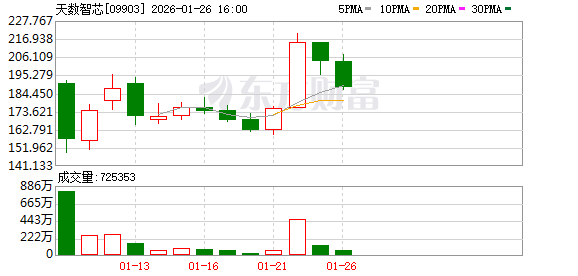
天数智芯公布四代通用GPU架构路线 国产算力商业化放量
Xin Hua Cai Jing· 2026-01-26 13:00
Core Insights - TianShu ZhiXin (天数智芯) has released its fourth-generation general-purpose GPU architecture roadmap, focusing on "high efficiency, predictability, and sustainability" as the core design goals for "high-quality computing power" [2][5] - The company has introduced the "Tongyang" series of edge computing products, showcasing deep application cases across multiple industries and achievements in building an open ecosystem [2][5] Group 1: Product Development and Performance - Over the next three years, TianShu ZhiXin plans to launch multiple products based on the newly released fourth-generation architecture, continuously enhancing computing performance [5] - The TianShu TianShu architecture has achieved a computing power utilization rate exceeding 90%, which is a 60% improvement over the industry average [5] Group 2: Market Position and Applications - The TianGai general-purpose GPU is currently operating over 400 models, with the company's products and solutions serving more than 300 clients and completing over 1,000 deployments across sectors such as internet, finance, healthcare, and research [6] - The "Tongyang" series has been implemented in areas like embodied intelligence, industrial automation, business intelligence, and traffic intelligence, demonstrating the maturity and reliability of domestic computing power [6] Group 3: Ecosystem Development - TianShu ZhiXin has signed strategic cooperation agreements with various ecosystem partners, including hardware manufacturers and solution providers, to enhance the domestic AI computing ecosystem [6] - The company aims to create an open and win-win industrial ecosystem, enabling various industries to utilize AI with higher performance and convenience, thus accelerating the arrival of an era of accessible computing power [6] Group 4: Vision and Leadership - According to Liu Yunjie, an academician of the Chinese Academy of Engineering, AI computing power must balance quantity and quality, requiring breakthroughs in single-point performance and efficient collaboration between software and hardware [6] - CEO Gai Lujian emphasized the need for a fully self-developed stack to solidify the ecological foundation and define a new development paradigm through open cooperation, aiming to benefit various industries with domestic general-purpose GPU achievements [6]
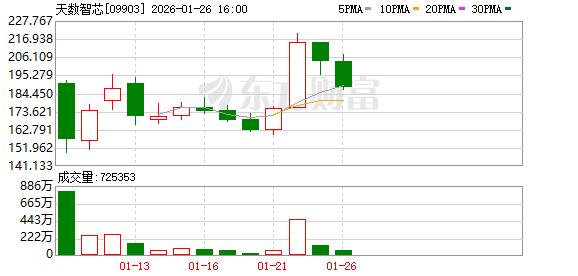
天数智芯发布国产GPU架构路线图,预期2027年超越英伟达Rubin
Guan Cha Zhe Wang· 2026-01-26 12:15
Core Insights - The company, Tensun Zhixin, unveiled its fourth-generation architecture roadmap, aiming for "high-quality computing power" with a focus on efficiency, predictability, and sustainability, targeting to surpass NVIDIA's Rubin architecture by 2027 [1][2] - The company introduced the "Tongyang" series of edge computing products, which reportedly outperform NVIDIA's AGX Orin in performance, showcasing applications across multiple industries and building an open ecosystem [1][10][12] Architecture Roadmap - The fourth-generation architecture includes the Tian Shu, Tian Xuan, Tian Ji, and Tian Quan architectures, with specific milestones set for 2025 to 2027, aiming to exceed current industry standards [2][4] - Key innovations in the Tian Shu architecture include a 90% effective utilization rate for AI calculations, a 60% efficiency improvement over the industry average, and a 20% performance advantage over NVIDIA's Hopper architecture in specific scenarios [8] High-Quality Computing Power - The concept of "high-quality computing power" is defined by three core characteristics: high efficiency through optimized design, predictability via precise simulation, and sustainability to adapt to evolving algorithms [4][5] Tongyang Series Products - The Tongyang series includes four products designed for various applications, with performance metrics ranging from 100T to 300T, and aims to be the leading edge computing solution in China [10][12] - The products are positioned to support AI integration with the physical world, enhancing capabilities in various sectors such as industrial automation and commercial intelligence [10][18] Industry Applications - The company has demonstrated successful applications of its products in sectors like internet, finance, healthcare, and scientific research, validating the maturity and reliability of domestic computing power [14][16] - Specific achievements include doubling single-machine performance in AI applications, reducing token costs by 50%, and improving efficiency in generating structured medical records [16] Ecosystem Development - Tensun Zhixin has signed strategic cooperation agreements with various hardware manufacturers and solution providers to enhance the domestic AI computing ecosystem [21] - The company emphasizes the importance of both quantity and quality in AI computing power, advocating for efficient collaboration between software and hardware to enable comprehensive scene empowerment [23]

天数智芯重磅公布芯片四代架构路线图 彤央边端系列性能超越国际主流 首次公布标杆客户与规模化落地成果
Mei Ri Jing Ji Xin Wen· 2026-01-26 11:57
Core Insights - The company, Tensu Zhixin, unveiled its fourth-generation architecture roadmap, aiming for "high-quality computing power" with a focus on efficiency, predictability, and sustainability, targeting to surpass NVIDIA's Rubin architecture by 2027 [2][3] - The company introduced the "Tongyang" series of edge computing products, demonstrating superior performance compared to NVIDIA's AGX Orin, and showcased various industry applications and ecosystem development [2][13][15] Architecture Roadmap - The four-generation architecture roadmap includes: - 2025: Tensu Tian Shu architecture surpasses Hopper - 2026: Tensu Tian Xuan architecture matches Blackwell - 2026: Tensu Tian Ji architecture surpasses Blackwell - 2027: Tensu Tian Quan architecture surpasses Rubin, with a shift towards breakthrough chip designs thereafter [3][10] High-Quality Computing Power - High-quality computing power is defined by three core characteristics: - Efficiency: Optimized design to create the best Total Cost of Ownership (TCO) for clients - Predictability: Precise simulation allows clients to anticipate performance before deployment - Sustainability: Seamless adaptation from traditional to future algorithms, ensuring long-term value [5] AI++ Computing System - The AI++ computing system paradigm integrates both internal and external chip capabilities, establishing a software-driven model that leverages software intelligence to unlock hardware potential, supporting a thriving application ecosystem [8] Tongyang Series Products - The Tongyang series includes four products: - Tongyang TY1000: Compact module with industry-level computing power - Tongyang TY1100: Integrates ARM v9 12-core CPU and self-developed GPU - Tongyang TY1100_NX: High cost-performance option with larger memory - Tongyang TY1200: Offers 300 TOPs performance for advanced applications [13][15] Performance Metrics - The Tongyang series products demonstrate measured dense computing power ranging from 100T to 300T, outperforming NVIDIA's AGX Orin in various applications [15] - The Tian Shu architecture achieves over 90% effective utilization efficiency during AI-related computations, with a 60% efficiency improvement over the industry average [10] Industry Applications - The company has successfully implemented its products in various sectors, including internet, finance, healthcare, and research, showcasing the maturity and reliability of domestic computing power [17][19] - Specific applications include: - Doubling single-machine performance in AI internet applications - Reducing report generation time in finance by 70% - Streamlining medical record generation to 30 seconds per record [19][21] Ecosystem Development - Tensu Zhixin has signed strategic cooperation agreements with hardware manufacturers and solution providers to enhance the domestic AI computing ecosystem [23] - The company aims to create an open and win-win industrial ecosystem, facilitating higher performance and easier access to AI for various industries [23][25] Future Vision - The company emphasizes the need for both quantity and quality in AI computing power, advocating for efficient collaboration between software and hardware to empower all scenarios [25] - The CEO expressed a commitment to self-research and open cooperation to foster a prosperous domestic computing ecosystem [25]
国产算力大反攻!天数智芯(09903)抛出四代架构“超车”路线图 彤央边端性能超越英伟达 300+标杆客户落地 万亿赛道格局生变
智通财经网· 2026-01-26 11:02
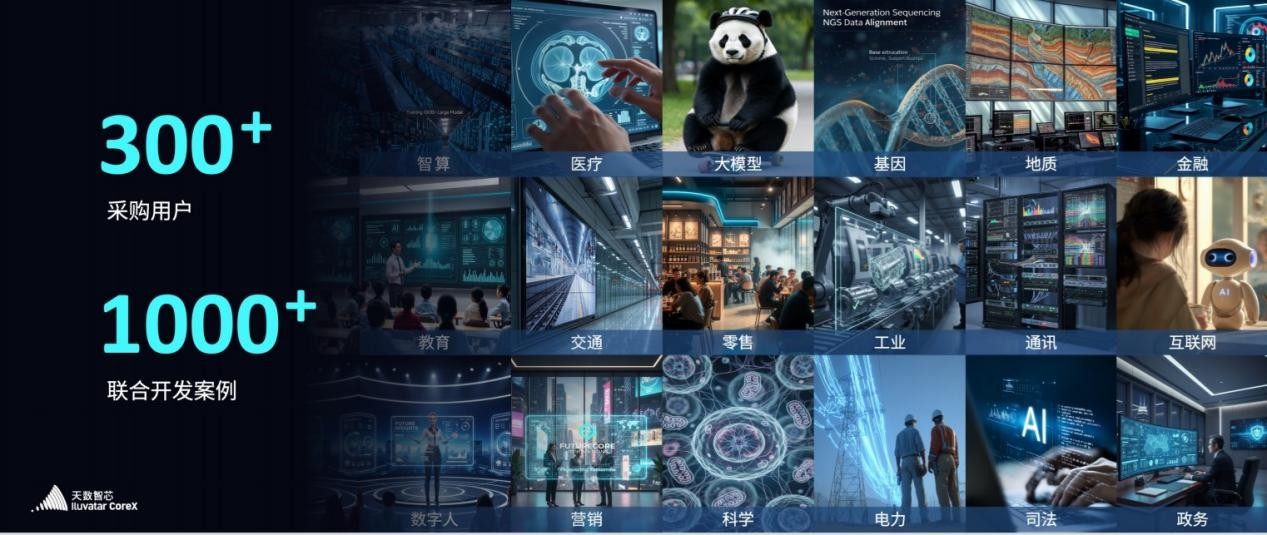
Core Insights - The article highlights a significant breakthrough in domestic AI computing power replacement, with TianShu ZhiXin (天数智芯) announcing its fourth-generation architecture roadmap, aiming to surpass NVIDIA's core architectures within three years [1][4][22] - The company has revealed over 300 benchmark clients and more than 1,000 deployment results, indicating a new phase of commercial viability for domestic general-purpose GPUs [1][16][21] Group 1: Technological Advancements - TianShu ZhiXin's fourth-generation architecture aims to surpass NVIDIA's Hopper, Blackwell, and Rubin architectures by 2027, with a series of product launches planned over the next three years [4][10] - The new architecture introduces innovative technologies that enhance computing efficiency by 60% compared to industry averages, with specific performance improvements noted in AI applications [11][9] - The company has established three core standards for "high-quality computing," focusing on total cost of ownership (TCO), predictable performance, and sustainable algorithm compatibility [6][22] Group 2: Product Launches and Market Position - The "TongYuan" series of edge computing products has been launched, achieving performance benchmarks that exceed NVIDIA's AGX Orin, marking a significant competitive advantage in the edge computing market [10][15] - The products cover a range of applications, including AI, industrial automation, and smart transportation, with notable deployments in various sectors such as finance and healthcare [19][21] - The company has reported serving over 300 paying clients and completing more than 1,000 commercial deployments, demonstrating a robust commercial growth phase [16][21] Group 3: Market Opportunities and Strategic Positioning - The edge computing market is expanding at a compound annual growth rate of over 40%, with TianShu ZhiXin's advancements breaking the monopoly of foreign giants and increasing the domestic market share [15][22] - The company has committed over 2 billion yuan in R&D, establishing a strong foundation for innovation and product iteration [22][24] - With supportive government policies and a strategic focus on general-purpose GPUs, TianShu ZhiXin is positioned as a key player in the burgeoning AI computing landscape, with projections indicating a market value of 3.6 trillion yuan by 2029 [24]