微流控技术

Search documents
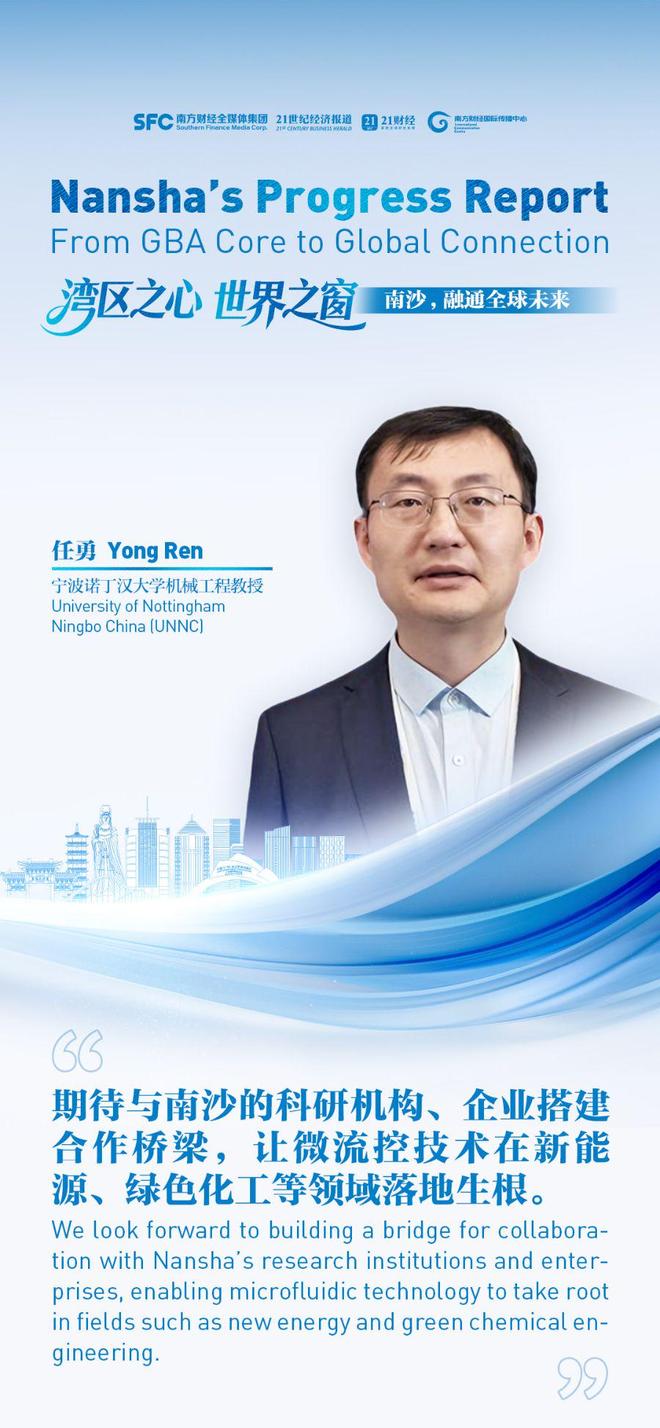
宁波诺丁汉大学教授任勇:感受南沙创新活力,期待共拓科技新蓝海
2 1 Shi Ji Jing Ji Bao Dao· 2025-12-18 11:06
Group 1 - The integration of microfluidic technology and artificial intelligence (AI) is creating new possibilities across various industries, including energy, environmental protection, and green chemistry [1] - Microfluidic technology, originating from Europe and the US, has expanded in China, particularly in the Greater Bay Area, which offers significant industrial advantages for collaboration [1] - The core of microfluidic technology is the "lab-on-a-chip," which integrates functions such as mixing, separation, and detection of fluids on a small chip [1] Group 2 - The application of AI in microfluidics is enhancing its capabilities, with examples including the use of AI algorithms for battery thermal management in electric vehicles, enabling health monitoring and thermal management throughout the battery's lifecycle [1] - In the green chemistry sector, AI pre-training techniques are significantly reducing experimental costs and labor input, acting as an accelerator for rapid technology implementation [1] - Guangdong province is a major hub for the electric vehicle industry, with an expected production of 3.6178 million vehicles in 2024, accounting for one-quarter of the national output [2] Group 3 - Nansha is a key node in the electric vehicle supply chain, with significant production capacity and a complete ecosystem from vehicle manufacturing to intelligent networking, generating an annual output value of nearly 200 billion yuan [2] - The collaboration between research teams and leading companies in the automotive sector, such as GAC Toyota and Geely, is expected to enhance the integration of microfluidic and AI technologies into core components of electric vehicles [2] - Nansha's role as an important innovation node in the Greater Bay Area, supported by policies and industrial capacity, is seen as a promising opportunity for collaboration in the fields of new energy and green chemical engineering [2][4]

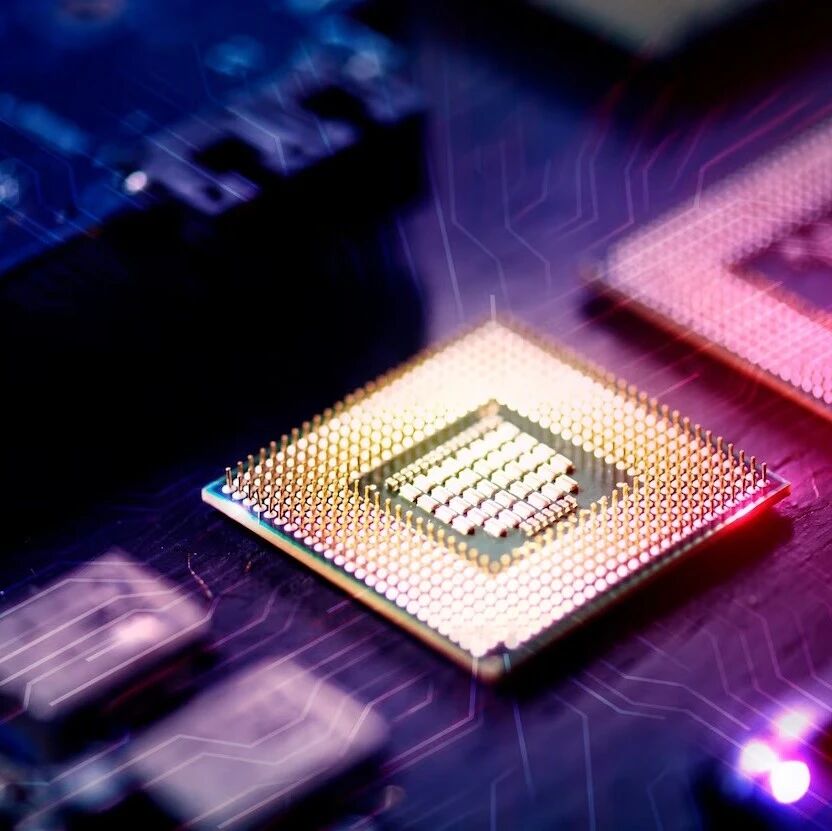
给芯片降温的新方法
半导体行业观察· 2025-11-18 01:40
Core Viewpoint - The article discusses the rapid increase in data center rack density driven by the demands of artificial intelligence and high-performance computing, leading to higher power consumption and heat generation, which traditional cooling methods struggle to manage [2][4]. Group 1: Rack Power Consumption - Average power per rack has increased from 6 kW eight years ago to 270 kW currently, with projections of 480 kW racks next year and megawatt-level racks within two years [2]. - The cooling infrastructure is challenged to keep pace with this increase in power requirements [2]. Group 2: Microfluidic Cooling Technology - Corintis is developing microfluidic technology that delivers cooling liquids directly to specific areas of chips, significantly improving cooling efficiency [2][4]. - In tests with Microsoft, servers running Teams showed three times the cooling efficiency compared to existing methods, with microfluidic technology reducing chip temperatures by over 80% compared to traditional air cooling [2][4]. Group 3: Environmental Impact and Water Usage - Current industry standards require approximately 1.5 liters of water per kW per minute for cooling, which could escalate to 15 liters per minute for chips nearing 10 kW, raising environmental concerns [4]. - Corintis aims to optimize liquid cooling to ensure efficient use of water, addressing community concerns regarding large AI facilities [4]. Group 4: Design and Manufacturing Innovations - Corintis has expanded its additive manufacturing capabilities to produce copper components with microchannels as small as 70 microns, compatible with existing liquid cooling systems [4][5]. - The company believes that collaborating directly with chip manufacturers to etch channels on silicon wafers could lead to a tenfold improvement in cooling performance [5]. Group 5: Future Directions - The goal is to integrate cooling systems directly with chip designs, addressing thermal transfer bottlenecks [8]. - Corintis has produced over 10,000 copper cold plates and aims to reach an annual production of 1 million by the end of 2026, while also developing internal cooling channels within chips [8]. - The company has announced plans for expansion in the U.S. and Germany, alongside a $24 million Series A funding round led by BlueYard Capital [8].
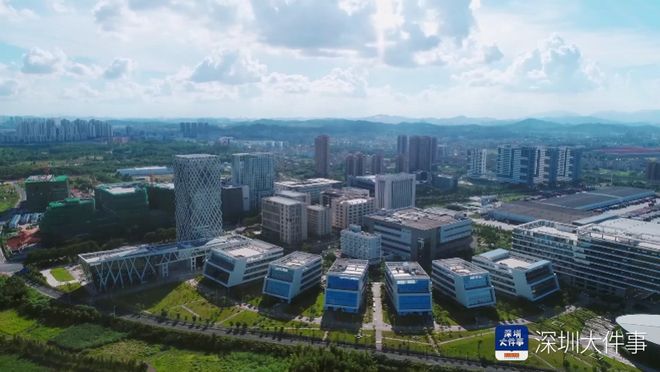
生物医药“尖子生” 深圳坪山有何上分秘诀?
Nan Fang Du Shi Bao· 2025-09-11 13:15
Core Viewpoint - The Shenzhen National Biopharmaceutical Base (Pingshan) has been recognized as one of the top four biomanufacturing innovation bases in China, reflecting its significant progress in the biopharmaceutical industry over the past two decades [1][4]. Group 1: Industry Recognition and Growth - The Pingshan biopharmaceutical industry has been acknowledged for its innovation and development, evidenced by its inclusion in the "2025 Most Innovative Biomanufacturing Base" list [1][4]. - An international delegation from the U.S. praised Pingshan's complete industrial ecosystem during their visit, highlighting the area's advancements in biopharmaceutical technologies [3][4]. - Pingshan has established itself as a leading hub for biopharmaceuticals in Shenzhen, with a growing consensus among industry players that it is the preferred location for biopharmaceutical enterprises [4][6]. Group 2: Industry Infrastructure and Ecosystem - Pingshan has concentrated its efforts on strategic emerging industries, particularly biopharmaceuticals and high-end medical devices, with 1,290 biopharmaceutical companies currently operating in the area [6][7]. - The biopharmaceutical sector in Pingshan is projected to generate an output value of 26.78 billion yuan in 2024, maintaining its leading position in Shenzhen [6]. - The region has developed a robust industrial ecosystem, featuring major companies like Fosun Pharma and Sanofi Pasteur, alongside numerous innovative small and medium enterprises [6][7]. Group 3: Supportive Policies and Services - Pingshan has implemented a comprehensive service system for the biopharmaceutical industry, providing over 2.5 million square meters of high-standard industrial space for companies [9][10]. - The district has introduced financial support policies, including a biopharmaceutical and innovative drug special policy, and established a fund cluster exceeding 5 billion yuan to support innovation [10][12]. - A three-tiered service mechanism has been created to enhance efficiency in administrative processes, significantly reducing response times for companies [10][12]. Group 4: Future Development and Vision - Pingshan aims to continue its role as a leading biopharmaceutical innovation hub by leveraging its national base status and focusing on research, innovation, and industrial clustering [11][12]. - The area is expected to attract more global industry leaders and innovative projects, further solidifying its position in the global biopharmaceutical landscape [11][12].
精英计划 | 天津工生所张以恒团队博士后招聘启事
合成生物学与绿色生物制造· 2025-09-06 21:02
Core Viewpoint - The article emphasizes the importance of industrial biotechnology in supporting China's sustainable development and innovation in the bio-economy, focusing on key technologies and research areas that can replace fossil resources with renewable carbon resources and enhance industrial processes through modern biotechnology [5][20]. Group 1: Research Focus - The research institute focuses on three strategic themes: replacing fossil resources with renewable carbon resources, using clean biological processing instead of traditional chemical methods, and enhancing industrial levels through modern biotechnology [5]. - Key research areas include industrial protein science and biocatalysis engineering, synthetic biology and microbial manufacturing engineering, and biological systems and bioprocess engineering [5]. Group 2: Team Introduction - Zhang Yiheng, a prominent researcher and doctoral supervisor, leads the Low Carbon Synthesis Engineering Biology National Key Laboratory and has made significant contributions to the field, including the establishment of the in vitro BioTransformation (ivBT) engineering technology system [6]. - Zhang Yuzhen, another researcher, has developed microfluidic technologies for quantitative studies of microbial populations and is working on high-throughput identification techniques for important industrial enzymes [7][8]. Group 3: Recruitment Information - The institute is seeking to hire 2-3 postdoctoral research assistants and 1-2 assistant researchers, with a focus on candidates holding doctoral degrees in microbiology, molecular biology, or enzyme engineering [9][10]. - Competitive salaries and benefits are offered, including social insurance, housing funds, and opportunities for professional development and overseas visits [11][12]. Group 4: Career Development - Postdoctoral researchers can apply for permanent positions with competitive salaries and development opportunities, including potential advancement to senior technical roles based on their research achievements [13][14]. Group 5: Upcoming Events - The article mentions an upcoming forum on non-grain biomass high-value utilization, scheduled for January 27-29, 2025, in Hangzhou, focusing on clean pretreatment of biomass and commercialization of bio-based materials and fuels [20].