
产业生态

Search documents
孟晚舟华为年报致辞:坚持开源开放,繁荣产业生态
凤凰网财经· 2026-03-31 15:37
Core Viewpoint - Huawei's 2025 annual report indicates a stable business performance with a global sales revenue of 880.9 billion RMB and a net profit of 68 billion RMB, marking the second-highest revenue in the company's history [2][4]. Group 1: Revenue and Business Performance - Huawei's overall revenue for 2025 reached 880.9 billion RMB, showing a year-on-year growth of 2.2% [2][4]. - The revenue breakdown by business segments includes: - ICT Infrastructure: 375.014 billion RMB, up 2.6% - Terminal Business: 344.473 billion RMB, up 1.6% - Digital Energy: 77.312 billion RMB, up 12.7% - Intelligent Automotive Solutions: 45.018 billion RMB, up 72.1% [5][6]. - The intelligent automotive solutions business achieved significant growth and profitability, with a revenue increase of over 70% [7]. Group 2: Strategic Focus and R&D Investment - Huawei emphasizes strategic focus on four main pillars: strategic focus, battlefield transformation, open-source collaboration, and quality-driven success [2][6]. - The company invested 192.3 billion RMB in R&D in 2025, accounting for 21.8% of total sales revenue, with cumulative R&D investment exceeding 1.382 trillion RMB over the past decade [8][9]. Group 3: Ecosystem Development - The Harmony ecosystem has crossed a critical threshold, with over 10 million developers and more than 36 million devices running Harmony 5.0 by the end of 2025 [9][10]. - The Ascend ecosystem has developed over 3,000 partners and 4 million developers, while the Kunpeng ecosystem has over 6,800 partners and 3.8 million developers [10][26]. Group 4: Future Outlook - Huawei plans to strengthen its core ecosystem in 2026, focusing on enhancing developer tools and services to improve the Harmony ecosystem experience [28]. - The company aims to maintain strategic focus and high-quality development, ensuring that quality remains the foundation of its survival and growth [29][30].


拒绝低价内卷,农夫山泉何以突破500亿?
Xin Lang Cai Jing· 2026-03-26 13:16
Core Insights - The company achieved a total revenue of 52.6 billion yuan in 2025, marking a 23% year-on-year growth, with a net profit of 15.9 billion yuan, up 31% from the previous year [1] Revenue Breakdown - The dual-driven strategy of "water + beverages" has been pivotal, with tea beverages generating 21.5 billion yuan, accounting for over 40% of total revenue, making it the largest category [2] - The packaged water business also saw growth, contributing 18.7 billion yuan [2] Channel Strategy - The company has consciously controlled its e-commerce sales ratio, with a public guideline from its founder stating that e-commerce should not exceed 5%, and this ratio has been declining in recent years [4] - The rationale behind this strategy is to maintain pricing integrity, as online sales often lead to price erosion, which can harm brand value and profit margins [5][6] Profitability and Ecosystem - The company maintains a stable price point of 2 yuan per bottle, with a factory price of 0.7 yuan, allowing for a healthy profit margin of 64.5% for distributors and retailers [7] - This approach has helped preserve profit margins across the industry, enabling investment in research and innovation [8] Long-term Business Philosophy - The company is not merely in the "water selling" business but is focused on building a sustainable ecosystem that benefits brands, channels, and retail partners [9] - The emphasis on long-term profitability for all stakeholders is a key aspect of its business model [9]

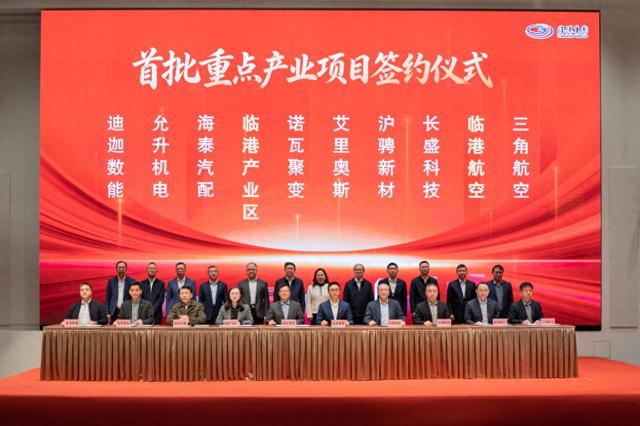
为全市全年招商工作树立标杆!临港集团45个项目集中签约
Xin Lang Cai Jing· 2026-02-27 15:22
Core Viewpoint - The Shanghai Lingang Group has achieved a significant acceleration in investment attraction and industrial cultivation through the signing of 45 high-energy and high-growth projects, marking a strong start to the year 2026 [1][3]. Group 1: Project Highlights - The signed projects cover key industries such as integrated circuits, artificial intelligence, biomedicine, aerospace, new energy vehicles, high-end intelligent manufacturing, and modern services, featuring both industry leaders and innovative teams [3]. - Notable projects include Nova Fusion's investment in a small modular nuclear fusion reactor research and commercialization project, filling a gap in Shanghai's nuclear fusion industry [3]. - Shanghai Triangle Aviation Technology Co., Ltd. plans to invest 1 billion yuan in the Lingang New Area to support the C919 and subsequent large aircraft series [3]. Group 2: Economic Impact - The Shanghai Municipal Economic and Information Commission reported that the city's industrial output value is expected to exceed 4.07 trillion yuan by 2025, with a 5.1% growth in industrial added value, the fastest in four years [1]. - The integrated circuit industry is projected to reach nearly 490 billion yuan, growing by 25%, while the artificial intelligence industry is expected to exceed 630 billion yuan with a growth rate of 40% [1]. Group 3: Organizational Changes - The Lingang Group has implemented a systematic reform of its investment attraction mechanism, establishing the Shanghai Lingang Economic Development Promotion Company to enhance professional and market-oriented investment efforts [4][5]. - The establishment of this specialized company aims to address challenges such as low industrial aggregation and limited project sources, transitioning from a focus on rental and policy competition to resource integration and ecosystem development [5]. Group 4: Future Goals - The Lingang Group aims to become a leading integrated service provider and operator of innovative ecosystems, focusing on enhancing industrial ecological shaping, investment attraction, and innovation capabilities [6].

企业才是未来产业的C位
Sou Hu Cai Jing· 2026-02-27 04:33
Core Viewpoint - The article emphasizes that enterprises are the main players in driving future industries, as they possess both technical knowledge and market awareness, enabling them to adapt quickly to changes in demand [3][4]. Group 1: Role of Enterprises - Enterprises are crucial because they understand technology and focus on orders, allowing for immediate shifts in research and development in response to market changes [3]. - The R&D expenditure of Chinese enterprises accounts for nearly 80% of the national total, indicating that the innovation battleground has shifted towards enterprises [3]. Group 2: Challenges and Solutions - There are significant challenges such as talent mobility, capital retention, and platform openness that need to be addressed for effective innovation [3]. - The dual flow of talent between academia and industry must be normalized, with industry demanding quicker production timelines from researchers [3]. Group 3: Role of Government - The government should focus on removing obstacles rather than directly participating in the innovation process, fostering an environment that allows enterprises to thrive [4]. - A supportive ecosystem is essential, where leading enterprises can drive upgrades across the entire industry chain [3][4].

非洲采矿业推动就业增长
Shang Wu Bu Wang Zhan· 2026-02-25 13:28
Core Insights - The demand for critical minerals globally is rising, leading to increased investments in mining, processing, and the entire industry chain in Africa, solidifying the mining sector's role as an employment engine with a positive outlook for development [1] Group 1: Industry Overview - Africa holds approximately $29.5 trillion in mineral wealth, accounting for 20% of global reserves, with $8.6 trillion yet to be developed [1] - The mining industry is a crucial source of income for Africa and a key pathway for job creation and economic diversification [1] - Future focus will shift from reliance on raw material exports to local processing of downstream industries such as aluminum and battery materials, transforming resource advantages into sustainable industrial employment [1] Group 2: Current Developments - Several African countries are advancing new mining projects: Namibia plans to resume uranium production and expand into rare earths and lithium; South Africa aims to invest $125.2 billion over five years to enhance the critical mineral value chain; Zambia's mining sector is projected to provide 73,000 jobs by 2025, with copper mine expansions attracting further investment and employment [1] - The U.S. has signed a mineral cooperation agreement with the Democratic Republic of the Congo, which has $24 trillion in mineral reserves, of which only 10% has been developed, indicating significant employment growth potential [1] Group 3: Challenges and Opportunities - Geopolitical competition for critical minerals like cobalt and lithium in Africa is intensifying, while insufficient financing channels continue to hinder the expansion of the mining sector, particularly affecting local companies and small operators [1] - There is a growing need for enhanced collaboration between Africa and global financial institutions to address these challenges [1]
21社论丨用好优势抓住机遇,促进广东制造业与服务业协同发展
2 1 Shi Ji Jing Ji Bao Dao· 2026-02-24 23:09
Group 1 - The core theme of the Guangdong conference is the collaborative development of manufacturing and service industries to explore new paths for high-quality development [1] - Guangdong's manufacturing sector accounts for 1/8 of the national manufacturing value added and approximately 1/3 of the province's GDP, establishing it as a global manufacturing hub [1] - The manufacturing industry in Guangdong is transitioning towards intelligent, green, and integrated development, aiming to move from low-value assembly to high-value design and sales [1] Group 2 - The historical evolution of developed economies shows that manufacturing and service industries have always evolved dynamically and collaboratively, leading to deeper industrial division and tighter integration [2] - The rapid development of information technology since the 1990s has empowered manufacturing through service-oriented manufacturing and the integration of the digital economy with the real economy [2] - The current technological revolution and industrial transformation necessitate a strong collaboration between manufacturing and services, leveraging advancements in AI, biomanufacturing, and quantum communication [2] Group 3 - Guangdong has unique advantages in the global technological revolution, with the Guangdong-Hong Kong-Macao Greater Bay Area being the only region with both mechanical and AI technologies [3] - The manufacturing sector in Guangdong includes leading industries such as home appliances, mobile phones, and automobiles, which need to collaborate with intelligent technologies to enhance their competitive edge [3] - A supportive market environment is essential for the collaborative innovation of manufacturing and services, requiring regulatory frameworks that facilitate new products, business models, and technological innovations [3]
用好优势抓住机遇,促进广东制造业与服务业协同发展
2 1 Shi Ji Jing Ji Bao Dao· 2026-02-24 22:40
Group 1 - The core theme of the Guangdong conference is the collaborative development of manufacturing and service industries to explore new paths for high-quality development [1] - Guangdong's manufacturing sector accounts for 1/8 of the national manufacturing value added and approximately 1/3 of the province's GDP, establishing it as a global manufacturing hub [1] - The manufacturing industry in Guangdong is transitioning towards intelligent, green, and integrated development, aiming to move from low-value assembly to high-value design and sales [1] Group 2 - The historical evolution of developed economies shows that manufacturing and service industries have always evolved dynamically and collaboratively, leading to deeper industrial division and tighter integration [2] - The rapid development of information technology since the 1990s has empowered manufacturing through service-oriented manufacturing and the integration of digital and physical economies [2] - The current technological revolution and industrial transformation necessitate a strong collaboration between manufacturing and services, leveraging advancements in AI, bio-manufacturing, and quantum communication [2] Group 3 - Guangdong has unique advantages in the global technological revolution, with the Guangdong-Hong Kong-Macao Greater Bay Area being a leading region in both mechanical and AI technologies [3] - The manufacturing sector in Guangdong includes leading industries such as home appliances, mobile phones, and automobiles, which need to collaborate with intelligent technologies to enhance their competitive edge [3] - A supportive market environment is essential for the collaborative innovation of manufacturing and services, requiring regulatory frameworks that facilitate new products, business models, and technological innovations [3]
厚植产业生态 项目有如“雨后春笋”
Xin Lang Cai Jing· 2026-02-21 17:15
Core Viewpoint - Chengdu is experiencing a significant industrial growth, with various projects contributing to its economic development and creating a synergistic effect between enterprises and the city [1]. Group 1: Investment and Expansion - A company is investing 300 million yuan in a phase two expansion project, indicating a commitment to growth and innovation [1]. - The transition from trial production to the creation of the world's first set of products highlights the company's ambition and technological advancement [1]. Group 2: Industry Ecosystem - Multiple projects, such as Hong Kong Precision Medicine and Jin Wangdao's international leading technology, are interconnected and contribute to the strengthening of Chengdu's industrial chain [1]. - The TGV Ecological Innovation Center and Jinjiang Tourism's headquarters are examples of how these initiatives are not isolated but part of a broader industrial ecosystem [1]. Group 3: Business Environment - Chengdu's favorable business environment is characterized by a responsive and supportive approach to enterprises, fostering a collaborative relationship between the city and businesses [1]. - The city's continuous efforts to enhance its industrial foundation and create a precise industrial network are pivotal for attracting investments and driving growth [1].
超万亿!北京亦庄放大招,母基金体系重磅出炉
母基金研究中心· 2026-02-13 09:36
Core Viewpoint - The Beijing Economic and Technological Development Zone (Beijing E-Town) is establishing a comprehensive fund ecosystem to support high-quality development, with a focus on attracting innovative enterprises and resources through a multi-layered financing approach [2][3]. Group 1: Fund Ecosystem and Investment Strategies - The fund ecosystem includes a government investment guidance fund with a total scale of 20 billion yuan, focusing on key industries such as new-generation information technology and general artificial intelligence [2]. - A mother fund system exceeding 1 trillion yuan is being developed to enhance the region's production capacity and support the growth of innovative enterprises [3]. - The establishment of various funds, including a 170 billion yuan technology industry fund and six AIC funds totaling 31 billion yuan, aims to attract social capital for early-stage and technology investments [2][3]. Group 2: Government Initiatives and Support - The Beijing government has been active in establishing district-level mother funds, with over 50 mother funds currently in operation, showcasing significant clustering effects [4]. - Recent initiatives include the launch of the Shunyi District Equity Investment Guidance Fund with a target scale of 100 billion yuan, and the expansion of the Haidian District government investment fund to 200 billion yuan [5][6]. - The Beijing government is also focusing on a "Beijing model" for industry funds, with eight major funds targeting sectors like robotics, artificial intelligence, and healthcare, collectively amounting to 1 trillion yuan [6][7]. Group 3: Policy Framework and Future Outlook - The "Implementation Plan" issued by eight departments in Beijing aims to introduce over 1 trillion yuan in long-term capital for technology innovation by the end of 2027 [8]. - Key measures include enhancing venture capital's role in supporting technological innovation and improving exit channels for venture investments [8][9]. - The recent developments in the fund landscape are expected to trigger a new wave of investment enthusiasm in Beijing, fostering early-stage and innovative investments [9].

钟世强:联合共建产业生态,广州饲料行业要做“最强大脑”┃穗风不惑
Nan Fang Nong Cun Bao· 2026-02-09 08:31
Core Viewpoint - The Guangzhou feed industry aims to become the "strongest brain" by building an industrial ecosystem and integrating various sectors such as feed, animal health, breeding, food, and supply chain [7][8][39]. Group 1: Industry Development - The Guangzhou feed industry has experienced significant growth since the reform and opening up, leveraging technological innovation to expand from local to global markets [3][4]. - The Guangzhou Feed Industry Association has become a benchmark for industry development over the past 40 years, reflecting the evolution of the feed industry [5][28]. - In 2023, the association appointed Zhong Shiqiang as the honorary president, recognizing his decade-long contributions to the industry [9][30]. Group 2: Challenges and Opportunities - The feed industry is facing new challenges and is at a critical juncture for transformation and upgrading [13][36]. - Zhong Shiqiang emphasizes the importance of guiding enterprises to develop headquarters economies and establish R&D centers to leverage Guangzhou's talent advantages [14][15][36]. Group 3: Ecosystem Integration - The industry is shifting from a "pyramid" structure to a "dumbbell" model, where integrated enterprises dominate the market, necessitating collaboration across the supply chain to reduce transaction costs and enhance competitiveness [38][39]. - Small and specialized companies must consider how to integrate into the industrial ecosystem to survive in a highly competitive market [40]. Group 4: Innovation and Talent - There are numerous new applications for traditional feed additives waiting to be explored, and advancements in material science will reshape resource allocation [41]. - The new generation of entrepreneurs is broadening their horizons and effectively utilizing modern technologies like AI, which will provide them with greater opportunities in the future [42][44].
