德式小麦

Search documents
鲜啤福鹿截止2025年底全年门店共计1808家
Bei Jing Shang Bao· 2026-01-20 11:05
Core Insights - The company plans to launch 20 new products in 2025 [1] - The German-style wheat beer has become the top-selling product, achieving sales of 100 million pounds in a year [1] - By the end of 2025, the company aims to sign 1,607 new stores, bringing the total to 1,808 stores across over 300 cities in China [1]
IPO前紧急分红1.12亿!手握国内最大餐酒吧,一年低调赚了10.74亿
Xin Lang Cai Jing· 2026-01-17 11:44
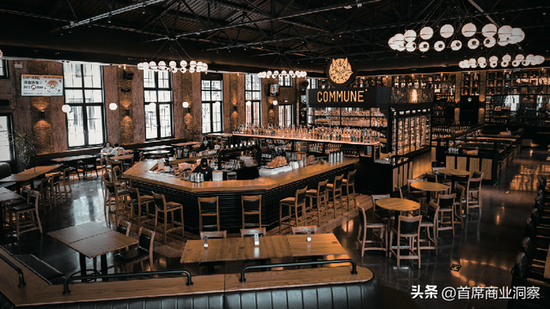
Core Viewpoint - The largest restaurant and bar chain in China, COMMUNE, is preparing for an IPO in Hong Kong, despite challenges in the restaurant industry. The business model focuses on both food and beverage offerings, appealing to young consumers and capitalizing on the nightlife market [2][4][55]. Company Overview - COMMUNE operates over 112 direct-operated stores across China, emphasizing refined service rather than rapid expansion [9][61]. - The company has received significant funding from various investors, including Hillhouse Capital and Tomato Capital, which has bolstered its cash flow [12][64]. - The restaurant-bar hybrid model is described as more of an entertainment business than a traditional dining establishment, catering to consumers throughout the day and night [5][7][59]. Financial Performance - In the first three quarters of the previous year, COMMUNE generated approximately 8.72 billion RMB, with nearly 45% of revenue coming from high-margin alcoholic beverages, reflecting a year-on-year growth of over 14% [14][66]. - The company is projected to achieve revenues exceeding 10 billion RMB by 2025, with a historical high of 10.74 billion RMB expected in 2024, marking a growth of over 27% [68][14]. - The gross profit margin has consistently exceeded 67%, indicating strong profitability compared to traditional dining establishments [17][69]. Market Position - The restaurant-bar market in China is valued at approximately 1.12 trillion RMB, with a growth rate of 7.7% year-on-year, indicating a robust market opportunity [24][75]. - COMMUNE's strategy includes a focus on urban areas, with a significant presence in both first and second-tier cities, although same-store sales growth has been more pronounced in second-tier cities [26][76]. - The company has over 9 million members, reflecting a strong customer base that supports its business model [73]. Consumer Trends - There is a noticeable shift in consumer preferences towards a combination of food and beverage offerings, with food sales beginning to surpass beverage sales, reaching 54% of total revenue in recent quarters [30][81]. - The pricing strategy is designed to be competitive, offering a high value-to-price ratio, which appeals to cost-conscious consumers [33][84]. - Marketing strategies include engaging promotions and events that enhance the social experience, contributing to the brand's appeal among younger demographics [37][39]. IPO Strategy - The upcoming IPO is seen as a strategic move to further capitalize on the growing market and enhance brand visibility internationally [45][51]. - Prior to the IPO, the company has distributed over 1.12 billion RMB in dividends, indicating strong financial health and shareholder value [45][46].

华润啤酒20251114
2025-11-16 15:36
Summary of China Resources Beer Conference Call Company Overview - **Company**: China Resources Beer - **Industry**: Beer and Alcoholic Beverages Key Points Sales Performance - Third-quarter sales maintained a growth rate of over 20%, consistent with the first half of the year, indicating stable operations despite industry challenges in October [2][4] - The overall sales contribution for the year is primarily from the first half, with the second half expected to contribute less [2][4] Profit Margins and Cost Management - The gross margin improved in the first half due to increased use of Australian barley, but the effect diminished in the second half [2][4] - The company anticipates that a rise in aluminum prices in 2026 will be manageable, with potential price increases or high-end product offerings to offset costs [2][5] Market Dynamics - The beer market is not experiencing significant price pressure, with short-term fluctuations influenced by channel inventory and promotions [2][8] - Emerging brands like Mixue Ice City are seen as beneficial for market expansion, introducing new consumer segments and preferences [2][9] Product Strategy - For 2026, the company plans to continue launching niche differentiated products while maintaining a strong base of major products [3][10] - Currently, niche products account for a small percentage of overall sales, but there are plans to enhance their market presence over the next five years [2][11] Consumer Trends and Marketing - The company is adapting to changing consumer preferences by testing new products through e-commerce and KOL channels, but will also consider traditional sales channels based on product suitability [2][13] - New product launches in the 8-10 RMB and 10-12 RMB price ranges will focus on high-end differentiated products without heavy marketing investments initially [2][12] Future Outlook - The overall economic environment will significantly influence sales and pricing strategies in 2026, with expectations of stability compared to 2025 [3][10] - The company remains confident in its long-term strategies for high-end products and the white liquor business, with ongoing adjustments based on market conditions [2][15] Additional Insights - The white liquor market is under pressure due to restrictions and slow recovery in business dining, prompting the company to explore beer channels for white liquor sales [2][4] - The company is committed to a long-term plan that includes a focus on differentiated products and expansion in key regions like the Greater Bay Area [2][15]
上半年啤酒股业绩分化局势复杂,业内忙出圈业外忙入局
Di Yi Cai Jing· 2025-08-19 10:44
Core Viewpoint - The domestic beer industry in China is experiencing a complex situation with performance divergence between domestic and foreign brands, as domestic companies continue to grow through premiumization while foreign brands face stagnation or decline [2][3]. Group 1: Performance of Domestic Beer Companies - China Resources Beer reported a revenue of 23.94 billion RMB, a year-on-year increase of 0.8%, and a net profit of 5.79 billion RMB, up 23% [3]. - The beer business revenue reached 23.16 billion RMB, growing by 2.6%, with premium and above beer sales increasing by over 10% [3]. - Yanjing Beer achieved a revenue of 8.56 billion RMB, a 6.4% increase, and a net profit of 1.1 billion RMB, up 45.5% [4]. Group 2: Performance of Foreign Beer Brands - Budweiser APAC saw a decrease in sales volume in China by 8.2%, with revenue and revenue per hectoliter down by 9.5% and 1.4%, respectively [3]. - Chongqing Beer reported a revenue of 8.839 billion RMB, a slight decline of 0.2%, and a net profit of 870 million RMB, down 4% [3]. Group 3: Market Trends and Consumer Behavior - The beer market is shifting from traditional social drinking to home consumption, with retail beer sales now accounting for over 60% of total beer consumption [5][6]. - The rise of e-commerce and instant retail has contributed to double-digit growth in new retail channels for beer [5][6]. - The beer industry is facing intense competition, with a reported 0.3% decline in production among large-scale breweries in the first half of 2025 compared to the previous year [8]. Group 4: Industry Diversification and New Entrants - Companies from other industries, such as Wuliangye and Three Squirrels, are entering the beer market, particularly in the craft beer segment, which is seen as a key area for future premiumization [7][8]. - Beer companies are diversifying their product offerings to include beverages and spirits to adapt to market changes and consumer preferences [8][9]. - The competitive landscape is evolving, with a focus on meeting diverse consumer needs through innovative and differentiated products [9].

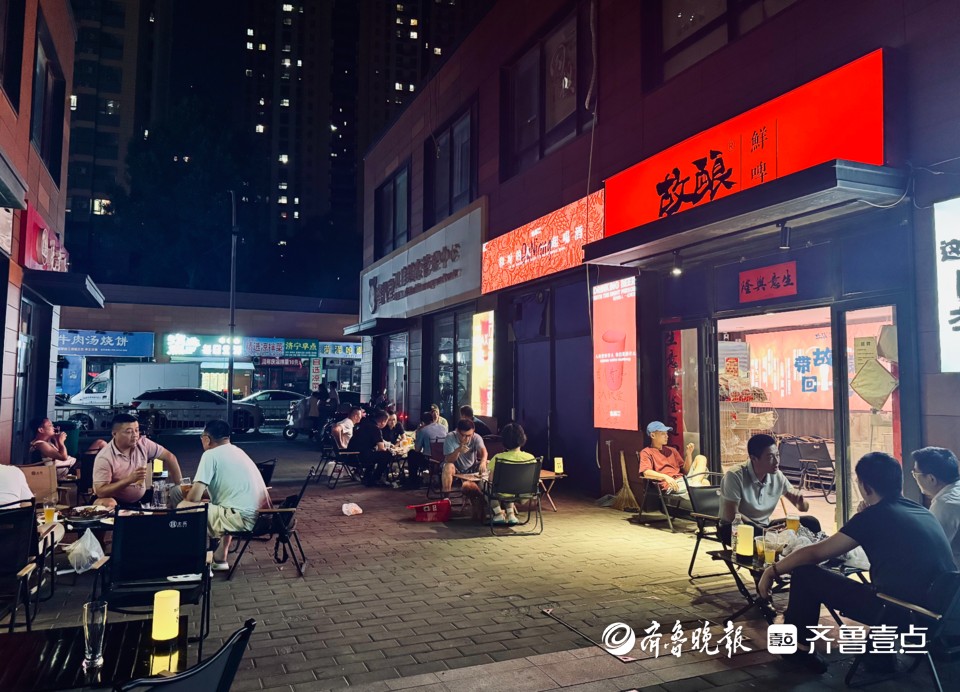
精酿啤酒“冰火录”:有人日销三四吨,有人半年就关店
Qi Lu Wan Bao Wang· 2025-07-21 01:00
Industry Overview - The craft beer industry in Jinan is experiencing rapid growth, with 545 craft beer-related enterprises currently existing, 104 of which were established within the last year [1][12] - The competition is intensifying, with 15 craft beer bars located within a one-kilometer radius in the Dongyi community commercial street [1][12] Business Models - Different business models are emerging, such as the community craft beer bar model, which focuses on local customer bases and offers a variety of products at competitive prices [3][6] - The "lightweight" business model, exemplified by Gongda Mai Kaishen Craft Beer, operates without dine-in options, focusing solely on takeout to minimize costs [4][6] Market Dynamics - The average daily sales in Jinan's craft beer market are around 3 to 4 tons, with an average customer spending of 50 yuan [6] - The craft beer market is becoming a popular choice for entrepreneurs, with low entry barriers and a potential startup cost of around 10,000 yuan for a takeout-only model [6][12] Challenges and Competition - New entrants face significant challenges, as illustrated by a struggling craft beer bar that had to close after only four months due to low foot traffic and high operational costs [7][9] - The market is witnessing a divide between successful brands that leverage strong supply chains and marketing strategies and individual brands that struggle without such support [9][10] Future Outlook - The craft beer industry in Jinan is expected to evolve into a more differentiated market, with high-end boutique stores and community-oriented affordable options coexisting [12] - Market positioning and understanding consumer preferences will be crucial for the survival and growth of new entrants in the craft beer sector [12]