德邦鑫星价值基金

Search documents
主动权益基金规模靠什么破百亿?
Guo Ji Jin Rong Bao· 2026-01-23 12:32
Core Insights - Growth stocks outperformed last year, leading to a significant increase in both performance and scale for several growth-oriented funds by the end of Q4 2025 [1][2] - The market trend has shifted from merely "star chasing" to focusing on "industry chain opportunities," with funds that strategically position themselves in high-growth sectors attracting substantial capital inflows [7] Fund Performance and Scale Growth - Several funds have transitioned from "mini funds" to larger scales, with notable examples including: - China Europe Cycle Selection increasing from 0.36 million to 15.75 million - Industrial Bank Quality Selection rising from 0.35 million to 17.91 million - Yongying Technology Selection reaching 154.68 million [1][2] - New funds entering the billion scale include: - Huatai PineBridge Xinxiang Tianli increasing from 62.65 million to 116.21 million - Huatai PineBridge Technology Innovation and Morgan Emerging Power also crossing the 100 million mark [2] Sector Focus and Investment Strategies - Funds that saw significant scale increases were heavily invested in high-demand sectors such as AI, commercial aerospace, and precious metals [1][4] - The investment strategies of these funds include: - Huatai PineBridge Xinxiang Tianli focusing on limited supply upstream resources and high-end manufacturing - Morgan Emerging Power maintaining positions in AI-related stocks while increasing exposure to lithium batteries and other sectors [4][5] - Funds like Yongying Technology Selection and Debon Xin Star Value continue to emphasize AI and related innovations, indicating a strong belief in the sector's growth potential [5][6] Market Dynamics and Fund Management - The surge in fund sizes is linked to the performance of their core holdings, creating a positive feedback loop where high sector demand drives fund inflows [8] - The shift in market dynamics reflects a growing preference for funds that can deliver stable returns and dividends, particularly in high-growth sectors [8] - Analysts suggest that the rapid increase in fund size may impact investment strategies, potentially leading to higher trading costs and challenges in maintaining flexibility [8]
网络大V流量AB面:从西贝闭店102家到德邦基金单日吸金120亿
Sou Hu Cai Jing· 2026-01-20 03:53
Group 1 - The core message of the article emphasizes that in the internet era, trust and user sentiment are crucial for businesses, as demonstrated by the contrasting fates of Xibei and Debang Fund [2][14] - Xibei, a restaurant chain, announced the closure of 102 stores, resulting in a direct loss of 500 million yuan, affecting approximately 4,000 employees [4][5] - The crisis for Xibei began with a negative comment from influencer Luo Yonghao, which escalated into a public relations disaster, highlighting the importance of consumer perception over factual rebuttals [5][6] Group 2 - In contrast, Debang Fund's product attracted 12 billion yuan in a single day, showcasing the power of social media and influencer endorsements in driving financial flows [6][8] - The Debang Fund, which had previously underperformed, saw a significant increase in value, with a 29.42% rise in just six trading days at the start of 2026 [6][10] - The fund's rapid growth was largely attributed to speculative investments, with a notable concentration in C-class shares, which are more suited for short-term holding [12][10] Group 3 - Both cases illustrate the underlying logic of the flow economy, where the impact of social media can either uplift or devastate businesses [14] - The article argues that while flow can enhance business opportunities, it should not become a tool for emotional manipulation or short-term profit extraction [14] - The need for businesses to maintain ethical standards and a focus on value creation is emphasized as essential for sustainable success in the flow-driven market [14]


赛道型基金大消息!“80后”百亿级基金经理升职
Zhong Guo Ji Jin Bao· 2025-11-19 16:35
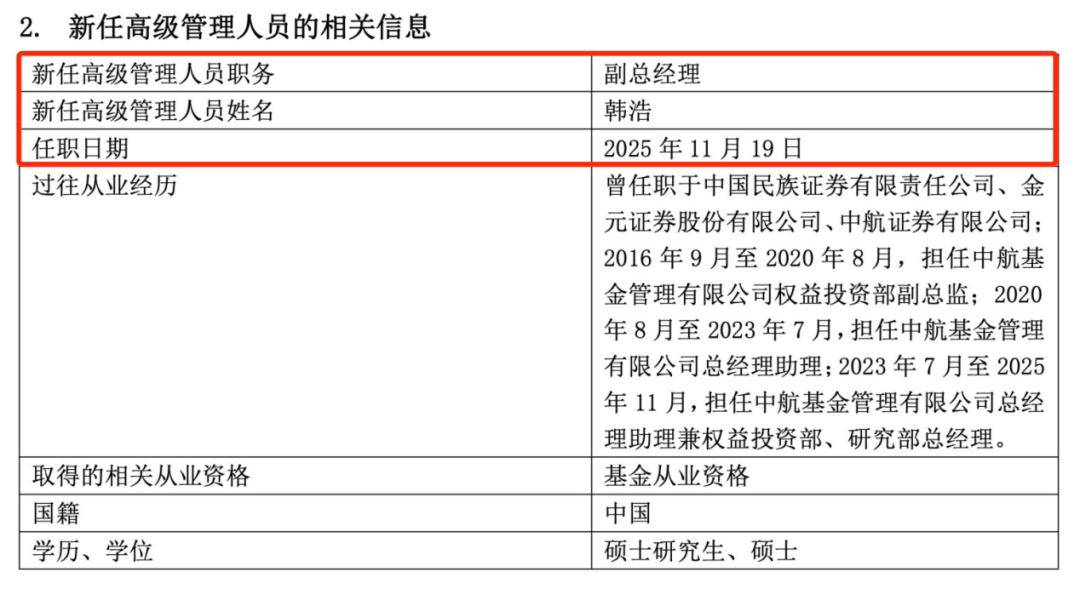
Group 1 - The core point of the article is the promotion of Han Hao to Vice President of China Aviation Fund, highlighting the rise of "billion-level" fund managers in the context of booming sectors like AI computing power and solid-state batteries [1][2][8] - Han Hao's management of four funds covers sectors such as AI computing power, low-altitude economy, solid-state batteries, and large aircraft, with his flagship fund, China Aviation Opportunity Leading Mixed Fund, growing from 681 million yuan at the end of last year to 13.231 billion yuan by the end of Q3 this year, representing an increase of over 18 times [2][5] - The recent management changes at China Aviation Fund include the departure of former Vice President Deng Haiqing, who is expected to join another fund company [2][3] Group 2 - Han Hao, born in the 1980s, has a diverse background in securities and investment, having held various positions in companies like China Minmetals Securities and Jin Yuan Securities before joining China Aviation Fund in 2016 [4][3] - The fund management landscape has seen a significant increase in the number of fund managers with over 10 billion yuan in assets, with 109 active equity fund managers reaching this milestone by the end of Q3, marking a 51.5% increase from the previous quarter [9] - The recent surge in technology stocks has led to the emergence of multiple "billion-level" fund managers, with notable performances from funds heavily invested in AI computing power, achieving net value growth of over 200% and 100% in the past year [9][11] Group 3 - China Aviation Fund is actively developing sector-focused funds, with additional funds covering areas such as humanoid robots, innovative drugs, edge chips, smart driving, and rare earths and strategic metals [6] - The industry is reflecting on the implications of new regulations regarding the concentration of investments in specific sectors, as many funds have achieved outstanding performance by focusing on one or two industries [9][10] - The extreme investment styles adopted by some smaller fund companies may need to evolve in response to regulatory changes, prompting a need for differentiated development strategies [11]
赛道型基金大消息!“80后”百亿级基金经理升职
中国基金报· 2025-11-19 16:27
Group 1 - The core viewpoint of the article highlights the promotion of Han Hao, a fund manager known for managing "hundred billion-level" funds, to the position of deputy general manager at AVIC Fund, reflecting the rise of fund managers in the AI computing and solid-state battery sectors [2][4]. - Han Hao's management of four funds spans various sectors including AI computing, low-altitude economy, solid-state batteries, and large aircraft, with his flagship fund, AVIC Opportunity Leading Mixed Fund, growing from 681 million yuan at the end of last year to 13.231 billion yuan by the end of Q3 this year, marking an increase of over 18 times [2][6]. - The article notes a significant increase in the number of fund managers with over 10 billion yuan in assets under management, with 109 managers reaching this milestone by the end of Q3, a 51.5% increase from the previous quarter [8]. Group 2 - The recent surge in technology stocks has led to outstanding performance among funds heavily invested in AI computing and other niche sectors, resulting in multiple fund managers achieving "hundred billion-level" status [8]. - The article discusses the implications of new regulations from the Fund Industry Association, which emphasize the need for fund managers to establish internal management systems to avoid excessive concentration in single sectors, prompting a reflection on the future of niche sector funds [8][9]. - Concerns are raised about the sustainability of funds that have relied on concentrated investments in one or two industries for short-term performance, highlighting the need for fund managers to develop broader market selection capabilities [9][10].

苦熬半年站上“C”位,AI基金大赚111%
Zheng Quan Shi Bao· 2025-08-25 23:54
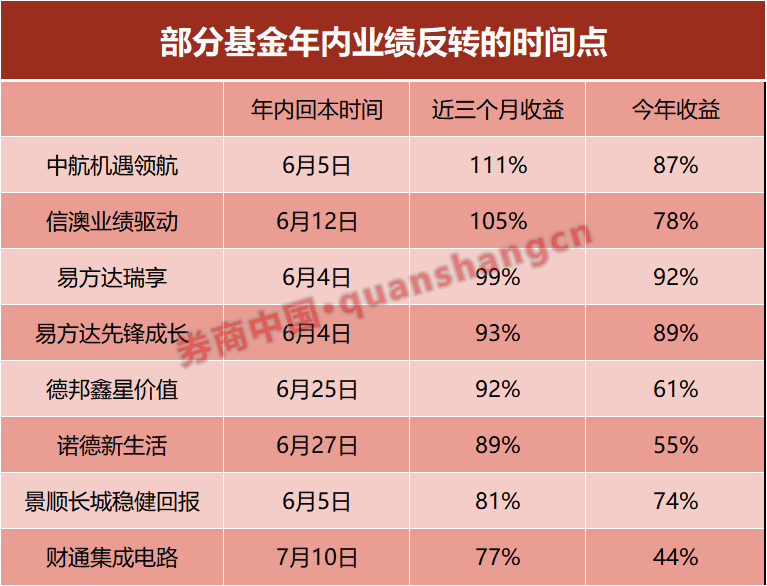
Group 1 - The AI sector has seen a significant turnaround in performance after a challenging first half of the year, with many funds transitioning from losses to substantial gains in just a few months [1][2][3] - As of August 24, the top 20 performing equity funds over the last three months have all focused on the AI computing sector, achieving returns exceeding 70%, with some funds like Zhonghang Opportunity leading with a 111% return [2][5] - The shift in market focus from pharmaceuticals to AI has been a key driver for many funds, which previously struggled during the first half of the year [6][7] Group 2 - The AI sector's performance is closely linked to market rotation trends, with a notable shift occurring in July as the pharmaceutical sector began to cool down [6][7] - The China Securities Artificial Intelligence Index has shown a cumulative increase of 35% since July 1, highlighting the renewed interest and investment in AI [7] - Analysts emphasize that the core of AI investment lies in computing power, with increasing demand driven by accelerated application scenarios and technological advancements [8][9] Group 3 - Key factors driving the strong performance of the computing power sector include higher-than-expected capital expenditure plans from major cloud providers, the release of new AI models, and robust supply chain feedback indicating strong demand [9] - The investment landscape is expected to benefit from various segments such as GPU and ASIC chips, optical modules, and AI servers, which are anticipated to see significant growth [9]