赛道型基金

Search documents
迎接50万亿存款迁徙 | 固收+站上历史风口,3万亿只是起点
Xin Lang Cai Jing· 2026-02-27 09:09
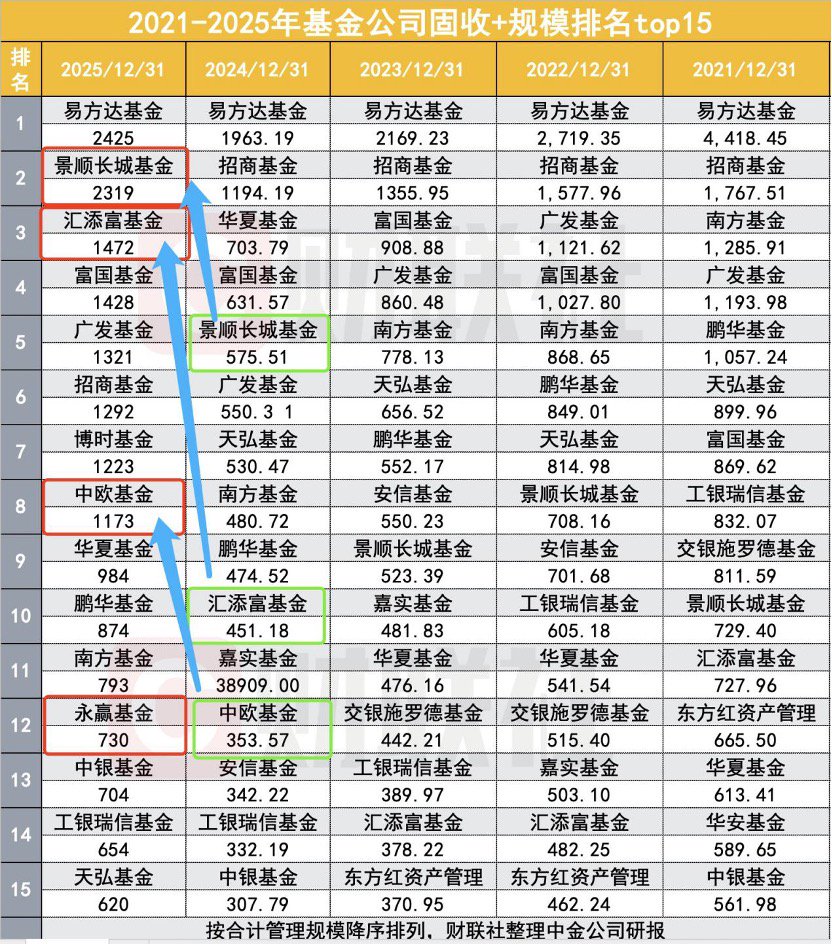
Core Insights - The public fund industry is poised for significant growth, particularly in the "fixed income +" sector, driven by a massive migration of deposits estimated at 50 trillion yuan [2][3] - The competition for "fixed income +" business is intensifying, with a consensus that the current scale of 3 trillion yuan is just the beginning, as institutions increase their investments [2][3] Group 1: Market Trends - The total scale of "fixed income +" funds reached a historical peak of 3 trillion yuan by the end of 2025, marking a 9% quarter-on-quarter increase and a 56% year-on-year growth [2] - The second-tier bond funds saw significant expansion, with a scale of 1.55 trillion yuan, reflecting a 19% increase, primarily driven by new capital inflows from institutional investors [2][3] - The market is expected to see a continued rise in the popularity of "fixed income +" strategies, with a focus on dynamic adjustments based on market trends [3][10] Group 2: Company Performance - E Fund remains the leader in "fixed income +" management with a scale of 242.5 billion yuan, followed closely by Invesco Great Wall and Huatai-PB, with 231.9 billion yuan and 147.2 billion yuan respectively [5][6] - Several companies, including Yongying Fund, have entered the top 12 in "fixed income +" management scale, indicating a competitive landscape [4][6] - The top 15 fund companies have shown substantial growth in their "fixed income +" scales from 2021 to 2025, with notable increases in assets under management [5] Group 3: Regulatory Environment - The regulatory environment is becoming more favorable for "fixed income +" products, with expectations of accelerated product approvals as high-interest deposits mature [7] - Fund companies are encouraged to actively engage in "fixed income +" strategies to capture migrating funds, with a focus on clear risk-return profiles to attract institutional investors [7][9] - The approval process for new products is becoming more refined, with faster pathways for higher-rated fund companies [7] Group 4: Strategic Developments - E Fund is evolving its strategy from fixed income enhancement to a multi-asset allocation model, aiming for comprehensive synergy in investment research [8] - Southern Fund has introduced the "优生优养计划" to emphasize product design and investor experience, with "fixed income +" and FOF as key components [9] - BlackRock is also focusing on "fixed income +" as a priority in its domestic fund strategy, leveraging its extensive multi-asset business framework [9]


越涨越买,资金涌入,赛道基金又走红
Zhong Guo Zheng Quan Bao· 2026-01-29 23:32
Group 1 - The core viewpoint of the articles highlights the surge in popularity and investment in sector-specific funds, particularly in areas like non-ferrous metals and AI, driven by impressive performance and investor enthusiasm [1][3] - Sector-specific funds have shown remarkable performance, with some funds experiencing growth rates exceeding 90 times their initial size within a short period, indicating a strong demand for targeted investment strategies [3][5] - The trend of sector funds is further supported by data showing that over half of the newly launched equity funds in early 2026 are sector-focused, particularly in technology, non-ferrous metals, and healthcare [5] Group 2 - The strong inflow of capital into sector-specific funds is evident, with significant net inflows reported in sector ETFs, contrasting with the outflows from broader market ETFs [3][5] - The performance of sector-specific ETFs has been outstanding, with some non-ferrous metal ETFs rising over 30% and certain gold stock ETFs increasing by more than 50%, significantly outperforming the market average [3] - Industry experts caution that while sector funds can yield high returns during favorable market conditions, they also carry inherent risks due to their concentrated exposure, which can lead to substantial losses when market conditions change [4][5]
越涨越买,资金涌入!赛道基金又走红
Zhong Guo Zheng Quan Bao· 2026-01-29 23:15
Group 1 - The core viewpoint is that sector-specific funds are gaining significant attention and inflow from investors, driven by strong performance in sectors like metals and AI, but there are underlying risks associated with this trend [1][2]. Group 2 - Sector-specific funds are outperforming traditional broad-market funds, with many small funds experiencing exponential growth in assets under management due to their focus on high-growth sectors [2]. - For instance, a semiconductor-focused fund saw its assets grow from less than 100 million to over 9 billion within a quarter, marking a growth of over 90 times [2]. - Industry ETFs, as passive sector-specific products, are also attracting substantial inflows, with certain ETFs in sectors like metals and chemicals gaining over 10 billion despite broader market sell-offs [2]. Group 3 - The enthusiasm for sector-specific funds has led to a surge in new fund launches, with over half of the equity funds launched this year being sector-focused, particularly in technology, metals, and healthcare [3]. - However, industry experts caution that the "double-edged sword" nature of these funds means that while they can yield high returns in favorable conditions, they are also vulnerable to significant declines when sector performance wanes [3]. - Historical patterns in capital markets show that reliance on a single sector can lead to sharp corrections, as seen in past trends with internet stocks, liquor funds, and renewable energy [3].
赛道型产品走上C位双刃剑效应不容忽视
Zhong Guo Zheng Quan Bao· 2026-01-29 21:02
Core Insights - The surge in popularity of sector-focused funds, driven by rising net values in themes like artificial intelligence, semiconductors, and non-ferrous metals, indicates a significant investment trend in the market [1][2] - Despite the current enthusiasm, there are underlying risks associated with sector funds, as no sector can maintain high prosperity indefinitely, leading to potential investment challenges when market conditions change [1][5] Fund Performance and Trends - Sector-focused funds have shown strong capital inflows, with many funds experiencing significant growth in assets under management, such as a semiconductor fund that grew from approximately 90.52 million to over 9 billion in just over a quarter [2] - Data from Wind indicates that, as of January 28, 2026, sector ETFs have attracted over 100 billion in net inflows, contrasting with significant outflows from broader market ETFs [2][3] Institutional Interest - Over half of the newly launched equity funds in 2026 are sector-focused, with a notable concentration in technology, non-ferrous metals, and healthcare sectors [3][4] - The rise in sector fund popularity is attributed to macroeconomic factors, industry cycles, and investor demand, particularly in high-tech sectors benefiting from technological advancements and policy support [3][4] Investor Behavior - Investors are increasingly favoring sector funds for their ability to simplify investment choices and diversify risk compared to individual stock investments [4] - The current market environment has led to a tendency for investors to chase high returns in popular sectors, creating a feedback loop of increasing investments as fund values rise [2][4] Market Dynamics - Historical patterns show that sector-focused investments often experience cycles of rapid growth followed by significant corrections, highlighting the importance of cautious investment strategies [5][6] - Industry experts emphasize the need for fund managers to diversify beyond single sectors to mitigate risks associated with market volatility and changing economic conditions [5][6]
赛道型基金大消息!“80后”百亿级基金经理升职
Zhong Guo Ji Jin Bao· 2025-11-19 16:35
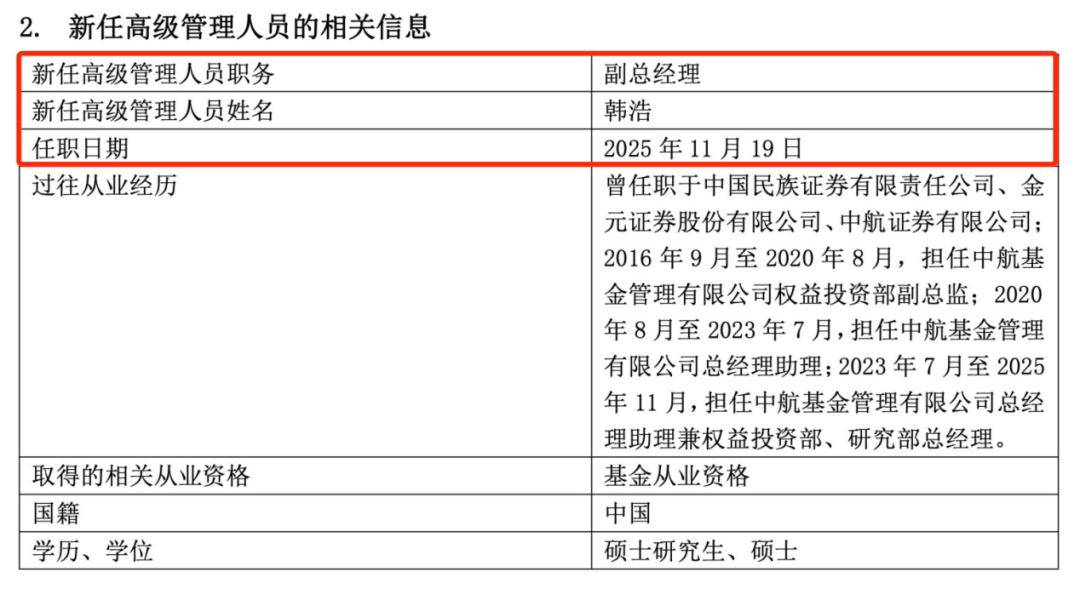
Group 1 - The core point of the article is the promotion of Han Hao to Vice President of China Aviation Fund, highlighting the rise of "billion-level" fund managers in the context of booming sectors like AI computing power and solid-state batteries [1][2][8] - Han Hao's management of four funds covers sectors such as AI computing power, low-altitude economy, solid-state batteries, and large aircraft, with his flagship fund, China Aviation Opportunity Leading Mixed Fund, growing from 681 million yuan at the end of last year to 13.231 billion yuan by the end of Q3 this year, representing an increase of over 18 times [2][5] - The recent management changes at China Aviation Fund include the departure of former Vice President Deng Haiqing, who is expected to join another fund company [2][3] Group 2 - Han Hao, born in the 1980s, has a diverse background in securities and investment, having held various positions in companies like China Minmetals Securities and Jin Yuan Securities before joining China Aviation Fund in 2016 [4][3] - The fund management landscape has seen a significant increase in the number of fund managers with over 10 billion yuan in assets, with 109 active equity fund managers reaching this milestone by the end of Q3, marking a 51.5% increase from the previous quarter [9] - The recent surge in technology stocks has led to the emergence of multiple "billion-level" fund managers, with notable performances from funds heavily invested in AI computing power, achieving net value growth of over 200% and 100% in the past year [9][11] Group 3 - China Aviation Fund is actively developing sector-focused funds, with additional funds covering areas such as humanoid robots, innovative drugs, edge chips, smart driving, and rare earths and strategic metals [6] - The industry is reflecting on the implications of new regulations regarding the concentration of investments in specific sectors, as many funds have achieved outstanding performance by focusing on one or two industries [9][10] - The extreme investment styles adopted by some smaller fund companies may need to evolve in response to regulatory changes, prompting a need for differentiated development strategies [11]
赛道型基金大消息!“80后”百亿级基金经理升职
中国基金报· 2025-11-19 16:27
Group 1 - The core viewpoint of the article highlights the promotion of Han Hao, a fund manager known for managing "hundred billion-level" funds, to the position of deputy general manager at AVIC Fund, reflecting the rise of fund managers in the AI computing and solid-state battery sectors [2][4]. - Han Hao's management of four funds spans various sectors including AI computing, low-altitude economy, solid-state batteries, and large aircraft, with his flagship fund, AVIC Opportunity Leading Mixed Fund, growing from 681 million yuan at the end of last year to 13.231 billion yuan by the end of Q3 this year, marking an increase of over 18 times [2][6]. - The article notes a significant increase in the number of fund managers with over 10 billion yuan in assets under management, with 109 managers reaching this milestone by the end of Q3, a 51.5% increase from the previous quarter [8]. Group 2 - The recent surge in technology stocks has led to outstanding performance among funds heavily invested in AI computing and other niche sectors, resulting in multiple fund managers achieving "hundred billion-level" status [8]. - The article discusses the implications of new regulations from the Fund Industry Association, which emphasize the need for fund managers to establish internal management systems to avoid excessive concentration in single sectors, prompting a reflection on the future of niche sector funds [8][9]. - Concerns are raised about the sustainability of funds that have relied on concentrated investments in one or two industries for short-term performance, highlighting the need for fund managers to develop broader market selection capabilities [9][10].

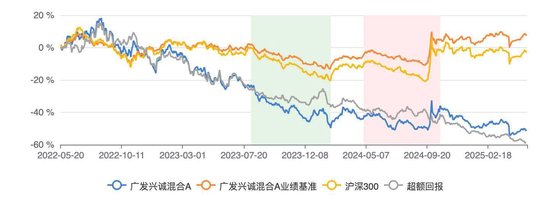
广发兴诚混合A近三年跑输业绩基准56% 郑澄然面临降薪压力
Xin Lang Ji Jin· 2025-05-23 13:43
Core Viewpoint - The China Securities Regulatory Commission (CSRC) has introduced a new action plan aimed at promoting high-quality development of public funds, which includes a performance-based compensation mechanism for fund managers linked to long-term performance [1] Group 1: Regulatory Changes - The new action plan specifies that if a fund manager's product underperforms its benchmark by more than 10 percentage points over three years, their performance compensation will be significantly reduced [1] - Conversely, if the performance exceeds the benchmark, the compensation may be increased [1] Group 2: Fund Performance Analysis - The Guangfa Xingcheng Mixed A fund has shown long-term poor performance, with a cumulative return over the past three years that is 51.12% lower than its benchmark [2] - As of May 20, 2025, the fund's total assets have decreased from a peak of 4.863 billion to 1.262 billion [5] - The fund manager, Zheng Chengran, has a return of -59.05% during his tenure, which has lasted over four years [4] Group 3: Investment Strategy and Holdings - The fund has heavily invested in the photovoltaic industry, with top holdings including leading companies such as Sungrow Power Supply (8.38%) and Hengtong Optic-Electric (8.02%) [6][9] - Despite attempts to diversify into other sectors like agriculture and pharmaceuticals, the fund's performance has continued to decline, indicating a lack of effective strategy [10][12] Group 4: Market Dynamics and Future Outlook - The fund's strategy has been characterized by frequent shifts without a clear guiding logic, leading to a fragmented approach that has not mitigated losses in the renewable energy sector [12][13] - Zheng Chengran expressed optimism about potential recovery in the renewable energy sector and the pharmaceutical industry, citing recent market stability and sector rotation [14]