快递代收服务

Search documents
增量不增收 部分地区快递驿站现“转让、关停”
Xin Lang Cai Jing· 2026-02-11 20:52
Core Viewpoint - The rapid expansion of express delivery stations in China is facing significant challenges, leading to a rise in closures and transfers as profitability declines amid intense competition and operational difficulties [1][2][4]. Group 1: Industry Overview - The express delivery station industry has grown alongside the rapid development of e-commerce, with over 240,000 express company outlets and more than 420,000 rural logistics service stations in China [2]. - Despite the growth in business volume, many delivery stations are experiencing operational difficulties, with numerous owners seeking to transfer or close their businesses due to increased competition and reduced profitability [3][4]. Group 2: Operational Challenges - Many delivery station operators report that the influx of competing stations has diluted their package volumes, making it increasingly difficult to maintain profitability [3][5]. - Complaints from consumers regarding service quality, such as packages being left at stations instead of delivered to homes, have increased, highlighting the operational challenges faced by delivery stations [2][3]. Group 3: Financial Performance - The average revenue per package for delivery stations has decreased significantly, with the average price per delivery dropping from 28.55 yuan in 2007 to 7.55 yuan currently [4][6]. - Operators are facing a "loss-leader" situation where they are forced to lower prices to compete, resulting in profit margins being severely squeezed [6]. Group 4: Market Regulation and Future Directions - Regulatory bodies are increasing oversight of the express delivery market to combat "involution" and ensure fair competition, with measures aimed at preventing below-cost pricing practices [6][7]. - Experts suggest that delivery stations should evolve from mere package transfer points to community service hubs, offering additional services to enhance customer engagement and profitability [8].
大撤退!快递驿站,越来越难做了
商业洞察· 2026-01-03 09:21
Core Viewpoint - The article discusses the decline of express delivery stations in China, highlighting the shift from a once lucrative business model to a struggling industry facing significant challenges and competition [3][8]. Group 1: Current Challenges in the Express Delivery Station Industry - Over half of the 187,000 express delivery stations in China are operating at a loss, with the average lifespan of these stations dropping from 2.3 years to just 11 months [9]. - The closure rate for stations within six months is as high as 43%, with nearly 60% failing to survive beyond one year [9]. - The primary revenue model relies on delivery and shipping fees, which have significantly decreased due to intense price competition, with delivery fees dropping from 0.5-0.8 yuan per item to as low as 0.2 yuan in competitive areas [14]. - The average shipping cost has fallen to 7.52 yuan per item, a 7.7% decrease compared to the previous year [14]. - Fixed costs such as rent and labor are substantial, with monthly expenses for a small station ranging from 2,000 to 3,000 yuan for rent and 3,000 to 5,000 yuan for labor [16]. Group 2: Consumer and Company Relations - Express delivery station owners are caught between consumer dissatisfaction and penalties from delivery companies, leading to a challenging operational environment [20][24]. - Complaints against delivery stations have surged by 43% year-on-year, with issues like unauthorized package placements and unreasonable charges being the main concerns [23]. - Delivery companies impose strict penalties on station owners for customer complaints, regardless of whether the issues are resolved [26][28]. Group 3: Industry Saturation and Competition - The industry faces external pressures from saturation and fierce competition, with 95% of county-level cities experiencing an oversupply of delivery stations [32]. - To compete for delivery resources, station owners engage in price wars, further driving down profitability [34]. - Malicious competition tactics, such as reporting rivals for regulatory violations, exacerbate the already difficult market conditions [36]. Group 4: Attempts at Diversification - Many station owners have attempted to diversify their services by integrating retail or community group buying, but these efforts often result in minimal returns and additional operational burdens [39][42]. - Over 80% of customers visit stations solely to pick up packages, spending less than three minutes on average, which limits the effectiveness of retail initiatives [41]. - Successful diversification is rare and typically requires prime locations or expertise in retail management, which most owners lack [45]. Group 5: Future Outlook - Despite the challenges, the demand for last-mile delivery remains strong, with express delivery volumes projected to reach 1.75 billion packages in 2024, more than double the volume from 2020 [45]. - The article concludes that while express delivery stations are unlikely to disappear entirely, the previous "wealth creation myth" surrounding them must be supported by sustainable business models [48].


快递驿站,塌房了
投资界· 2025-12-16 07:52
Core Viewpoint - The express delivery station business, once perceived as a low-cost and low-barrier entrepreneurial opportunity, is now facing significant challenges, leading many operators to exit the market despite previous profitability [5][27]. Group 1: Business Challenges - Many express station owners are experiencing financial losses despite high package volumes, with one owner reporting an average monthly delivery volume of 80,000 but still operating at a loss [5][27]. - The competitive landscape has intensified, with new entrants and aggressive tactics among existing operators, including price wars and complaints to regulatory bodies [10][16][27]. - The introduction of new regulations has increased operational burdens, forcing some owners to handle deliveries themselves, which raises costs and complicates operations [25][27]. Group 2: Financial Dynamics - The average income from delivery fees has decreased, with one operator noting a drop from 4,500 to around 1,500 monthly due to increased competition and reduced package volumes [27]. - Penalties from delivery companies are a significant financial drain, with one operator reporting that over 70% of their income was deducted due to fines [18][22]. - The overall trend in the express delivery industry shows a decline in service prices, with a reported 8.2% decrease in average delivery fees in early 2025 [28]. Group 3: Market Trends - The express delivery market is projected to grow, with an estimated 175.08 billion packages expected in 2024, reflecting a 21.5% year-on-year increase [27][28]. - Despite the growth in package volume, the profitability for individual stations is declining due to increased competition and reduced fees, leading to a challenging environment for operators [27][28]. - The rise of alternative delivery models, such as automated delivery vehicles, is changing the operational landscape, further complicating the situation for traditional express stations [27]. Group 4: Survival Strategies - Many station owners are diversifying their business models by incorporating additional services, such as community group buying or retail, to supplement their income [29]. - Some operators are actively seeking to transfer their stations to new owners, often advertising them as "profitable immediately," despite the underlying challenges [6][29]. - The survival of express stations often hinges on the owner's ability to manage costs effectively and adapt to the rapidly changing market dynamics [29].

推新型门店、代收快递 便利店的自救与升级
Bei Jing Shang Bao· 2025-08-21 14:17
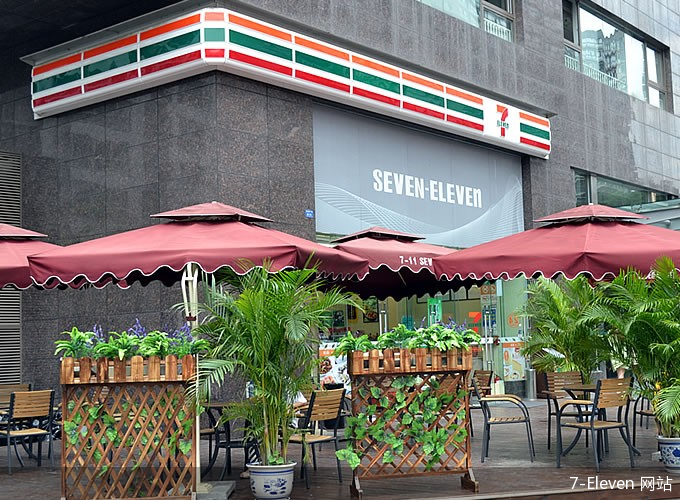
Core Insights - 7-Eleven is undergoing self-rescue efforts after the withdrawal of a takeover bid by Canadian convenience store giant ACT, which marked a loss of a quick transformation opportunity for 7&i Holdings [5] - The convenience store industry is actively exploring new store models to seek breakthroughs amid challenges of sluggish growth and profit pressure [1][5] New Store Formats - 7-Eleven has launched a new store format in Tongzhou District, featuring a 24-hour service window, redesigned employee uniforms, and new product offerings including self-service coffee machines and a relaxation area on the second floor [3] - Lawson has also accelerated service innovation with its first new store in Qingdao, offering 24-hour services such as package collection and self-service charging [3] - Both companies are focusing on unique products as a standard feature of their new store formats, with Lawson emphasizing the need to develop specific products based on consumer characteristics [4] Industry Challenges - 7-Eleven is experiencing a slowdown in franchise growth, with a reported 0.7% decline in revenue and an 11.0% drop in operating profit for the first quarter of fiscal year 2025, marking five consecutive quarters of negative growth [5] - In comparison, competitors like FamilyMart and Lawson have maintained an 8% growth rate in daily sales [5] - The number of 7-Eleven stores in China has been surpassed by Lawson, with 6,652 and 4,639 stores respectively [5] Competitive Landscape - Domestic convenience store brands such as Meiyijia, Yijie, and Kunlun Haokai are dominating the top three positions, prompting foreign brands like Lawson and 7-Eleven to innovate and localize their strategies [6] - New entrants like Three Squirrels and Kudi Coffee are also entering the convenience store market, indicating a trend of cross-industry competition [7] - The convenience store sector is increasingly focusing on young consumers, with a need for precise channel and customer matching [7] Market Trends - The China Chain Store & Franchise Association's report indicates that the number of convenience stores will continue to grow in 2024, with 24-hour and community-based stores becoming increasingly important [8] - Convenience stores are encouraged to enhance product cost-effectiveness and adopt a strategy of "market demand + differentiated value" to develop proprietary brand products [8]