惠选订房平台

Search documents
专访“滴滴订房”平台创始人:上线一年多,进展不理想
Mei Ri Jing Ji Xin Wen· 2025-11-29 13:57
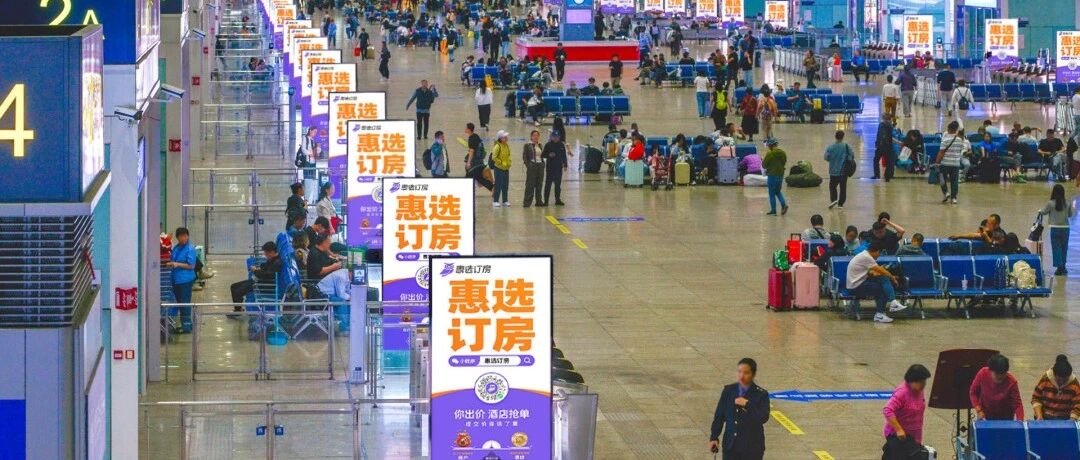
Core Insights - The hotel industry is facing a supply surplus, leading to the emergence of a new player known as "Hui Xuan Booking," which is likened to "Pinduoduo" in the hotel sector and operates on a C2B model similar to "Didi Chuxing" for hotel bookings [1] Company Overview - "Hui Xuan Booking" launched in September 2024 and has been aggressively advertising in high-speed train stations across various cities [1] - The company aimed to onboard 30,000 hotels by 2025 but has currently managed to integrate less than 10,000 hotels [1] - The platform processes nearly 20,000 orders per month, but the transaction completion rate stands at only 50% [1] Market Challenges - Despite a continuous increase in order volume, the company faces significant challenges in market promotion and customer acquisition, which require substantial financial investment [1] - The founder, Ma Zhaode, has acknowledged that progress has not met initial expectations [1]

80元起下单中高端酒店的“酒店界拼多多”狂奔一年多
Mei Ri Jing Ji Xin Wen· 2025-11-27 13:29
Core Viewpoint - The hotel industry is facing challenges in achieving revenue growth, with new models like "C2B" and "JD Travel" not yet delivering significant results [1][2] Group 1: C2B Model Overview - The "C2B" model allows consumers to set prices for hotel rooms, aiming to connect price-sensitive users with hotels that have vacant rooms [2][3] - The "Hui Xuan Ding Fang" platform, representing this model, has struggled to gain traction, with only about 10,000 hotels onboarded against an initial target of 30,000 by 2025 [1][4] - The platform has seen a high cancellation rate of 50% on its nearly 20,000 monthly orders, indicating issues with user trust and hotel engagement [1][4] Group 2: Market Challenges - The platform faces difficulties in attracting hotels due to exclusivity agreements with major OTAs and the reluctance of well-known brands to lower prices [5][8] - User trust is a significant barrier, with many consumers hesitant to engage with a new platform, leading to high cancellation rates and negative feedback regarding order fulfillment [6][10] - The platform's operational model relies on low-cost marketing strategies and partnerships, with a focus on integrating resources rather than traditional advertising [11][12] Group 3: Future Goals and Projections - The company aims to reach 1 million users by the end of the year, with a long-term goal of capturing 25% to 30% of the hotel market share in China, targeting 100,000 to 150,000 hotels [12] - The operational strategy includes building a hotel alliance over the next five years and potentially pursuing an IPO in the future [12]
“滴滴订房”爆了!支付巨头上门密谈2小时,连李嘉诚都看好
首席商业评论· 2025-11-06 03:57
Core Viewpoint - The emergence of "Didi Booking" signifies a transformative shift in the hotel industry, challenging the dominance of traditional online travel agencies (OTAs) that have controlled pricing for over two decades [4][6][12]. Group 1: Market Dynamics - "Didi Booking" has launched a nationwide advertising campaign, investing over 100 million yuan to promote its "bid for hotel rooms" model across major high-speed rail stations [3][4]. - The company has expanded its operations to over 20 provinces and partnered with nearly 8,000 hotels within just one year of its launch [4]. - The founder, Ma Zhaode, identified a significant opportunity in the hotel industry, noting that with an average occupancy rate of only 50% across 360,000 hotels in China, there exists a substantial amount of unused capacity [6][12]. Group 2: Business Model Innovation - The "Didi Booking" model is inspired by Priceline's "Name Your Price" concept, allowing users to set their own prices for hotel rooms, which is facilitated by AI algorithms and mobile payment systems [10][12]. - The platform employs a "black box" pricing mechanism, ensuring that transaction prices are only visible to the buyer and seller, thus protecting brand value and preventing price wars [12][15]. - Users can either bid for rooms based on their budget or allow the AI to negotiate prices on their behalf, enhancing the user experience and potentially upgrading their accommodation [12][14]. Group 3: Technological Integration - The integration of AI technology allows hotels to set their own price ranges and manage bookings more efficiently, with funds being transferred to hotels immediately after guests check out [14][19]. - The system also incentivizes hotel staff to encourage guests to book through the platform, creating a revenue-sharing model that retains customer loyalty [14][15]. Group 4: Strategic Partnerships and Growth - A strategic partnership with Alipay has been established, enabling "Didi Booking" to leverage Alipay's platform resources to enhance its service offerings [19][21]. - The company is pursuing a city partner model to expand its reach, collaborating with local agents to penetrate various markets across China [21][23]. - By 2025, "Didi Booking" aims to establish 300 city service centers and 1,000 district service centers, partnering with 30,000 hotels and reaching 10 million users [25].