
感知与决策系统

Search documents
华源晨会精粹20260326-20260326
Hua Yuan Zheng Quan· 2026-03-26 11:26
Group 1: Robotics - Woan Robotics (06600.HK) - The company achieved revenue of 900 million yuan in 2025, a year-on-year increase of 48%, with a gross profit of 490 million yuan, up 54%, resulting in a gross margin of 54%, an increase of 2.3 percentage points year-on-year [2][8] - The global market strategy has shown significant results, with revenue growth in core markets such as Germany, which saw a 108.9% increase [9] - The product lines, including enhanced execution robots and AI solutions, have all experienced high growth, validating the sustainability of core category growth [9][10] Group 2: Utilities - China Resources Power (00836.HK) - The company reported a net profit of 14.519 billion HKD in 2025, a slight increase of 0.9% compared to 2024, with core business profit rising by 9.9% [14][15] - The growth in 2025 was primarily driven by a decline in coal prices and new power generation units, despite a decrease in renewable energy performance due to accounting changes [15] - The company plans to add 5.45 million kilowatts of wind and solar capacity in 2026, focusing on comprehensive energy services as a new growth engine [18] Group 3: Food and Beverage - Nongfu Spring (09633.HK) - The company achieved total revenue of 52.553 billion yuan in 2025, a year-on-year increase of 22.51%, with a net profit of 15.868 billion yuan, up 30.89% [21][22] - The tea beverage segment has become the largest revenue source, with a 29% increase in revenue to 21.6 billion yuan, accounting for 41.1% of total revenue [22][23] - The packaging water business has shown a strong recovery, with revenue increasing by 17.3% to 18.71 billion yuan, demonstrating the company's robust brand and channel capabilities [22][23] Group 4: North Exchange - Audiwei (920491.BJ) - The company reported revenue of 683 million yuan in 2025, an 11% year-on-year increase, with a net profit of 94.03 million yuan, up 7% [25][26] - The sensor business revenue grew by 20% due to increased applications in smart homes and enhanced collaboration with automotive manufacturers [26][27] - The company has initiated the construction of a high-performance sensor R&D base in Guangzhou, aiming to enhance its technological capabilities [27] Group 5: North Exchange - Xingtux Control (920116.BJ) - The company achieved revenue of 321 million yuan in 2025, an 11% increase, with a net profit of 100.83 million yuan, up 19% [30][31] - The commercial aerospace sector saw a 62% revenue increase, driven by the expansion of services to mainstream commercial satellite companies [31][32] - The company plans to build an AI-enabled space cloud product system to meet the growing demand for low-orbit internet constellations [33] Group 6: North Exchange - Lechuang Technology (920425.BJ) - The company is focused on the adhesive control system market, with expected revenue of 123 million yuan in 2025, a 58% year-on-year increase, and a net profit of 33.69 million yuan, up 100% [38][39] - The company is expanding its applications in AI glasses and power batteries, enhancing its market share in the adhesive control system sector [39][40] - The overall market for adhesive machines in China is projected to grow significantly, with a CAGR of 18% from 2025 to 2029 [37]


卧安机器人:首次覆盖报告:全球家庭机器人龙头,全渠道动能强劲-20260312
GUOTAI HAITONG SECURITIES· 2026-03-12 05:45
Investment Rating - The report initiates coverage with a "Buy" rating for Woan Robotics (6600.HK) [1][7]. Core Insights - Woan Robotics is positioned as a global leader in home robotics, leveraging an integrated product matrix that covers diverse household scenarios. The company has successfully turned profitable in the first half of 2025, driven by high-margin DTC channel growth and scale effects [2][10]. - The company is expected to achieve significant revenue growth, with projected revenues of RMB 1,016 million in 2025, RMB 1,501 million in 2026, and RMB 1,966 million in 2027, reflecting year-on-year growth rates of 67%, 48%, and 31% respectively [4][12]. - The report highlights the company's strong technological barriers, focusing on three core technologies: robot positioning and environment construction, AI machine vision control, and distributed neural control network technology [7][12]. Financial Summary - Revenue projections for Woan Robotics are as follows: - 2024: RMB 610 million - 2025: RMB 1,016 million - 2026: RMB 1,501 million - 2027: RMB 1,966 million - The company is expected to achieve a net profit of RMB 79 million in 2025, RMB 146 million in 2026, and RMB 212 million in 2027, with a remarkable growth rate of 2,661% in 2025 [4][12]. - The earnings per share (EPS) are projected to be -0.03 in 2024, 0.35 in 2025, 0.65 in 2026, and 0.94 in 2027 [4][12]. Market Position and Growth Drivers - Woan Robotics has established a global sales network covering over 90 countries, with a DTC channel that has seen a compound annual growth rate of 73.3% from 2022 to 2024, contributing nearly half of the company's revenue [7][10]. - The global home robotics market is expected to grow from RMB 5.9 billion in 2024 to RMB 70.7 billion in 2029, with a penetration rate increasing from 2.3% to 16.2%, indicating a high-growth, low-penetration market [7][10]. Valuation Analysis - Given the company's recent losses and significant capital expenditures, a price-to-sales (PS) valuation method is employed, resulting in a target market value of RMB 30.03 billion and a target price of HKD 147.01 per share for 2026 [12][13].
卧安机器人(06600):首次覆盖报告:全球家庭机器人龙头,全渠道动能强劲
GUOTAI HAITONG SECURITIES· 2026-03-12 05:13
Investment Rating - The report initiates coverage with an "Accumulate" rating for Woan Robotics (6600.HK) [1][7] Core Insights - Woan Robotics is a global leader in home robotics, leveraging an integrated product matrix that covers diverse household scenarios. The company has successfully turned profitable in the first half of 2025, driven by high-margin DTC channel growth and scale effects [2][10] - The company is positioned in a high-growth market with low penetration, with the global home robotics market expected to grow from 5.9 billion RMB in 2024 to 70.7 billion RMB by 2029, indicating a significant growth opportunity [7][10] Financial Summary - Revenue projections for Woan Robotics are as follows: - 2024: 610 million RMB - 2025: 1,016 million RMB - 2026: 1,501 million RMB - 2027: 1,966 million RMB - The revenue growth rates are 33%, 67%, 48%, and 31% respectively [4][11] - The net profit forecast shows a turnaround from a loss of 3 million RMB in 2024 to profits of 79 million RMB in 2025, 146 million RMB in 2026, and 212 million RMB in 2027, with growth rates of 81%, 2661%, 86%, and 45% respectively [4][11] - The company’s EPS is projected to improve from -0.03 in 2024 to 0.94 in 2027 [4][11] Business Model and Market Position - Woan Robotics has established a comprehensive sales network covering over 90 countries, utilizing a "China supply chain + global channel" model. The DTC channel has shown rapid growth, with a compound annual growth rate of 73.3% from 2022 to 2024, contributing nearly half of the revenue [7][10] - The company has a clear business structure and significant sales network advantages, which are expected to enhance profitability as the DTC channel continues to grow [12] Valuation Analysis - Given the company's recent losses and capital expenditures, a PS (Price-to-Sales) valuation method is employed. The report assigns a 20x PS valuation for 2026, resulting in a target market value of 30.03 billion RMB and a target price of 147.01 HKD [12][13]
卧安机器人(06600):AI具身家庭机器人龙头,商业闭环+垂类应用多点开花
Hua Yuan Zheng Quan· 2026-03-11 15:00
Investment Rating - The report assigns a "Buy" rating for the company, marking its first coverage [5]. Core Insights - The company is a leading provider of AI-enabled household robots, achieving a commercial model closure in overseas markets and expanding into various vertical applications. It aims to develop hot-selling products and high-potential new items while continuously enhancing its product matrix for household robots [5][6]. - The company has a strong focus on creating a "brain" for general household robots and enhancing its embodied robot products, fostering a flywheel effect that promotes mutual enhancement among models, data, and commercialization [6][7]. - The company is expected to achieve revenues of 2.7 billion, 4.6 billion, and 6.1 billion yuan from 2022 to 2024, with a compound annual growth rate (CAGR) of 49% [6]. Summary by Sections Market Performance - The closing price is HKD 115.30, with a market capitalization of HKD 25,983.56 million. The stock has seen a one-year high of HKD 201.60 and a low of HKD 73.80 [3]. Business Overview - The company specializes in various household robots, including enhanced execution robots and perception and decision-making systems, with over 95% of its revenue coming from overseas markets, particularly Japan, Europe, and North America [6]. - The company is projected to capture 11.9% of the global market share in household robot systems by 2024, ranking first in retail sales [6]. Financial Projections - Revenue forecasts for 2025, 2026, and 2027 are estimated at 9.0 billion, 14.8 billion, and 19.4 billion yuan, with year-on-year growth rates of 47%, 65%, and 32% respectively [7]. - The company is expected to achieve a net profit of 166.17 million yuan by 2027, with a significant turnaround from losses in previous years [8]. Product Development - The company plans to launch several innovative products, including the Acemate tennis robot, Kata Friends AI companion robot, and Onero H1 humanoid housekeeping robot, which are expected to open new market segments and enhance revenue streams [7].
一文读懂卧安机器人:10W2026周报
CAITONG SECURITIES· 2026-03-10 04:25
Company Overview - The company, Woan Robotics, is a global provider of home robot systems, focusing on markets in Japan, Europe, and North America, and aims to build an ecosystem centered around smart home robot products[4]. - Woan Robotics ranks first among global home robot system providers with a market share of approximately 11.9%[25]. Market Growth - The global home robot industry is projected to grow from RMB 2.133 billion in 2022 to RMB 2.577 billion in 2024, with a compound annual growth rate (CAGR) of 9.9%[29]. - The market size for home robot systems is expected to increase from RMB 22 billion in 2022 to RMB 59 billion in 2024, achieving a CAGR of 63.7%[29]. Product and Revenue Insights - The company's product matrix includes enhanced execution robots and perception decision systems, with revenue from enhanced execution robots expected to reach RMB 32 billion by 2024, growing at a CAGR of 57.0%[30]. - The perception and decision systems market is anticipated to grow to RMB 23 billion by 2024, with a CAGR of 75.7%[30]. Regional Market Dynamics - The U.S. home robot market is projected to grow at a staggering CAGR of 101.2% from 2024 to 2029, driven by strong consumer purchasing power and recognition of automation[31]. - Japan's market for home robot systems is expected to reach RMB 149 billion by 2029, with a CAGR of 52.8% from 2024 to 2029[31]. Competitive Advantages - The company benefits from a robust R&D team, with 43% of its workforce dedicated to research and development, enabling continuous innovation and product optimization[25]. - Woan Robotics has established a comprehensive global sales network, entering over 90 countries and regions, with more than 2,000 offline stores[26].
未知机构:卧安机器人首次覆盖报告全球居家机器人系统行业龙头持续释放智能单品到系统生-20260127
未知机构· 2026-01-27 02:25
Summary of Conference Call Records Company Overview - The company is a leader in the global home robotics system industry, recognized for its strong patent barriers in enhanced robotics and perception decision systems, connecting over 10 million devices across more than 90 countries, establishing itself as a global frontrunner [1][1][1] Financial Projections - Revenue projections for 2025, 2026, and 2027 are expected to reach 881 million, 1.202 billion, and 1.574 billion RMB, representing year-on-year growth of 44.5%, 36.5%, and 30.9% respectively [2][2][2] - Net profit attributable to the parent company is projected to be 37 million, 62 million, and 114 million RMB for the same years, with significant improvements from losses to growth rates of 69% and 84% [2][2][2] Market Dynamics - The global home robotics system market is projected to grow at a CAGR of 64% from 2024 to 2029, with the market size expected to reach 70.7 billion RMB by 2029, increasing its share of the overall home robotics market from 2.3% to 16.2% [2][2][2] - The market size for home robotics in key regions for 2024 is estimated at 1.8 billion RMB in Japan, 400 million RMB in the USA, 600 million RMB in Europe, and 3.2 billion RMB in other regions, with respective CAGRs of 52.8%, 101.2%, 94.7%, and 54.0% from 2024 to 2029 [3][3][3] Product Segmentation - The company's product offerings include enhanced execution robots, perception and decision systems, and other smart products, with significant growth expected in the retail market for tennis robots and perception systems [3][3][3] - The enhanced execution robots market is projected to reach approximately 3.2 billion RMB by 2024, with a CAGR of 61% [3][3][3] Competitive Position - The company holds an 11.9% market share in the global home robotics system provider space for 2024, ranking first, particularly strong in the Japanese market, and experiencing rapid growth in the US and European markets [4][4][4] - User engagement metrics show over 3.5 million registered app users and over 10.8 million connected devices, with 55.9% of users connecting two or more products [4][4][4] Revenue and Profitability - Revenue growth from 2022 to 2024 is projected at a CAGR of 49.0%, with 2025 H1 revenue at 396 million RMB, reflecting a year-on-year increase of 44.1% [4][4][4] - The gross margin improved from 34.3% in 2022 to 54.2% in 2025 H1, with adjusted EBITDA turning positive from a loss of 69.1 million RMB in 2022 to 54.1 million RMB in 2025 H1 [5][5][5] Risks - Key risks identified include sales channel risks, geopolitical risks, stock price volatility risks, and the risk of not being profitable in recent years [5][5][5]
卧安机器人成功登陆港交所主板,荣膺“AI具身家庭机器人第一股”
市值风云· 2025-12-30 10:11
Core Viewpoint - Woan Robotics has successfully listed on the Hong Kong Stock Exchange, becoming the first stock in the "AI Embodied Home Robot" sector, with a market capitalization exceeding HKD 16.4 billion, marking it as a significant player in the robotics market for 2025 [1] Group 1: Company Overview - Woan Robotics is recognized as the largest AI embodied home robot system provider globally, according to Frost & Sullivan, based on retail revenue projections for 2024 [1] - The company has a strong research foundation, with its core management team originating from Harbin Institute of Technology, showcasing a commitment to innovation in robotics since their university days [2][5] - The company has developed a complete system from technology research and development to product implementation, mastering three core AI technologies: machine vision control, robot positioning and environment construction, and distributed neural control networks [5] Group 2: Market Performance and Investor Confidence - The IPO was met with overwhelming demand, with a subscription rate of approximately 254.5 times for the public offering and about 8.9 times for the international offering, indicating strong market confidence in the potential of the home robotics sector [1] - Notable early investors include prominent figures such as Professor Li Zexiang and Professor Gao Bingqiang, along with a roster of top investment institutions like Hillhouse Capital and Source Code, reflecting strong market recognition of the company's founding team [7] - The IPO successfully attracted cornerstone investors who collectively subscribed over HKD 700 million, accounting for more than 42% of the total offering, further demonstrating confidence in the company's technology and business model [7] Group 3: Product and Growth Strategy - Woan Robotics has established a three-dimensional product layout, focusing on a stable core and dual growth curves, covering various family scenarios such as smart control, household chores, elderly care, and security [9] - The company has launched innovative products like the AI tennis robot Acemate and the AI companion robot Kata Friends, which have received significant market attention and accolades, including being listed among TIME magazine's "Best Inventions of 2025" [10][11] - The upcoming humanoid household robot H1 is set to launch in January 2026, targeting high-frequency household tasks, which is expected to fill a gap in practical applications for humanoid robots [11] Group 4: Financial Performance and Global Expansion - Woan Robotics has demonstrated strong commercial viability, with products sold in over 90 countries, achieving significant growth in key markets like Japan and Europe, where revenue growth rates exceed 68% [12] - The company has achieved a compound annual growth rate (CAGR) of 49% in revenue over the past three years, with a gross margin of 51.7% in 2024, indicating a robust financial position [12] - The company plans to allocate approximately 66.5% of the raised funds to enhance R&D capabilities and develop key technologies related to AI embodied home robots, aiming to solidify its industry leadership [14] Group 5: Market Potential and Future Outlook - The global market for tennis robots is projected to reach RMB 8.27 billion by 2029, with a CAGR of 293% from 2025 to 2029, indicating substantial growth potential [14] - The AI companion robot market is expected to reach USD 23.23 billion by 2031, with a CAGR of 86% from 2024 to 2031, highlighting the expanding opportunities in this sector [14] - The humanoid robot market is forecasted to see annual sales reach 6 million units by 2035, with a market size potentially exceeding USD 120 billion, positioning Woan Robotics to capitalize on significant growth in the coming years [14]


新股首日 卧安机器人(06600)首挂上市 早盘平开 公司在家庭机器人系统提供商中排名全球第一
Jin Rong Jie· 2025-12-30 02:30
Core Viewpoint - Woan Robotics (06600) has successfully listed its shares at a price of HKD 73.8, raising approximately HKD 1.544 billion through the issuance of 22.2223 million shares, with no price fluctuation reported at the time of writing [1]. Company Overview - Woan Robotics is a global provider of home robotics systems, primarily targeting markets in Japan, Europe, and North America, and aims to build an ecosystem centered around smart home robotic products [1]. - According to a report by Frost & Sullivan, Woan Robotics ranks first globally among home robotics system providers with a market share of 11.9% based on retail sales projected for 2024 [1]. Product Offerings - The company focuses on developing home robotics systems to meet diverse user needs across various family scenarios [1]. - The comprehensive product portfolio includes enhanced execution robots and perception and decision-making systems [1]. - Enhanced execution robots consist of flexible skill robots that can mimic human finger and wrist movements for physical interactions, including door lock robots, curtain robots, and finger robots [1]. - Enhanced mobile robots can simulate human foot movements and, through modular product combinations, achieve functions such as cleaning, air purification, delivery, dynamic monitoring, and even participation in certain sports activities [1].

卧安机器人启动全球发售:2025年上半年盈利转正 但全年仍预亏 机器人属性实为智能家电?
Xin Lang Cai Jing· 2025-12-24 08:19
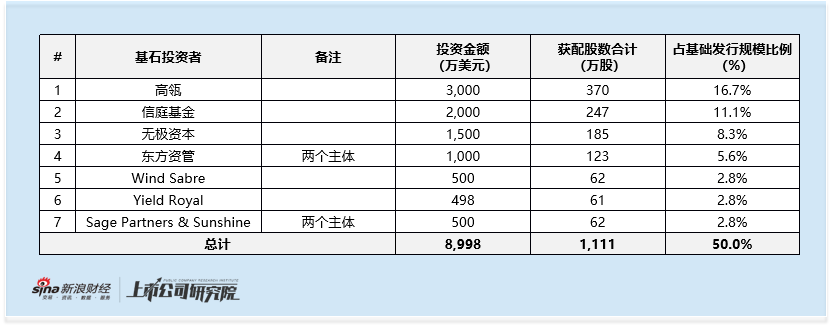
Core Viewpoint - The company, Woan Robotics, is set to launch its global IPO on December 30, 2023, with an offering price range of HKD 63-81 per share, aiming for a base issuance scale of HKD 14-18 billion, potentially increasing to HKD 16.1-20.7 billion if the greenshoe option is fully exercised [1][19]. Group 1: Investment and Market Recognition - Seven cornerstone investors have collectively subscribed nearly USD 9 million, representing 50% of the base issuance scale, highlighting strong capital recognition [2][20]. - Notable investors include Hillhouse Capital (USD 30 million), Dongfang Asset Management (USD 10 million), and a multi-strategy fund from the Middle East (USD 15 million), indicating professional investment confidence in the company's value [2][20]. - The participation of investors with low core business overlap with Woan Robotics suggests a focus on financial investment rather than traditional industrial synergy [2][20]. Group 2: Product Performance and Market Strategy - Woan Robotics has shown strong market performance, with core products including enhanced execution machines and perception and decision-making systems, expected to see price and sales growth in 2025 [4][23]. - The company’s revenue from Japan, Europe, and North America accounted for 95.5%, 95.6%, 95.0%, and 96.6% of total revenue from 2022 to the first half of 2025, with Japan being the largest market [6][25]. - The company relies heavily on Amazon for sales, with revenue from the platform comprising 81.9%, 65.2%, 64.2%, and 67.0% of total revenue during the same period [6][25]. Group 3: Financial Performance - Revenue figures for Woan Robotics from 2022 to 2024 are approximately CNY 270 million, CNY 460 million, and CNY 610 million, reflecting a compound annual growth rate of 49% [5][24]. - The company achieved a net profit of CNY 27.9 million in the first half of 2025 after narrowing losses in previous years [5][24]. Group 4: Product Differentiation and Market Positioning - The company’s products are positioned closer to smart home appliances rather than high-end intelligent robots, with significant overlap in functionality with existing products in the market [7][26]. - The multi-functional home robot, primarily a combination of vacuuming and carrying functions, represents a niche innovation but does not reach the complexity of high-end robotic products [10][28]. - Future high-end products, such as an AI tennis robot and a humanoid household robot, are still in pre-sale or planning stages, lacking market validation [11][29]. Group 5: Industry Challenges and Valuation - Despite short-term performance, the company is expected to incur losses in 2025 due to ongoing investments in core technology and IPO-related expenses [14][32]. - The claim of being the "number one" in global retail sales by revenue is limited by the specific metrics used, which do not account for non-retail channels [15][33]. - The IPO valuation of at least HKD 14 billion corresponds to a price-to-sales ratio of 23x for 2024, significantly higher than comparable companies in the A-share market, which average below 4.5x [17][35].
卧安机器人(06600):IPO申购指南
Guoyuan International· 2025-12-18 12:17
Investment Rating - The report suggests a cautious subscription for the IPO of the company, Wan'an Robotics, with a proposed price range of HKD 63 to HKD 81 per share [1][3]. Core Insights - The company is recognized as a leading global provider of home robotic systems, focusing on markets in Japan, Europe, and North America, and aims to build an ecosystem centered around smart home robotic products [1]. - The global home robotics market is projected to grow from RMB 213.3 billion in 2022 to RMB 257.7 billion in 2024, with a compound annual growth rate (CAGR) of 9.9%, and is expected to reach approximately RMB 436.5 billion by 2029, with a CAGR of 11.1% from 2024 to 2029 [2]. - The company's revenue is forecasted to increase significantly, reaching RMB 274.6 million, RMB 457.3 million, and RMB 609.9 million for the years 2022, 2023, and 2024 respectively, reflecting a CAGR of 49.0% [2]. Summary by Sections IPO Details - The total fundraising amount is estimated at HKD 1.5049 billion based on a mid-price of HKD 73 per share, with a total of 22.2223 million shares available for subscription [1]. - The subscription period is from December 18 to December 23, 2025, with an entry fee of HKD 8,181.69 [1]. Market Potential - The home robotics market is currently in a rapid development phase, with an expected increase in product penetration to 29.9% by 2029 [2][3]. - The company has over 3.5 million registered users on its SwitchBotApp, with more than 10.8 million devices connected [1]. Financial Performance - The company has shown improvement in operational efficiency, with net losses decreasing from RMB -86.98 million in 2022 to RMB -3.07 million in 2024 [2].