户外装

Search documents
纺织服装行业全球观察之vffy2026Q3:北美地区销售回暖,亚太和EMEA地区销售承压
GF SECURITIES· 2026-02-27 14:45
Investment Rating - The report assigns a "Buy" rating for the textile and apparel industry, indicating an expectation of stock performance exceeding the market by more than 10% over the next 12 months [40]. Core Insights - The report highlights that VF Corporation's FY2026Q3 performance shows a revenue of $2.876 billion, with a year-over-year increase of 1.48% after currency adjustments. Net profit reached $301 million, reflecting a significant year-over-year increase of 79.17% after currency adjustments [4]. - The gross margin for FY2026Q3 was reported at 56.62%, up by 0.33 percentage points year-over-year, attributed to higher quality inventory and lower discounts [4]. - The operating profit margin for FY2026Q3 was 10.05%, an increase of 2.08 percentage points year-over-year [4]. - The report notes a mixed performance across product categories and regions, with North America showing a revenue increase of 2%, while the Asia-Pacific and EMEA regions experienced declines of 7% and 4%, respectively [4]. Summary by Category/Brand - **By Product Category**: - Sportswear revenue was $1.926 billion, up 5% year-over-year, while outdoor apparel revenue was $672 million, down 9% year-over-year [4]. - **By Brand**: - Revenue for The North Face was $1.356 billion (up 5%), Vans at $558 million (down 10%), and Timberland at $570 million (up 5%) [4]. Summary by Region - **North America**: Revenue of $1.539 billion, a 2% increase year-over-year [4]. - **Asia-Pacific**: Revenue of $408 million, a 7% decrease year-over-year [4]. - **EMEA**: Revenue of $929 million, a 4% decrease year-over-year [4]. Summary by Channel - **Wholesale Channel**: Revenue of $1.250 billion, a 5% decrease year-over-year [4]. - **Direct-to-Consumer Channel**: Revenue of $1.626 billion, a 1% increase year-over-year [4]. Operational Metrics - Cash conversion days for FY2026Q3 were 108.9 days, a decrease of 10.3 days year-over-year [4]. - Accounts receivable turnover days were 52.4 days, an increase of 4.1 days year-over-year [4]. - Inventory turnover days were approximately 142.8 days, a decrease of 8.6 days year-over-year [4]. Shareholder Returns - The board announced a quarterly dividend of $0.09 per share [4]. Performance Outlook - For FY2026Q4, the company expects revenue growth of 0%-2% and adjusted operating profit between $10 million and $30 million. The gross margin is expected to remain stable or slightly increase compared to the previous year [4].
把消费者当小偷防,优衣库惹怒年轻人
凤凰网财经· 2025-12-22 13:42
Core Viewpoint - The article discusses the negative consumer experience at Uniqlo stores in China, highlighting issues of surveillance and privacy violations, which have led to a backlash against the brand [2][6][18]. Group 1: Consumer Experience and Surveillance - Many consumers have reported feeling uncomfortable due to being closely monitored by staff, with some even being followed and photographed under the suspicion of theft [3][6]. - Internal reports indicate that certain Uniqlo stores have a practice of labeling suspicious customers as "11号" (No. 11), leading to invasive monitoring and sharing of their images among staff [7][10]. - The practice of surveillance is reportedly directed by regional managers, indicating that it is a systematic approach rather than isolated incidents [6][12]. Group 2: Impact on Business Performance - Uniqlo's parent company, Fast Retailing, reported a global revenue increase of 9.6% and a profit increase of 16.4% for the fiscal year 2025, but the Greater China region saw a revenue decline of 4% and a profit drop of 12.5%, marking the first time both metrics fell in this market [21][23]. - The decline in performance is attributed to changing consumer preferences, with younger shoppers seeking more unique and fashionable options rather than basic items, which Uniqlo primarily offers [27][28]. - The company has begun to shift its strategy from aggressive store expansion to focusing on fewer, higher-quality flagship stores that enhance customer experience [29][30]. Group 3: Future Strategies - Uniqlo is attempting to improve its market position by enhancing store experiences and integrating digital services, such as online ordering and in-store pickup [31][32]. - However, regaining consumer trust after the surveillance incident may take considerable time, and the competitive landscape in the Chinese apparel market is intensifying [33][34].


优衣库中国市场遇冷:收入利润双降,年轻人“不买账”
Xin Jing Bao· 2025-10-22 07:33
Core Viewpoint - Uniqlo, once celebrated for its high cost-performance ratio, is facing challenges in the Chinese market due to intensified competition and changing consumer attitudes, leading to a decline in both revenue and profit in its largest overseas market, Greater China [2][4][7]. Financial Performance - Fast Retailing Group reported a record revenue of 3.4 trillion yen for the fiscal year ending August 31, 2025, a 9.6% increase year-on-year, with operating profit at 551.1 billion yen, up 13.6% [3]. - Uniqlo remains the core brand, contributing approximately 2.9 trillion yen, or 86% of total revenue, but reliance on a single brand poses risks [3][4]. - Greater China revenue fell to 650.2 billion yen, a 4% decline, with operating profit down 12.5% to 89.9 billion yen, marking the first instance of simultaneous revenue and profit decline in recent years [4][6]. Regional Performance - Japan's Uniqlo revenue surpassed 1 trillion yen for the first time, growing 10.1%, while international business revenue reached 1.91 trillion yen, up 11.6%, accounting for 56% of total revenue [3][4]. - In contrast, Greater China's revenue accounted for about 19% of total revenue, still higher than North America's 8% and Europe's 10.9% [4][6]. Market Dynamics - The rise of domestic brands and "alternative" products has eroded Uniqlo's price advantage, with consumers increasingly turning to local brands and cheaper alternatives [7][8]. - Uniqlo's pricing strategy is under scrutiny, as consumers express concerns over perceived value, with many opting for alternatives that offer similar styles at lower prices [7][8]. - The company is adjusting its store strategy, reducing the number of outlets in lower-tier cities while focusing on flagship stores in first-tier cities, indicating a shift from expansion to efficiency optimization [8][9]. Future Outlook - Fast Retailing plans to drive growth in the Chinese market through business restructuring and digital transformation, projecting a revenue increase to 3.75 trillion yen for the fiscal year 2026, a 10.3% year-on-year growth [6].

贵的户外品牌,都有了班味儿
3 6 Ke· 2025-08-13 05:27
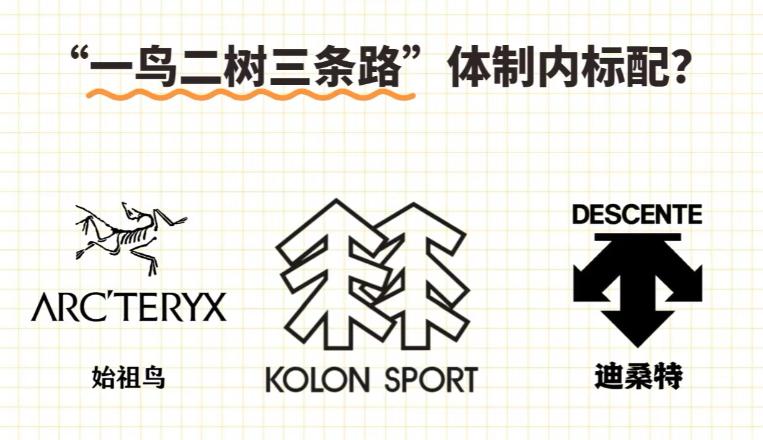
Core Insights - The article discusses the transformation of outdoor clothing into a symbol of workplace culture, referred to as "班味儿" (ban wei er), reflecting the aspirations and struggles of office workers [1][10][17] Group 1: Brand Interpretations - Outdoor brands like Arc'teryx, KOLON, and Descente have been reinterpreted by office workers, with their logos and designs now symbolizing career aspirations and challenges [2][4][12] - The North Face has become popular among young people, with its logo's unique features being used to distinguish genuine products from counterfeits [6][16] - Salomon's logo and brand image have evolved to represent the struggles of middle-class workers, while HOKA is seen as a symbol of hope for upward mobility [8][9][12] Group 2: Economic Implications - The rise of "班味儿" has led to increased demand for outdoor apparel, with brands like Descente and KOLON pricing their products at premium levels, indicating a strong economic backing required to participate in this trend [13][15] - The sales figures for these brands reflect their popularity, with Descente achieving over 10 billion yuan in sales in China by June this year [16] Group 3: Cultural Shifts - The concept of "班味儿" has become a common term among young professionals in major cities, highlighting a shared sense of overwork and fatigue in the workplace [10][12] - The article notes a decline in workplace fashion standards, with a shift from aspirational dressing to more casual and comfortable attire, reflecting the changing attitudes of workers [12][17] - The phenomenon illustrates a broader cultural shift where outdoor clothing, originally associated with freedom and adventure, has become intertwined with the pressures of corporate life [17][18]