
手机通信套餐

Search documents
老用户想换手机套餐有点难
Xin Lang Cai Jing· 2025-12-21 07:20
Core Viewpoint - Despite years of promoting "speed increase and fee reduction" in mobile communication, consumers still face obstacles in obtaining satisfactory plans, including rising prices, unilateral cancellation of low-cost plans, and confusing binding sales terms [1] Group 1: Consumer Experience - Consumers find it easy to sign up for new plans but face significant challenges when trying to switch to more affordable options, often encountering penalties for early termination [2][3] - Many consumers are unaware of the binding contracts they sign, which often include hidden fees and long-term commitments that complicate their ability to change plans [4][5] Group 2: Sales Tactics - Telecom operators employ tactics such as "contract bundling" to retain high-paying customers, often misleading consumers about the true nature of promotional offers [5][6] - There are reports of deceptive practices targeting vulnerable groups, such as the elderly, where sales representatives emphasize free devices while downplaying the associated high-cost plans and long-term contracts [5][6] Group 3: Regulatory Environment - The Consumer Rights Protection Law and telecommunications regulations affirm consumers' rights to choose services freely, yet operators often prioritize high-value plans for existing customers over new user incentives [6][7] - Experts suggest that regulatory bodies should enhance oversight and create more detailed guidelines to curb misleading sales practices and ensure consumer rights are upheld [7]
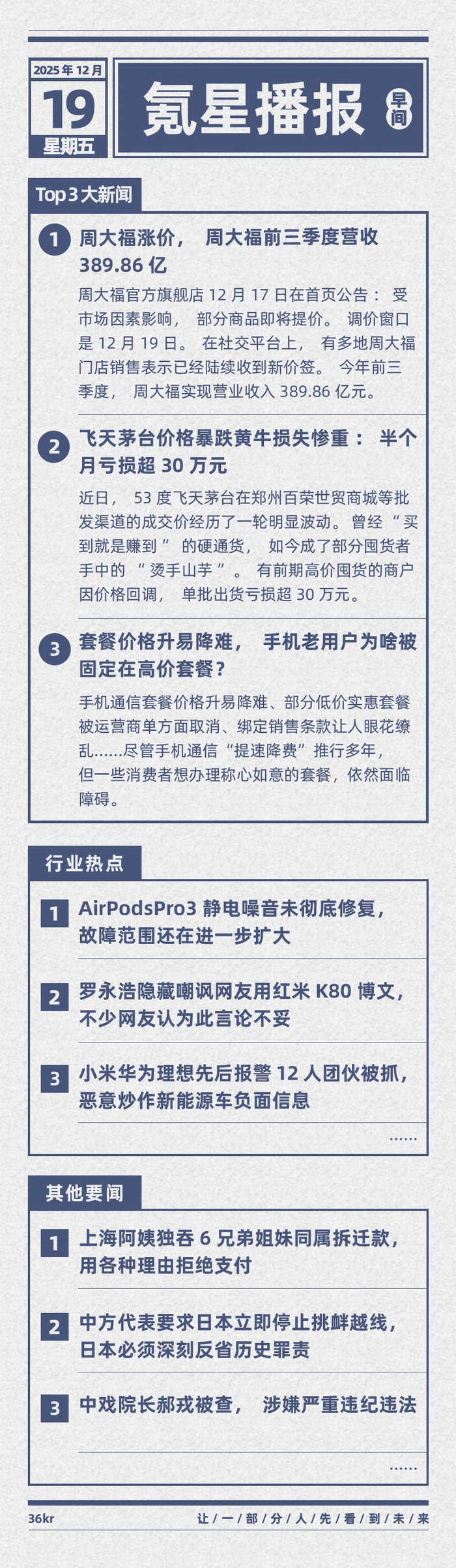
周大福营收389.86亿、茅台价跌黄牛亏损30万、手机套餐价升难降
3 6 Ke· 2025-12-19 05:11
Group 1 - Chow Tai Fook announced a price increase for some products, with a revenue of 38.986 billion yuan for the first three quarters of the year [5] - The price of Feitian Moutai has dropped significantly, causing losses exceeding 300,000 yuan for some speculators who had previously hoarded the product [5] - Mobile communication package prices are difficult to lower, with many consumers facing obstacles in finding satisfactory plans despite years of "speeding up and reducing fees" initiatives [5] Group 2 - AirPods Pro 3 continues to experience unresolved static noise issues, with the scope of the problem expanding [6] - A group of 12 individuals has been arrested for maliciously promoting negative information about new energy vehicles, involving companies like Xiaomi and Huawei [6] - The price of platinum jewelry has surpassed 800 yuan, indicating a rising trend in precious metal prices [4]



资费升易降难、合约暗藏玄机,手机套餐少些套路吧
Ren Min Ri Bao· 2025-12-19 02:33
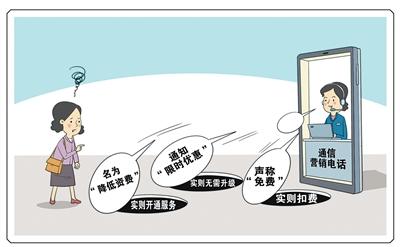
Core Viewpoint - The article highlights the difficulties consumers face when trying to change their mobile communication plans, emphasizing that while it is easy to sign up for new packages, switching to more affordable options is fraught with obstacles such as high penalties and restrictive terms [2][6][12]. Group 1: Consumer Experiences - Consumers report that changing to a lower-priced mobile plan often requires paying a penalty, which was not clearly communicated at the time of signing up for the original plan [2][7]. - Many consumers, like Mr. Huang and Mr. Wang, find themselves stuck in high-cost plans due to the operators' policies that favor new users and complicate the process for existing customers [3][5][10]. - There is a prevalent issue of misleading sales practices, where consumers are not adequately informed about the terms and conditions, leading to unexpected costs and dissatisfaction [8][9]. Group 2: Industry Practices - The article discusses the common practice among telecom operators of binding customers to long-term contracts with high exit fees, effectively locking them into expensive plans [7][9]. - Operators often employ tactics such as offering "free" devices or promotional plans that come with hidden costs, particularly targeting vulnerable groups like the elderly [9][11]. - The industry is criticized for prioritizing high-value plans for existing customers while offering better deals to new users, creating a disparity that affects customer loyalty and satisfaction [12][13]. Group 3: Regulatory and Consumer Rights - The article references consumer protection laws that affirm the right to choose services freely, indicating that telecom operators must not impose restrictions on users [12][14]. - Regulatory bodies are beginning to take action to address these issues, including initiatives to simplify plan offerings and ensure that changes requested by consumers are processed promptly [13][14]. - Experts suggest that there is a need for stricter regulations and clearer communication from operators to protect consumer rights and enhance transparency in service offerings [14][15].
资费升易降难、合约暗藏玄机……手机套餐套路调查
Ren Min Ri Bao· 2025-12-18 23:17
Core Viewpoint - The article highlights the difficulties consumers face when trying to change their mobile communication plans, despite the promotion of "speeding up and reducing costs" in the telecommunications industry. Consumers often encounter obstacles such as high cancellation fees, misleading sales practices, and preferential treatment for new users over existing ones [1][11][12]. Group 1: Consumer Experiences - Consumers like Mr. Huang and Mr. Wang express frustration over the inability to switch to lower-priced plans without incurring additional costs or penalties [1][2]. - Many consumers report being locked into high-priced contracts due to unclear terms and conditions presented at the time of signing [6][8]. - The article notes that customer service representatives often offer limited options for existing users, pushing them towards higher-priced plans or requiring them to open new accounts to access better deals [2][4][9]. Group 2: Sales Practices and Contractual Obligations - The practice of "contract bundling" is identified as a common tactic used by telecom operators to retain high-spending customers, often leading to increased costs for consumers who wish to downgrade their plans [5][8]. - Misleading promotions, such as "free phones" or "exclusive offers," often come with hidden costs and long-term commitments that are not clearly communicated to consumers [8][10]. - The article emphasizes that many consumers are unaware of the penalties associated with early contract termination, which can significantly impact their decision-making [6][9]. Group 3: Regulatory and Industry Response - The article discusses the legal framework protecting consumer rights, including the Consumer Rights Protection Law and the Telecommunications Regulations, which mandate transparency and fair practices from service providers [11][13]. - Regulatory bodies are taking steps to address these issues, including initiatives to simplify service offerings and ensure that consumers are fully informed before making decisions [11][12]. - Experts suggest that ongoing regulatory oversight and consumer education are essential to combat deceptive practices and enhance consumer rights in the telecommunications sector [13][14].