抹茶粉

Search documents
到底是谁还在花钱?
虎嗅APP· 2026-01-13 10:11
Core Insights - The growth engine of China's consumer market is shifting from traditional first-tier cities to emerging cities, indicating a significant change in consumption patterns [4][17]. - Emerging cities like Changsha and Guiyang are leading new consumption trends, characterized by a willingness to spend and a focus on emotional value in purchases [9][19]. Group 1: Emerging Consumption Trends - Changsha has become a leader in new consumption trends, with unique entertainment options like comedy clubs and tea houses attracting consumers [11][12]. - Guiyang ranks second nationally in the willingness to spend on self-pleasure, with a thriving coffee culture despite not being a coffee-producing region [13]. - The 2025 Box District Consumption Power Report highlights surprising consumption behaviors in cities like Yibin and Bengbu, showcasing a desire for quality and novelty in food [14][15]. Group 2: Emotional and Health-Oriented Consumption - Emotional value is becoming a key driver of consumer behavior, with reports indicating that emotional experiences are now central to purchasing decisions [19][20]. - The emotional consumption market is projected to grow significantly, reaching 2.72 trillion yuan in 2025, reflecting a shift towards seeking self-value and emotional fulfillment [20]. - Health-conscious consumption is also on the rise, with 71% of consumers actively researching product ingredients before purchase, indicating a proactive approach to dietary health [23][25]. Group 3: Market Dynamics and Opportunities - The retail landscape is evolving, with brands adapting to the changing preferences of consumers in emerging cities, which are becoming the core growth engines for fast-moving consumer goods [36][38]. - Companies like Hema are expanding into emerging cities, focusing on high-end products to meet the growing demand for quality among local consumers [38][42]. - The success of innovative retail models and supply chain strategies is crucial for companies aiming to tap into the vast consumer base in these regions, highlighting the importance of addressing real consumer needs [43].


当一线不再独占消费力,新兴城市如何点亮中国消费地图?
Sou Hu Cai Jing· 2026-01-05 06:27
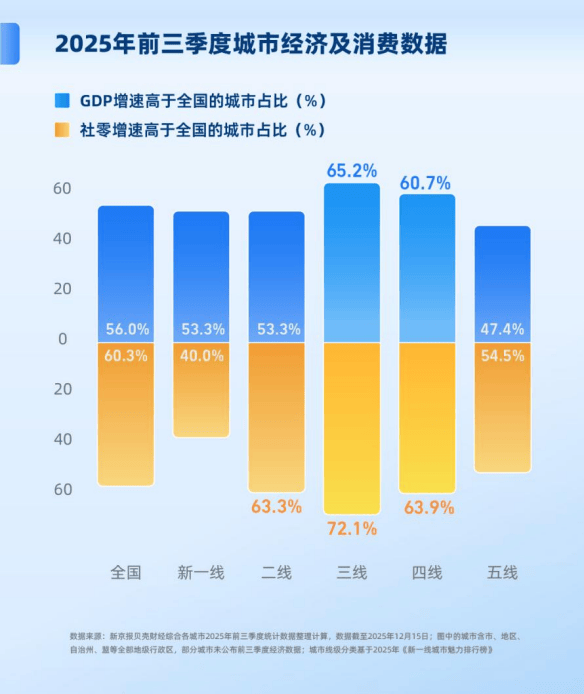
Core Insights - Consumption is a crucial component of domestic demand and a key support for the economic recovery in China, with a reported year-on-year growth of 4% in retail sales from January to November 2025, surpassing the growth rates of the previous year [1] - The Chinese government has prioritized boosting consumption as a key economic task, with recent policies aimed at enhancing financial support for consumption across various sectors [1] - Emerging cities are becoming the main drivers of consumption growth, with three to five-tier cities contributing 80% of the incremental growth in the fast-moving consumer goods market [3][4] Group 1: Economic and Consumption Trends - The macroeconomic data indicates a structural shift in China's economic growth dynamics, with emerging cities increasingly driving economic and consumption growth [4] - By December 15, 2025, 55.7% of non-first-tier cities reported GDP growth rates exceeding the national average, with significant contributions from third and fourth-tier cities [4] - Among 306 non-first-tier cities, 98.7% experienced positive growth in social retail sales, with 72.1% of third-tier cities outperforming the national average [4][6] Group 2: Consumer Behavior and Market Dynamics - The consumer market in non-first-tier cities is becoming increasingly competitive, with brands expanding their presence in these regions, leading to a shift in consumption patterns [9][10] - The rise of lifestyle brands and high-end products in emerging cities reflects a growing demand for quality and variety among consumers [10][11] - The trend of cross-city shopping is emerging, with residents of smaller cities traveling to nearby urban centers for shopping, indicating a blurring of consumption boundaries [30][32] Group 3: Retail Innovations and Supply Chain Developments - New retail models, such as Hema's integration of local products into urban consumption, are transforming traditional supply chains and enhancing consumer access to diverse products [18][20] - The "Hema Village" model is facilitating the entry of local agricultural products into urban markets, creating new consumption trends and enhancing local economies [22][24] - The performance of Hema stores in various emerging cities demonstrates that consumer enthusiasm is not strictly correlated with city tier levels, highlighting the potential for growth in these markets [26][30] Group 4: Lifestyle Changes and Consumption Patterns - The lifestyle preferences of consumers in emerging cities are evolving, with a focus on convenience and emotional satisfaction in shopping experiences [30][33] - Health-conscious consumption is on the rise, with an increasing demand for products that emphasize quality ingredients and health benefits [33][35] - The introduction of high-quality retail spaces is extending shopping hours and enhancing the overall consumer experience, contributing to a more vibrant night-time economy [36]
从“高颜值”到高价值 浙江莲都描绘美丽健康产业新图景
Zhong Guo Xin Wen Wang· 2025-12-30 10:37
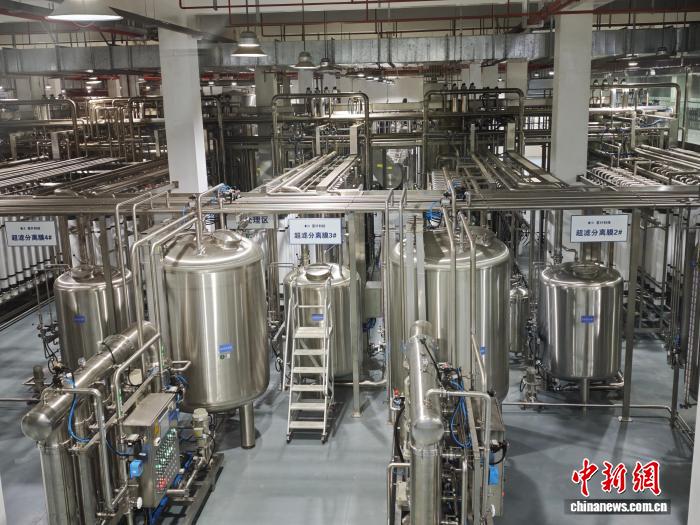
Group 1 - The establishment of the Lishui Tongji Laboratory marks a significant breakthrough in building a high-level scientific and technological innovation platform in Lishui City, focusing on the beautiful health industry through industry analysis, technology research and development, achievement transformation, and talent attraction [1] - Lishui's ecological advantages, being one of the top ten regions in China for both water and air quality, are being leveraged to create new economic growth points, particularly in the beautiful health sector [1] - The local government has introduced policies and established a multi-level fund cooperation platform to support the development of the beautiful health industry, with a total investment of 15 billion yuan in 39 major projects [1] Group 2 - The "Ecological Naies Intelligent Factory and Industrial Core Area Project," with a total investment of 3.3 billion yuan, is accelerating its progress, aiming to create a complete beautiful health industry chain from planting to production [2] - Naies Group's transformation from a mature daily chemical enterprise to an explorer in the beautiful health industry reflects the broader industrial transformation in Lishui, attracting high-quality partners to the region [2] - Zhejiang Mingye Plant Technology Co., Ltd. is a pilot "future factory" in Lishui, utilizing advanced technology to produce high-value health products, supported by the region's substantial tea cultivation area of nearly 600,000 acres [4] Group 3 - The successful registration of a new plant extract from the willows by Naies Group represents a breakthrough in the cosmetics sector for Lishui, with strategic partnerships formed with leading beauty companies to develop local plant-based raw materials [4] - The industrial output value of the beautiful health sector in Lishui has reached 8.94 billion yuan, demonstrating the effective transformation of ecological resources into economic value [4] - Lishui is evolving into a new highland for the beautiful health industry, showcasing a model of high-quality development that integrates industry growth, ecological beauty, and improved livelihoods for local residents [4]
“寸土生金”,一场都市现代农业突围战
Xin Lang Cai Jing· 2025-12-28 22:35
Core Viewpoint - Nanjing's agricultural sector demonstrates significant advancements through innovative practices and technology, achieving record yields and integrating various agricultural industries to enhance overall productivity and value [1][4][10]. Group 1: Agricultural Productivity - The Liyou Agricultural Machinery Cooperative in Nanjing achieved a record yield of 975.8 kg per mu, marking a 20% increase in per mu benefits [1]. - Nanjing's agricultural area and total output have consistently led the southern Jiangsu region, with a projected annual growth rate of over 10% during the 14th Five-Year Plan period [1][4]. - The contribution rate of agricultural technology progress in Nanjing exceeds 74%, significantly higher than the national average [4]. Group 2: Technological Innovation - Nanjing has shifted from traditional farming practices to a technology-driven approach, utilizing hybrid rice varieties and precision farming techniques [2][3]. - A large-scale single production enhancement initiative has been launched, involving expert teams providing comprehensive services across 450,000 mu of farmland [3][4]. - The city has developed a robust agricultural technology application support system, enhancing the integration of research and practical application [3][10]. Group 3: Industry Integration - Nanjing is moving from a raw material selling model to a value-added chain approach, integrating production, processing, and services [6][7]. - The city has identified eight key agricultural industries, including high-quality rice and green vegetables, to drive economic growth [7][10]. - Innovative practices such as shared gardens and urban agriculture have been implemented, generating significant local income [8][9]. Group 4: Branding and Market Access - Nanjing has developed a public brand strategy, "Food Gift Qinhuai," to unify and promote local agricultural products, resulting in sales of approximately 1.85 billion yuan over five years [11][12]. - The city actively facilitates market access for farmers through direct connections with supermarkets and e-commerce platforms [12]. - Nanjing's agricultural products are expanding into international markets, enhancing brand recognition and value [12].
贵州土特产,成了打工人的“咖啡新替”
东京烘焙职业人· 2025-12-15 08:33
Core Viewpoint - The rise of matcha products in the beverage market is driven by changing consumer preferences towards more authentic, healthier, and complex flavors, with a notable shift towards bitter and concentrated matcha varieties [5][11][24]. Group 1: Market Trends - Matcha has gained significant popularity in 2024, with 50 leading tea brands launching 73 new matcha products, laying the groundwork for its explosive growth in 2025 [8]. - The perception of matcha has shifted from being considered too bitter to being embraced as a core selling point, with brands promoting the bitterness as a reflection of the tea's authentic flavor [11]. - The introduction of "thousand-mesh" matcha, which is finer and provides a more refined experience, has become prevalent, with many brands now sourcing matcha from domestic regions like Zhejiang and Guizhou [14][28]. Group 2: Consumer Behavior - Consumers are increasingly seeking genuine flavors and healthier options, moving away from overly sweet beverages to those that highlight the natural taste of ingredients [17][24]. - Matcha is being recognized not only for its flavor but also for its health benefits, being classified as a "superfood" rich in antioxidants, making it a preferred choice for those looking for a lighter beverage compared to coffee [19][20]. - The growing trend of DIY matcha preparation at home or in the office reflects a shift in consumer behavior, with 25.83% of consumers purchasing pure matcha drinks and 23.14% opting for matcha for home preparation [22]. Group 3: Supply Chain and Production - China has become the largest producer of matcha globally, with production reaching 3,916 tons in 2020, accounting for over 55% of the world's supply [26][27]. - Japan is facing a supply crisis due to adverse weather conditions affecting the production of key matcha ingredients, leading to increased prices and limited availability [28]. - The rise of domestic matcha production, particularly from regions like Zhejiang and Guizhou, is meeting the growing global demand, with Guizhou's matcha production exceeding 1,200 tons in 2024 [29][30]. Group 4: Cultural and Brand Development - The resurgence of matcha in China is seen as a return to its roots, with efforts underway to build a unique Chinese matcha culture and brand identity [34][35]. - Local brands are beginning to incorporate traditional Chinese tea practices to differentiate themselves from Japanese matcha, aiming to create a distinct cultural narrative around Chinese matcha [36].

巨星传奇(06683)上涨3.24%,报13.39元/股
Jin Rong Jie· 2025-08-07 05:51
Group 1 - The core business of the company includes IP creation and operation as well as new retail, with a focus on media content creation, event planning, and celebrity IP management services [1] - The company has a total fan base of 200 million for its celebrity IP portfolio, and its health management products, including Magic Coffee and Matcha Powder, maintain a leading market share [1] - As of the 2024 annual report, the company reported total revenue of 584 million yuan and a net profit of 56.054 million yuan [2] Group 2 - On August 5, the company completed a placement of 37.52 million shares at a price of 9.13 HKD per share, raising a net amount of 324.1 million HKD [3]
巨星传奇2024年收入5.84亿元 IP创造及运营业务增长显著
Zheng Quan Shi Bao Wang· 2025-04-01 04:27
Core Insights - The company reported a revenue of RMB 584 million for the year ending December 31, 2024, representing a year-on-year increase of approximately 35.8% [1] - The two main business segments, IP creation and operation, and new retail, contributed 53.8% and 46.2% to total revenue, respectively [1] - Gross profit reached RMB 327 million, up about 18.4% year-on-year, while net profit was RMB 50.2 million, reflecting a year-on-year increase of 21.3% [1] IP Creation and Operation - The revenue from IP creation and operation surpassed new retail for the first time, generating RMB 314 million in the fiscal year 2024, a growth of approximately 65.1% from RMB 190 million in fiscal year 2023 [2] - The significant growth in this segment was driven by the successful airing of two major television programs, including the second season of "Travel Diary" featuring Jay Chou, which garnered 392 trending topics and over 6 billion views on Weibo [2] - Another program, "Happy Talk," hosted by Yu Chengqing, maintained the highest ratings among similar shows during its broadcast period, generating RMB 168 million in revenue from these programs [2] New Retail Performance - The new retail segment continued to perform strongly, recording revenue of approximately RMB 270 million, a year-on-year increase of about 12.5% [4] - This segment focuses on the development and sale of health management and skincare products, utilizing various distribution channels [4] - The flagship product, Magic Coffee, has been well-received by consumers, ranking first in the Chinese bulletproof beverage market from 2020 to 2024 based on total sales [4]
中日抹茶之争,贵州先赢一城
吴晓波频道· 2025-03-21 18:48
Core Viewpoint - The article discusses the rising competition between Chinese and Japanese matcha industries, highlighting China's rapid growth in matcha production and the challenges faced by Japan in meeting increasing global demand [4][6][22]. Group 1: Market Dynamics - In 2024, Japan's green tea export value reached $240 million, a 25% increase year-on-year, but faced supply shortages [4]. - By 2025, China's matcha production is expected to exceed 5,000 tons, making it the largest producer globally, with Guizhou accounting for a quarter of this output [4][6]. - The global matcha market size reached $3.3 billion in 2024, projected to grow to $7 billion by 2029, with an annual growth rate of nearly 10% [13]. Group 2: Health and Cultural Trends - Matcha's popularity surged due to its health benefits, containing polyphenols, amino acids, and antioxidants, appealing to younger consumers seeking guilt-free indulgence [11][13]. - The cultural significance of matcha has evolved, with consumers choosing it not just for health but as a lifestyle statement reflecting sophistication and sustainability [13][14]. Group 3: Challenges in Japan - Japan faces a supply chain crisis due to declining domestic demand for traditional tea, limited tea garden area, and labor shortages, leading to a significant drop in matcha production [15][16][20]. - The aging population of tea farmers has resulted in a decrease from 53,000 farmers in 2000 to 12,000 in 2020, exacerbating the production challenges [16]. Group 4: China's Competitive Edge - China has rapidly developed its matcha industry, with Zhejiang being the largest production province, and Guizhou emerging as a key player with high-quality production and significant export volumes [26]. - The Chinese market's ability to quickly adapt to supply and demand changes, along with its vast green tea resources, positions it favorably against Japan's traditional production constraints [26]. Group 5: Future Outlook - The competition between China and Japan in the matcha market is expected to evolve into a model of "China-Japan technology cooperation + global capacity transfer," focusing on quality and cultural value [33]. - China's matcha industry is supported by government initiatives and significant investment, with over $5 billion in industry financing expected in 2024 [29][30].