担保债务凭证(CDO)

Search documents
中金:不是选择,是必然——政治经济学眼中的美国政策
中金点睛· 2026-02-08 23:37
Core Viewpoint - Trump's unconventional policies are a response to escalating domestic social contradictions in the U.S., rooted in long-term distribution imbalances caused by neoliberalism since the 1980s [2][4]. Group 1: Domestic Policies - Trump's administration has implemented measures to cut government spending, such as the "Great Beautiful Act," which reduces welfare spending and increases eligibility requirements [6]. - The establishment of the DOGE Efficiency Department aims to eliminate government redundancies and promote federal layoffs [5]. - The administration has challenged the independence of the Federal Reserve and proposed a cap on credit card interest rates at 10% to lower consumer loan financing costs [5][6]. - Measures to limit institutional investors from purchasing single-family homes have been introduced to address housing affordability [5][6]. Group 2: Foreign Policies - Trump's foreign strategy includes imposing tariffs on a wide range of imports to protect domestic industries and reduce living costs [5][6]. - The administration has called for an end to the Russia-Ukraine conflict and reduced international aid commitments [5][6]. - There is a focus on increasing military spending and pressuring allies to share defense costs [5][6]. Group 3: Economic Implications - The policies aim to alleviate internal contradictions but are unlikely to resolve them fundamentally, reflecting a tendency for short-term gains at low costs [4][5]. - The proposed changes in monetary policy, such as the nomination of Warsh to the Federal Reserve, could lead to significant market volatility [4][5]. - The ongoing financialization of the U.S. economy has led to a widening gap between corporate profits and worker wages, with the share of labor income remaining stable while corporate income has increased [9][11]. Group 4: Structural Challenges - The U.S. faces significant structural challenges, including income inequality, healthcare affordability, and educational disparities, which have been exacerbated by the pandemic [7][39]. - The political landscape shows increasing polarization regarding economic issues, making it difficult to implement necessary reforms [56][57]. - The return of neoclassical economics has contributed to the exacerbation of social contradictions, with a reliance on Keynesian policies without substantial structural reforms [60][61].

超越2008年危机:全球影子银行超1.7万亿!普通投资者如何自保?
Sou Hu Cai Jing· 2025-10-28 18:50
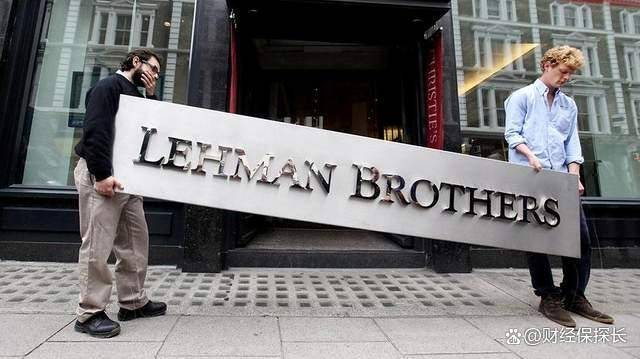
Core Viewpoint - A $1.7 trillion "black box market" of private credit is expanding, posing risks potentially greater than those seen during the 2008 Lehman Brothers crisis [1][3]. Group 1: Market Overview - The private credit market is becoming a significant risk hub within the global financial system, characterized by a lack of transparency and regulatory oversight [3][10]. - The market has grown at an alarming rate, exceeding 20% annually, with a current size of approximately $1.6 trillion [7][9]. Group 2: Risk Factors - Rising interest rates are creating a lagging effect, with many companies facing interest burdens that have increased by over 200% due to floating rates [10][11]. - There is a liquidity illusion in the market, where credit products are rarely traded, leading to potential price drops of 40% or more during market stress [11]. - The devaluation of collateral, such as corporate equity or real estate, poses a significant risk, especially if combined with rising rates and liquidity issues [11]. Group 3: Systemic Risk Concerns - The concentration of risk is notable, with the top ten private credit managers controlling over 80% of the market, making the system vulnerable to a domino effect from any single institution's failure [11]. - Commercial banks have deepened their involvement in the private credit market, increasing systemic risk as highlighted by stress tests from the Federal Reserve [11]. - There is a lack of effective resolution mechanisms for shadow banking institutions, which could complicate responses to a potential crisis [11]. Group 4: Warning Signals - The spread on CCC-rated CLOs has widened significantly, indicating growing concerns about default risks [12]. - There has been a historical high in early withdrawals from U.S. retirement accounts, suggesting individuals may be preparing for economic downturns [12]. - Bankruptcy filings among U.S. companies have increased by 61% year-over-year, with many being significant borrowers in the private credit space [12].
“真正的投资逻辑是非共识”丨和高资本、昆仲资本荐书荐影
Zheng Quan Shi Bao Wang· 2025-10-08 06:08
Core Insights - The essence of successful investing lies in accurately assessing profitability, which is fundamentally tied to the depth of understanding [1] - Engaging with literature allows investors to expand their cognitive horizons and identify enduring truths amidst change [1] Group 1: Recommended Literature - "The Possible Futures of the Next 10,000 Days" by Kevin Kelly is recommended for its insights into future societal structures, interpersonal relationships, and personal growth, beyond just technological advancements [2] - The book encourages readers to actively shape the future rather than passively accept changes, providing a comprehensive view of potential future scenarios [2] Group 2: Film Recommendation - The film "The Big Short" illustrates how a few individuals foresaw the 2008 financial crisis and profited from it by shorting the housing market, highlighting the concept of non-consensus investing [3] - The film's narrative centers on the subprime mortgage crisis, showcasing how flawed financial products were misrated and sold, leading to a market collapse [3] - Key investment lessons from the film include the importance of independent judgment that contrasts with market consensus, the necessity of thorough research to support non-consensus views, and the psychological challenges faced before being proven right [3]
产业链大逃亡?6.6万亿的豪赌引爆美国金融,世界经济差点遭拖垮
Sou Hu Cai Jing· 2025-10-01 10:43
Core Insights - AIG, once recognized as one of the healthiest companies globally, faced a rapid collapse that posed a significant threat to the global economy [1] - The crisis began on September 15, 2008, known as "Black Monday," when AIG's stock plummeted by 60% and it faced a liquidity crisis [3][5] - AIG's downfall was primarily due to its uncontrolled business expansion and heavy involvement in derivatives, leading to massive losses during the subprime mortgage crisis [7][9] Company Overview - AIG originated in Shanghai and became the largest insurance company in the U.S., with total assets of $1.2 trillion and operations in 140 countries before 2008 [1] - The company had over 11.5 million employees and was integral to the U.S. financial system, with approximately 106 million Americans relying on its insurance services [5] Crisis Development - The crisis was triggered by the bankruptcy of Lehman Brothers, which led to AIG's stock collapse and a subsequent request for a $30 billion emergency loan from the New York Federal Reserve [3][5] - AIG's risk exposure was estimated at $3 trillion, significantly higher than that of Lehman Brothers and Merrill Lynch combined [5] Government Response - Timothy Geithner, then President of the New York Federal Reserve, played a crucial role in advocating for a government bailout of AIG due to its interconnectedness with global financial institutions [5][9] - On September 15, 2008, Geithner proposed an $85 billion loan to AIG, which was initially met with skepticism but ultimately approved [9] Long-term Implications - The financial crisis highlighted the risks associated with large financial institutions and the complexities of government intervention in the financial markets [11][17] - The ongoing discussions among former Treasury officials emphasize the importance of maintaining the independence of the Federal Reserve and the potential risks associated with U.S. government debt [11][13]