
换电机器人

Search documents
感悟发展的未来感
Ren Min Ri Bao· 2026-01-05 03:15
Group 1 - The core viewpoint emphasizes the integration of technology and policy in enhancing the quality of life in China, showcasing how effective policies lead to tangible benefits for citizens [1][2] - The rapid development of technology in China is highlighted, including advancements in high-speed rail, mobile payments, and smart city initiatives, which collectively create a vibrant modern landscape [2][3] - China's strategic planning and execution capabilities are recognized, with a focus on how these attributes contribute to national strength and citizen welfare, aligning with the goals of the 14th Five-Year Plan [2][3] Group 2 - The article discusses China's unique approach to governance, where long-term goals and strategies are transparently communicated to society, fostering confidence in future development [3][4] - The concept of Chinese-style modernization is presented as a blend of traditional values and contemporary innovation, emphasizing the importance of cultural heritage in shaping the future [3][4] - The narrative concludes with a vision of China's future not only as a national endeavor but as a contribution to global progress, combining ambitious goals with practical efforts [4]
感悟发展的未来感(评论员观察)
Ren Min Ri Bao· 2026-01-04 22:25
Group 1 - The core viewpoint emphasizes the combination of ambitious goals and pragmatic work, instilling confidence in future development and providing certainty in an uncertain world [1][4] - The integration of technology in healthcare, such as the effective use of information technology in medical insurance and data resources, enhances the accessibility and affordability of medical services, leading to improved public satisfaction [1][2] - China's rapid development is characterized by advanced technologies like high-speed rail, mobile payments, and smart city initiatives, which have transformed from concepts into reality, showcasing a vibrant modern landscape [2][3] Group 2 - The strategic planning and execution capabilities of China are highlighted, with a focus on long-term goals and the ability to communicate these effectively to society and the world [3][4] - The concept of Chinese modernization is rooted in a rich historical context, emphasizing continuity and innovation without a complete break from tradition, which adds depth to its modernization efforts [3][4] - The development plans, such as the "14th Five-Year Plan," are designed to align national strategies with business opportunities and public welfare, ensuring that both enterprises and individuals can find their place within the broader vision [2][3]
美记者:在中国农村,我看到震撼一幕
Guan Cha Zhe Wang· 2025-12-19 10:57
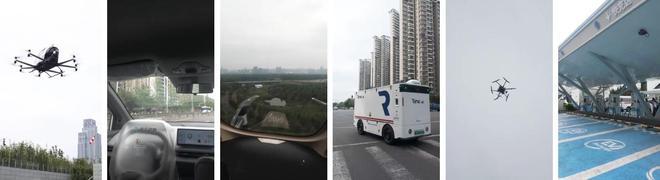
Core Insights - China is making significant advancements in autonomous technologies, including self-driving delivery vehicles, flying cars, and battery-swapping robots, which are being rapidly deployed in urban settings [1][12] - The city of Hefei is at the forefront of low-altitude economy and electric vertical takeoff and landing (eVTOL) aircraft, transitioning from testing to commercial operations [3][12] - The integration of advanced technologies into daily life in China is creating a competitive edge in future transportation and urban management [1][12] Autonomous Vehicles and Delivery Systems - Hefei has implemented small autonomous delivery vehicles capable of carrying 300 to 500 packages, which navigate complex urban traffic using advanced sensors and software [9] - The use of autonomous delivery vehicles is expanding into rural areas, demonstrating their versatility and adaptability in various environments [9] - The city has also introduced drone delivery services for urgent medical supplies, showcasing the technology's potential to enhance public welfare [9] Electric Vehicles and Charging Infrastructure - China has established 18.6 million public charging stations, effectively addressing range anxiety for electric vehicle users [5] - New electric vehicle models can achieve a fast charge in just 5 minutes, reflecting the advanced technology in Chinese electric cars [5] - Automated battery-swapping stations are becoming common, allowing for battery replacements in just three minutes, further enhancing the convenience of electric vehicle usage [6] Urban Transportation Innovations - Hefei's "air taxis" are now in commercial operation, with a flight duration of up to 25 minutes and a speed of approximately 128.75 km/h [3] - The integration of autonomous driving technology in public transportation, including subways and buses, is being actively tested across various cities in China [12] - High-speed rail services are also incorporating innovative features, such as in-seat ordering for food and beverages, enhancing passenger experience [12] Overall Technological Landscape - The rapid deployment of various autonomous technologies in China reflects a strong commitment to innovation and practical application, contrasting with the more cautious approach seen in many Western countries [12] - The ongoing real-world testing of these technologies in cities like Hefei is generating valuable operational experience, which is crucial for future improvements and scalability [12] - China's ambition extends beyond domestic applications, aiming to lead in clean energy technologies and expand their market presence globally [12]

双杰电气:公司建设重卡换电站中的换电机器人由公司自行研制
Zheng Quan Ri Bao Wang· 2025-08-14 11:13
Core Viewpoint - The company, Shuangjie Electric (300444), is developing self-researched battery swapping robots for heavy-duty trucks, which can shorten battery swapping time and enhance operational efficiency for customers in high-frequency transportation scenarios such as logistics, mining, and ports [1] Group 1: Company Developments - The battery swapping robots are designed and manufactured in-house by the company [1] - The robots are aimed at improving efficiency in battery swapping processes [1] Group 2: Market Trends - There is a growing demand for efficient and automated battery swapping equipment due to the rapid adoption of new energy heavy-duty trucks [1] - Supportive policies for battery swapping models are contributing to the increasing market demand [1]

