支付宝车载助手

Search documents
多家车企引入AI智能体,行车中能点餐
2 1 Shi Ji Jing Ji Bao Dao· 2025-09-25 08:03
Core Viewpoint - Alibaba Group's CEO emphasizes that AI will be the next generation operating system, with aspirations towards Artificial Superintelligence (ASI) [1] Group 1: AI in Automotive Industry - The automotive industry is increasingly integrating AI agents into smart cockpits, with companies like Li Auto, BYD, and NIO leading the charge [1][2] - Li Auto's AI agent can perform tasks such as ordering food through voice commands, showcasing the practical applications of AI in vehicles [1] - The goal is to create a closed-loop system for users that connects "people, cars, and life" through the vehicle's AI capabilities [2] Group 2: Functionality of AI Agents - AI agents in vehicles primarily assist with navigation, food ordering, and ride-hailing, but require external ecosystem connectivity to function effectively [3] - Li Auto's AI agent operates on two frameworks: CUA (Cockpit Using Agent) and MCP/A2A (Multi-Channel Processing/Agent-to-Agent), allowing for task execution through third-party applications [3][5] - CUA is the prevalent technical route, enabling multi-modal understanding and task execution via apps like Alipay [3] Group 3: Challenges and Solutions - CUA faces limitations, particularly in complex tasks where accuracy is low, with only about 30% success in multi-step tasks [4] - Li Auto proposes a solution by breaking down tasks into manageable steps, improving prediction accuracy for user actions [4] Group 4: Future Developments - The vision for Li Auto's AI agent includes "full memory" and "environmental perception," allowing the agent to remember user actions and recognize environmental cues [7] - Full memory encompasses user interactions and relationships, enabling the AI to proactively assist rather than just react [7] - Environmental perception is crucial for the AI to interact with real-world data, enhancing its ability to perform tasks effectively [8]


多家车企引入AI智能体,行车中能点餐
21世纪经济报道· 2025-09-25 07:58
Core Viewpoint - Alibaba's CEO emphasizes that AI will be the next generation operating system, with a focus on advancing towards Artificial Superintelligence (ASI) [1] Group 1: AI in Automotive Industry - Several automotive companies, including Li Auto, BYD, and NIO, have introduced AI agents into their smart cockpits, allowing drivers to perform tasks like ordering food through voice commands [1] - Li Auto's AI agent aims to create a closed loop for users to interact with their vehicle and daily life, enhancing user experience beyond simple tasks [2] Group 2: Functionality of AI Agents - The initial applications of automotive AI agents include navigation, food ordering, and ride-hailing, primarily assisting daily consumer activities [4] - Li Auto's AI agent operates on two frameworks: CUA (Cockpit Using Agent) and MCP/A2A (Multi-Channel Processing/Agent-to-Agent), with CUA being the more common approach among automakers [4][7] - CUA involves multi-modal large model understanding tasks and executing them through apps, while MCP/A2A allows tasks to be delegated to third-party agents for efficiency [7] Group 3: Challenges and Solutions - CUA faces challenges in accurately completing complex tasks, with a reported success rate of only about 30% for multi-step tasks [5] - Li Auto proposes a solution by breaking down tasks into manageable steps, predicting user actions to improve accuracy [5] Group 4: Future Developments - Li Auto's Agent 2.0 framework emphasizes "full information memory" and "environmental perception," aiming to enhance user interaction and task execution [9] - Full information memory includes tracking all user actions and interactions, while environmental perception allows the AI to recognize and respond to real-world stimuli [9][10] - The integration of real-world data is crucial for AI to achieve higher levels of understanding and functionality, as highlighted by Alibaba's CEO [10]

捷停车再亮相2025外滩大会,为车主带来伴随式服务体验
Sou Hu Wang· 2025-09-15 10:03
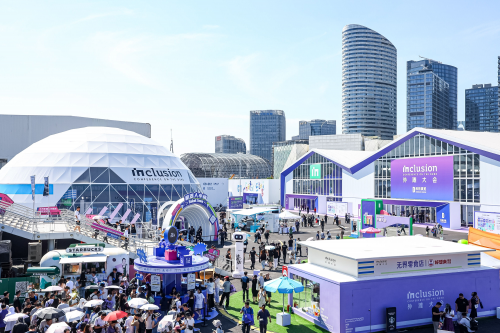
Core Insights - The "2025 Inclusion·Bund Conference" in Shanghai focuses on "reshaping innovative growth" with global leaders from finance, technology, and industry [2] - Jieshun Technology showcases its smart parking service platform, Jieting, which collaborates with Alipay to redefine parking interaction in the AI era [2] Group 1: Smart Parking Solutions - Jieting and Alipay's "Parking Assistant" has achieved multi-scenario smart payment, serving 40 million users with entry, billing, and exit reminders over the past year [4] - The "Parking Assistant" capabilities will be fully opened to mobile manufacturers and OEMs in 2025, enhancing user experience with contextual and intelligent services [4] Group 2: User Experience Innovations - The Li Auto i8's smart cockpit features Alipay's in-car assistant, which automatically provides parking reminders and allows facial recognition payment, streamlining the parking process [6] - Jieting's competitive edge lies in its vertical data foundation and ecosystem connectivity, with 140 million users and coverage of 59,000 smart parking lots and 31.5 million connected parking spaces [8] Group 3: Data-Driven Services - The platform has established a big data model for the parking industry, including real-time parking status and user payment preferences, enhancing service capabilities [8] - Jieting offers proactive recommendations based on user behavior and location, cross-device notifications, and integrates parking with destination shopping, leveraging Alipay's consumer data [9] Group 4: Market Impact and Future Potential - The integration of AI and parking services not only improves user experience but also provides revenue opportunities for parking lots and businesses [11] - The evolution of parking services is shifting from mere payment to detailed operational management, unlocking endless possibilities for contextual services [11]