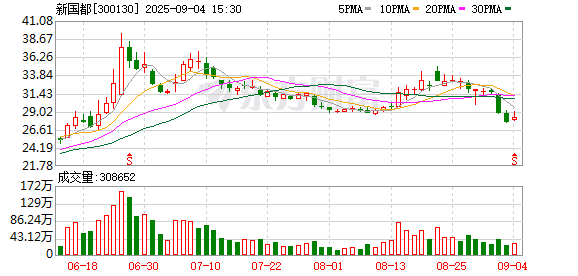
支付服务及场景数字化服务

Search documents
新国都(300130.SZ):目前没有涉及到GEO(生成式引擎优化)相关业务
Ge Long Hui· 2026-01-26 14:48
Core Viewpoint - The company, New Guodu (300130.SZ), primarily focuses on payment services, scenario digitalization services, and electronic payment equipment, and does not engage in GEO (Generative Engine Optimization) related business [1] Group 1 - The main business of the company includes payment services and scenario digitalization services [1] - The company also operates in the electronic payment equipment sector [1] - There is no involvement in GEO related business activities [1]

母公司冲刺港股上市之际,嘉联支付再收百万元罚单
Guo Ji Jin Rong Bao· 2025-12-10 13:25
Group 1 - The People's Bank of China issued an administrative penalty against JiaLian Payment, imposing a fine of 1.41 million yuan and confiscating illegal gains of 1,293.91 yuan due to violations of merchant management and clearing management regulations [1] - JiaLian Payment's parent company, XinGuoDu, has submitted a prospectus to the Hong Kong Stock Exchange for an H-share listing, primarily relying on JiaLian Payment's national bank card acquiring business license to provide payment and digital services [1] - Analyst Wang Pengbo highlighted significant uncertainties regarding XinGuoDu's success in listing on the Hong Kong Stock Exchange, citing weak growth in core payment business and challenges in governance optimization and compliance with dual regulatory standards [1] Group 2 - JiaLian Payment has faced multiple penalties in recent years, including a 40,000 yuan fine in January 2017 for inadequate implementation of merchant real-name systems and a 1.38 million yuan fine in December 2017 for failing to fulfill customer identity verification obligations [2] - In August 2020, JiaLian Payment was fined 9.41 million yuan for failing to establish necessary risk management measures and for conducting transactions with unidentified clients [2] - On October 31, 2023, JiaLian Payment was again penalized with a fine of 2.99 million yuan for violations related to clearing management and merchant management, with the general manager held responsible and fined 160,000 yuan [2]
拟赴港二次上市 新国都面临两大“绊脚石”
Guo Ji Jin Rong Bao· 2025-12-04 12:04
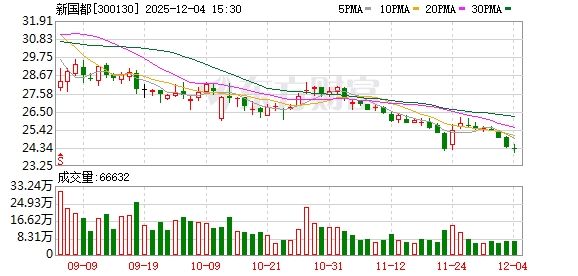
Core Viewpoint - The company, Shenzhen Xinguodu Co., Ltd. (New Guodu), is seeking to list H-shares on the Hong Kong Stock Exchange to accelerate overseas business expansion and establish an international capital operation platform, despite facing challenges such as declining performance and regulatory scrutiny in the payment industry [2][4]. Company Overview - New Guodu was established on July 31, 2001, and listed on the Shenzhen Stock Exchange's Growth Enterprise Market on October 19, 2010. It primarily provides payment services and digital scene services through its wholly-owned subsidiary, JiaLian Payment, which holds a national bank card acquiring business license [6]. - The revenue composition of New Guodu includes 67.12% from acquiring and value-added services, 29.90% from electronic payment products, and smaller contributions from audit services, technical services, and others [6]. Financial Performance - New Guodu's revenue for 2024 was 3.148 billion yuan, a year-on-year decrease of 17.20%, with a net profit of 234 million yuan, down 68.98%. The non-recurring net profit was 492 million yuan, down 29.63% [6]. - In the first half of 2025, the company reported revenue of 1.527 billion yuan, a decline of 3.17%, and a net profit of 275 million yuan, down 38.61% [7]. - The third-quarter report for 2025 indicated revenue of 2.343 billion yuan, a decrease of 4.15%, but a net profit of 408 million yuan, up 37.1%, largely due to non-recurring gains [7]. Regulatory Challenges - JiaLian Payment, the subsidiary of New Guodu, has faced multiple penalties for compliance issues, which pose significant challenges for the company's IPO in Hong Kong. The penalties include fines for failing to comply with merchant identification and transaction reporting regulations [10][11][12]. - The company has acknowledged the need to adjust tax-related matters from previous years, which is expected to impact its net profit significantly [12]. Industry Context - The payment industry is currently experiencing increased regulatory scrutiny, declining fee rates, and intensified competition. The regulatory environment is expected to tighten further in the second half of 2025, raising compliance costs for companies like New Guodu [8]. - New Guodu's efforts to expand into cross-border payments and value-added services have not yet shown significant progress, and the company faces challenges in local competition and regulatory barriers in overseas markets [8]. IPO Prospects - Analysts express significant uncertainty regarding New Guodu's chances of a successful IPO in Hong Kong, citing weak core business growth, the long-term nature of new business investments, and the need for governance improvements [13]. - The company is under pressure to optimize its revenue structure and enhance transparency in its operations to meet regulatory requirements and address market concerns [13].

拟赴港二次上市,新国都面临两大“绊脚石”
Guo Ji Jin Rong Bao· 2025-12-04 12:04
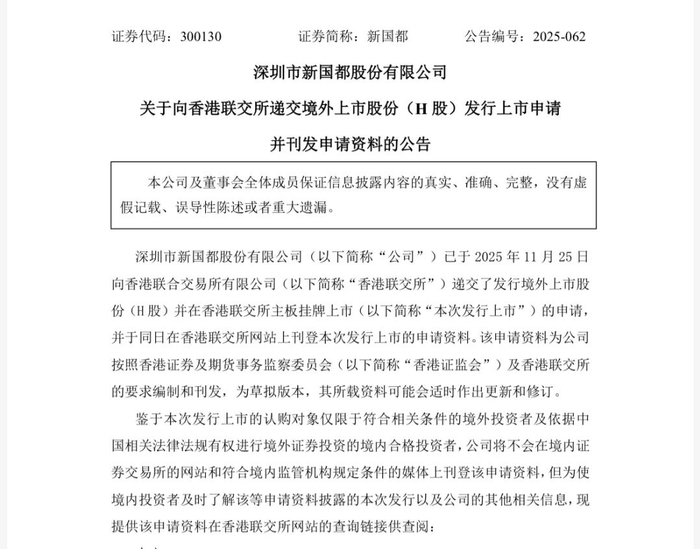
Core Viewpoint - The company Shenzhen Xinguodu Co., Ltd. (New Guodu) has submitted a prospectus to the Hong Kong Stock Exchange for an H-share IPO, aiming to accelerate overseas business expansion and establish an international capital operation platform [1][3]. Financial Performance - New Guodu has experienced a continuous decline in performance, with 2024 revenue at 3.148 billion yuan, down 17.20% year-on-year, and net profit at 234 million yuan, down 68.98% year-on-year [4]. - The significant drop in net profit for 2024 is attributed to tax adjustments affecting the subsidiary Jialian Payment, with an estimated impact of 325 million yuan on net profit [5]. - In the first half of 2025, revenue and net profit continued to decline, with revenue at 1.527 billion yuan, down 3.17% year-on-year, and net profit at 275 million yuan, down 38.61% year-on-year [5]. - The third-quarter report for 2025 showed revenue of 2.343 billion yuan, down 4.15% year-on-year, but net profit increased by 37.1% due to significant contributions from non-recurring gains [6]. Regulatory Challenges - Jialian Payment, the subsidiary of New Guodu, has faced multiple penalties for compliance issues, which pose a significant obstacle to the IPO process [7][8]. - The company has been penalized for various violations, including failure to comply with customer identity verification and improper management of merchant accounts [7][8]. - New Guodu's compliance system is under scrutiny, raising questions about its ability to meet both domestic and international regulatory standards [9]. Market Conditions - The payment industry is currently facing stringent regulations, declining fee rates, and intensified competition, which are impacting New Guodu's core business growth [6][9]. - The company's efforts to expand into new areas such as cross-border payments and value-added services have not yet yielded significant results, leading to concerns about the sustainability of any potential recovery in performance [6][9]. Strategic Considerations - The IPO in Hong Kong is seen as a critical step for New Guodu's global strategy, but it must overcome challenges related to performance, corporate governance, and regulatory compliance [10]. - There is a need for the company to optimize its revenue structure and enhance transparency in its operations to address market concerns and meet regulatory requirements [10].
不只是融资新国都谋求A+H上市背后
Sou Hu Cai Jing· 2025-09-04 15:30
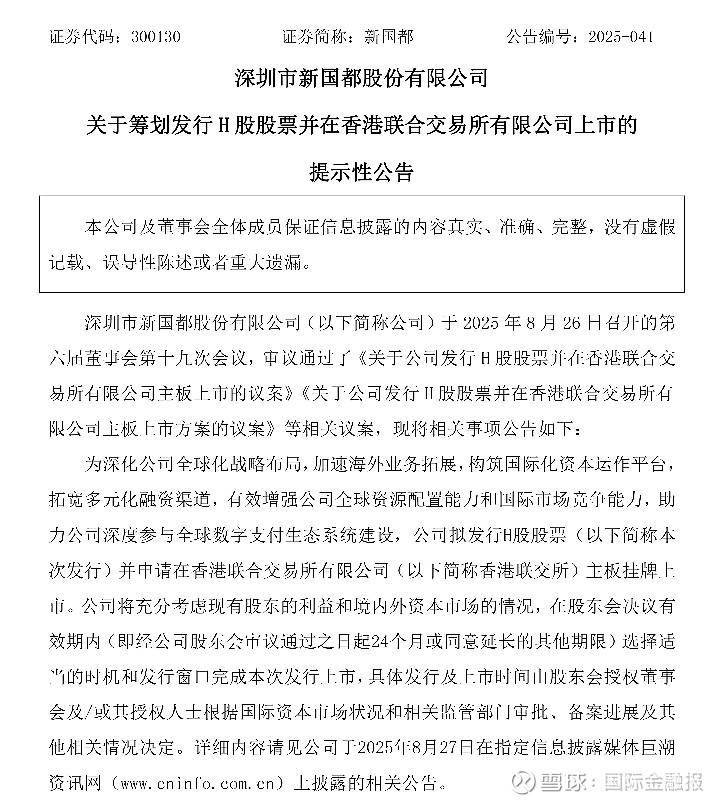
Core Viewpoint - New Guodu, a payment service provider, plans to issue H-shares and apply for listing on the Hong Kong Stock Exchange to accelerate overseas business expansion and diversify financing channels amid declining performance and regulatory challenges [1][6]. Group 1: Company Overview - New Guodu was established on July 31, 2001, and listed on the Shenzhen Stock Exchange's Growth Enterprise Market on October 19, 2010. It primarily provides payment services and digital service solutions through its wholly-owned subsidiary, Jialian Payment [4][6]. - The company's main revenue sources include 67.12% from acquiring and value-added services, 29.90% from electronic payment products, and smaller contributions from audit and technical services [6]. Group 2: Financial Performance - New Guodu's revenue for 2024 is projected at 3.148 billion yuan, a year-on-year decrease of 17.20%, with net profit dropping by 68.98% to 234 million yuan [6][7]. - In the first half of 2024, the company reported a revenue of 1.527 billion yuan, down 3.17%, and a net profit of 275 million yuan, down 38.61% [7]. - The decline in profits is attributed to reduced income and gross margins from acquiring and value-added services, influenced by strategies to expand new merchant partnerships [7]. Group 3: Regulatory Challenges - Jialian Payment, New Guodu's subsidiary, has faced multiple penalties for compliance issues, including a recent fine of 2.99 million yuan for violations related to clearing management and merchant management [8][10]. - The company has also disclosed potential tax adjustments amounting to 362 million yuan, which could further impact its net profit for 2024 [10]. Group 4: Market Position and Strategy - Industry experts suggest that New Guodu's move to list in Hong Kong reflects a need for capital support amid declining performance and market challenges, emphasizing the importance of a clear international strategy for sustainable growth [4][10]. - The competitive landscape in the traditional acquiring market is intensifying, with Jialian Payment facing pressure from declining rates and increased competition, while innovation efforts have yet to yield results [7][10].
不只是融资!新国都谋求“A+H”上市背后
Guo Ji Jin Rong Bao· 2025-09-04 14:57
Core Viewpoint - New Guodu, a payment service provider, plans to issue H-shares and apply for listing on the Hong Kong Stock Exchange to accelerate overseas business expansion and diversify financing channels amid declining performance and regulatory challenges [2][6]. Group 1: Company Overview - New Guodu was established on July 31, 2001, and listed on the Shenzhen Stock Exchange's Growth Enterprise Market on October 19, 2010. The company primarily provides payment services and scenario digitalization services through its wholly-owned subsidiary, Jialian Payment [4][6]. - Jialian Payment obtained a third-party payment license in 2012 and has been involved in nationwide card acquiring business since 2017 [6]. Group 2: Financial Performance - New Guodu's revenue for 2024 is reported at 3.148 billion yuan, a year-on-year decrease of 17.20%, while the net profit attributable to shareholders is 234 million yuan, down 68.98% [6]. - The company’s first half of 2024 shows continued decline, with revenue of 1.527 billion yuan, a decrease of 3.17%, and net profit of 275 million yuan, down 38.61% [7]. - The decline in profits is attributed to a drop in revenue and gross margin from acquiring and value-added services, influenced by increased marketing support and competitive market measures [7]. Group 3: Regulatory Challenges - Jialian Payment has faced multiple penalties for compliance issues, including a warning and a fine of 2.99 million yuan for violations related to clearing management and merchant management [9]. - In 2020, Jialian Payment was fined 9.41 million yuan for failing to establish proper risk management measures and for conducting transactions with unidentified clients [12]. Group 4: Market Context and Strategic Considerations - Industry experts suggest that New Guodu's move to list in Hong Kong reflects a need for capital support amid declining performance and increasing compliance requirements [4][13]. - The company’s reliance on capital markets without a solid core technology or localized operational capabilities raises concerns about its long-term viability in the competitive payment sector [13].